A winter festival in Oku-Mikawa, alive with yudate kagura and masked dances
Hanamatsuri
Festival information
EVENT INFORMATION- Season / frequency
- November–January (Toei Town) / December–January (throughout Kitashitara County) / Every year
- Area
- Aichi Prefecture・Toei Town, Shitara Town, and Toyone Village(From Tokyo: approx. 1 h 40 min–2 h · bullet train)Prefecture-level estimate to a main station or airport, not the venue. Airport access, check-in and onward travel are extra; remote areas and islands can take much longer.
- Highlights and activities
- Wishes behind the festival
- Participation / viewing
- Spectators welcome
- Last updated
- 2026/10/19
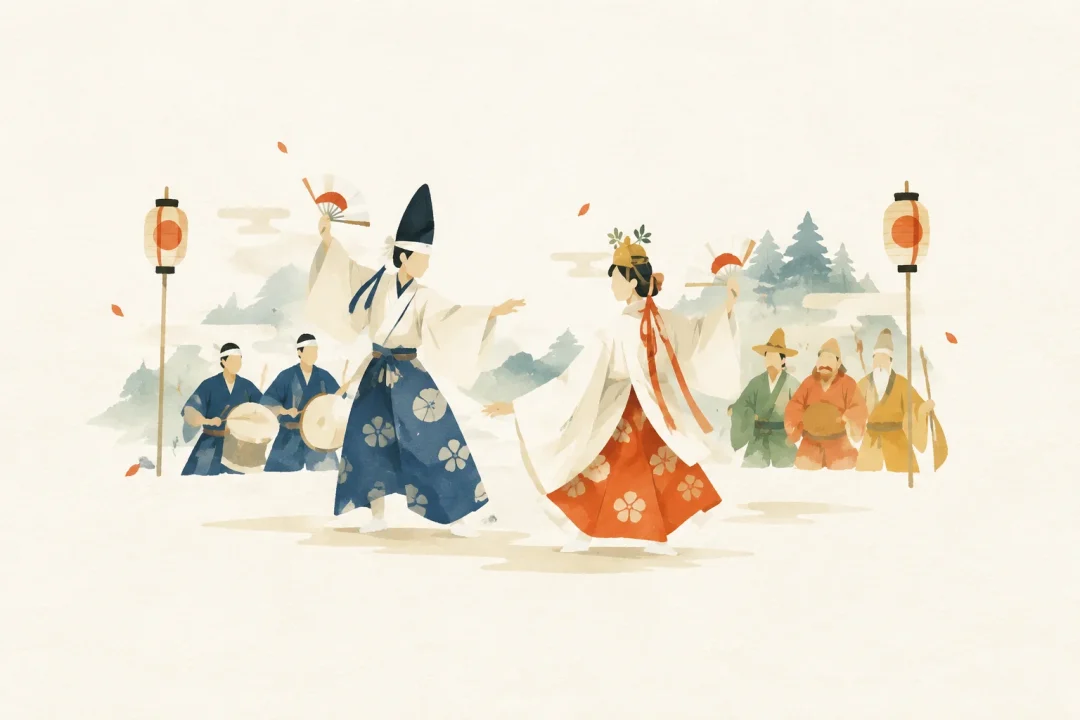
Hanamatsuri features all-night yudate and masked dances in the maibayashi space surrounding a cauldron. Passed down in districts throughout Kitashitara County, Aichi Prefecture, this traditional winter ritual brings life to the mountain villages with prayers for a bountiful harvest and good health.
About Hanamatsuri
Hanamatsuri is a form of yudate passed down throughout Kitashitara County, Aichi Prefecture.
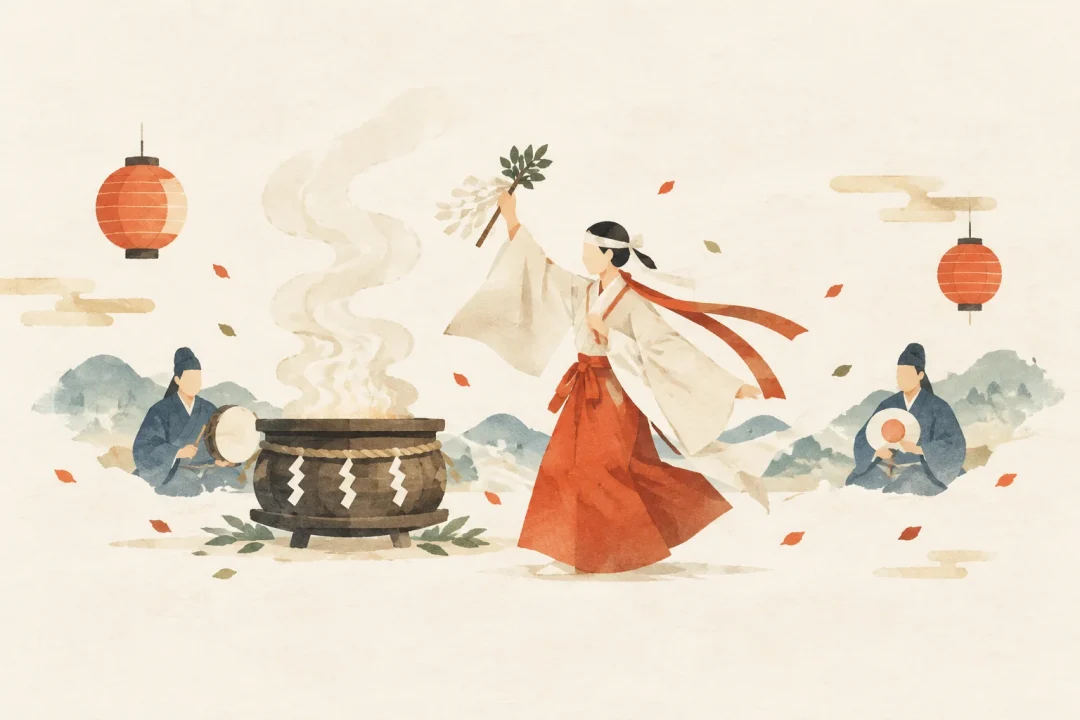
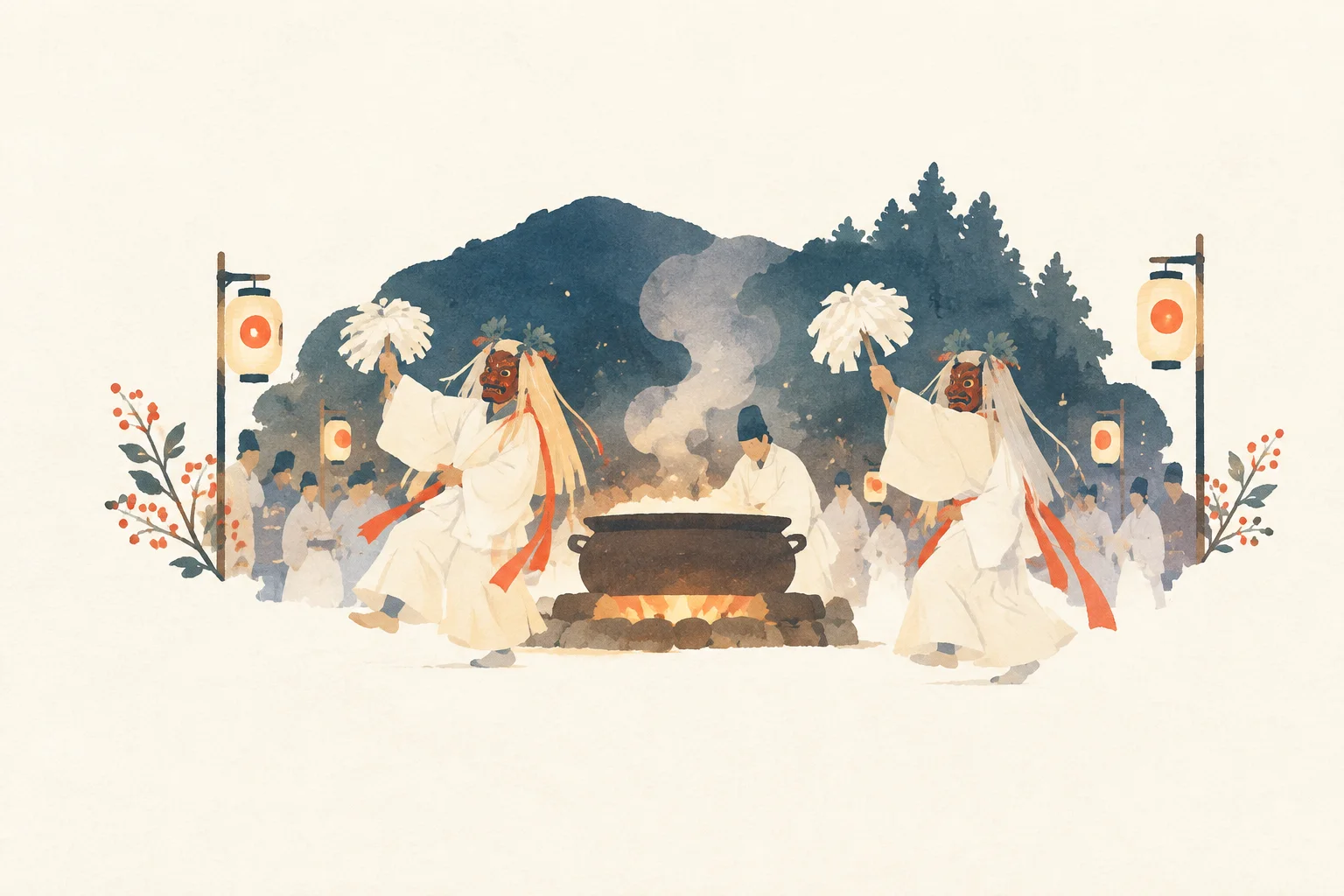
Centered on a maibayashi space with a cauldron, performances include yudate, dances for purifying the hot water, and masked dances.
Hanamatsuri is held in various districts of Toei Town, each preserving its own slightly different style.
The festival is also associated with “nurturing the flowers,” a prayer for the rice to mature.
Source: 国指定文化財等データベース / 東栄町の伝統神事 花祭 | 特集・コラム | 【公式】愛知県東栄町の観光サイト 東栄町のじかん
Festival highlights
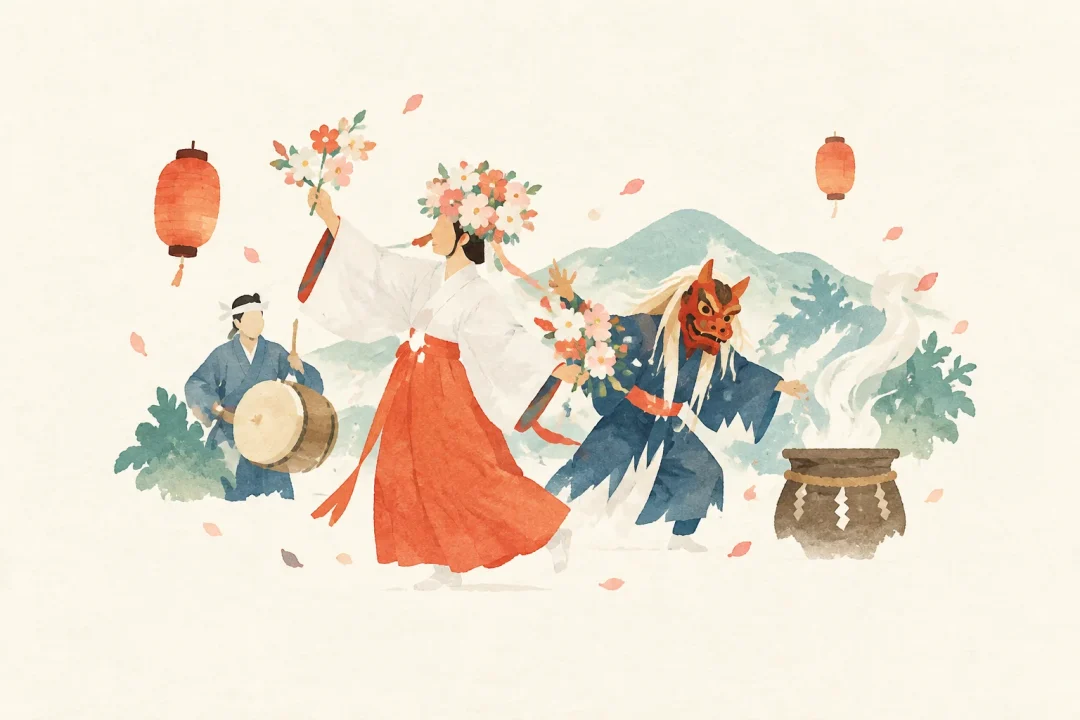
Highlights include yudate, dances for purifying the hot water, and dances performed in various masks in the maibayashi space surrounding the cauldron.
The demons in particular are considered important figures. They are said to bring new vitality to the earth, leading to a bountiful harvest and good health.
Accompanied by drums and flutes, the dances continue through the night, and you can also see masks and performances unique to each district.
A winter festival in Oku-Mikawa, alive with yudate kagura and masked dances
What to expect
The festival begins by boiling water drawn from a waterfall in the village and welcoming the myriad gods into the maibayashi dance space.
The space is purified with dances known as ichi no mai and jichime, followed by the flower dance, dances for different age groups, and dances for individual prayers.
Toward the end, demons dance with yutabusa—bundles of sacred paper streamers—and splash water from the cauldron.
Finally, the gods are pacified and sent back to their original place, bringing the festival to a close.
How to take part
At this festival, you can watch ritual performances in the dance courtyard. Whether general visitors may take part as dancers depends on the guidance for each district.
The Toei Town guide introduces a fun way to enjoy the festival by joining in the chants to the beat of drums and flutes.
Do not touch the marking the sacred area or any ritual implements, and watch from a distance that does not obstruct the dancers.
Location and access
- Venue and address
Hanamatsuri venues vary by district.
Some roads leading to venues in Toei Town are narrow, making it difficult for vehicles to pass each other.
- Train and bus
Guidance says it is difficult to travel by public transport from Toei Station to the various Hanamatsuri venues.
Using a taxi is recommended.
- By car
Roads may be icy in winter, so equip your vehicle with winter tires or similar and drive safely.
- Parking
Dates vary by district, so check information from the district hosting the festival.
Event venue 愛知県東栄町、設楽町、豊根村 花祭は地区ごとに会場が異なります
This map uses the venue name. Check the official guide for the event area and entrances.
Dates and season
Hanamatsuri is held on different dates in each district, mainly during winter.
For 2026, event listings show that Hanamatsuri will be held in Futto, Toei Town, from January 2 to the 3rd; in Shimogawashiro, Toei Town, from January 10 to the 12th; in Shimokurokawa, Toyone Village, from January 2 to the 3rd; and in Tsugu, Shitara Town, on January 2.
According to Toei Town’s information, the festival will also be held in various districts of the town from November to January in fiscal year Reiwa 8.
Tips for your visit
The venue is treated as sacred ground. Please do not touch the shimenawa ropes, straw mats, decorations, or other items, and watch without obstructing activity in the maibayashi dance space.
Guidance notes that masked dancers have limited visibility and may be uncomfortable with people standing close or with flash photography.
Dress warmly for the all-night dances, and do not drive after drinking at the venue.
Nearby attractions
Toei Town lists the Hanamatsuri Hall, which exhibits demon masks, costumes, video footage, and ritual implements related to Hanamatsuri.
This facility offers a chance to learn not only about Hanamatsuri performances but also about the tools and preservation efforts that support the festival.
Toei Town also lists the Hanamatsuri Hall, as well as accommodations and hot springs available during the Hanamatsuri season.
Origins and History of Hanamatsuri
Hanamatsuri is said to be a traditional with a history of about 700 years. It was designated a National Important Intangible Folk Cultural Property in 1976.
Some aspects of its origins are unclear, though one account says that Shugendo practices in Yoshino and Kumano, which reached their peak in the Heian period, influenced the people of Oku-Mikawa.
Today, it is passed down by preservation groups and others in several districts of Kitashitara County, each of which maintains its own distinctive style.
Official information
For Hanamatsuri in Toei Town, fiscal year Reiwa 8 information is available on the official tourism website of the Toei Town Tourism and Community Development Association.
Hanamatsuri dates and venues vary by district, so also check event information from the tourism associations and local governments of Toei Town, Shitara Town, and Toyone Village.
For an overview of its cultural property status, see the Agency for Cultural Affairs’ Database of Nationally Designated Cultural Properties.
Hanamatsuri at a Glance
Hanamatsuri is a traditional ritual of Oku-Mikawa, with yudate, water-purification dances, and masked dances performed through the night in a maibayashi space surrounding a cauldron.
The festival is associated with “nurturing the flowers,” a prayer for the rice to mature, while the demon dances embody prayers for a bountiful harvest and good health.
It will be held in several districts in 2026, but dates and venues vary by district.
This is a festival to visit prepared for the cold and uneven footing, and with respect for local customs.
Japanese Festivals.jp Editorial Team
Celebrating local culture and helping you discover a side of Japan you never knew.
Article updated: 2026/10/19
Submit information or a correction Submit photos of this festival