What is Hikkawase at Kawagoe Festival? Enjoy the encounters between floats and festival musicians
Focus on the exchange of sounds and dashi in the streets lined with traditional storehouses.
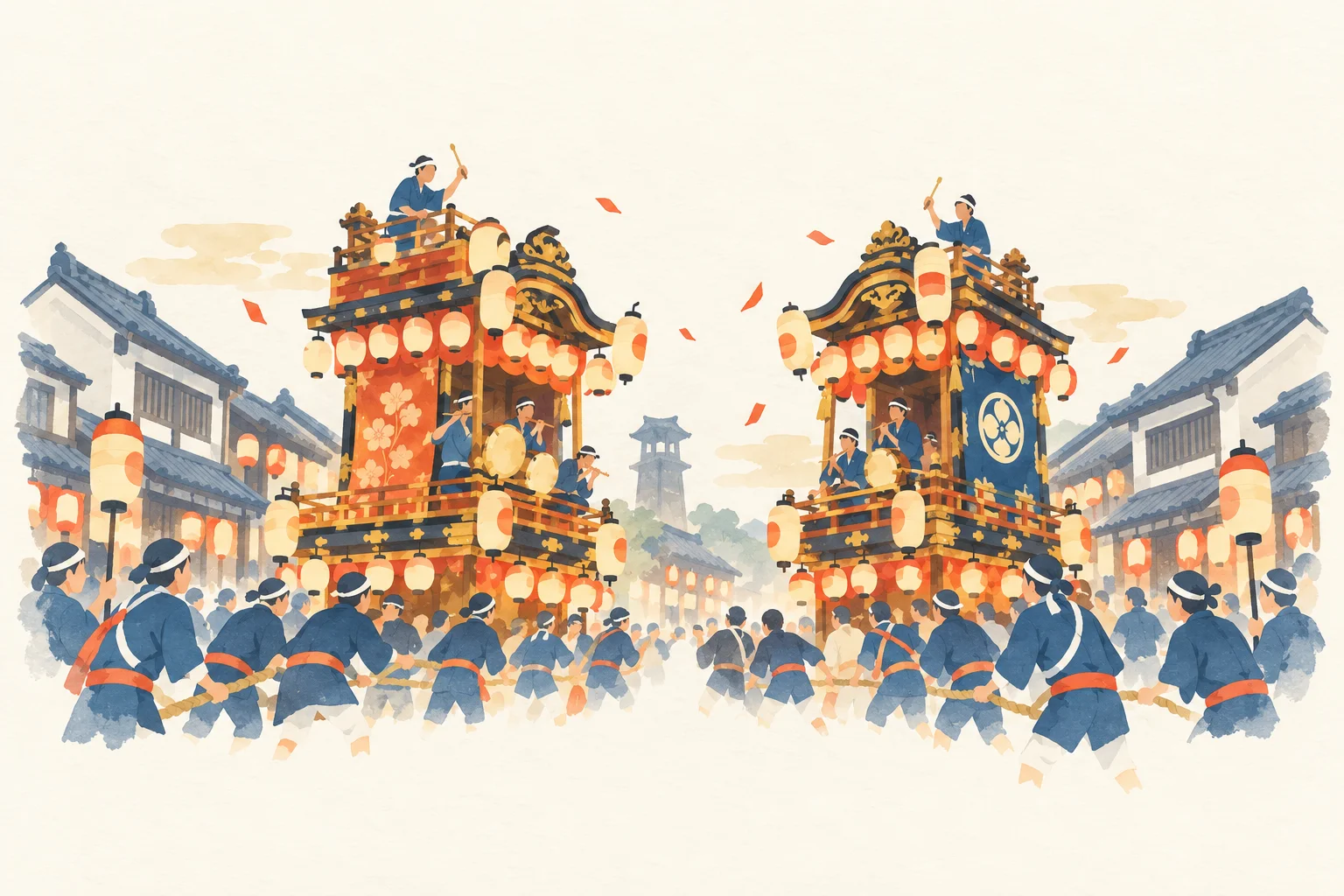
One term to know for the Kawagoe Festival is “hik-kawase” (ひっかわせ). When face each other and their festival musicians perform in competition, it is one of the festival’s major highlights. Rather than simply counting the dashi, watch how the sounds overlap, attention turns to the dancers, and people around them respond. This gives you a feel for the character of a town festival. Here, we explain the history and how to appreciate the festival in a way that is easy for first-time visitors to understand.
What to look for during the hik-kawase
The official guide describes the hik-kawase as a performance in which several dashi face one another and compete through flutes, drums, bells, and dancing. The stage and festival musicians at the front of each dashi are worth watching. Follow the dancing or music of one dashi first, then shift your gaze to the one facing it. This helps you notice the different performances taking place within the same intersection. (Kawagoe Festival Official Site, “Overview and History”)
On the other hand, it is best not to make a rigid plan based on assumptions such as, “I’ll definitely see it at this place at this time.” Prioritize the year’s procession information and directions from staff on site, and watch from a place that does not obstruct passage. Rather than rushing to decide who wins the musical contest, look for one difference in the costumes or stages from one town to another; even a short viewing can then leave a lasting impression.
The dashi’s splendor is connected to the town’s history
The Kawagoe Festival originated as a festival at Hikawa Shrine and developed under the influence of Edo’s Tenka Matsuri festivals. The official history describes offerings including a by Matsudaira Nobutsuna in 1648 and festival processions beginning in 1651. This shows that the festival’s background lies not only in its present-day appearance, but also in the exchange of culture between the castle town and Edo. (Kawagoe Festival Official Site, “Overview and History”)
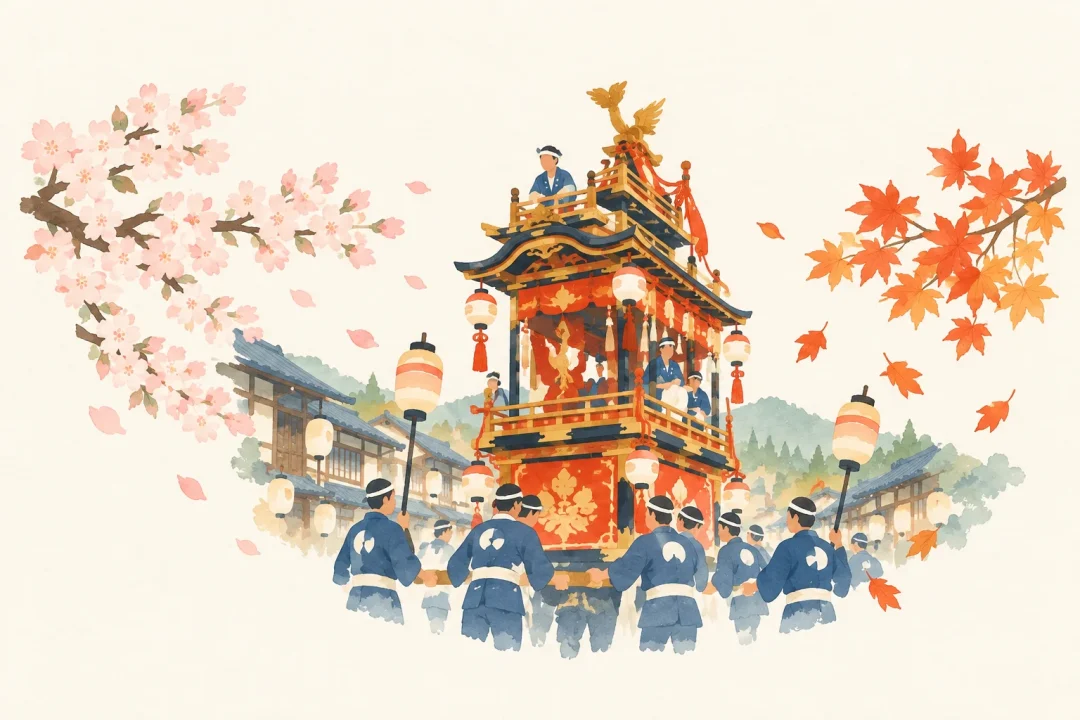
When looking at a dashi, slowly move your gaze from top to bottom: the figures, curtains, carvings, and the stage for the festival musicians. If you take only one overall photo, it can be hard to explain what left an impression. Taking home one specific detail—“I was drawn to the figure from that town” or “I can’t forget the color of that curtain”—can give you something to enjoy researching later.
Should you visit by day or at night?
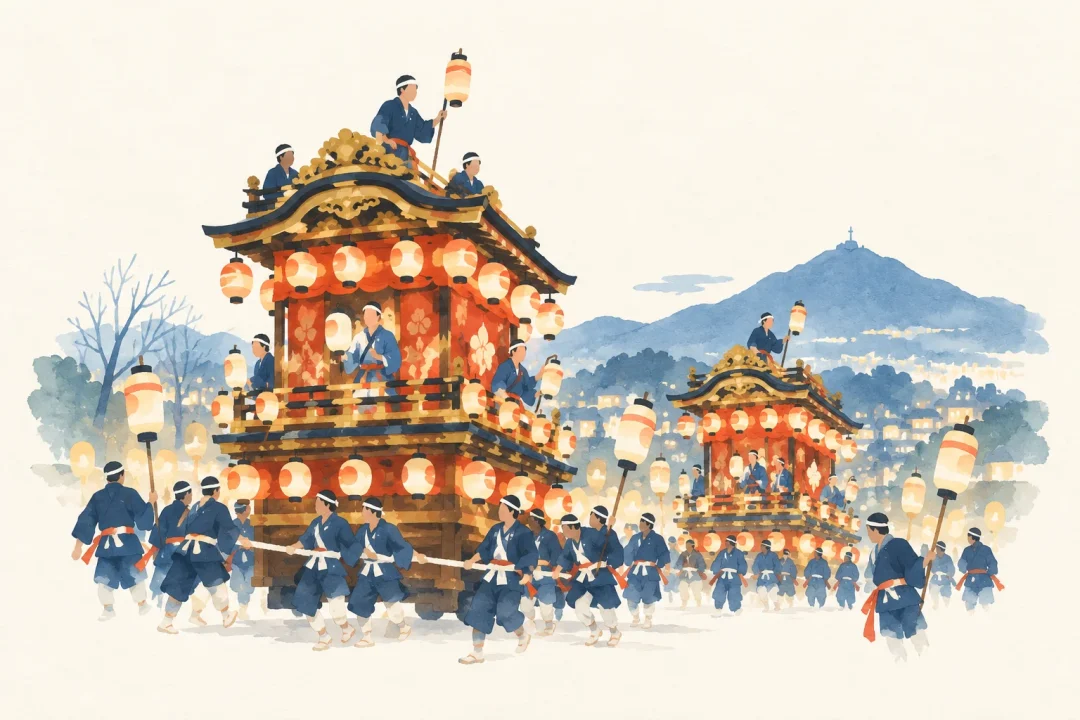
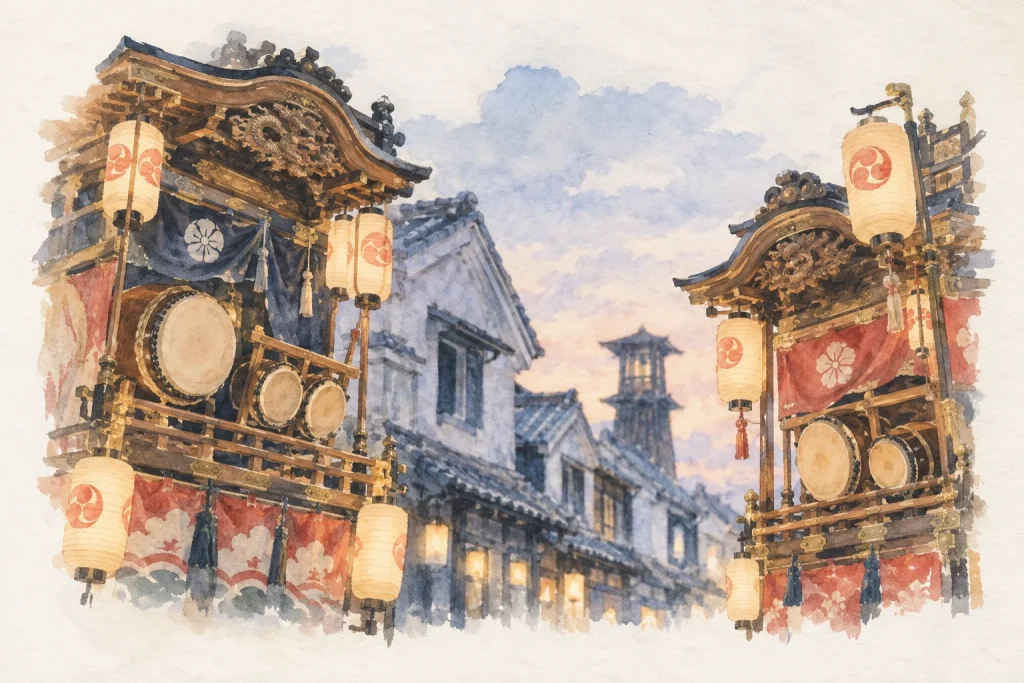
You can plan a visit suited to you: explore the decorations and streetscape by day, or enjoy the atmosphere created by lanterns and festival music at night. The official website also highlights the nighttime hik-kawase, but first-time visitors do not need to walk all day and into the night. Decide in advance which time of day you most want to see, and schedule a break beforehand so you can focus on the viewing.
If you are visiting with children or find it difficult to stand for long periods, consider exploring the town while it is still light instead of focusing only on the busiest time at night. Check separately whether there is a place to rest near your viewing spot and how to get back to the station after traffic restrictions begin. As well as bringing a map from a previous year, it is a good idea to save the current year’s information from the official website. (Kawagoe Festival Official Site, “Pamphlet”)
Explore the Kawagoe Festival Museum before or after the festival to gain new perspectives
The Kawagoe Festival Museum displays an actual dashi and introduces the festival through videos and other exhibits. It is a good place to explore decorations you could not get close to on the festival day, or history that caught your interest. Check the facility’s latest information for exhibits and opening status. (Kawagoe Festival Museum)
- Before you go: check the dates, traffic restrictions, and dashi information for this year.
- At the festival: follow the music or dancing of one float, then shift your gaze to the other dashi.
- When taking photos: do not block the route of the dashi pullers or the view of other spectators.
- After you get home: use the names of towns or figures that caught your interest as clues to learn about their history.
The appeal of the Kawagoe Festival is about more than seeing a large dashi up close. It lies in the sounds and movement of people created when dashi meet at street corners, and the town pride behind them. Even from a little farther away, paying attention to these details can make the hik-kawase feel less like a mere spectacle and more like an exchange between towns.
Official sources referenced
- Kawagoe Festival Official Site, “Overview and History”
- Kawagoe Festival Museum
- Kawagoe Festival Official Site, “Pamphlet”
This content is based on publicly available information from official sources, local authorities and tourism associations. Information checked: 2026/10/01. Please check the official information for the year you plan to visit for dates, venues, traffic restrictions and participation requirements.
Festivals related to this article

Kawagoe Festival
Dashi and enliven the kurazukuri streetscape at Kawagoe’s autumn festival

Find one thing that catches your interest.
Find a little “first” beyond the familiar everyday. Why not start with a region or way of enjoying yourself that catches your interest, and see where it leads?
Find festivals