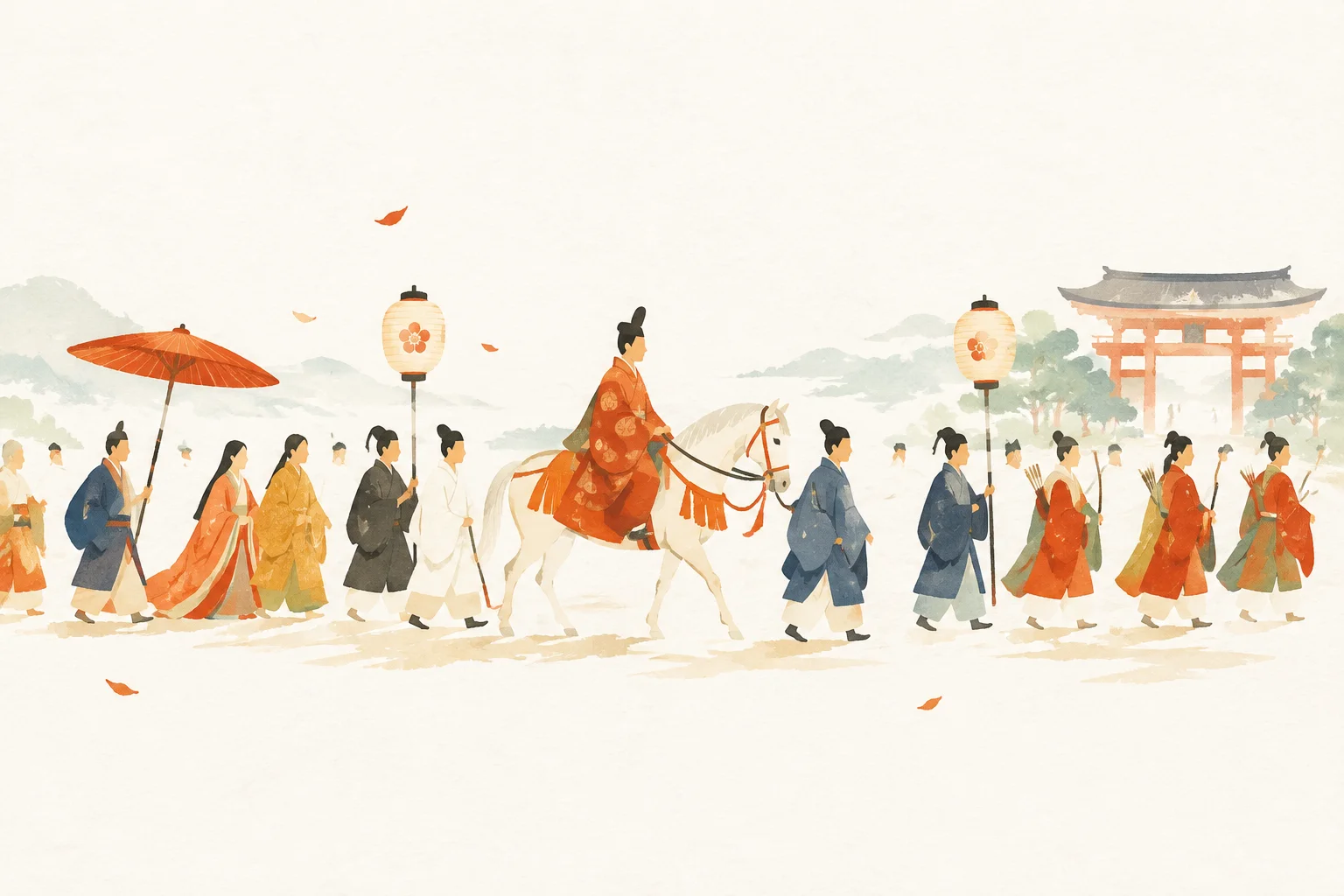
A historical scroll of period costumes bringing the ancient capital to life
Jidai Matsuri
Festival information
EVENT INFORMATION- Dates
- 2026/10/22Happening now
- Season / frequency
- Every year on October 22 / Every year
- Location
- The procession route from the Kyoto Imperial Palace to Heian Shrine, and viewing seats at Kyoto Gyoen, Oike-dori, and Jingū-michi
- Area
- Kyoto Prefecture・Kyoto City(From Tokyo: approx. 2 h 10 min–2 h 40 min · bullet train)Prefecture-level estimate to a main station or airport, not the venue. Airport access, check-in and onward travel are extra; remote areas and islands can take much longer.
- Participation / viewing
- Spectators welcome
- Participation fee
- Paid viewing seats: General seats: ¥5,000–¥7,500; Manabi Seats: ¥8,500–¥10,500; special seats in front of Otenmon Gate: ¥13,500–¥15,500 (tax included)
- Official website / social media
- Official website
- Last updated
- 2026/10/19
The Jidai Matsuri features figures and costumes from the Meiji Restoration through the Enryaku period in a procession from the Kyoto Imperial Palace to Heian Shrine. The procession, about 2 kilometers long, offers a chance to experience Kyoto’s history and traditional culture.
About Jidai Matsuri
Photo credits and terms of use
Photographer: Corpse Reviver File:Jidai Matsuri 2009 457.jpg / Wikimedia Commons / CC BY-SA 3.0 Own work by the contributorDisplay size only adjusted.May differ from the event currently featured.Photo credits and terms of use
Photographer: Corpse Reviver File:Jidai Matsuri 2009 480 (cropped to central figures).jpg / Wikimedia Commons / CC BY-SA 3.0 Own work by the contributorDisplay size only adjusted.May differ from the event currently featured.The Jidai Matsuri is a grand festival launched with the participation of Kyoto’s citizens to celebrate the founding of Heian Shrine.
A procession of historical costumes travels from the Kyoto Imperial Palace to Heian Shrine, moving backward in time from the Meiji Restoration to the Enryaku period.
As one of Kyoto’s three major festivals, it continues to pass on the city’s history and traditional culture.
Source: 令和8年「時代祭」有料観覧席券 団体予約の申込等について | 公益社団法人 京都市観光協会(DMO KYOTO) / 時代祭|【京都市公式】京都観光Navi
Festival highlights
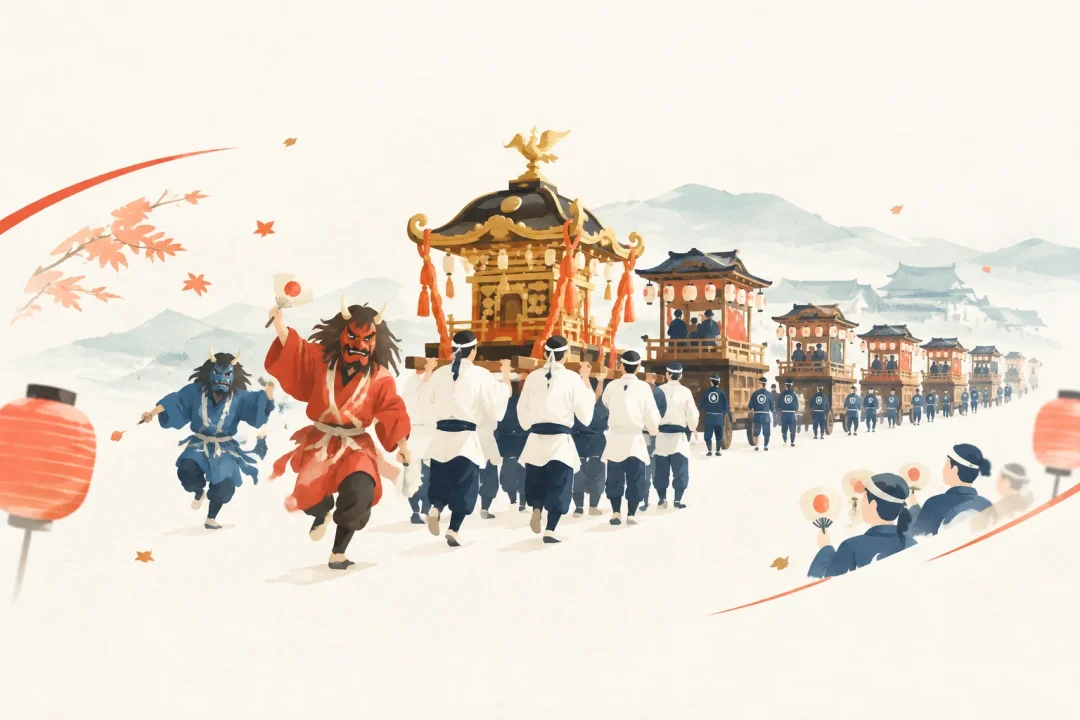
A highlight is the procession, about 2 kilometers long, featuring around 2,000 people, 70 horses, 2 oxen, horse-drawn carriages, and ox-drawn carts.
Led by the Ishin Kinnoto procession, groups representing the Edo, Azuchi-Momoyama, Yoshino, Muromachi, Kamakura, Fujiwara, and Enryaku periods follow.
Costumes, ceremonial items, and furnishings, carefully researched for historical accuracy, vividly convey changes in historical customs and culture.
A historical scroll of period costumes bringing the ancient capital to life
What to expect
The ceremonies include the appointment document ceremony for festival participants on October 15, the eve-of-festival ceremony on the 21st, the Shinkosai, Anzaisho-sai, and Kankosai on the 22nd, and the post-festival ceremony on the 23rd.
On the main day, the 22nd, the procession leaves the Imperial Palace at noon, travels through the city, and arrives at Heian Shrine at around 2:30 p.m.
You can watch along the route, and paid viewing seats are set up at Kyoto Gyoen, Oike-dori, and Jingumichi.
Source: 時代祭「行ってみよう!」|【京都市公式】京都観光Navi
How to take part
You can watch the procession for free along the route from Kyoto Imperial Palace to Heian Jingu Shrine.
For a more relaxed viewing experience, you can use the paid viewing seats set up in Kyoto Gyoen National Garden, along Oike Street, and on Heian Jingu-michi.
The procession features about 2,000 people dressed as figures and in the styles of different eras. From along the route, you can enjoy this historical pageant, which lasts about 2 hours.
No information is provided on how the general public can participate as performers.
In 2026, in addition to viewing from along the route, you can use paid seating at Kyoto Gyoen, Oike-dori, and Jingu-michi.
Advance lottery sales for the general public are scheduled to run from 10 a.m. on July 10 (Friday) until 11:59 p.m. on July 17 (Friday). Regular sales are scheduled to begin at 10 a.m. on September 8 (Tuesday).
In addition to general seats, seating options include Manabi Seats, which come with an instructor’s audio guide via earphones, and special seats in front of Otenmon Gate.
Source: 時代祭「どんな祭?」|【京都市公式】京都観光Navi
Location and access
- Venue and address
The procession departs from the Kyoto Imperial Palace and travels along Marutamachi-dori, Karasuma-dori, Oike-dori, Kawaramachi-dori, Sanjo-dori, and Jingū-michi before reaching Heian Shrine.
Viewing seats are set up at Kyoto Gyoen, Oike-dori, and Jingū-michi.
Address 97 Okazaki Nishitennocho, Sakyo-ku, Kyoto, Kyoto Prefecture (Heian Shrine)
Dates and season
The 2026 Jidai Matsuri is scheduled to take place on October 22 (Thursday). If it rains, it will be postponed to the following day, October 23 (Friday).
The ceremonies begin at 7 a.m. After events including the Shinko-sai and the Anzaisho-sai, the procession departs the Kyoto Imperial Palace at noon.
The procession is scheduled to arrive at Karasuma Oike at 12:50 p.m. and at Heian Jingu at around 2:30 p.m. After the entire procession has arrived, the Daigokuden-sai and -sai are held at 4 p.m.
Source: www.heianjingu.or.jp
Accommodation and hotels PR
Showing nearby accommodation.
Prices and availability are current at the time of retrieval. For multi-night stays, only the first night’s price is shown. Confirm the final price and directions to the venue with the booking provider. Select your dates again when using the area search link. Search area: within 3 km of Central Kyoto Prefecture / Kyoto City (the search is not centered on the festival venue)
Tips for your visit
The procession lasts about 2 hours, so if you plan to watch from along the route, it’s a good idea to check the order in which the groups pass and their locations in advance.
At the paid viewing seats, you can use an instructor’s audio guide via earphones at the Manabi Seats and the special seats in front of Otenmon Gate.
The use of unmanned aerial vehicles (drones) is prohibited at Heian Jingu Shrine.
Nearby attractions
At Kyoto Gyoen, the procession’s starting point, you can visit the Kan’in-no-miya Residence Exhibition Hall and Shu Sui Tei, a remnant of the former Kujo family residence.
The Kan’in-no-miya Residence Exhibition Hall offers insights into the nature and history of Kyoto Gyoen, and its garden is also open to visitors.
Shu Sui Tei is a teahouse that the Kujo family used as a retreat for tea gatherings, and it may be open to visitors on the day of the Jidai Matsuri.

京都タワー
京都府京都市下京区にある塔

京都国立博物館
京都市にある国立博物館

京都国立近代美術館
京都市左京区岡崎にある美術館

京都国際マンガミュージアム
日本の京都府京都市中京区にある日本最大の漫画博物館

京都市美術館
京都市左京区岡崎にある美術館

京都府立植物園
京都市左京区にある植物園

京都鉄道博物館
京都府京都市下京区にある鉄道博物館

Fushimi Inari Taisha
京都市伏見区にある神社

元離宮二条城
京都市にある城郭及び元皇室関連施設

Yasaka Shrine
京都市東山区にある神社

円山公園
京都市にある公園

Kitano Tenmangu Shrine
京都市上京区にある神社
Origins and History of Jidai Matsuri
The Jidai Matsuri began in 1895, when Heian Shrine was built to commemorate the 1,100th anniversary of the capital’s relocation to Heian-kyo, and a commemorative festival and procession of historical costumes were held.
Starting the following year, the procession of historical costumes was held on October 22, the anniversary of the capital’s relocation to Heian-kyo.
Today’s procession moves backward through time, from the Meiji Restoration to the Enryaku period, depicting Kyoto’s history.
Official information
Event details, the procession route, and information on the sale of paid viewing seats are available on Kyoto City’s official Kyoto Travel Navi website.
Heian Shrine’s official website posts information such as calls for procession participants.
Information on purchasing viewing seats is also available on Kyoto Travel Navi.
Source: www.heianjingu.or.jp
Jidai Matsuri at a Glance
The Jidai Matsuri is a large historical procession that travels about 2 kilometers from the Kyoto Imperial Palace to Heian Shrine.
It will be held on October 22 in 2026, offering a close-up view of costumes and ceremonial items from the Meiji Restoration through the Enryaku period.
You can watch for free along the route, or use paid viewing seats if you would like to watch in comfort.
Japanese Festivals.jp Editorial Team
Celebrating local culture and helping you discover a side of Japan you never knew.
Article updated: 2026/10/19
Submit information or a correction Submit photos of this festival