What Is the Namahage Sedo Festival? How It Differs from New Year’s Eve Namahage and the Story Told at Shinzan Shrine
Behind the frightening masks lie the customs of visiting deities and the origins of a winter festival.
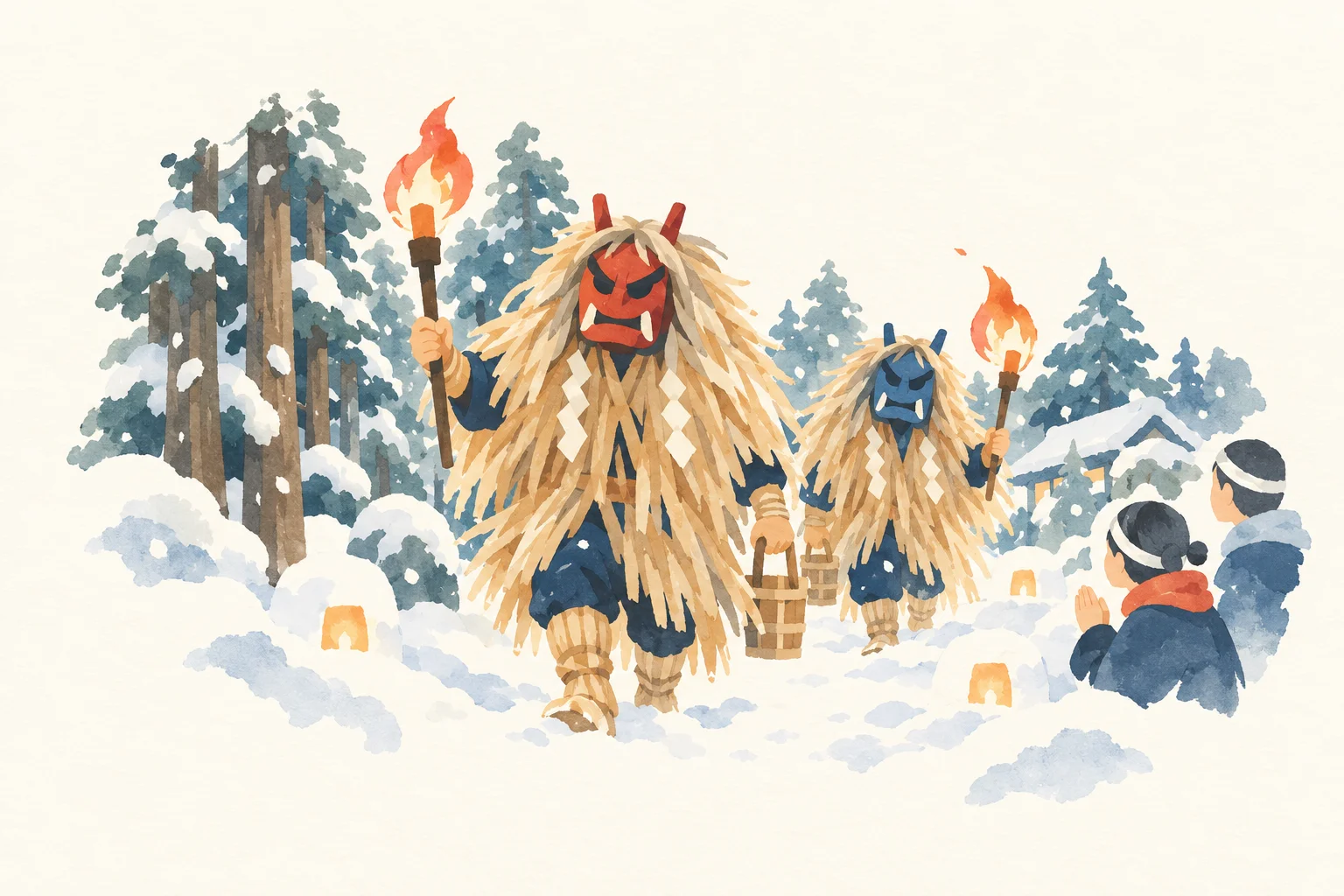
The Namahage Sedo Festival is a winter festival held at Shinzan Shrine in Oga City, Akita Prefecture. Photos of namahage appearing with torches in hand are striking, but some people may wonder, “Isn’t namahage a New Year’s Eve event?” The two are closely related, but they are not the same event. Knowing the difference makes it easier to understand the meaning of the performances you see at the venue.
Distinguishing New Year’s Eve customs from the February festival
Oga City describes the Namahage Sedo Festival as an event combining the Shinzan Shrine ritual “Sedo-sai” with “Oga no Namahage.” First held in 1964, it is held each year on the Friday, Saturday, and Sunday that include the second Saturday of February. It should not be understood as a direct transfer of local customs of visiting homes on New Year’s Eve to February.(Oga City “Sedo Festival”)
The official website also explains that the event began as an initiative to boost winter tourism. The presence of both ancient beliefs and rituals, and a newly developed tourism event, does not diminish the festival’s value. Looking separately at the background behind each element reveals the thoughtful ways the traditions are passed down.(Namahage Sedo Festival Official Website, “About the Festival”)
Pay attention to the events leading up to their appearance
The city’s guide introduces scenes such as rituals, “Namahage Nyukon” (the consecration of the namahage), local performing arts, the descent from the mountain, and the offering of mochi. If you come only for the appearance near the end, you may miss the sequence in which they receive their masks, head for the mountains, and appear again. If it is your first time, reading that year’s program before heading to the venue can help you experience the waiting time as part of the story.(Oga City “Sedo Festival”)
There is more to notice than just the fearsome appearance and loud voices. Notice the shape of the masks, the costumes, the way they walk, their distance from the fire, and their interactions with the priests. However, follow the announcements for that year regarding the order and content of the performances. Do not enter spaces needed for the festival’s proceedings, and be mindful that people taking photographs and those without cameras share the same space.
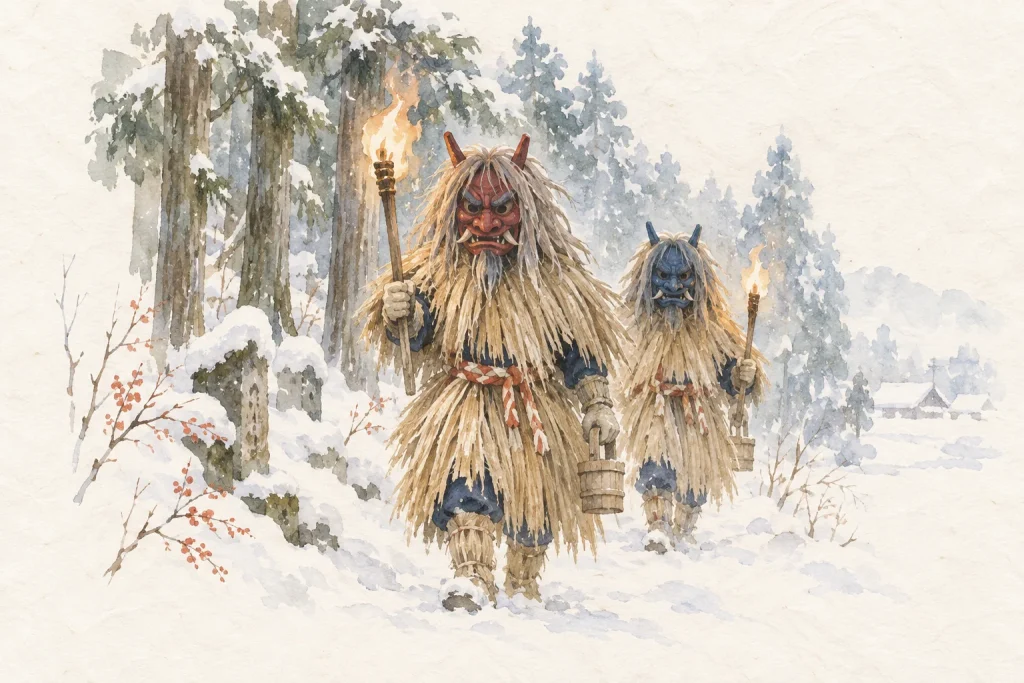
A starting point for learning about local variations: Oga Shinzan Folklore Museum
At the Oga Shinzan Folklore Museum, adjacent to the Namahage Museum, educational programs introduce the customs of the Shinzan district. The facility’s exhibits introduce the exchange in which the head of the household welcomes the visitors, as well as customs governing their actions. This is a place to broaden your perspective beyond the impression of namahage as simply frightening figures, and consider the relationship between those who visit and those who welcome them.(Namahage Museum “Oga Shinzan Folklore Museum”)
If you plan to visit both the festival and the facilities, schedule your daytime facility visit and evening viewing separately. Check opening and program hours, transportation options, and places to eat or rest; it is important not to cram in travel just to fill gaps in your schedule. Operations may differ between winter and other seasons, so check the facilities’ notices for the day as well.
Prepare for your visit to the winter shrine with the return trip in mind
At an outdoor event at night, the time spent standing still may feel longer than the time spent walking. Adjust your clothing with layers, and choose footwear with water resistance and good grip in mind. This is not an official equipment requirement for the venue, but an editorial suggestion for planning to watch the festival in winter. Confirm that the venue is Shinzan Shrine; do not plan your travel based only on the broad location “within Oga City.”
If you are bringing children, consider that they may be frightened by namahage, and think about places where you can watch from a distance or the option of leaving partway through. There is no need to make seeing every performance up close your goal. Check transportation options, on-site guidance, and that year’s admission requirements, and choose a visit length that feels manageable.
- Do not confuse the February Sedo Festival with local namahage customs on New Year’s Eve.
- Read the program for the year, and allow time before and after the scenes you want to see.
- Check the opening and program hours of cultural facilities, and look into any booking or other requirements separately from the festival.
- Plan your winter return journey, and make sure you can shorten your visit depending on the weather or how your companions are feeling.
After being struck by the spectacle, consider: “Why are they welcomed?” and “Why do they return to the mountains?” From there, namahage become more than frightening figures in photographs. Why not visit the Sedo Festival as a way to learn about Oga’s beliefs and way of life?
Official sources consulted
- Oga City “Sedo Festival”
- Namahage Sedo Festival Official Website, “About the Festival”
- Namahage Museum “Oga Shinzan Folklore Museum”
This is based on publicly available information from official sources, local governments, tourism associations, and others. Information checked: 2026/10/01. Please check the official information for the year of your visit for dates, venues, traffic restrictions, and participation requirements.
Festivals related to this article
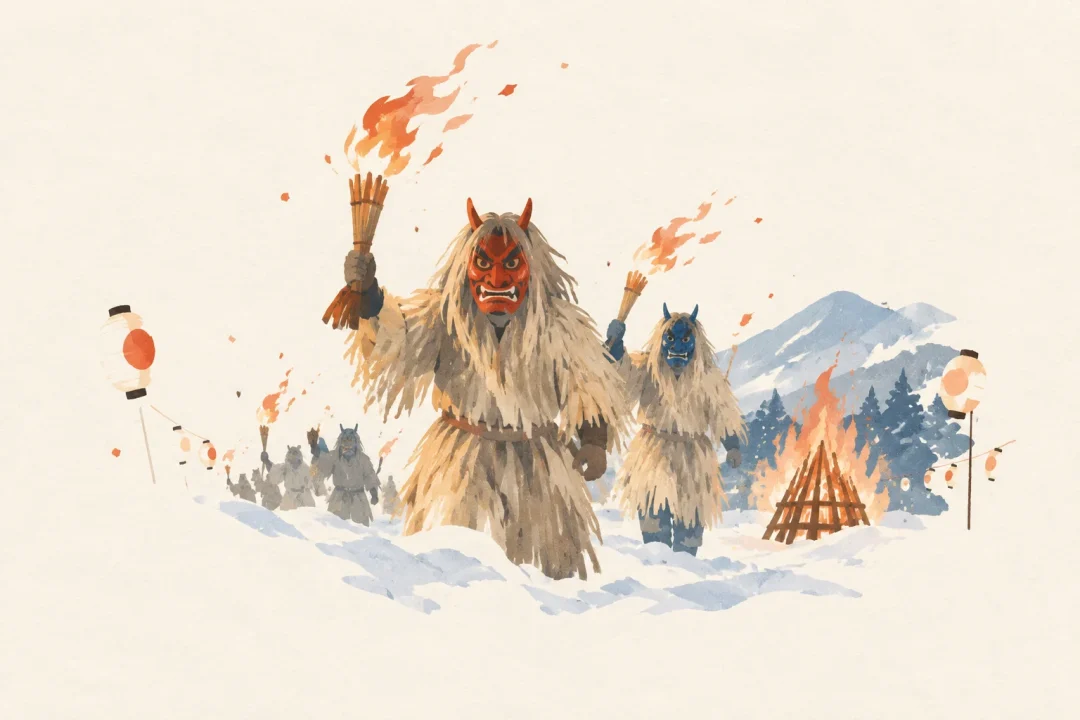
Namahage Sedo Festival
Oga's Namahage culture, illuminated by the saitō fire against the snowy mountain

Find one thing that catches your interest.
Find a little “first” beyond the familiar everyday. Why not start with a region or way of enjoying yourself that catches your interest, and see where it leads?
Find festivals