Why are Goshogawara Tachineputa so tall? Tracing the town’s memories and their revival
From towering lights to the town that welcomes them.
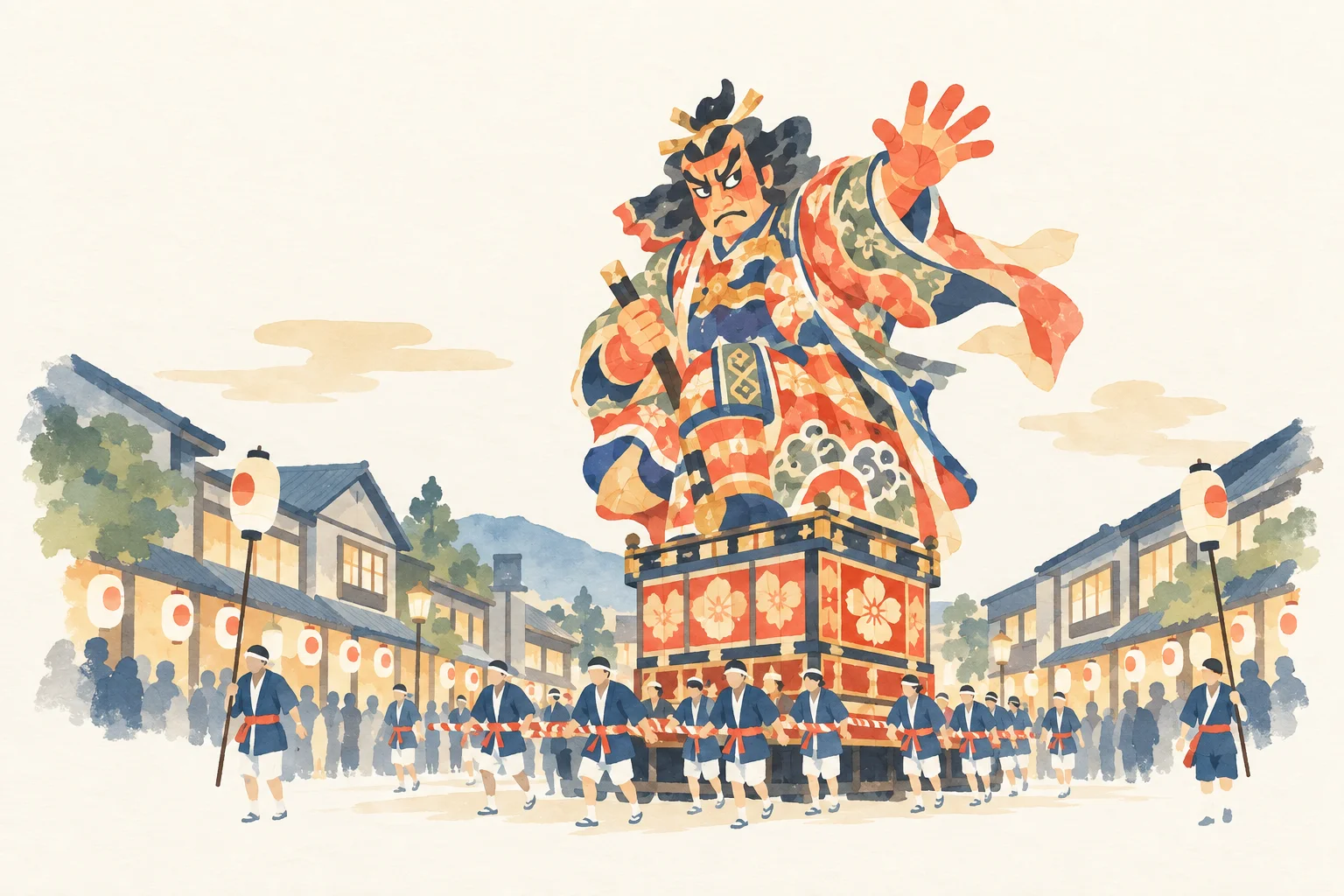
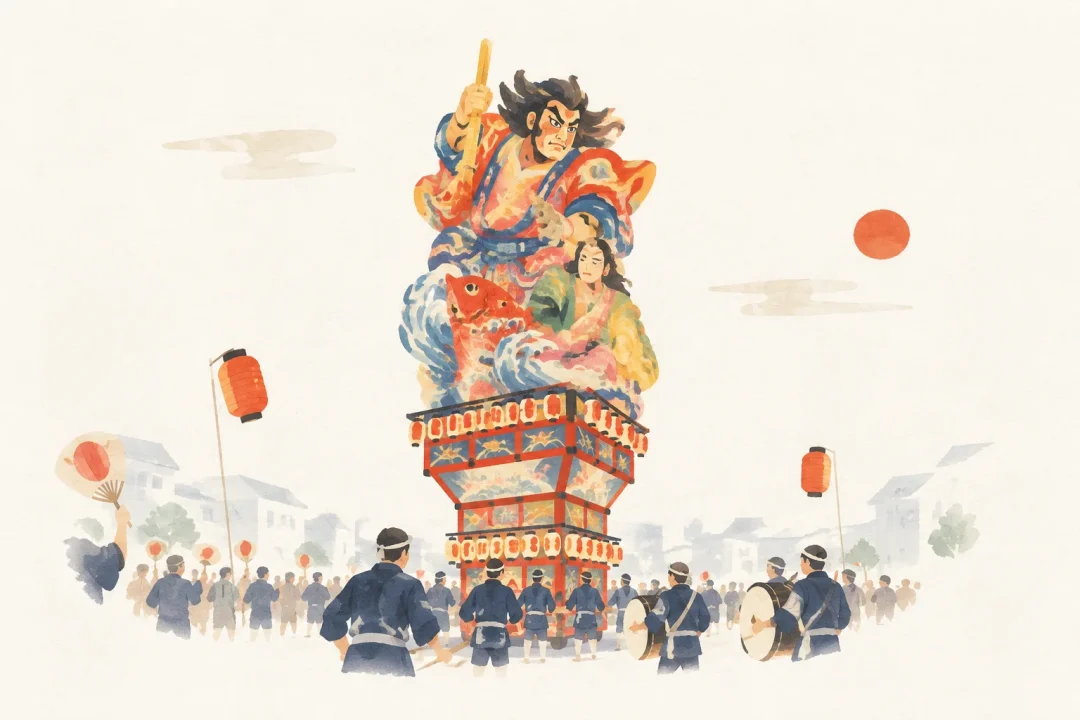
The Tachineputa that appear at night in Goshogawara are strikingly different from lanterns that spread out horizontally: they rise above the town. The amazement of looking up is reason enough to visit, but thinking about what it takes to move something so tall through the town reveals another side of the festival. Follow the connection between Tachineputa and the streets as a guide to enjoying the festival.
You understand the height better when you see it with the town
Aomori Prefecture’s tourism information introduces large Tachineputa that reach approximately 23 meters in height. The scale can be hard to imagine from numbers alone, but you can get a real sense of it by viewing the floats alongside the buildings along the route and the spectators. The same float can leave a very different impression when you spend time looking up at it nearby and when you view its full height from a little farther away. (Aomori Prefecture Tourism Information Website: “Goshogawara Tachineputa”)
If it’s your first time, try not to make getting a close-up shot your only goal. A composition that includes a few people or houses can capture the feeling of looking up from that spot. If you change viewing locations, follow the guidance given before and after the procession, and avoid moving in a way that means continually following right beside a moving Tachineputa.
Revival meant more than recreating the floats
The Goshogawara City Tourism Association describes how the procession of “Oyako no Tabidachi” began in 1998. Revival involved not only making the floats, but also preparations in the town, such as putting power lines underground and eliminating level changes. Building a large lantern and moving it through the streets were separate challenges. (Goshogawara City Tourism Association: “Tachineputa Feature”)
Knowing this background makes the roads and buildings in front of you part of the festival scenery, too. The height you look up at depends not only on the craftsmanship of the works, but also on the spaces the town makes available for them. Rather than assuming the festival is “something that has never changed,” consider seeing it as an effort to reconnect what was once interrupted.
Use the titles as a guide to what you see
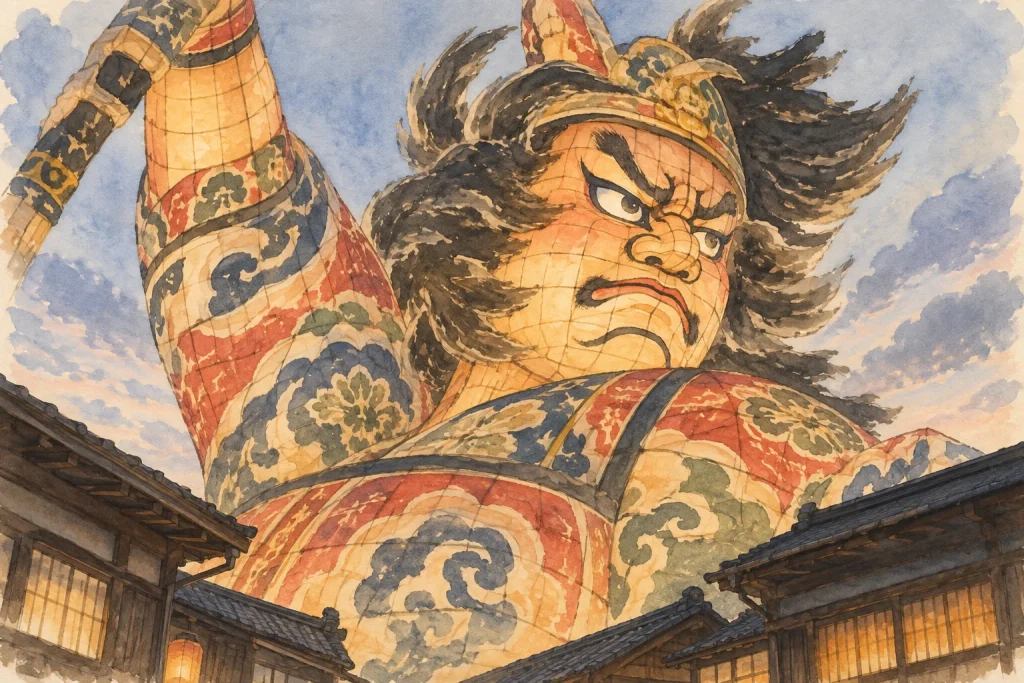
The tourism association’s list of past Tachineputa includes their production years and titles. Learning about the subject of each float can help you understand what scene its large face or objects represent. However, past works may not appear in the current year, so consult the historical list separately from the current year’s procession information. (Goshogawara City Tourism Association: “Past Tachineputa”)
Reading up on just 1 float is enough. Compare a float whose title you know with one whose shape and colors you enjoy without reading its description, and you may discover what kind of viewing suits you. Rather than aiming to explain the details of the story, putting into words what caught your eye can help the memory of your trip last longer.
Connecting a trip to watch the procession with a trip around town
The festival is held each year from August4 to 8. Check the current year’s announcements for daily processions, performers, and transport information. Even though the festival runs for 5 days, you may not be able to see what you want in the same way every day. (Goshogawara City Tourism Association: “Tachineputa Feature”)
| Stage of your trip | Things to decide in advance |
|---|---|
| Before you set out | Current-year procession dates, venue, and return transport |
| While it’s still light | Check your planned viewing spot and the way back |
| During the procession | Choose where to look up from, and follow directions first |
| After viewing | Remember the titles and note the details that caught your eye |
Exploring the town before the procession starts can help you enjoy it at ease. Rather than trying to find your way along unfamiliar streets after dark, get familiar with the open routes and the direction of the station so you can focus on the festival itself. The sight of the town, with people looking up, is part of what makes Goshogawara Tachineputa special.
Official information referenced
- Goshogawara City Tourism Association: “Tachineputa Feature”
- Goshogawara City Tourism Association: “Past Tachineputa”
- Aomori Prefecture Tourism Information Website: “Goshogawara Tachineputa”
This page is based on publicly available information from official sources, local governments, tourism associations, and other organizations. Information checked: 2026/10/01. Please check the official information for the year you plan to visit for dates, venue, traffic restrictions, and participation requirements.
Festivals related to this article
Goshogawara Tachineputa
A summer festival of giant illuminated floats and festival music moving through Goshogawara

Find one thing that catches your interest.
Find a little “first” beyond the familiar everyday. Why not start with a region or way of enjoying yourself that catches your interest, and see where it leads?
Find festivals