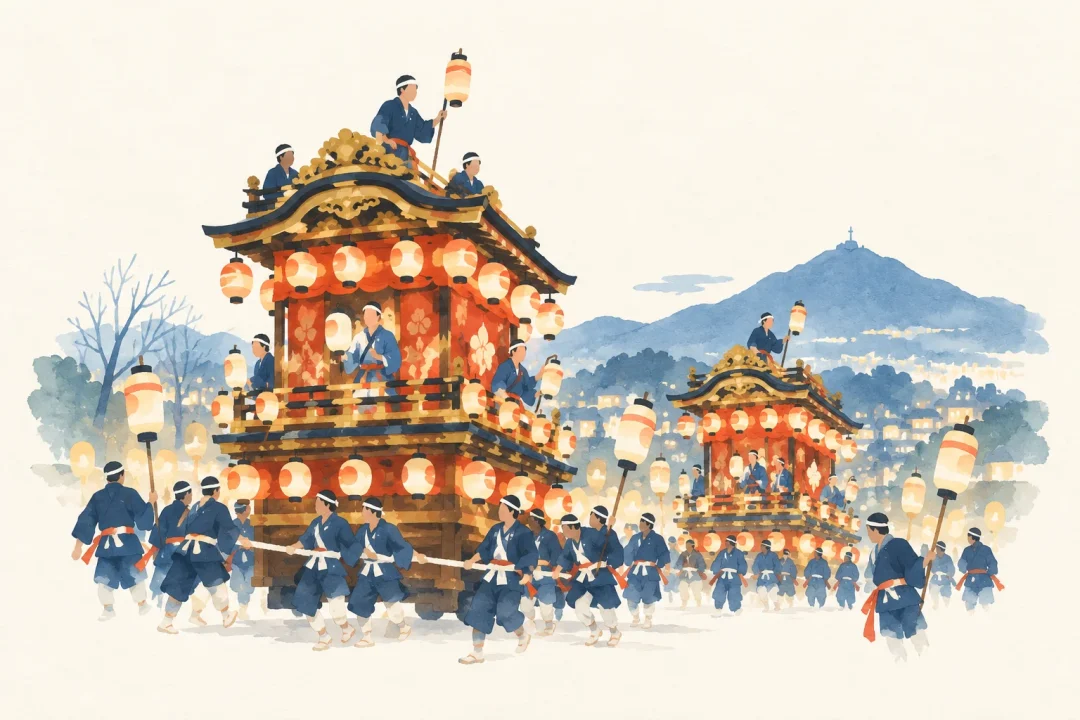
How are the spring and autumn Takayama Festivals different? Choose your trip by shrine, floats, and karakuri performances
The setting is different, even in the same Takayama. Enjoy the two festivals without confusing them.
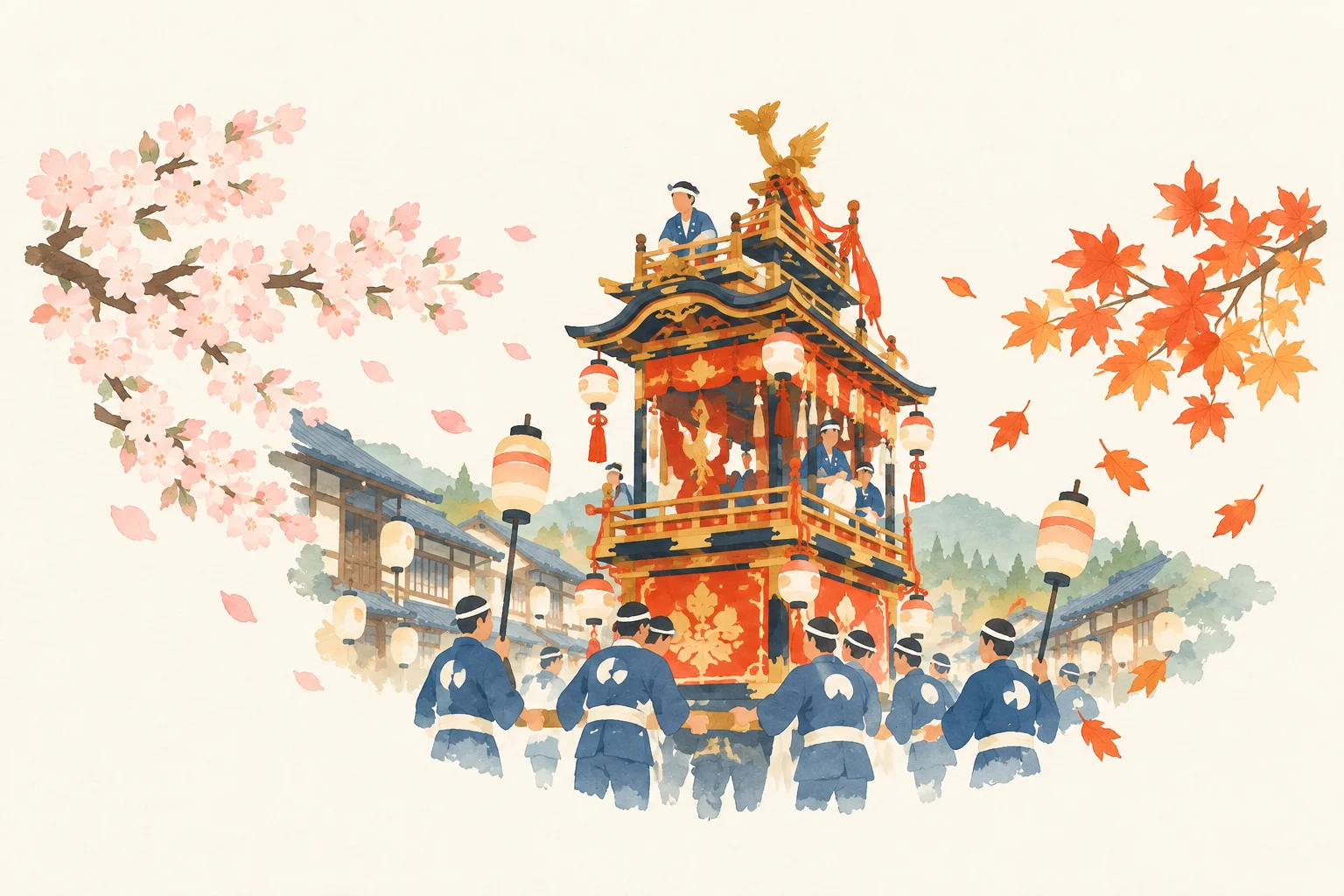
If you want to visit the Takayama Festival, the first decision is whether to go in spring or autumn. The spring Sanno Festival and autumn Hachiman Festival are not the same festival staged again every 6 months. The shrine at the heart of the festival and the floats on display are different. If you are planning a trip to see a float you liked in a photo, check which festival the photo is from.
Two settings: the spring Sanno Festival and the autumn Hachiman Festival
Takayama's tourism information presents the spring and autumn festivals separately. The spring Sanno Festival at Hie Shrine is held on April14 and 15 each year, while the autumn Hachiman Festival is held at Sakurayama Hachimangu Shrine. The autumn festival dates are October9 and 10 each year, and different floats from those in spring bring color to the town. First, remember “season, shrine, and venue” as a set to avoid misreading maps and event guides. (Hida Takayama Travel Guide: “How to Enjoy the Takayama Festival”) (Hida Takayama Travel Guide: “Autumn Takayama Festival”)
Rather than trying to compare both seasons at once, we recommend taking your first trip to focus on one of the festivals. If you also want to explore the townscape, set aside separate times for seeing the floats and shopping. If you go to a distant shop during overlapping event times, you may not be able to get back in time for the scene you came to see.
The floats are worth seeing even when they are not moving
The appeal of the floats lies not only in the excitement of the procession, but also in taking time to admire their decorations and construction. After taking in the whole float from a distance, shift your attention to the carvings, curtains, and area around the wheels. It is easy to focus on the colors and puppets, but observing where people handling the heavy floats stand and how much space is kept clear for them to move can also show how the floats relate to the town's street widths.
When viewing the floats, do not touch the decorations or approach the ropes or wheels to take photos. Even if a float appears to be stopped, preparations for its next movement may be underway. To capture the overall impression of the festival, consider taking some photos that frame a single float prominently and others that include people or buildings to show its scale.
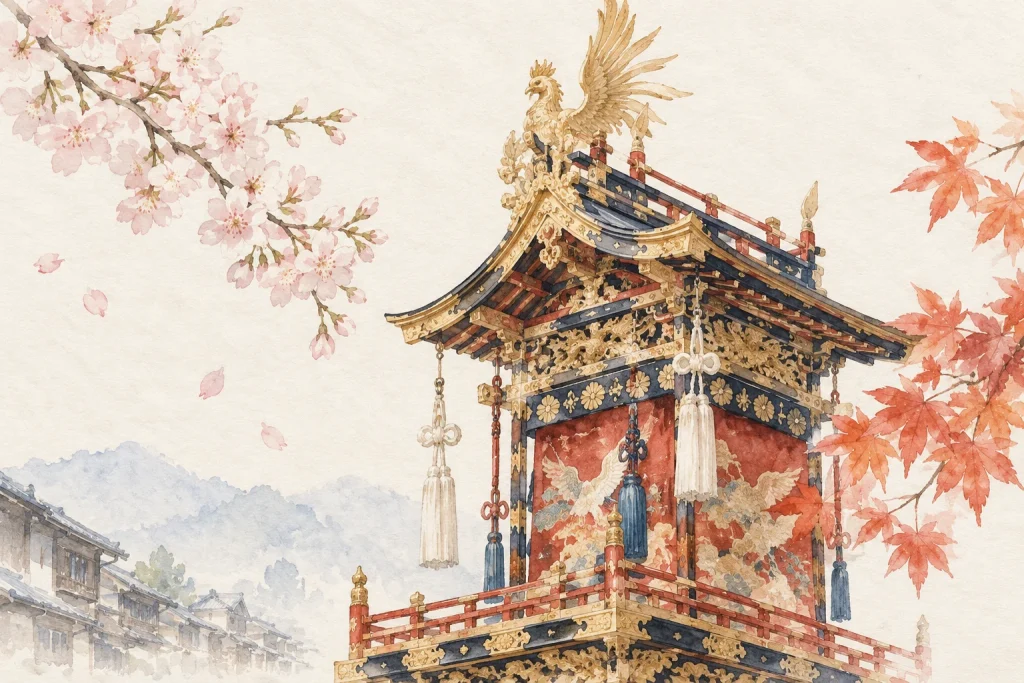
For karakuri performances, decide on the time and place first
The autumn Hachiman Festival features the karakuri puppet performance of Hotei-dai. It is not an event where the puppets move continuously just because you go to a place where the festival floats are lined up. If you want to watch, check the location and time of the performance in that year's event guide, then plan your day's travel around it.(Hida Takayama Travel Guide: “Autumn Takayama Festival”)
In addition to watching the puppets, notice the quiet before the action begins and where the spectators' attention is focused. Even without knowing how the mechanisms work in detail, you can still enjoy seeing how the small puppets' movements appear atop the large floats. Rather than suddenly pushing your way forward because the view is hard to see, it helps to plan for a spot with enough room to watch.
If rain is forecast, check each event separately
The Takayama Festival features precious floats, so outdoor events may be changed or canceled due to weather. The official festival guide also describes cases where the float storehouses are opened to the public in rainy weather. However, do not assume this is an alternative program that is always offered at every venue; check the announcements on the day. (Hida Takayama Travel Guide: “How to Enjoy the Takayama Festival”)
Travelers cannot change the weather, but they can prepare more options for what to do. Plan separately for time spent waiting for outdoor events, time spent indoors, and time to return to the station. It is also important not to reuse timetables from previous years, and instead to select the current year's edition from Takayama's brochure list. (Hida Takayama Travel Guide: “Brochures”)
Notes to prepare before booking
- Spring or autumn, and which festival features the float or karakuri performance you want to see.
- The start time and location of the event you want to watch, and where to find announcements in case of rain.
- How to travel from the station or your accommodation to the venue, and routes during traffic restrictions.
- Whether to stay for the evening events or head back while it is still light.
The first step to enjoying the Takayama Festival is not to pack in as many events as possible. Understand the differences between spring and autumn, and decide whether you want to spend your time on the floats, karakuri performances, or townscape. It is part of the appeal of the Takayama Festival that a second trip to the same town can bring you to a different festival from the one you saw the first time.
Official sources consulted
- Hida Takayama Travel Guide: “Autumn Takayama Festival”
- Hida Takayama Travel Guide: “How to Enjoy the Takayama Festival”
- Hida Takayama Travel Guide: “Brochures”
This guide is based on publicly available information from official sources, local authorities, and tourism associations. Information checked: 2026/10/01. Please check the official information for the year of your visit for dates, venues, traffic restrictions, and participation requirements.
Festivals related to this article
Takayama Festival
An autumn festival in Hida-Takayama, filled with master-crafted and lantern-lit processions

Find one thing that catches your interest.
Find a little “first” beyond the familiar everyday. Why not start with a region or way of enjoying yourself that catches your interest, and see where it leads?
Find festivals