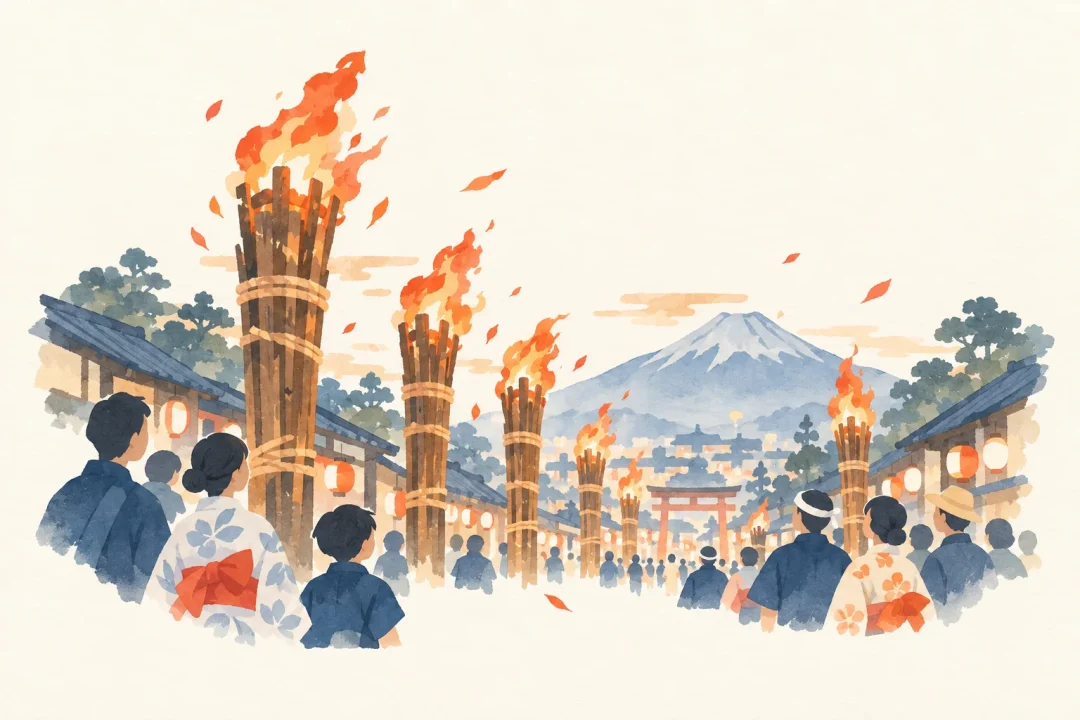
A night in Okumikawa filled with the deities’ dialogue and dances around a cauldron for heating water
Sankō Festival
Festival information
EVENT INFORMATION- Season / frequency
- The 2nd Saturday of November each year / Once a year
- Location
- Mitsuhashi / Tsushima Shrine
- Area
- Aichi Prefecture・Shitara Town(From Tokyo: approx. 1 h 40 min–2 h · bullet train)Prefecture-level estimate to a main station or airport, not the venue. Airport access, check-in and onward travel are extra; remote areas and islands can take much longer.
- Participation / viewing
- Spectators welcome
- Participation fee
- Free
- Last updated
- 2026/10/19
The Sankō Festival, which passes down dialogues and dances by deities, is held at Tsushima Shrine in Mitsuhashi, Shitara Town. It is a local folk performing art rooted in the community, combining with visiting-deity performances and dances of the Seven Lucky Gods.
About Sankō Festival
The Sankō Festival is a folk performing art passed down at Tsushima Shrine in Mitsuhashi, Shitara Town.
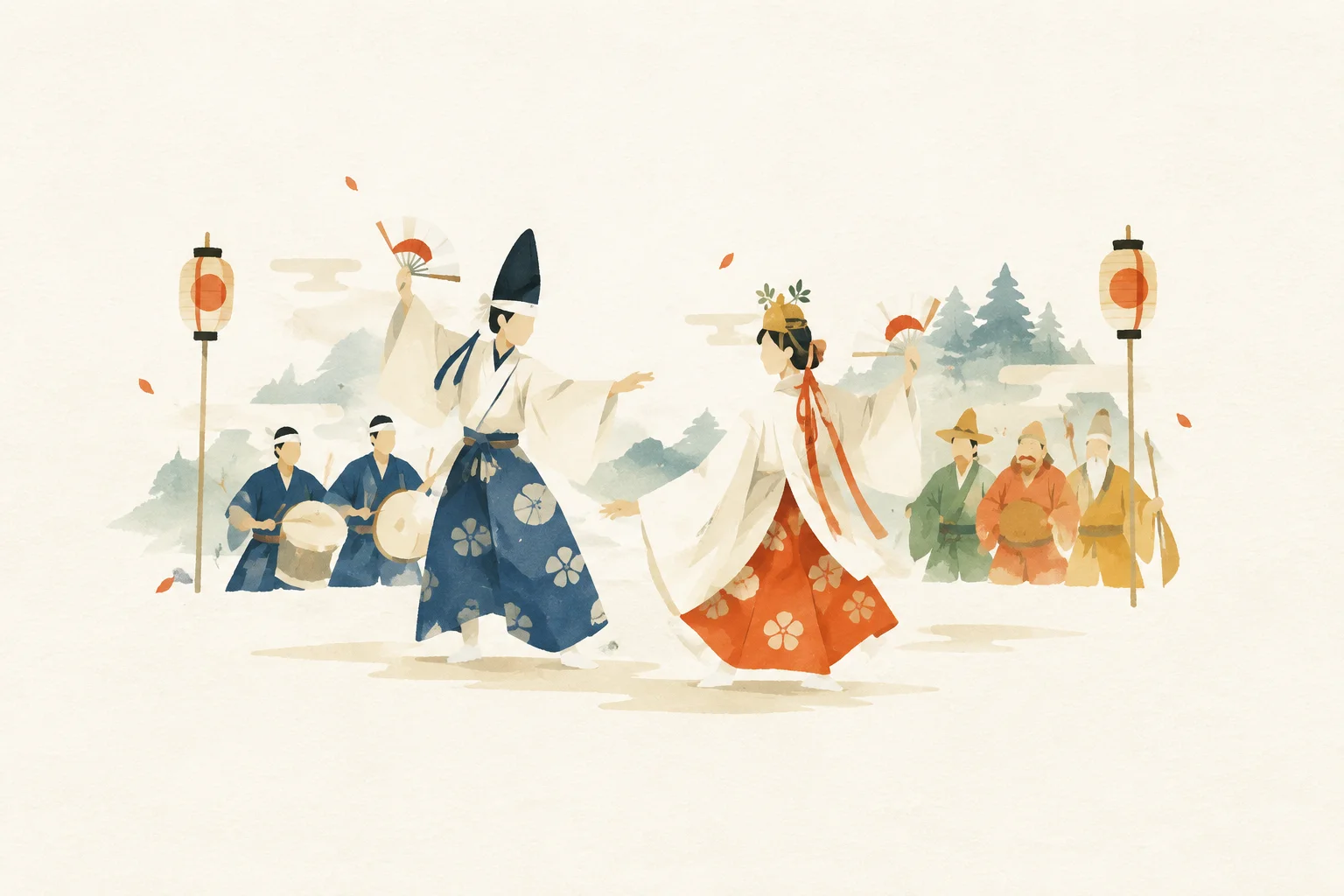
Deities such as the Seven Lucky Gods exchange dialogue with the priest and then announce themselves with the words “Sankō” before performing dances and water-heating rites.
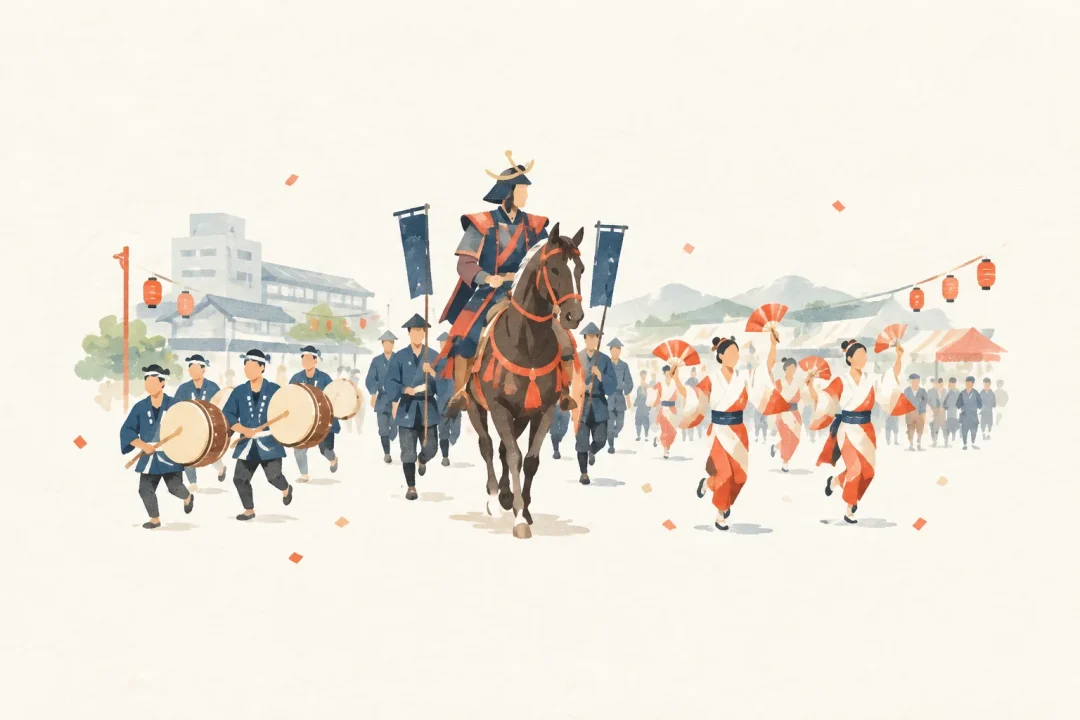
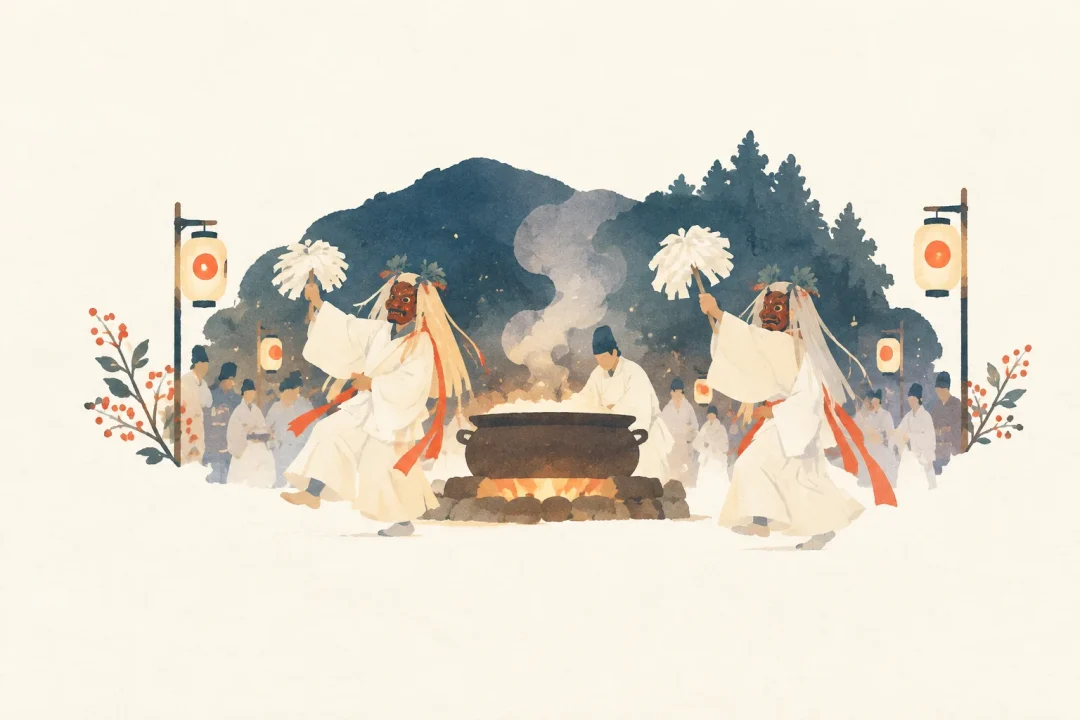
A procession takes place in the afternoon, and at night, performances by the deities unfold around a cauldron for heating water.
The festival is rich in local character, bringing together dengaku, visiting-deity performances, and dances of the Seven Lucky Gods.
Festival highlights
A highlight is the distinctive dialogue between the deities and the priest in the dance courtyard, where a cauldron for heating water is set up.
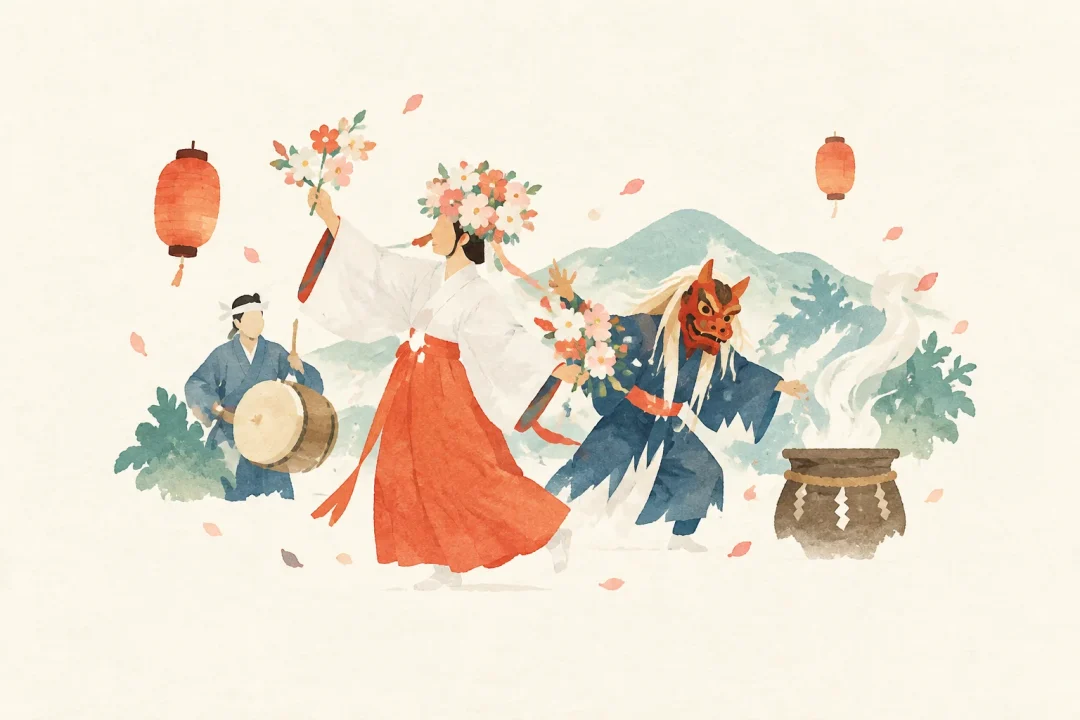
After Fudo Myoo, Ebisu, Bishamonten, Daikokuten, and Benzaiten each dance with different objects in their hands. Hotei, Jurojin, and Fukurokuju also appear.
At night, the dances continue in the lit by large torches, and the festival concludes with the dengaku-style “Koma,” “Tonomen,” and “Saiharai-men and Lion” performances.
Source: 国指定文化財等データベース
A night in Okumikawa filled with the deities’ dialogue and dances around a cauldron for heating water
What to expect
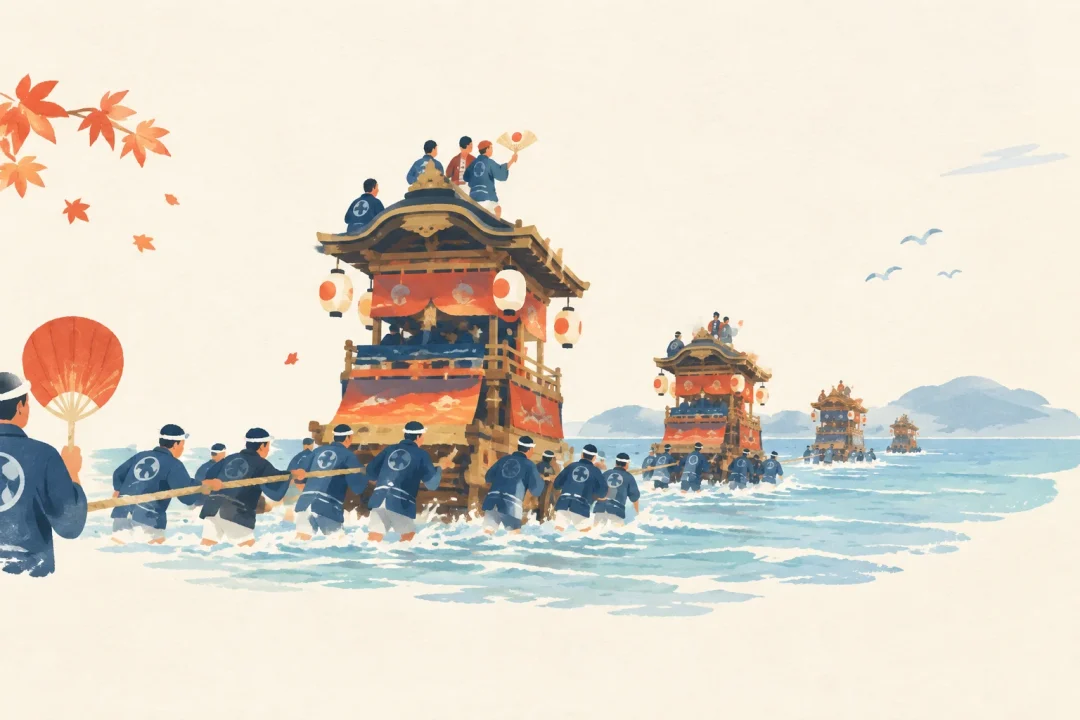
The festival begins in the afternoon with a mikoshi procession, during which the Eleven-Faced Kannon is moved from Kannon-do to Tsushima Shrine.
At night, the priest recites prayers and heats water. Fudo Myoo and the Seven Lucky Gods appear in turn to engage in dialogue and dance.
These are followed by Taiheiraku, gestures by three deities, and performances featuring the Koma, Tonomen, and lion. The next morning, the mikoshi is returned to Kannon-do, bringing the series of events to a close.
How to take part
Visitors can watch the event.
参加費:無料
Location and access
- Venue and address
Mitsuhashi Tsushima Shrine.
2 Uchigaizu, Mitsuhashi, Shitara Town, Kitashitara District, Aichi Prefecture.
- Train and bus
Take the JR Iida Line from Toyohashi Station to Hon-Nagashino Station, then transfer to the Toyotetsu Bus and the town-operated Mitsuhashi-Hōhō Line. Get off at Oritate and walk for 3 minutes.
- By car
About 40 minutes via Routes 151 and 257 from Shinshiro IC on the Shin-Tomei Expressway.
Source: 参候祭 | イベント検索 | 【公式】愛知県の観光サイトAichi Now
Address 2 Uchikaizu, Mitsuhashi, Shitara Town, Kitashitara District, Aichi Prefecture
Dates and season
Sankō Festival is held on the second Saturday of November in most years. Mikoshi processions and other events begin in the afternoon, and the Seven Lucky Gods’ dance is performed at night.
Accommodation and hotels PR
Showing nearby accommodation.
Prices and availability are current at the time of retrieval. For multi-night stays, only the first night’s price is shown. Confirm the final price and directions to the venue with the booking provider. Select your dates again when using the area search link. Search area: within 3 km of Central Aichi Prefecture / Shitara Town (the search is not centered on the festival venue)
Tips for your visit
The nighttime dances take place outdoors in the shrine grounds, so warm clothing suitable for the mountainous area in November is necessary.
Since information indicates that the Seven Lucky Gods’ dance begins at night, you may wish to plan whether to arrive in the afternoon to see the mikoshi procession or to attend the evening program.
Public transportation is said to be infrequent, so check your return transport options in advance as well.
Nearby attractions
In the Okumikawa area of Shitara Town, the same area where Sankō Festival is held, cultural attractions include Dame Kannon and the ruins of Dame Castle.
Dame Kannon is also known for its dedicated kabuki performances, while the ruins of Dame Castle are presented as the remains of a mountain castle.
Visiting the festival along with the area’s historical and cultural sites offers a chance to learn about the performing arts passed down in Shitara Town and the region’s background.
Origins and History of Sankō Festival
The Sankō Festival is believed to have developed from dengaku-style performing arts and to be connected to the “Oritate Gozu Tenno Hachioji Dengaku Festival,” mentioned in records from the Eiroku period.
Over a long tradition, visiting-deity performances that bring blessings and dances of the Seven Lucky Gods were added, shaping the festival into its present form.
In 1996, it was selected as an Intangible Folk Cultural Property for which the national government should take measures such as creating records.
Official information
The Agency for Cultural Affairs’ Database of Nationally Designated Cultural Properties lists the Sankō Festival as an “Intangible Folk Cultural Property for which measures such as creating records should be taken.”
The preservation group is the Sankō Festival Preservation Society.
Event announcements and transportation information are also available on Aichi Prefecture’s tourism website.
Sankō Festival at a Glance
The Sankō Festival is a folk performing art passed down at Tsushima Shrine in Uchikaizu, Mitsuhashi, Shitara Town, combining dengaku, visiting-deity performances, and dances of the Seven Lucky Gods.
It begins with a mikoshi procession, followed at night by deities gathering around a cauldron for heating water to exchange dialogue with the priest and perform dances.
The 2026 date is currently being confirmed, but the festival is usually held on the 2nd Saturday of November.
Japanese Festivals.jp Editorial Team
Celebrating local culture and helping you discover a side of Japan you never knew.
Article updated: 2026/10/19
Submit information or a correction Submit photos of this festival