Discover Nagasaki Kunchi through its neighborhoods: Odoricho, Kasaboko and Niwasakimawari
Behind the spectacular performances lie a role that comes around every 7 years and the life of the neighborhoods.
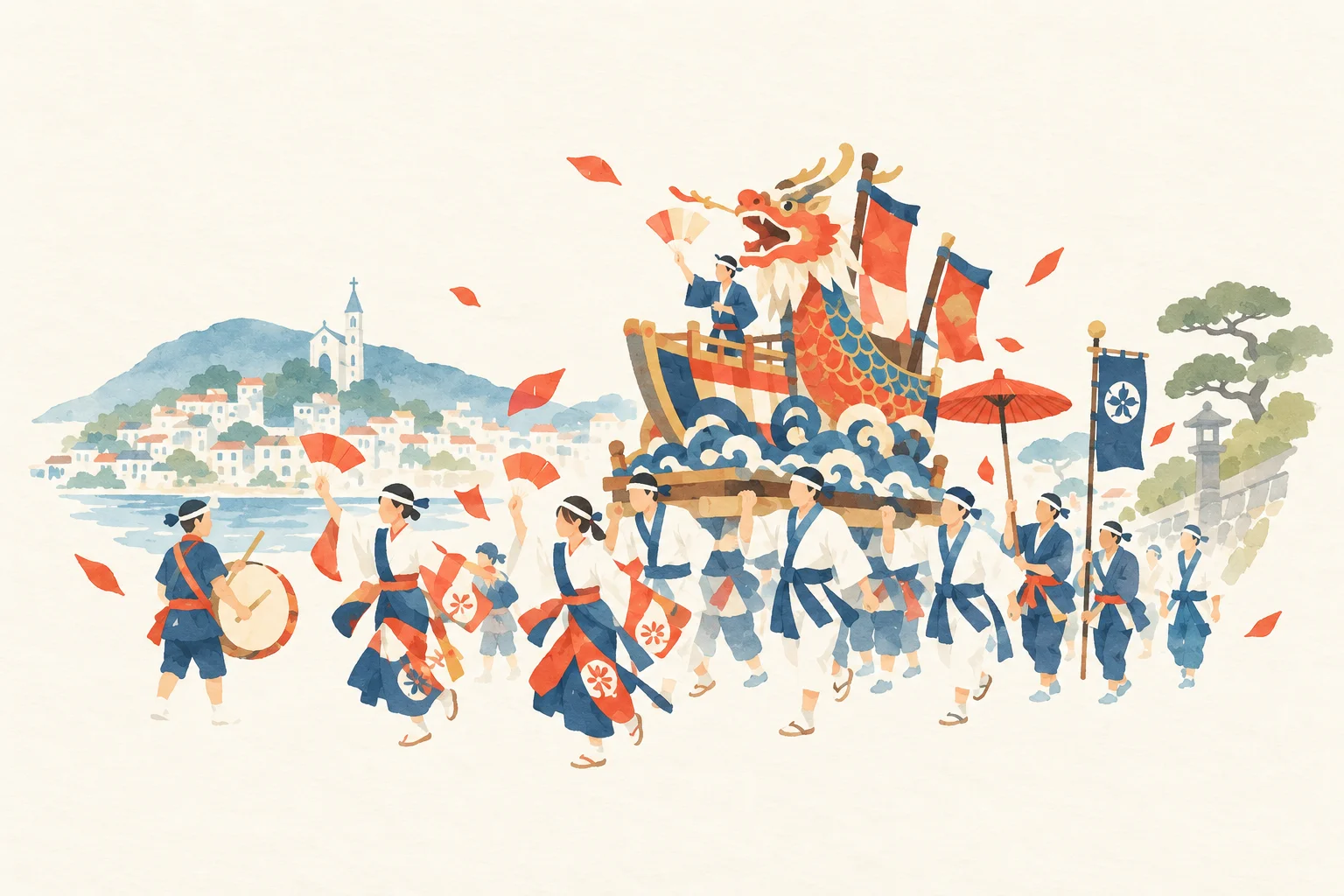
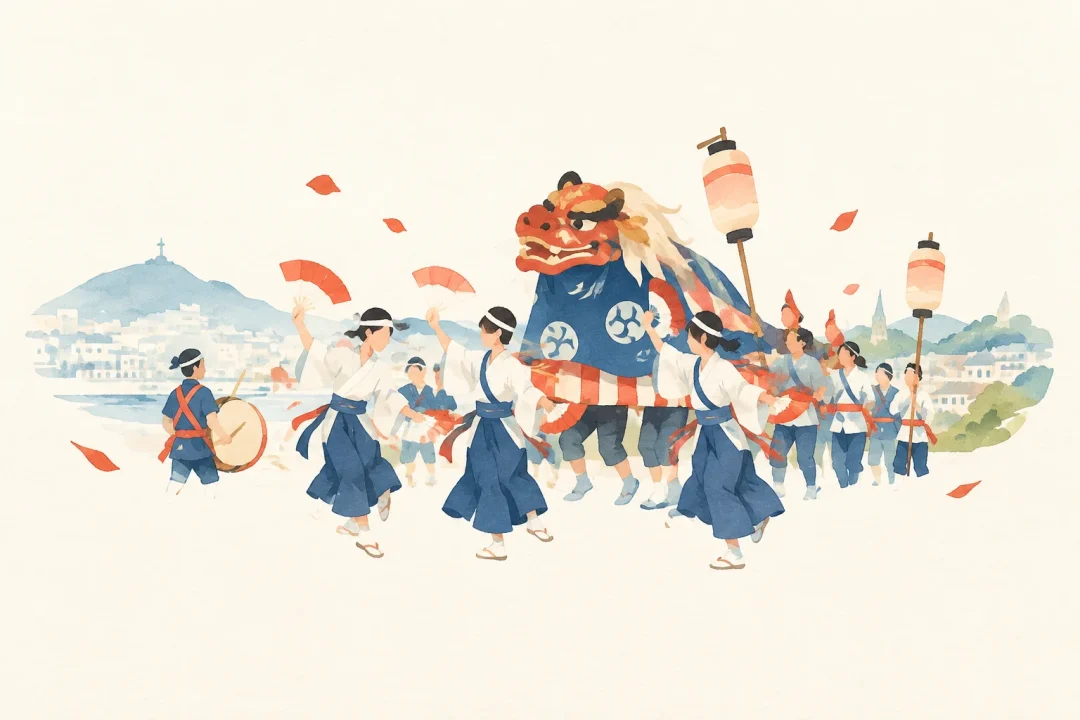
Photos of Nagasaki Kunchi draw the eye to floats shaped like boats and dragon performances. But the first term visitors should learn is “odori-cho” (the towns responsible for the performances). Before deciding what to watch, find out which towns are responsible for this year’s offerings. With that in mind, the costumes and props you encounter along the streets begin to connect as parts of a single story.
A festival held every year, but not every town takes part each year
Nagasaki Kunchi is Suwa Shrine’s autumn festival, held annually from the 7th to the 9th of October. The Nagasaki Traditional Performing Arts Promotion Association says the festival began with an offering in 1634, and explains that the odori-chō neighborhoods take turns presenting performances every 7 years. The festival takes place every year, but a particular neighborhood does not perform every year. (Nagasaki Traditional Performing Arts Promotion Association, “About Nagasaki Kunchi”)
This system also affects how visitors choose to plan their trips. A performance you saw in a past video may not be performed again the following year. Think of “going to Nagasaki Kunchi” and “going to see a particular town’s performance” as separate things, and check the official list of odori-cho to see which towns are taking part this year. Note down the town and performance names together to make venue information easier to follow.
The parasols and costumes reflect each town’s character
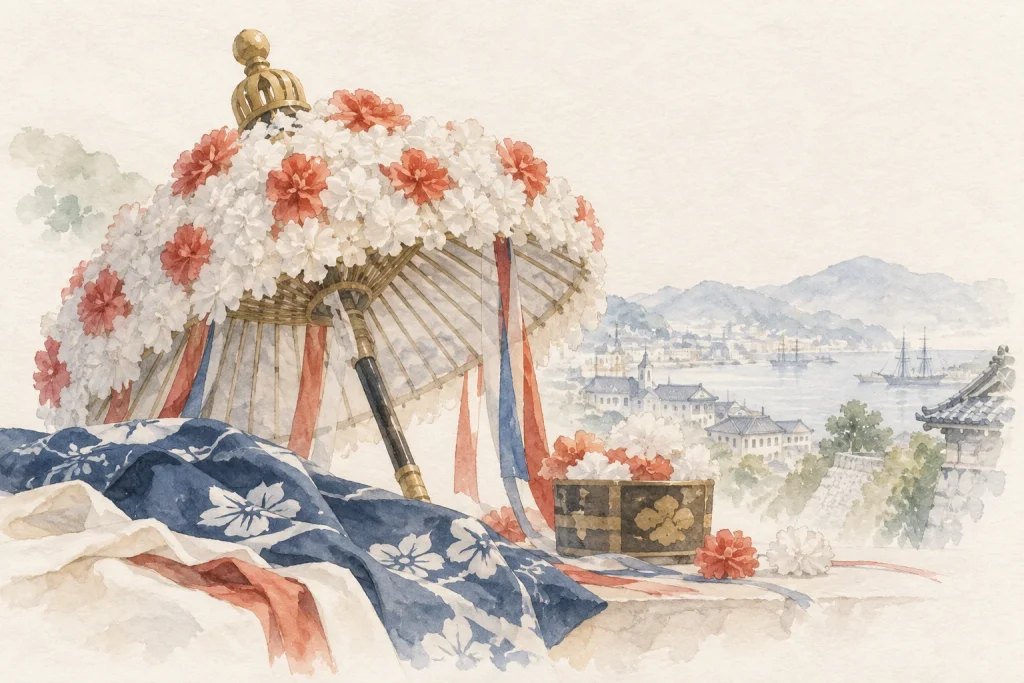
If you focus only on the large, moving floats, it is easy to miss the decorations and costumes. The “,” held before the festival, offers a way to discover these details. According to Nagasaki City’s tourism information, umbrellas, costumes, props, musical instruments, and gifts are displayed on October 3. Here, you can view designs that are hard to take in during a performance from a different vantage point. (Nagasaki City Official Tourism Website, “Nagasaki Kunchi Niwamise”)
There’s more to compare than just the beauty of the colors and decorations. Seeing where the props are placed and what is displayed alongside them can help you appreciate how much preparation goes into the festival. However, follow each town’s guidance on where displays are located. Even at events open to the public, the venue may include areas around shops and homes, so take care not to block entrances or enter places that are not open to the public.
View the offering venues and niwasaki mawari differently
In addition to venues such as Suwa Shrine, Nagasaki City provides information about “,” when performers visit homes and shops in the city center. It is easier to plan if you distinguish between watching a full performance and walking through the town to encounter the procession. Niwasaki mawari is not something to watch by stopping the moving odori-cho to suit the audience. (Nagasaki City, “When and where can I watch?”)
If it’s your first time, we recommend centering your trip on a venue whose viewing conditions you’ve checked, then consulting the official map for niwasaki mawari if you have enough time to get around. On days when you walk through the town streets, avoid planning to visit too many towns, and keep track of your current location and the station or tram stop you’ll return to so you can adjust if plans change. Even if you catch only part of a performance, knowing about the relationship between the town and the people who perform it can change how it stays with you.
4 things to check before your first Kunchi
- This year’s odori-cho and performances: don’t rely only on past photos or videos.
- Viewing locations and ticket conditions: check the venue name, date, time slot, and entry method together.
- Information on Niwamise and niwasaki mawari: read the official information for each as a separate event.
- Getting around and returning: take traffic restrictions into account and plan your route from the last place you’ll visit to your accommodation or station.
Rather than seeing Nagasaki Kunchi only as “a series of spectacular performances,” walk around asking yourself, “What does each town value?” The parasols, costumes, voices, and crowds gathered outside shops offer clues. Even if you travel to see a particular performance, remembering the name of one town on your way home should make news about the next Kunchi feel a little more familiar.
Official information consulted
- Nagasaki Traditional Performing Arts Promotion Association, “About Nagasaki Kunchi”
- Nagasaki City, “When and where can I watch?”
- Nagasaki City Official Tourism Website, “Nagasaki Kunchi Niwamise”
Compiled from publicly available information from official sources, local governments, tourism associations, and others. Information checked: 2026/10/01. Please check the official information for the year of your visit for dates, venues, traffic restrictions, and participation requirements.
Festivals related to this article
Nagasaki Kunchi
Traditional Nagasaki dedication performances in a vibrant blend of cultures

Find one thing that catches your interest.
Find a little “first” beyond the familiar everyday. Why not start with a region or way of enjoying yourself that catches your interest, and see where it leads?
Find festivals