Yudate kagura and masked dances passed down through three festivals
Tenryu Village’s Shimotsuki Kagura
Festival information
EVENT INFORMATION- Season / frequency
- Usually in early January
- Location
- Suwa Shrine in Sakabe, Amaterasu Omikami Shrine in Mukai, and Ike Shrine in Okochi
- Area
- Nagano Prefecture・Tenryu Village(From Tokyo: approx. 1 h 20 min–1 h 50 min · bullet train)Prefecture-level estimate to a main station or airport, not the venue. Airport access, check-in and onward travel are extra; remote areas and islands can take much longer.
- Wishes behind the festival
- Last updated
- 2026/10/19
A traditional performing art featuring yudate rituals and dances, passed down in three districts of Tenryu Village, Nagano Prefecture.
About Tenryu Village’s Shimotsuki Kagura
Tenryu Village’s Shimotsuki is a folk performing art passed down in Tenryu Village, Shimoina District, Nagano Prefecture.
It is performed in Shimotsuki—that is, lunar calendar: November—as kagura expressing gratitude to the gods for the harvest. The name collectively refers to the kagura performed at Mukai’s Okishime Festival, Sakabe’s Winter Festival, and the annual festival of Okochi Ike Shrine.
All three preserve the form of yudate kagura.
Source: 天龍村の霜月神楽 - Wikipedia
Festival highlights
A highlight is the way the festival combines kagura and yudate rituals.
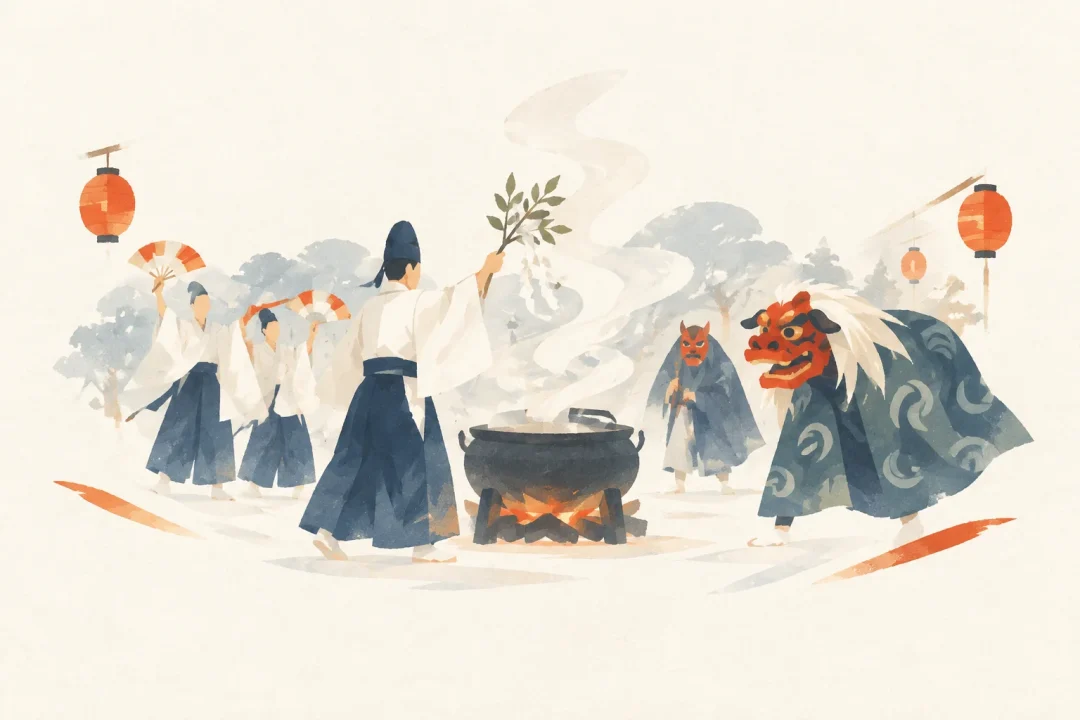
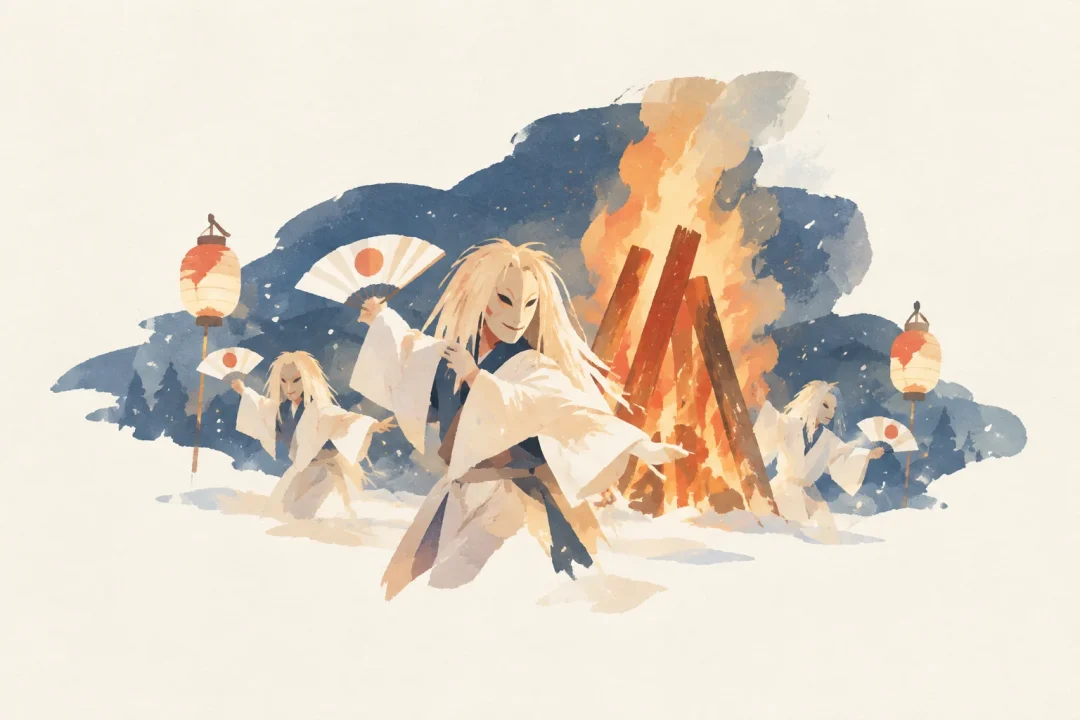
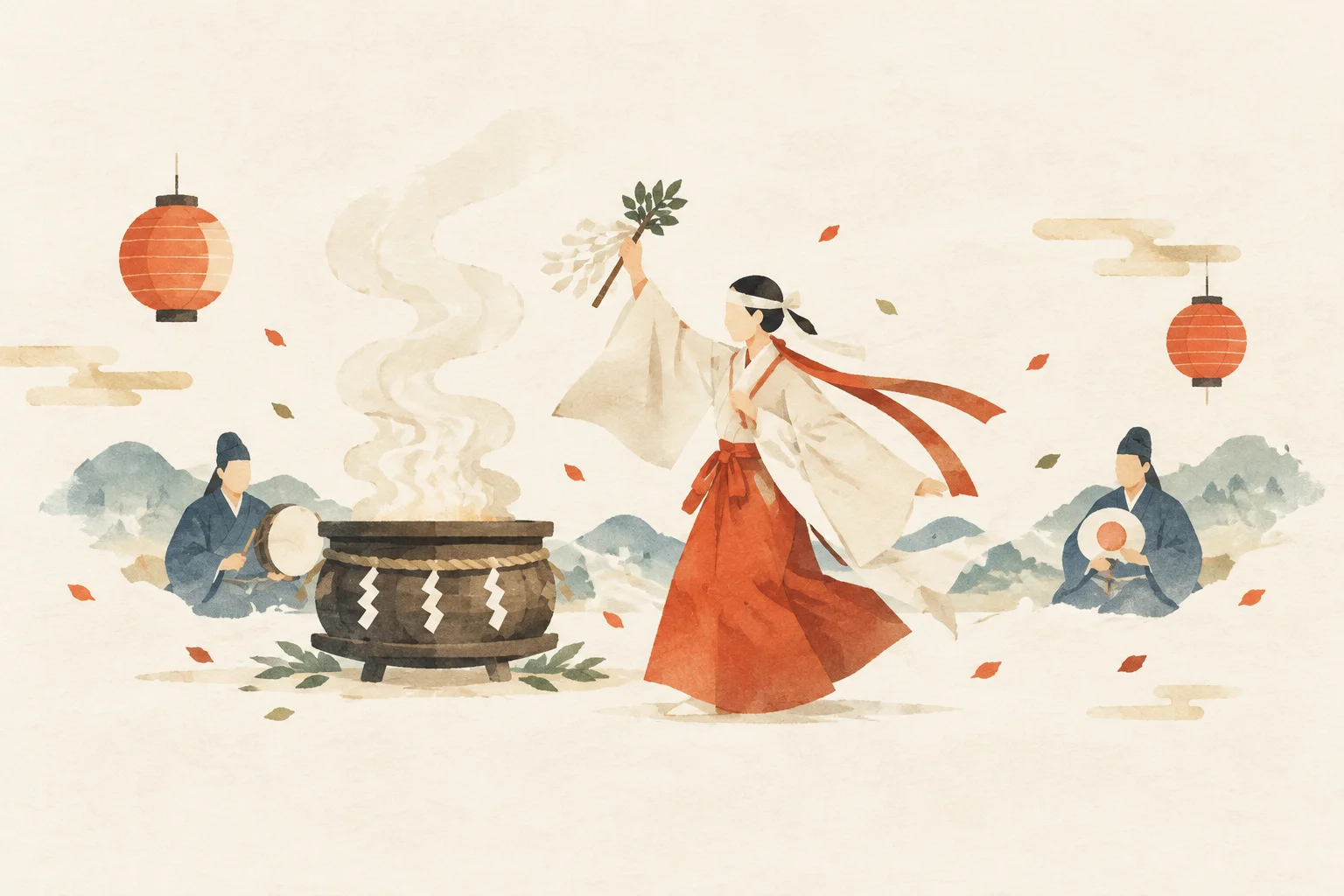
In Mukai, several yudate rituals and dances are performed in succession. In Sakabe, performances include the “Flower Dance” by boys in white robes and flower hats, dances using various masks, and ritual movements by the Water King and Fire King.
The dances, masks, and yudate rituals also vary from one festival to another.
Yudate kagura and masked dances passed down through three festivals
What to expect
The festival proceeds through , ceremonies, dances, and yudate rituals.
In Mukai, on the morning of the festival day, representatives of the parishioners perform misogi in the river, and yudate kagura is offered from the evening onward.
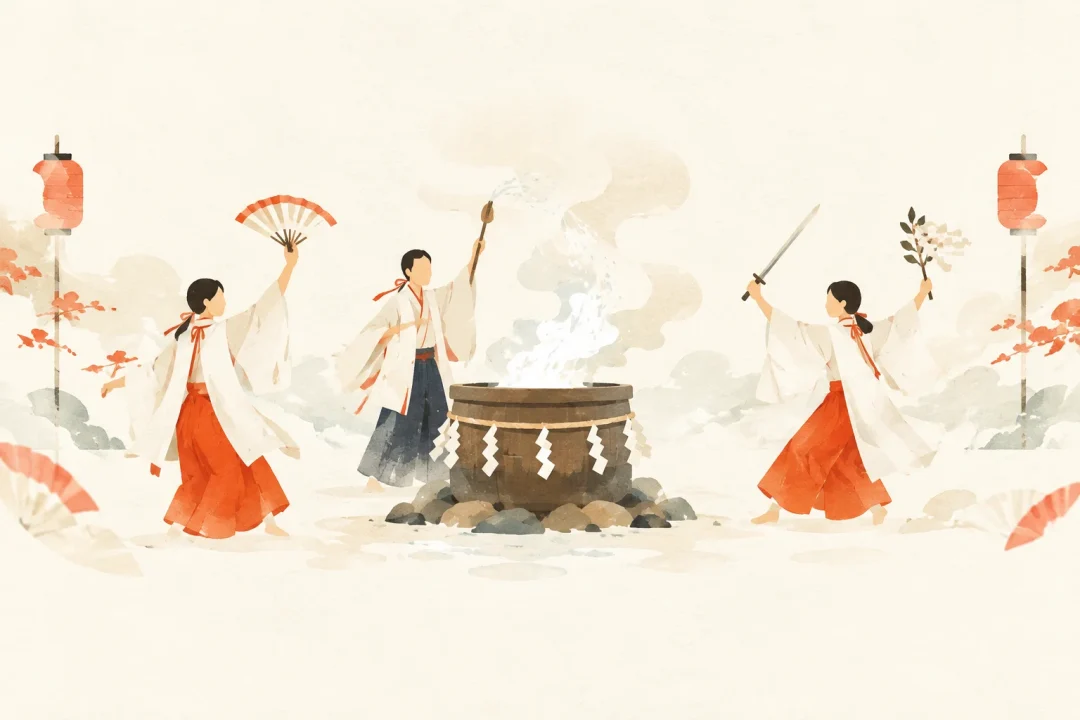
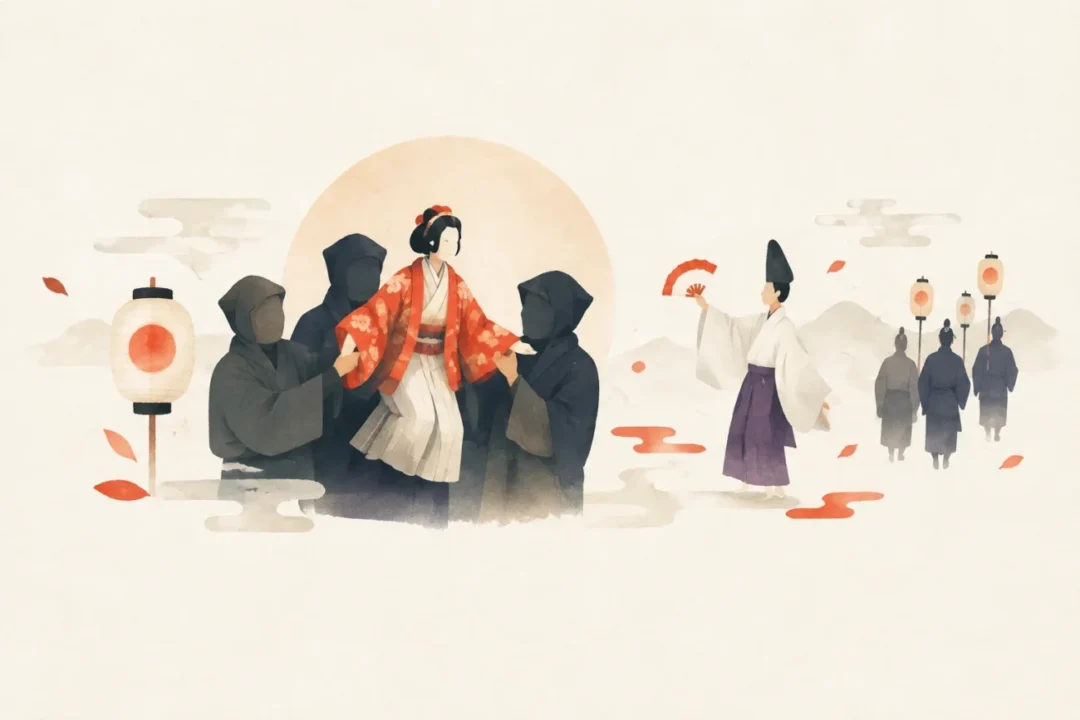
In Sakabe, the program continues with misogi in the Tenryu River and a procession, a ceremony before the gods, a dance by the miko, yudate rituals, and masked dances, concluding with a fire-prevention dance.
Location and access
- Venue and address
The festivals are held at Suwa Shrine in Sakabe, Amaterasu Omikami Shrine in Mukai, and Ike Shrine in Okochi.
The location is in the mountainous area of southern Nagano Prefecture.
Source: 国指定文化財等データベース
Event venue 長野県天龍村 坂部の諏訪神社
This map uses the venue name. Check the official guide for the event area and entrances.
Dates and season
- Season
Usually in early January
Accommodation and hotels PR
Showing nearby accommodation.
Prices and availability are current at the time of retrieval. For multi-night stays, only the first night’s price is shown. Confirm the final price and directions to the venue with the booking provider. Select your dates again when using the area search link. Search area: within 3 km of Central Nagano Prefecture / Tenryu Village (the search is not centered on the festival venue)
Origins and History of Tenryu Village’s Shimotsuki Kagura
Shimotsuki Kagura has been passed down as kagura expressing gratitude to the gods for the harvest in lunar calendar: November.
In Tenryu Village, the kagura performed at the three festivals in Mukai, Sakabe, and Okochi is collectively called “Tenryu Village’s Shimotsuki Kagura.”
In Showa 53, Shimotsuki Kagura associated with these festivals was designated an Important Intangible Folk Cultural Property of Japan, recognizing it as a folk performing art passed down in the region.
Source: 文化財 – 天龍村
Official information
The Tenryu Village Office’s cultural properties guide provides a list of cultural properties in the village, including Tenryu Village’s Shimotsuki Kagura.
The Hachijuni Cultural Foundation’s “List of Tenryu Village Festival Locations” provides the names of the districts and shrines where the festivals take place.
Tenryu Village’s Shimotsuki Kagura at a Glance
Tenryu Village’s Shimotsuki Kagura is a yudate kagura passed down through three festivals: Mukai, Sakabe, and Okochi.
Misogi, dances, yudate rituals, and masked dances are performed at each festival, expressing gratitude to the gods and prayers for health and protection from illness.
It is usually held in early January and is designated an Important Intangible Folk Cultural Property of Japan.
Japanese Festivals.jp Editorial Team
Celebrating local culture and helping you discover a side of Japan you never knew.
Article updated: 2026/10/19
Submit information or a correction Submit photos of this festival