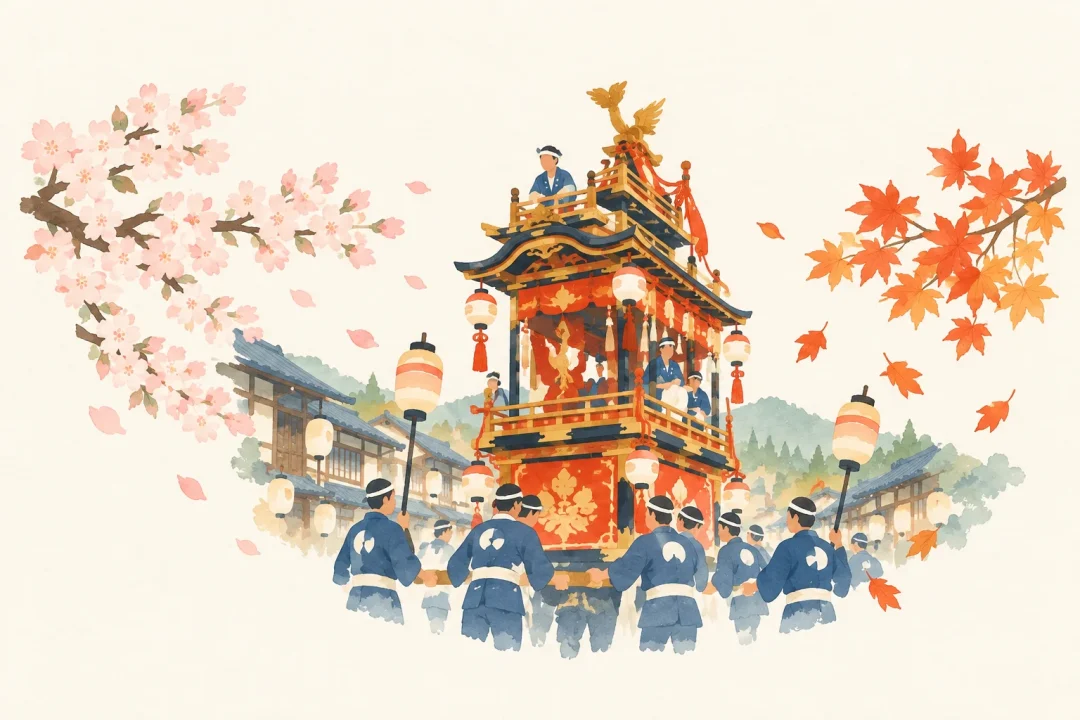
A traditional Hattasan performance praying for an abundant harvest through seven stages of rice cultivation
Hattasan Taasobi

Festival information
EVENT INFORMATION- Season / frequency
- Every January 7 / Every year
- Location
- Shosondo Hall (formerly Daishido Hall), Hattasan Son’eiji Temple
- Area
- Shizuoka Prefecture・Fukuroi City(From Tokyo: approx. 1 h–1 h 30 min · bullet train)Prefecture-level estimate to a main station or airport, not the venue. Airport access, check-in and onward travel are extra; remote areas and islands can take much longer.
- Features
- Highlights and activities
- Wishes behind the festival
- Participation / viewing
- Spectators welcome
- Last updated
- 2026/10/19
A springtime fertility rite passed down at Hattasan Son’eiji Temple, in which the movements of rice cultivation are expressed through seven dances. The procession, rice-planting dance, and firing of the large bow offer a glimpse of the farming culture passed down in the area.
About Hattasan Taasobi
Hattasan Taasobi is a folk performance held in conjunction with Shusho-e, a New Year’s observance at Hattasan Son’eiji Temple.
It imitates the work involved in rice cultivation and is considered a fertility rite that celebrates a good harvest in advance, thereby securing abundance from the deities and Buddhas.
It has been passed down by villagers in the temple’s surrounding settlement and continues as a local performance in seven stages.
Source: しずおか文化財ナビ 法多山の田遊び|静岡県公式ホームページ
Festival highlights
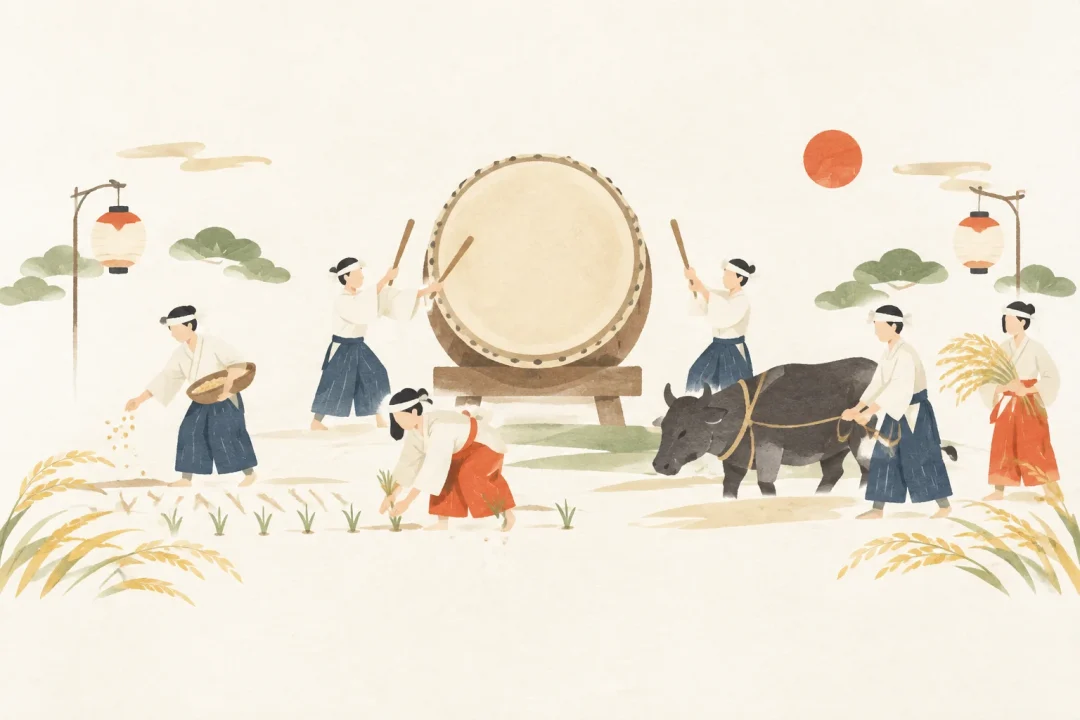
A highlight is the seven-part sequence that begins by purifying the area with sword and staff dances, then moves on to plowing, sowing seeds, chasing birds, and planting rice.
The skin of a large drum represents a rice paddy, while songs and movements depict farm work.
In particular, the Soutome stage features planters wearing flower hats and performers playing the kakko drum, who dance out the scene of rice planting.
Source: 国指定文化財等データベース
A traditional Hattasan performance praying for an abundant harvest through seven stages of rice cultivation
What to expect
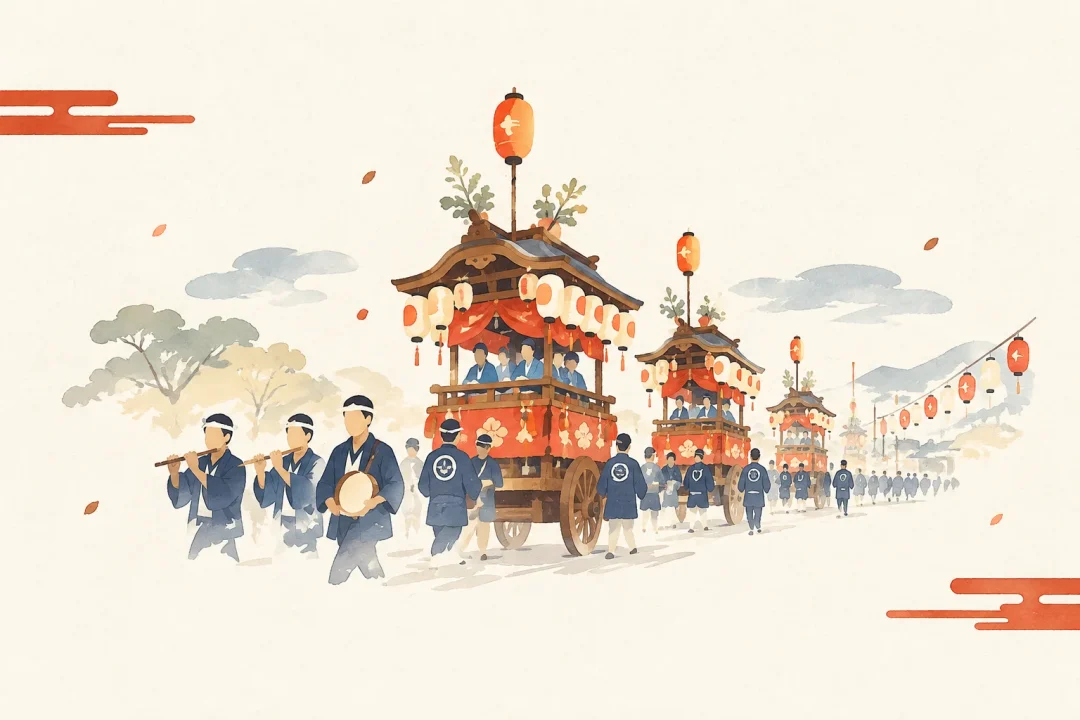
The procession heads toward the main hall, and the Taasobi performance begins after sutra chanting.
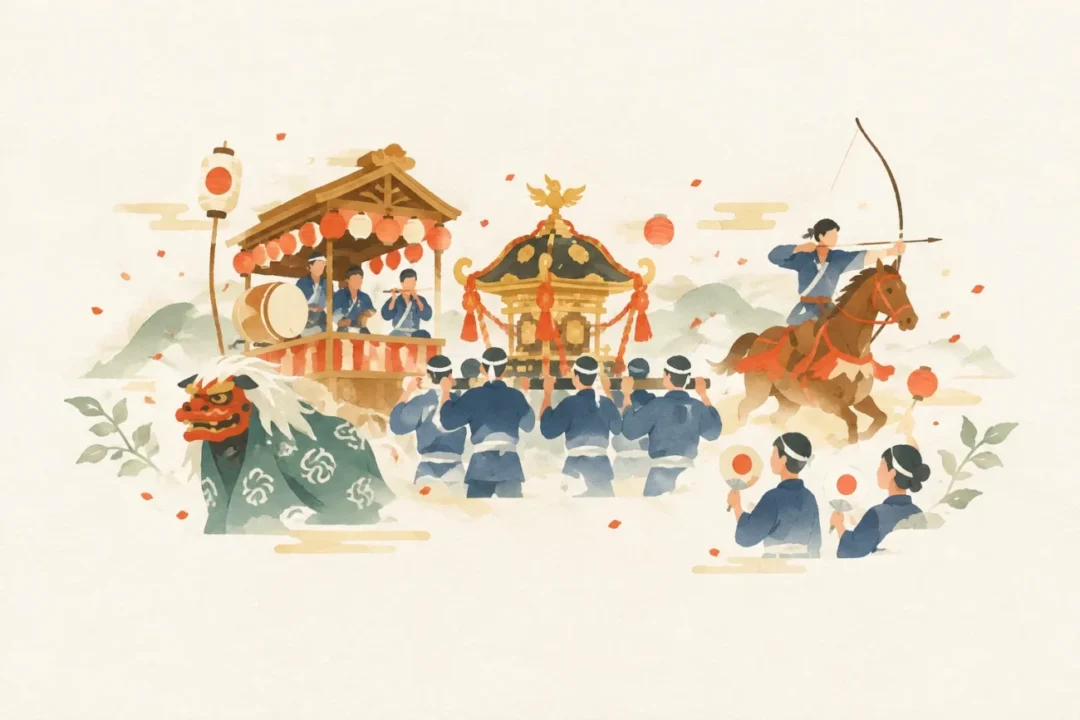
Following the sword and staff dances, seven stages depicting farm work are performed in this order: Shirakuwa, plowing and praising the ox, Noutto, chasing birds, and Soutome.
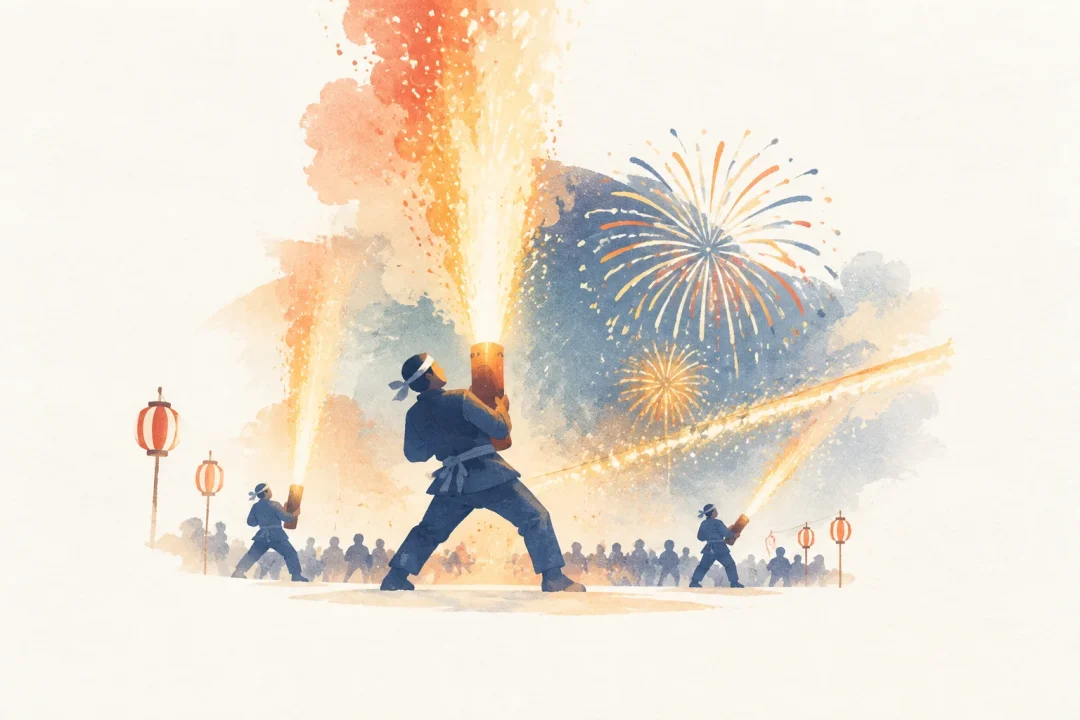
After the seven stages, a large bow is fired at Hakusan Shrine to ward off evil spirits.
How to take part
General visitors can watch the performance when it is open to the public.
The performance is a traditional art performed by villagers from the settlement at the temple gates and members of a preservation society. It is not advertised as an event in which spectators participate in gestures such as rice planting.
You can enjoy the procession, the seven-stage dance, and the shooting of the large bow by quietly watching from designated areas.
Location and access
- Venue and address
Shosondo Hall (formerly Daishido Hall), Hattasan Son’eiji Temple.
2777 Toyosawa, Fukuroi City, Shizuoka Prefecture.
- By car
Vehicles are not permitted inside the grounds of Hattasan.
Use a paid parking lot outside the , then walk toward the main hall.
- Parking
There are several parking lots nearby.
There is no free parking. Fees start at 100 yen and vary by season.
Source: 法多山|よくある御質問
Address 2777 Toyosawa, Fukuroi City, Shizuoka Prefecture
Dates and season
It is held annually on January 7.
This performance is part of Hattasan Son'eiji Temple’s New Year celebrations, and the public viewing is announced for around 1 p.m.
According to the official festival schedule, the procession departs at 11:30 a.m., and the seven-stage dance is offered from 12:30 p.m.
Source: 法多山|祭事案内 季節の催し物
Accommodation and hotels PR
Showing nearby accommodation.
Prices and availability are current at the time of retrieval. For multi-night stays, only the first night’s price is shown. Confirm the final price and directions to the venue with the booking provider. Select your dates again when using the area search link. Search area: within 3 km of Central Shizuoka Prefecture / Fukuroi City (the search is not centered on the festival venue)
Tips for your visit
The event takes place at Shosondo Hall within the temple grounds, with a procession and dance offerings, followed by the firing of a large bow.
When viewing, do not obstruct the performers or the procession’s route, and follow the temple’s instructions.
If arriving by car, note that there is no free parking and some parking lots operate only during busy periods; check the parking conditions before using a lot.
Source: 法多山|交通・駐車場のご案内
Origins and History of Hattasan Taasobi
Hattasan Taasobi is one of the rice-planting folk performances associated with the early-spring Shusho-e and Shunie observances passed down in areas of Shizuoka and Aichi Prefectures.
Fukuroi City’s guide notes that records are fragmentary, but the event is believed to have begun by at least the 15th century.
Recognized for its seven-part structure depicting farm work and its distinctive local characteristics, it was designated a National Important Intangible Folk Cultural Property in 2024.
Source: 1月 法多山の田遊祭/袋井市 / 国指定文化財等データベース
Official information
Details of the event can be confirmed in the event guide from Hattasan Son’eiji Temple and the cultural heritage guides from Shizuoka Prefecture and Fukuroi City.
The Hattasan event guide describes the Taasobi procession, the dedication of seven dances, and the ritual firing of arrows.
Shizuoka Prefecture’s cultural heritage guide provides information on the venue, public viewing time, the program, and whether parking is available.
Hattasan Taasobi at a Glance
Hattasan Taasobi is a traditional performance at Hattasan Son’eiji Temple that depicts the stages of rice cultivation in seven dances and prays for a good harvest by celebrating it in advance.
A procession is followed by sword and staff dances, plowing, praising the ox, chasing birds, and rice-planting movements. The event concludes with the firing of a large bow.
It is open to the public every January 7, offering a chance to experience both a temple observance and the local farming culture.
Japanese Festivals.jp Editorial Team
Celebrating local culture and helping you discover a side of Japan you never knew.
Article updated: 2026/10/19
Submit information or a correction Submit photos of this festival