Three days of neri carrying on Edo’s refined style as they parade through Yokosuka
Neri Events of the Mikumano Shrine Grand Festival
Festival information
EVENT INFORMATION- Season / frequency
- For 3 days, from the first Friday through Sunday of April each year / Every year
- Location
- Yokosuka district, Kakegawa City, centered on Mikumano Shrine
- Area
- Shizuoka Prefecture・Kakegawa City(From Tokyo: approx. 1 h–1 h 30 min · bullet train)Prefecture-level estimate to a main station or airport, not the venue. Airport access, check-in and onward travel are extra; remote areas and islands can take much longer.
- Features
- Highlights and activities
- Wishes behind the festival
- Participation / viewing
- Spectators welcome
- Last updated
- 2026/10/19
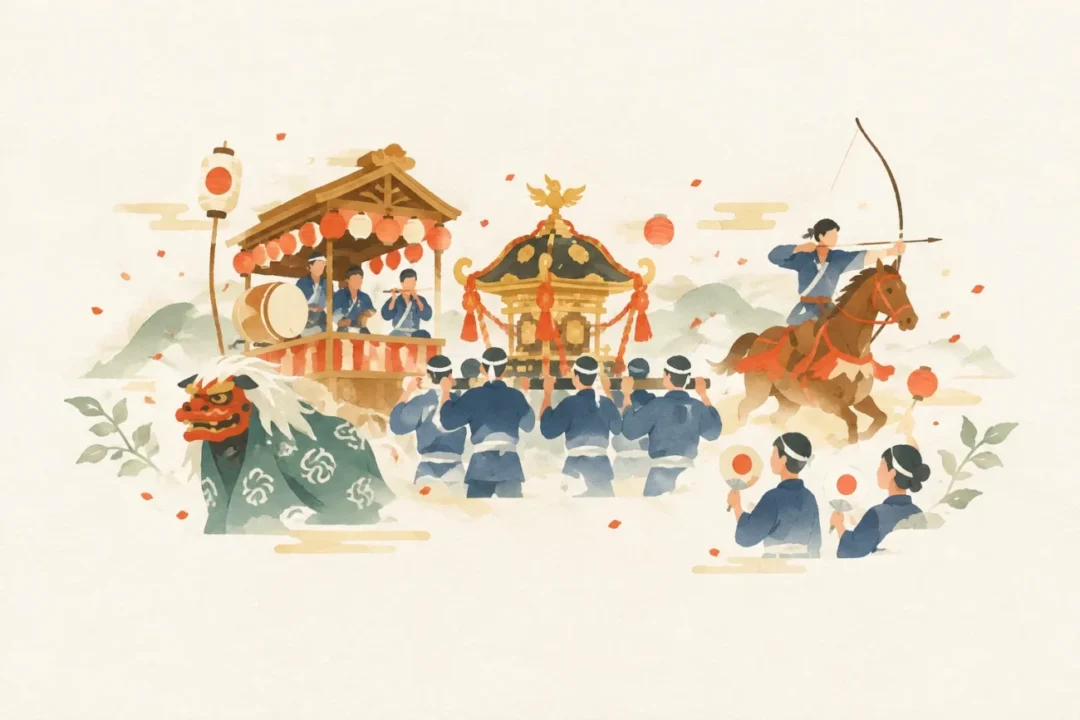
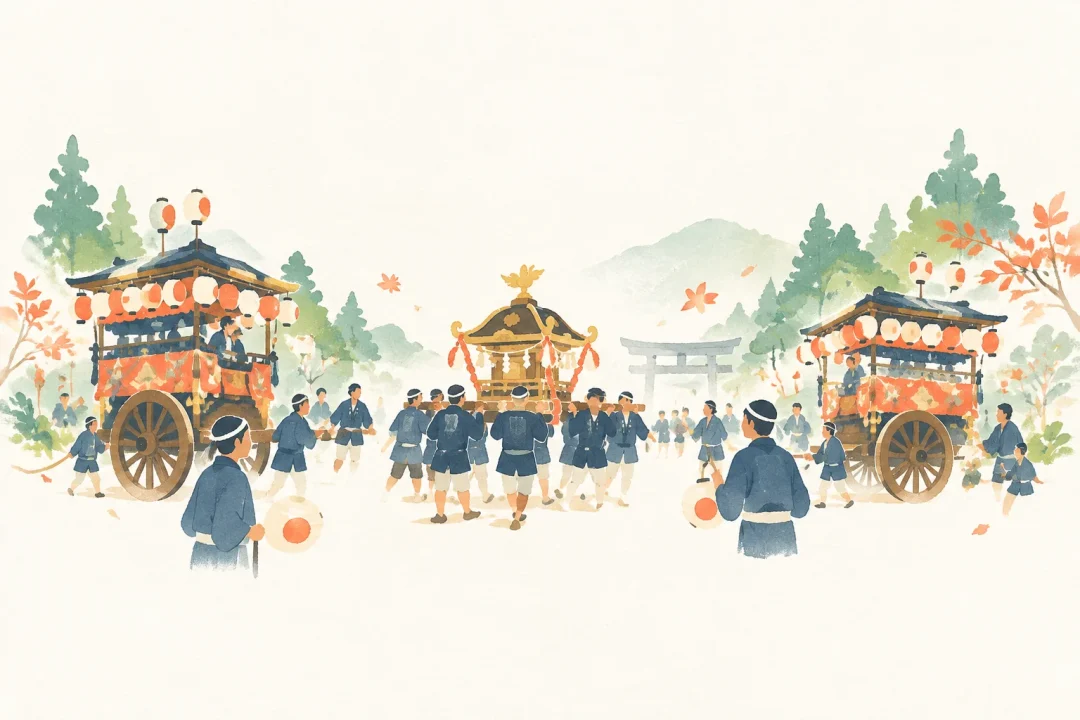
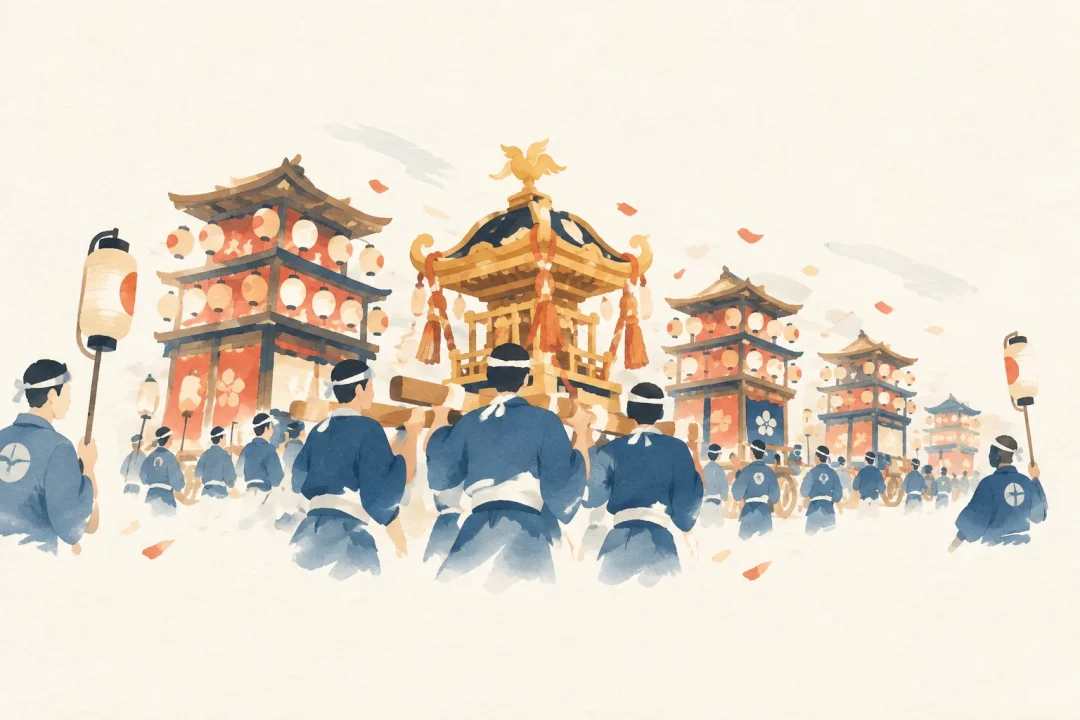
Centered on Mikumano Shrine in Yokosuka, Kakegawa City, this is a three-day grand festival in which 13 neri parade through town accompanied by festival music. Enjoy scenes of a festival passed down in this castle town, including the procession, ta-asobi, and nighttime parades lit by lanterns.
About Neri Events of the Mikumano Shrine Grand Festival
The neri events of the Mikumano Shrine Grand Festival are held mainly at Mikumano Shrine in Yokosuka, Kakegawa City, Shizuoka Prefecture.
Alongside the mikoshi procession, 13 called neri parade through the parishioner district and perform festival music in places such as the .
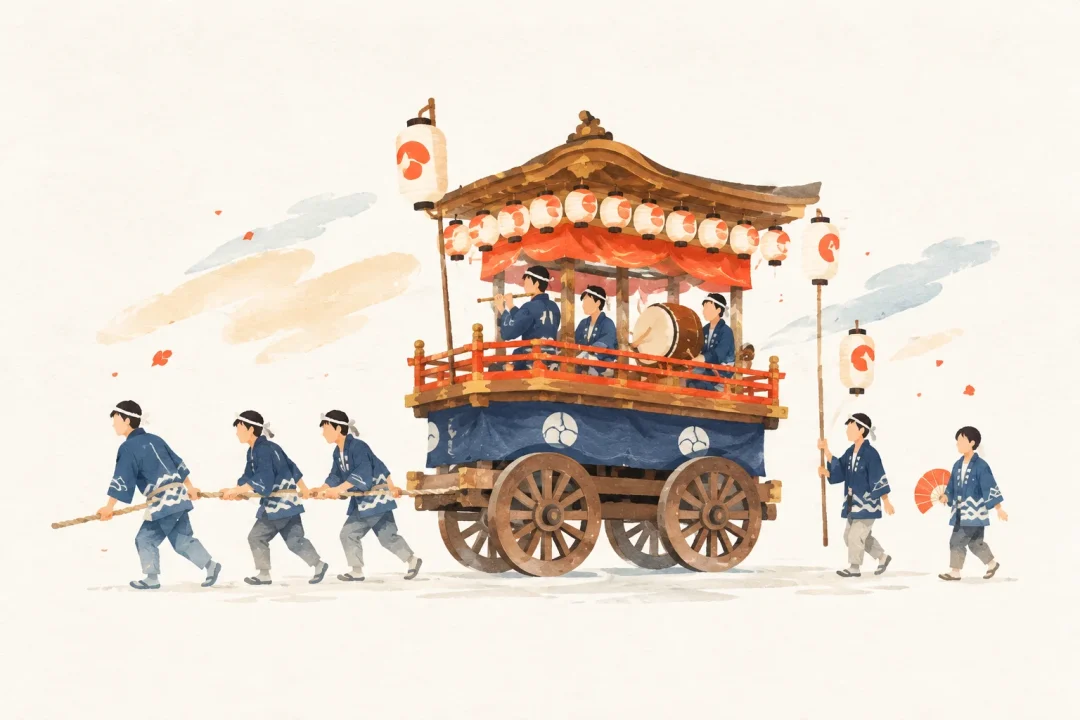
The neri are festival floats passed down by each neighborhood, and the three days of events are supported by the organizations and roles within each neighborhood.
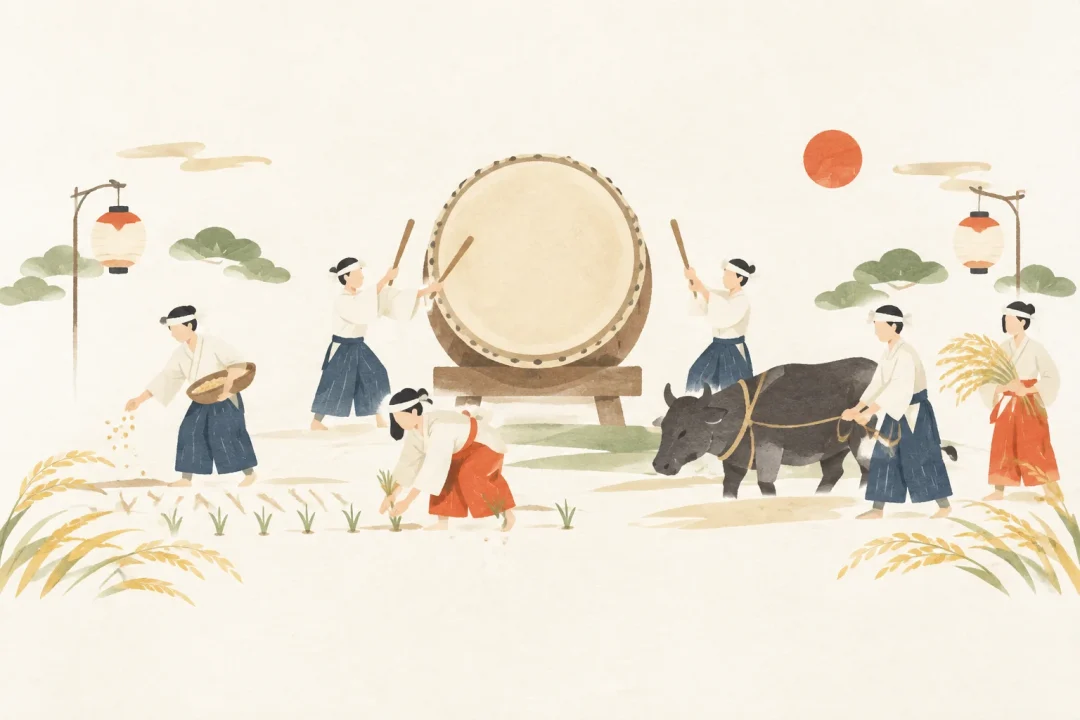
This is a community-rooted grand festival held to pray for bountiful harvests, household safety, and other blessings.
Source: 国指定文化財等データベース
Festival highlights
Highlights include the neri, which preserve the old Ipponbashira Mando-gata style, and the decorations that vary from neighborhood to neighborhood.
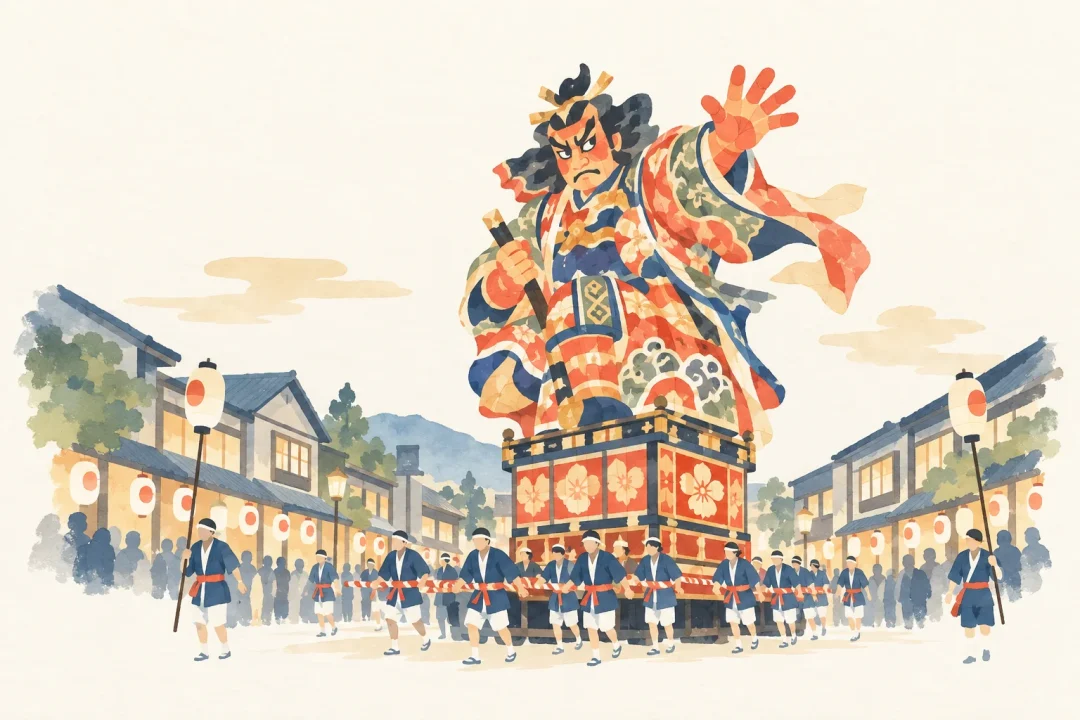
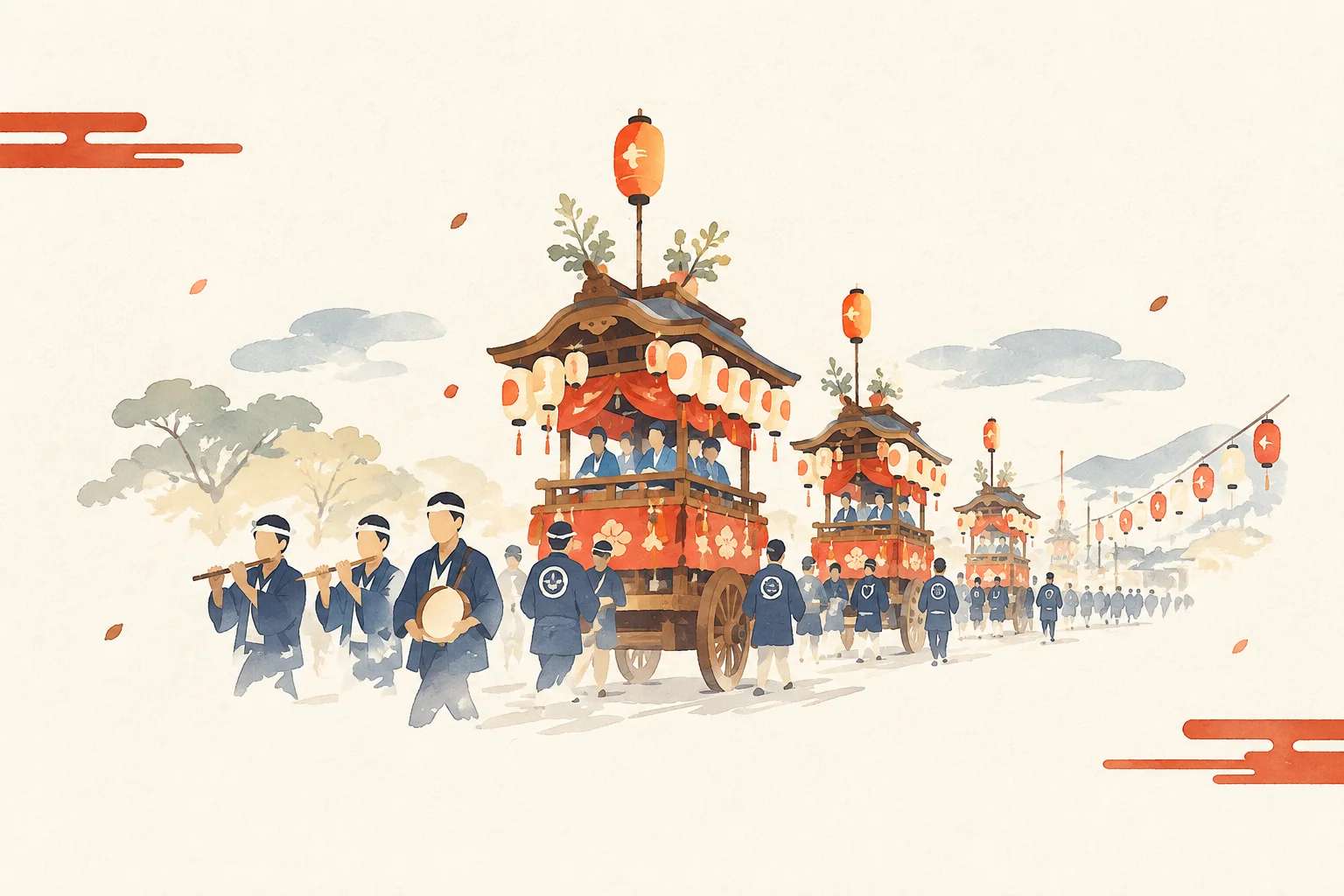
The neri move along the streets to shouts and festival music. Each has a 2-wheeled base with a single upright pole, adorned with mando decorations, figures, and flowers.
During Yoimiya, all 13 neri gather in the shrine grounds. On the night of Honraku, they perform festival music in a spirited competition as the festival’s grand finale.
The neri parades, illuminated by lanterns, take on a different appearance from their daytime aspect.
Source: 祢里と町衆|一本柱万度型の山車と曳き手たち | 三熊野神社大祭 / 行事と日程 | 三熊野神社大祭
Three days of neri carrying on Edo’s refined style as they parade through Yokosuka
What to expect
The festival unfolds over three days: Soroi on Friday, Yoimiya on Saturday, and Honraku on Sunday.
On the first day, each neighborhood’s neri parade through their own neighborhood and adjoining areas. On the second day, events continue with a gathering at the shrine, performances of festival music, a round of visits to each neighborhood’s meeting place, and nighttime festivities.
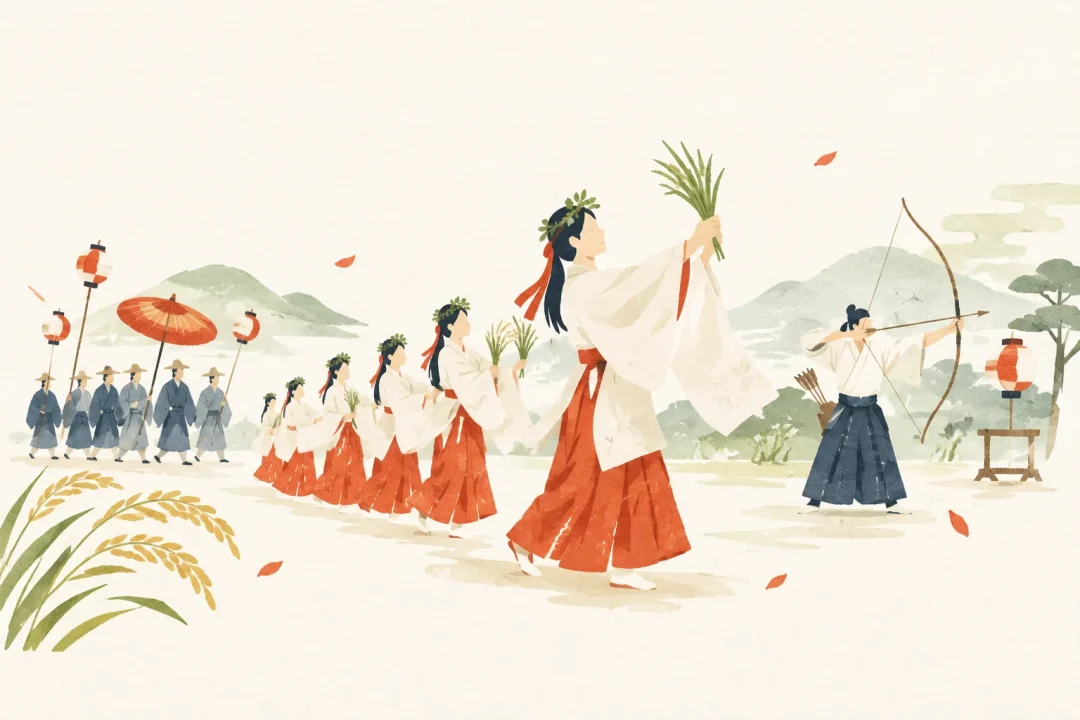
On the third day, the mikoshi procession, Miko-daki, and performances of Jidome-mai and ta-asobi take place. At night, neri from all the neighborhoods gather in the shrine grounds for the grand finale.
How to take part
The festival’s Neri preparations and processions, hayashi, and other activities are carried out by the neighborhoods and residents of Yokosuka.
Each neighborhood has an organization that passes down roles according to age and responsibility. People share the work of pulling the Neri, playing hayashi, and overseeing the events.
General visitors are invited to enjoy watching the religious ceremonies and the Neri processions.
Location and access
- Venue and address
Neri parade along a street stretching about 1 kilometer east to west, centered on Mikumano Shrine (1653-1 Nishiofuchi, Kakegawa City, Shizuoka Prefecture).
- Train and bus
The nearest stations are JR Fukuroi Station and JR Kakegawa Station.
From the south exit of Fukuroi Station, take the Akiba-Chuen Line bus bound for “Daito Branch Office” and get off at either “Shin-Yokosuka” or “Yokosuka Shako.”
From Kakegawa Station, the recommended route involves transferring to the Akiba-Chuen Line.
- By car
It takes about 20 minutes from the Fukuroi IC and about 20 minutes from the Kakegawa IC on the Tomei Expressway.
During the festival, traffic restrictions, including road closures to vehicles, apply on major roads in the former castle town.
- Parking
According to the 2026 information, temporary free parking is available near the venue.
The listed parking areas are the Osuka Branch Office staff parking lot, Osuka Central Community Center parking lot, Osuka School Lunch Center parking lot, Yokosuka Castle Ruins Entrance parking lot, and Sannomaru parking lot.
Source: 交通 | 三熊野神社大祭
Address 1653-1 Nishiofuchi, Kakegawa City, Shizuoka Prefecture
Dates and season
The Mikumano Shrine Grand Festival takes place over 3 days, from the first Friday through Sunday of April each year.
Friday is Soroi, Saturday is Yoimiya, and Sunday is Hongaku.
According to the 2026 schedule, Saturday is set to include the morning Neri procession and a hayashi dedication; Sunday is set to include the mikoshi procession, Mikko-daki, Jigatame Mai and Ta-asobi, and the evening finale, Senshuraku.
Detailed times vary depending on the day’s events.
Accommodation and hotels PR
Showing nearby accommodation.
Prices and availability are current at the time of retrieval. For multi-night stays, only the first night’s price is shown. Confirm the final price and directions to the venue with the booking provider. Select your dates again when using the area search link. Search area: within 3 km of Central Shizuoka Prefecture / Kakegawa City (the search is not centered on the festival venue)
Tips for your visit
During the festival, traffic restrictions are in place on major roads in the former castle town while the Neri are pulled through the streets.
If you come by car, use the designated temporary parking lots and avoid parking where it is not permitted.
The Sannomaru Parking Lot is inside the restricted area, and visitors are advised that there are times on Sunday, from around 2 p.m. to around 4 p.m., when it cannot be accessed.
The festival is also a local religious ritual, so it is important to enjoy watching while observing proper spectator etiquette.
Nearby attractions
Around the festival venue, the streetscape of Enshu Yokosuka retains the atmosphere of the Edo period.
As you walk along streets lined with storehouses and traditional townhouses, you can experience the history of Yokosuka as a castle town of the Yokosuka Domain.
Yokosuka Castle Ruins are within walking distance of Mikumano Shrine and are introduced as the remains of the castle of the Yokosuka Domain, which fostered the local festival culture.
Kakegawa Castle and Kakegawa tea are also nearby highlights recommended alongside the festival.

事任八幡宮
静岡県掛川市にある神社

掛川城
静岡県掛川市にあった城

掛川市二の丸美術館
静岡県掛川市掛川1142-1にある公立の美術館

高天神城
静岡県掛川市の城
Origins and History of Neri Events of the Mikumano Shrine Grand Festival
The origins of the neri are unclear. However, their resemblance to the Ipponbashira Mando-gata, an old style of Edo-style dashi, has been linked to a local tradition that festival music was brought here from Edo.
The “Yokosuka Sojōya Memo” first records the character “neri” in Shotoku 4 (1714), and contains an entry in Bunka 8 (1811) thought to refer to the neri seen today.
The festival dates shifted from the old calendar to the new calendar. Since Heisei 6, it has been held on the first Friday, Saturday, and Sunday of April.
Official information
You can check official information on the official website of the Mikumano Shrine Grand Festival.
It provides information about events and schedules, transportation to the venue, and highlights of the neri.
The Events and Schedule page on the official website outlines the three-day festival and gives the times of each event.
Neri Events of the Mikumano Shrine Grand Festival at a Glance
The neri events of the Mikumano Shrine Grand Festival are a three-day celebration in which 13 neri parade through Yokosuka, Kakegawa City.
The festival’s traditions and religious rites are passed down together through the Ipponbashira Mando-gata dashi, festival music, shouts, nighttime parades lit by lanterns, mikoshi processions, and ta-asobi.
It is held annually from the first Friday to Sunday of April, and the 2026 information also describes the events scheduled for each day.
Please be considerate of traffic restrictions and the fact that this is a local festival when visiting.
Japanese Festivals.jp Editorial Team
Celebrating local culture and helping you discover a side of Japan you never knew.
Article updated: 2026/10/19
Submit information or a correction Submit photos of this festival