Awa Odori is more fun when you watch the ren: how to enjoy the dance and narimono music
Discover the distinct rhythms and expressions of the groups within the same festival.
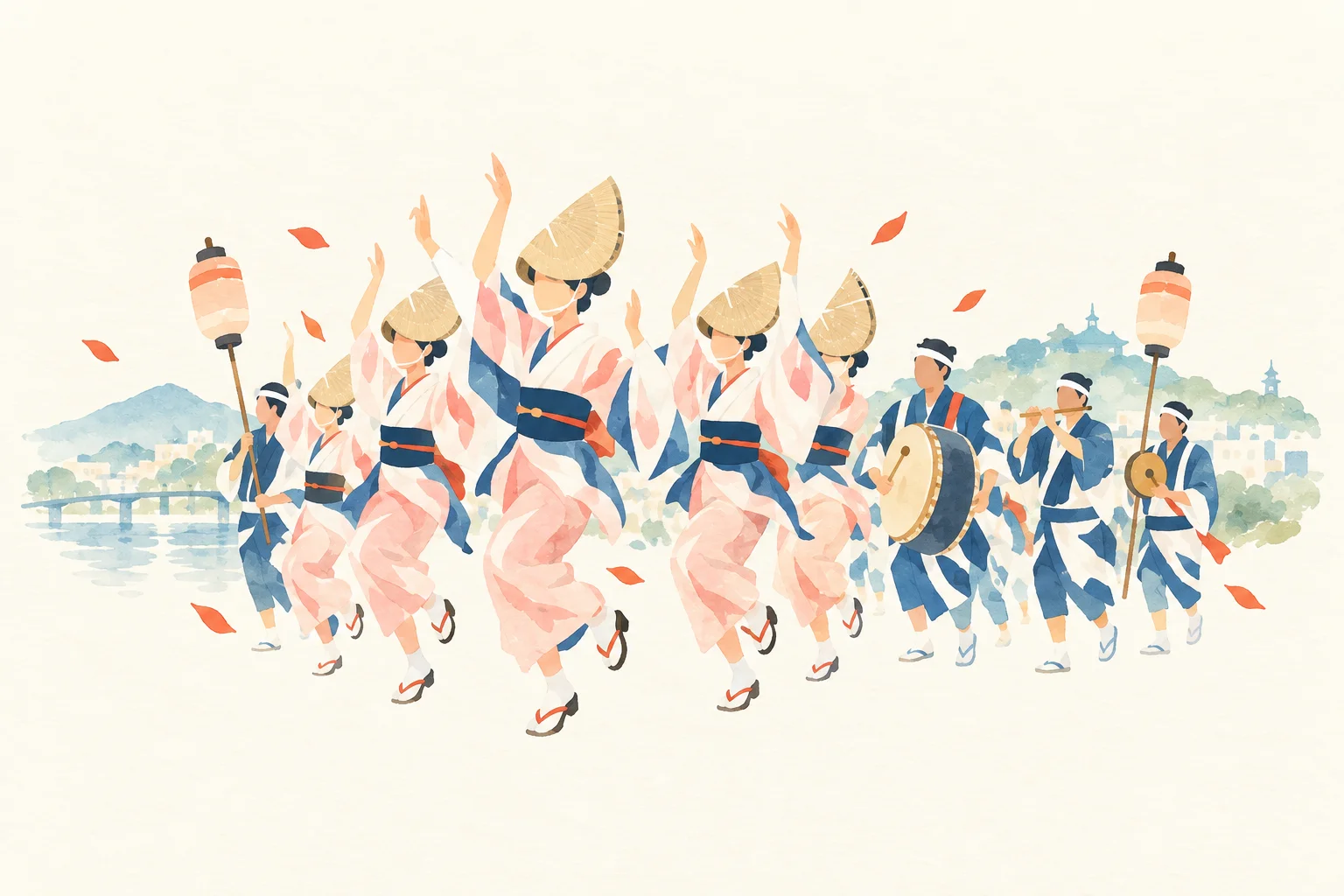
When you see Awa Odori for the first time, the bustle of the whole venue can capture your attention. To enjoy it a little more, try watching one “ren” as a group. The dancers’ costumes are not the only clues to remembering a group; the shape of its lines, its movements, and how it keeps time with the music also tell you about it.
Go home remembering the name of one ren
Groups in Awa Odori are called “ren.” Awa Odori Kaikan introduces famous ren belonging to two associations and notes that they perform not only at summer events but also at shows at the Kaikan. If you can identify the name of a ren that caught your attention at the venue, it can be a starting point for finding its later performances or introductions.(Awa Odori Kaikan: “Introducing the Famous Ren”)
You don’t need to seek out every famous ren from the start. Your viewing experience will be richer if you focus on one thing that caught your attention, such as the colors of the costumes or the timing of the dance. Even when watching several ren, enjoy the differences in how each one is put together rather than ranking them only as fast or slow, flashy or subdued.
There’s more to watch than just the dancers
After focusing on the dancers, shift your attention to the narimono music. Notice how the movements of the body coincide with the breaks in the music, and how the sound draws nearer and recedes as the line moves forward. Even without knowing about the instruments, listening to the same scene can change how you see it.
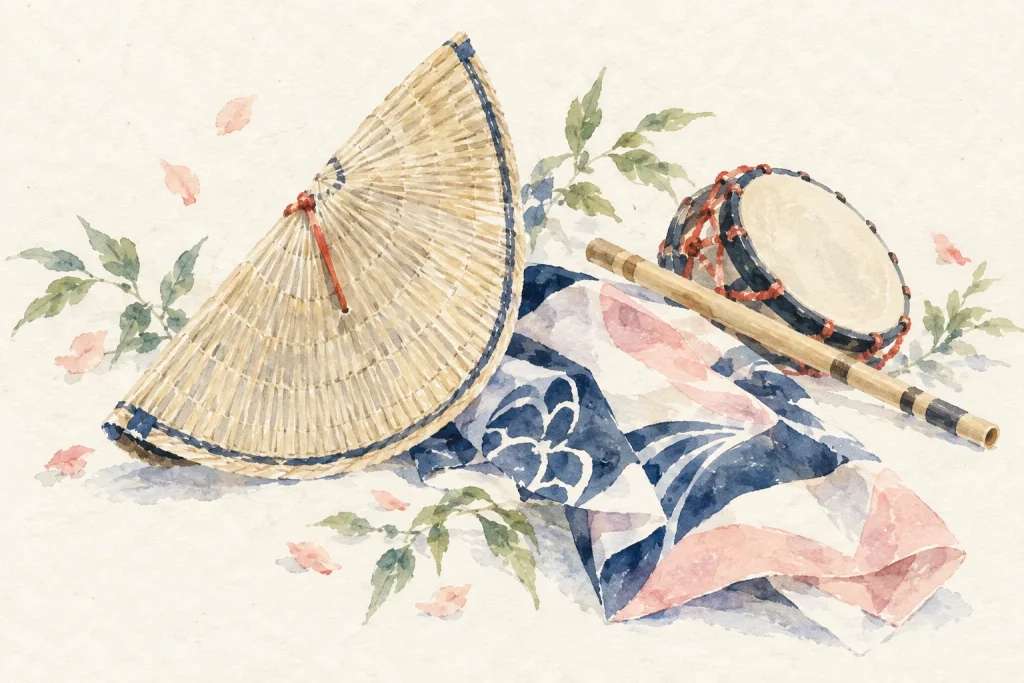
The museum at Awa Odori Kaikan introduces costumes, props, and narimono music from the past and present. It offers a different way in for people who want to take a closer look at things that pass by in an instant at the venue. Exhibitions and performances differ in content and conditions of use, so check before your visit.(Awa Odori Kaikan: “Facility and Performance Information”)
Don’t assume a performance venue and a stage show are the same kind of seat
The official guide lists different viewing settings, including performance venues and stage shows. Your choice of venue depends on whether you want to see the flow of dancers moving through the city or a complete performance on stage. When buying tickets, check the performance name, date, time, and venue together—not just the festival name.(Official Awa Odori “Guidebook”)
| What you want to enjoy | What to look for |
|---|---|
| Feel the energy of the city | Look up performance venues and route closures |
| Take time to observe how the groups are arranged | Check the stage show’s program and seating |
| Try moving to the dance yourself | Find opportunities for visitors to participate |
| Learn about the cultural background | Combine your visit with the Kaikan’s exhibits and explanations |
Even neighboring venues may not have the same entrance or re-entry requirements. You’ll find it easier to watch through to the end if you plan time to get from the exit to the next venue and take a break, rather than heading straight to the next place as soon as one performance ends. Choose your viewing seat with the activities before and after the performance in mind, not just where you’ll sit.
Turn watching into a first step toward dancing
The official website has information about “niwaka ren,” where beginners can try the dance. However, event dates and meeting places vary by year. Rather than joining a ren you happen to see along the route on your own judgment, check how visitors can take part.(Awa Odori Mirai e Tsunagu Executive Committee)
After trying the dance once, you may find yourself paying more attention to the dancers’ footwork and arm positions as you watch. Rather than making your ability to dance well a measure of your trip, we recommend enjoying the time as a chance to learn one movement. You may find a ren you want to watch, a sound that stays with you, or a desire to move your body again. All of these are ways to connect with Awa Odori.
Official sources consulted
- Awa Odori Kaikan: “Introducing the Famous Ren”
- Official Awa Odori “Guidebook”
- Awa Odori Kaikan: “Facility and Performance Information”
- Awa Odori Mirai e Tsunagu Executive Committee
Compiled from publicly available information from official sources, local authorities, tourism associations, and others. Information checked: 2026/10/01. Please check the official information for the year of your visit for dates, venues, traffic restrictions, and participation requirements.
Festivals related to this article
Tokushima City Awa Odori
Lanterns and music bring color to Tokushima’s summer; Awa Odori envelops the city

Find one thing that catches your interest.
Find a little “first” beyond the familiar everyday. Why not start with a region or way of enjoying yourself that catches your interest, and see where it leads?
Find festivals