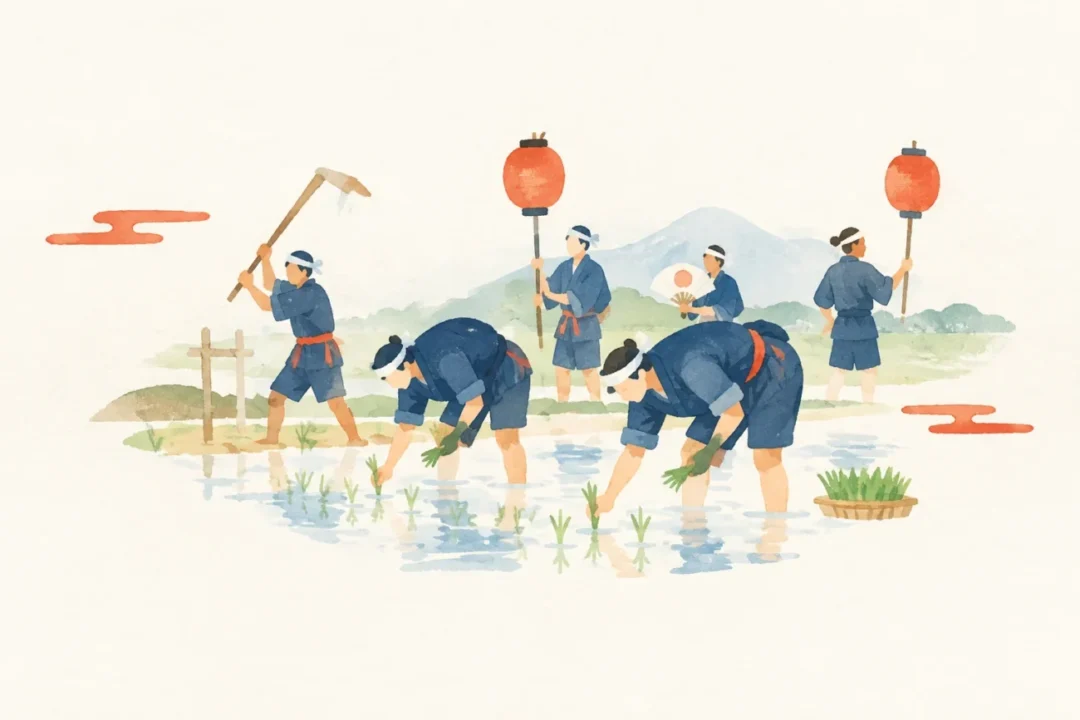
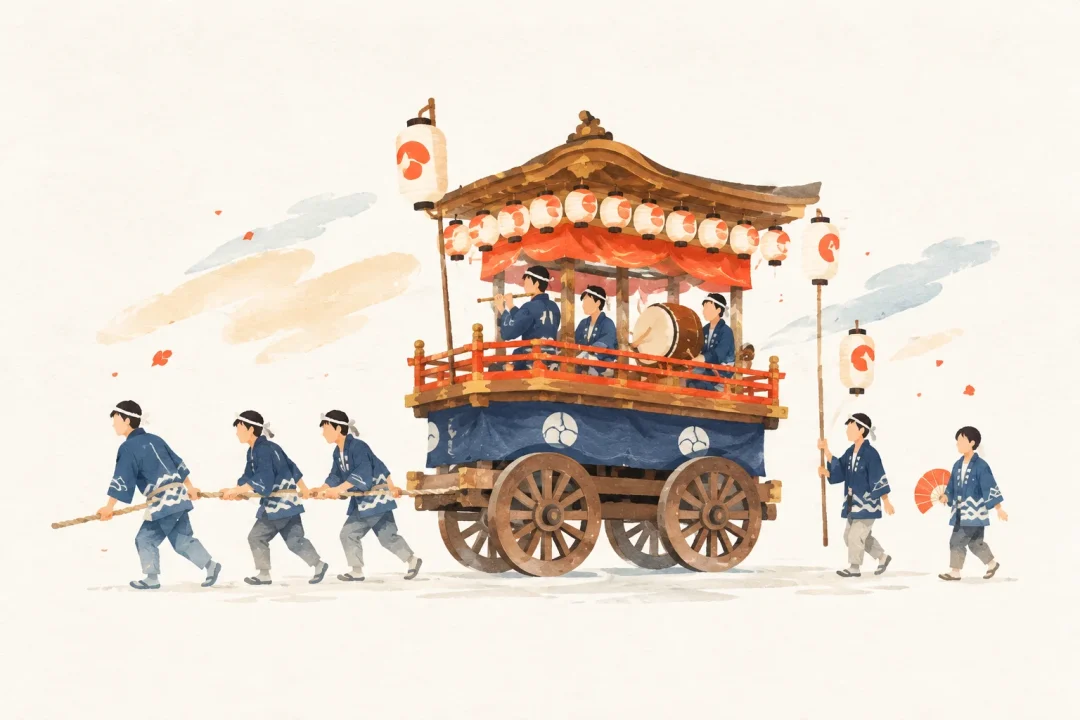
Taruki’s prayers, passed down through the mikoshi, lion, and yabusame
Taruki Gion Festival
Festival information
EVENT INFORMATION- Season / frequency
- The 8 days surrounding the second Sunday in July / Every year
- Location
- Amagura Shrine, Rokusho Shrine, and Kamitaruki, Shimotaruki, and Tomibe
- Area
- Shizuoka Prefecture・Kakegawa City(From Tokyo: approx. 1 h–1 h 30 min · bullet train)Prefecture-level estimate to a main station or airport, not the venue. Airport access, check-in and onward travel are extra; remote areas and islands can take much longer.
- Wishes behind the festival
- Last updated
- 2026/11/11
A joint festival of Amagura Shrine and Rokusho Shrine, passed down in the Taruki district of Kakegawa City. Through the procession, Oshiraku, and , you can experience a festival tradition passed down in the community.
About Taruki Gion Festival
The Taruki Gion Festival is a festival passed down in Kamitaruki, Shimotaruki, and Tomibe in Kakegawa City, with events associated with Amagura Shrine and Rokusho Shrine.
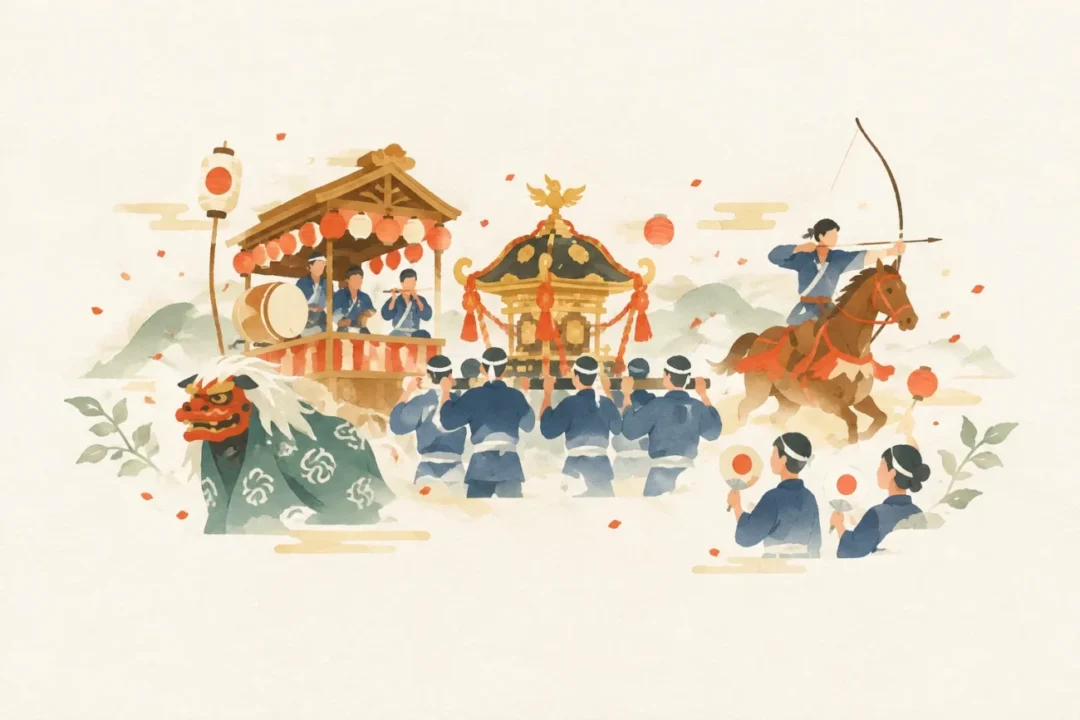
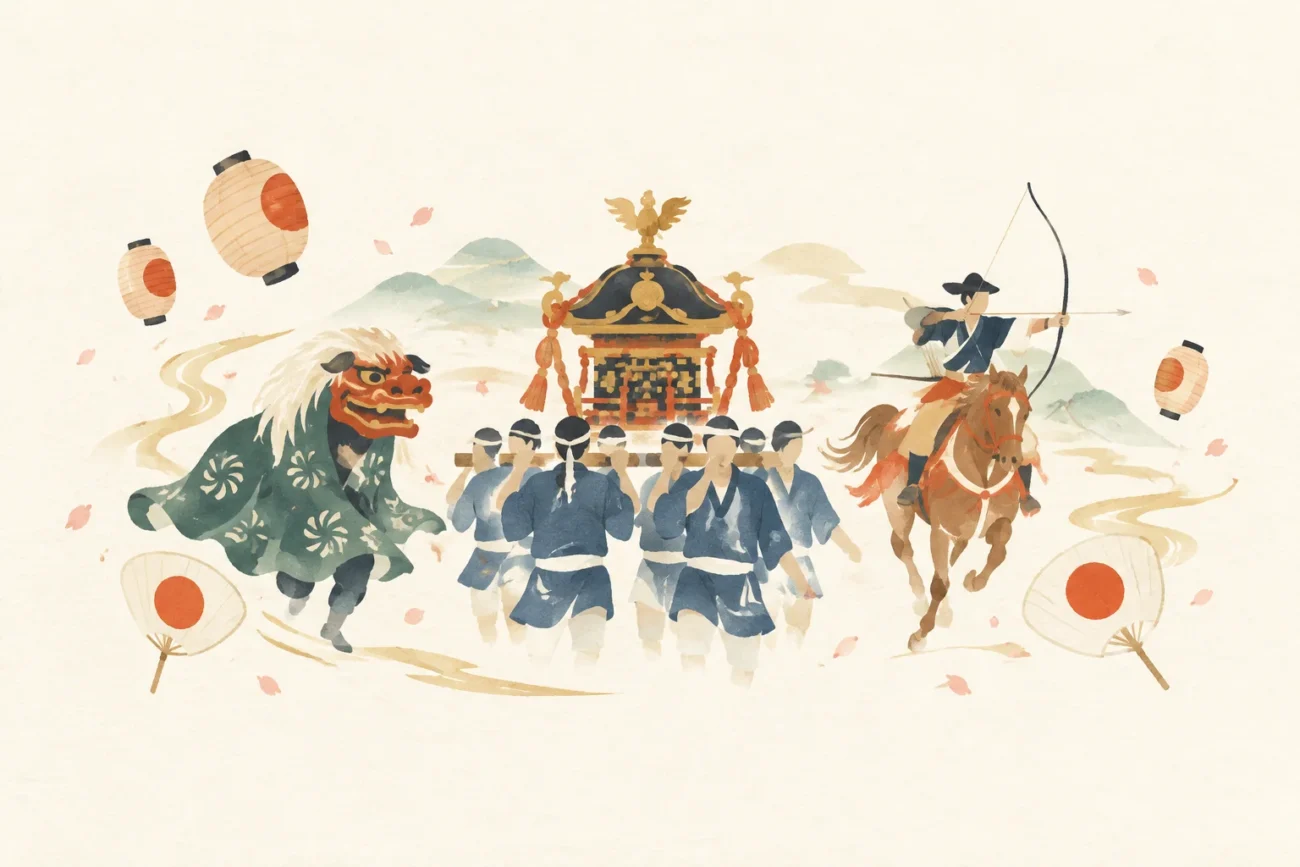
It comprises a mikoshi procession, Oshiraku, and children’s yabusame, among other events, and is an intangible folk cultural property designated by Kakegawa City that preserves the form of an old festival.
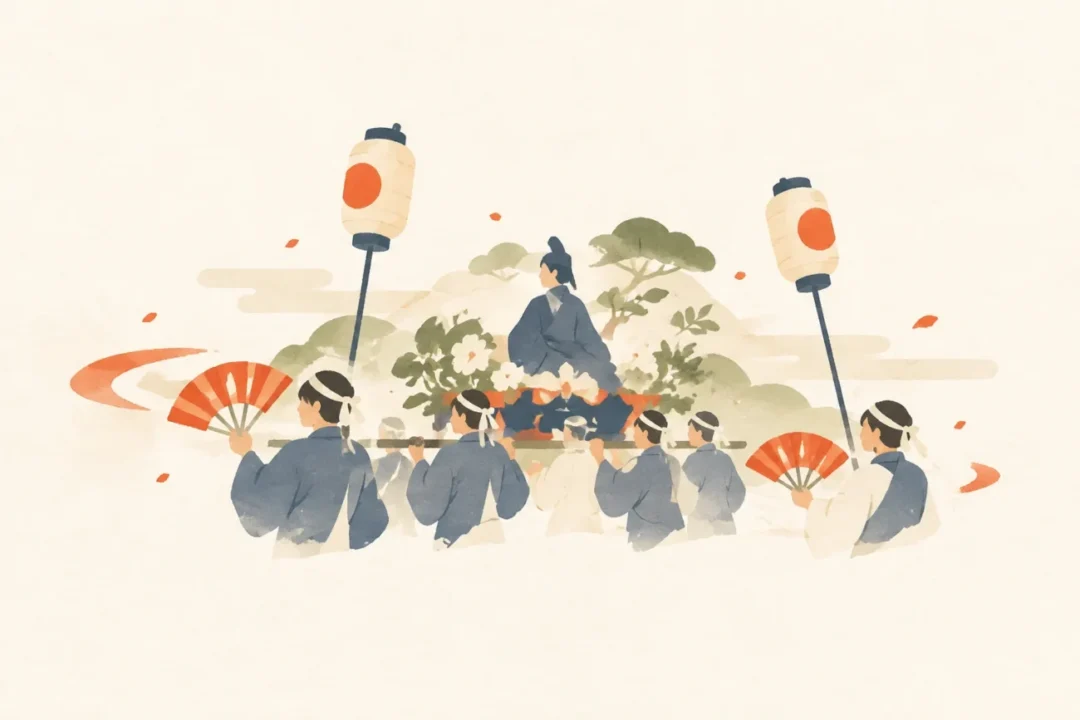
During the festival, the deity of Amagura Shrine travels in a mikoshi to Rokusho Shrine in Shimotaruki, while the community observes the customs and roles passed down over generations.
Festival highlights
Highlights include the mikoshi procession from Amagura Shrine to Rokusho Shrine, Oshiraku accompanied by a lion mask, and yabusame.
In Oshiraku, the day before the mikoshi returns, a reenacts a great lion tearing open bales of wheat.
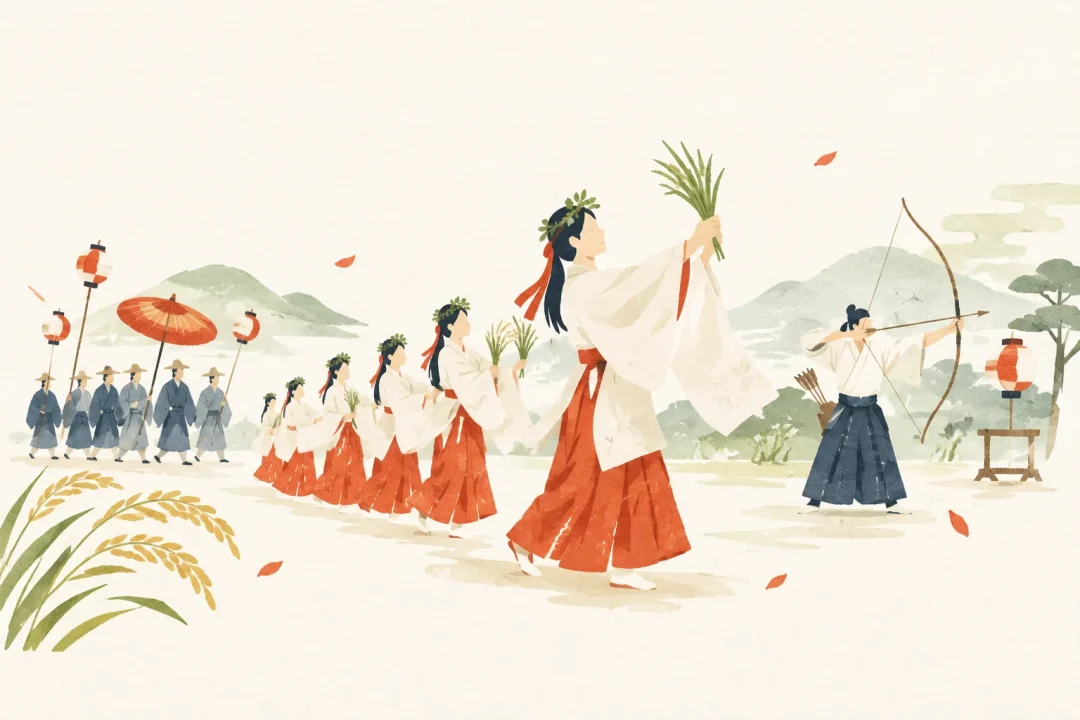
Yabusame takes place on the day of the return procession, preserving a scene associated with the festival’s legend of the great lion.
Taruki’s prayers, passed down through the mikoshi, lion, and yabusame
What to expect
The festival unfolds around the mikoshi procession linking Amagura Shrine and Rokusho Shrine.
During the festival, mugi-okowa is offered each day by designated households, and on the fifth day, known as Kesho Day, renew the and paper streamers.
Daily customs are passed down, including the Oshiraku ceremony on the seventh day and yabusame on the eighth day, the day of the return procession.
Location and access
- Venue and address
Amagura Shrine (Kamitaruki, Kakegawa City) / Rokusho Shrine (Shimotaruki, Kakegawa City), and Kamitaruki, Shimotaruki, and Tomibe
- Train and bus
From Kakegawa Station, take the Kakegawa Bus Service Sakuragi Line bus bound for Nemunoki Gakuen. Get off at the Kami-no-miya Iriguchi bus stop, then walk about 5 minutes to Amagura Shrine; or get off at the Baba bus stop, then walk about 5 minutes to Rokusho Shrine.
- By car
About 12 minutes from Kakegawa Station
Address Kamitaruki, Shimotaruki, and Tomibe, Kakegawa City
Dates and season
- Season
The 8 days surrounding the second Sunday in July
- Frequency
Every year
Accommodation and hotels PR
Showing nearby accommodation.
Prices and availability are current at the time of retrieval. For multi-night stays, only the first night’s price is shown. Confirm the final price and directions to the venue with the booking provider. Select your dates again when using the area search link. Search area: within 3 km of Central Shizuoka Prefecture / Kakegawa City (the search is not centered on the festival venue)
Nearby attractions

事任八幡宮
静岡県掛川市にある神社

掛川城
静岡県掛川市にあった城

掛川市二の丸美術館
静岡県掛川市掛川1142-1にある公立の美術館

高天神城
静岡県掛川市の城
Origins and History of Taruki Gion Festival
The Gion Festival is said to date back to the late Kamakura period.
When the shrine buildings of Amagura Shrine burned down, the enshrined deities were jointly worshipped at Rokusho Shrine, 2 kilometers to the south. This is said to have led to the start of a shin-ko festival held in their honor.
A legend about seven mounted warriors defeating a great lion that had ravaged the wheat is associated with yabusame. The defeated lion is said to have been enshrined as Dokko Gongen.
Official information
Kakegawa City’s “Tangible and Intangible Folk Cultural Properties” page introduces the Taruki Gion Festival as an intangible folk cultural property designated by the city.
The Agency for Cultural Affairs’ Cultural Heritage Database also lists the festival’s structure and traditions as an intangible folk cultural property designated by Kakegawa City.
Taruki Gion Festival at a Glance
The Taruki Gion Festival is an intangible folk cultural property of Kakegawa City, centered on a mikoshi procession linking Amagura Shrine and Rokusho Shrine, with events such as Oshiraku and yabusame.
It is said to have begun in the late Kamakura period, and daily roles such as offering mugi-okowa and renewing the shimenawa have also been passed down.
Another distinctive feature is the connection between the festival events and the legend of the great lion.
Sources and references
Japanese Festivals.jp Editorial Team
Celebrating local culture and helping you discover a side of Japan you never knew.
Article updated: 2026/11/11