There Were Festivals Like These, Too! 5 Festivals Honoring Ancestors with Fire and Prayer

Festivals centered on flames and lights carry meanings beyond their spectacular displays: they honor those who came before and pass prayers on to the future. Here are five events featuring fire in different forms, including warrior processions, giant torches, floating lanterns, , and insect-driving rites.
Owari Insect-Driving Rites (Inazawa City and Tokoname City, Aichi Prefecture)
- Dates
- Phase 1:2026/06/14Phase 2:2026/07/04
- Season / frequency
- Usually from around June to around July. In the Yada district, the unka-okuri and mushi-okuri rites are held on separate days. / Every year
- Location
- Yata district, Tokoname City (Yata Hachimansha Shrine and the Yada River) / Makikawa Elementary School and surrounding area in Sobue-cho, Inazawa City
- Area
- Aichi Prefecture・Inazawa City, Tokoname City
- Participation / viewing
- Open to public participation / spectators welcome
- Age restrictions
- Elementary school students in grades 1–6 in Tokoname City and their guardians (2026 participant recruitment)
- Required number of participants
- About 10 teams (2026 participant recruitment for the Yada district)
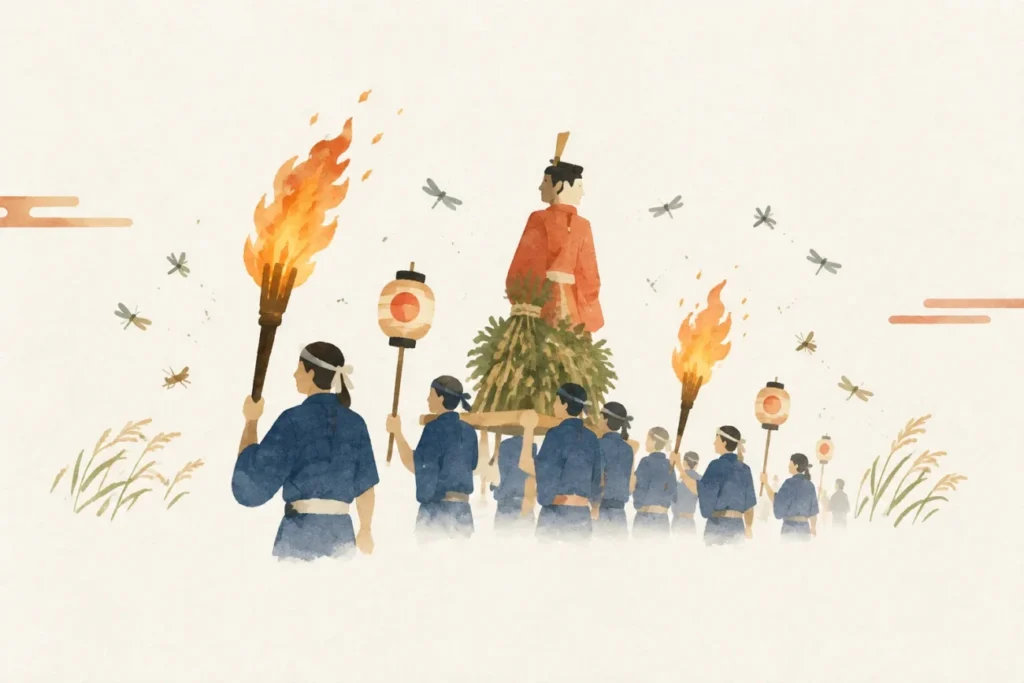
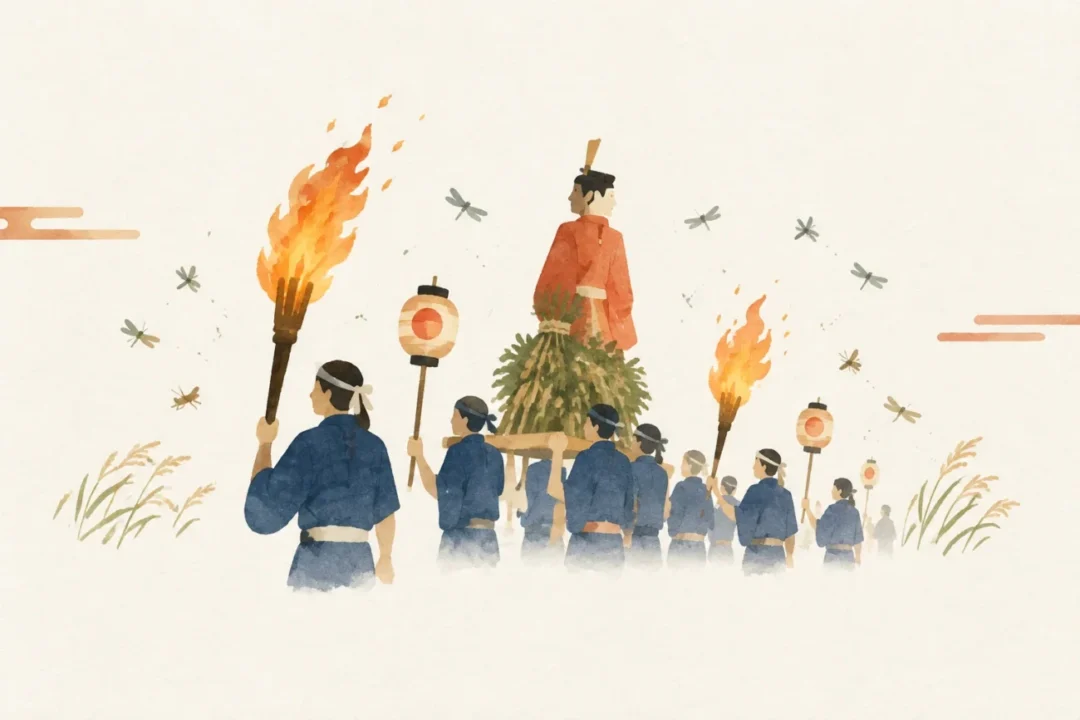
The Owari insect-driving rites are for riceDrive away pests and pray for a good harvestThis is a local traditional event. In the Yada district, people walk carrying giant torches to the sound of drums and conch shells; in Sobue, straw figures of Sanemori, tall lanterns, and torches form a procession.
The procession expresses a wish to ward off misfortune with fire and protect farmland and daily life.
Highlights of the Owari insect-driving rites
Highlights include the 2–3-meter torches used in the Yada district and the large straw figure of Sanemori carried in Sobue. People walk in the torch procession to the sounds of drums and conch shells, while in Sobue, tall lanterns, straw figures of Sanemori, and torches form a procession.
The event gives visible form to driving away pests and praying for a good harvest, including the final scenes involving straw figures and torches.

If you notice the roles of the straw figures and sounds, as well as the torches, you can see the forms people’s hopes take, meow!
Location and access
- Venue and address
-
Yata Hachimansha Shrine and the Yada River in the Yada district of Tokoname City. The Sobue event takes place at Makikawa Elementary School and the surrounding area (990 Sunazaki, Ryōjinaichi, Sobue-cho, Inazawa City).
- Train and bus
-
For the Sobue venue, get off at Kami-Marubuchi Station on the Meitetsu Line and walk about 30 minutes. Public transportation directions to the Yada district are currently being confirmed.
- By car
-
The specific driving route is currently being confirmed.
- Parking
-
The names and conditions of available parking lots are currently being confirmed.
AddressYada area, Tokoname City, Aichi Prefecture / 990 Sunazaki, Ryoterauchi, Sobuecho, Inazawa City, Aichi Prefecture
View detailed information about the Owari insect-driving rites
Ayabe Minazuki Festival (Ayabe City, Kyoto Prefecture)
- Dates
- 2026/07/25
- Season / frequency
- Every year, the 4th Saturday of July / Every year
- Location
- Across the Ayabe city area and around the Yura River
- Area
- Kyoto Prefecture・Ayabe City
- Participation / viewing
- Open to public participation / spectators welcome
- Participation fee
- Paid seats cost ¥20,000 per table seat or ¥3,000 per person for an area seat. The participation fee for the Mantō Nagashi lantern-floaters is being confirmed.
- Age restrictions
- Paid-seat tickets have conditions for free admission for preschool children. Table seats are for up to 2 people per table; area seats are for up to 1 person per adult.
- Required number of participants
- The Mantō Nagashi lantern-floaters are limited to 30 people. Each boat carries about 10 people.
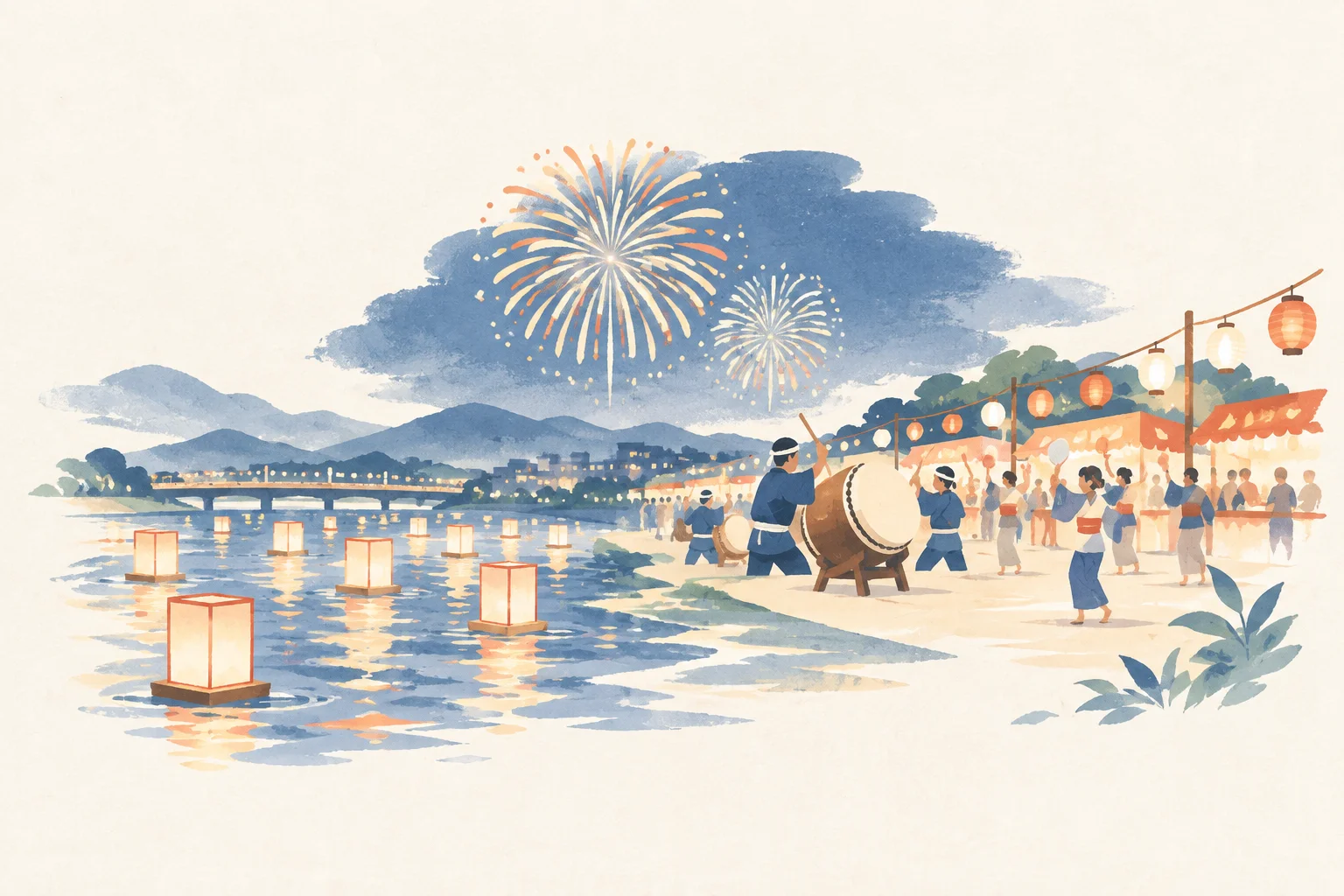
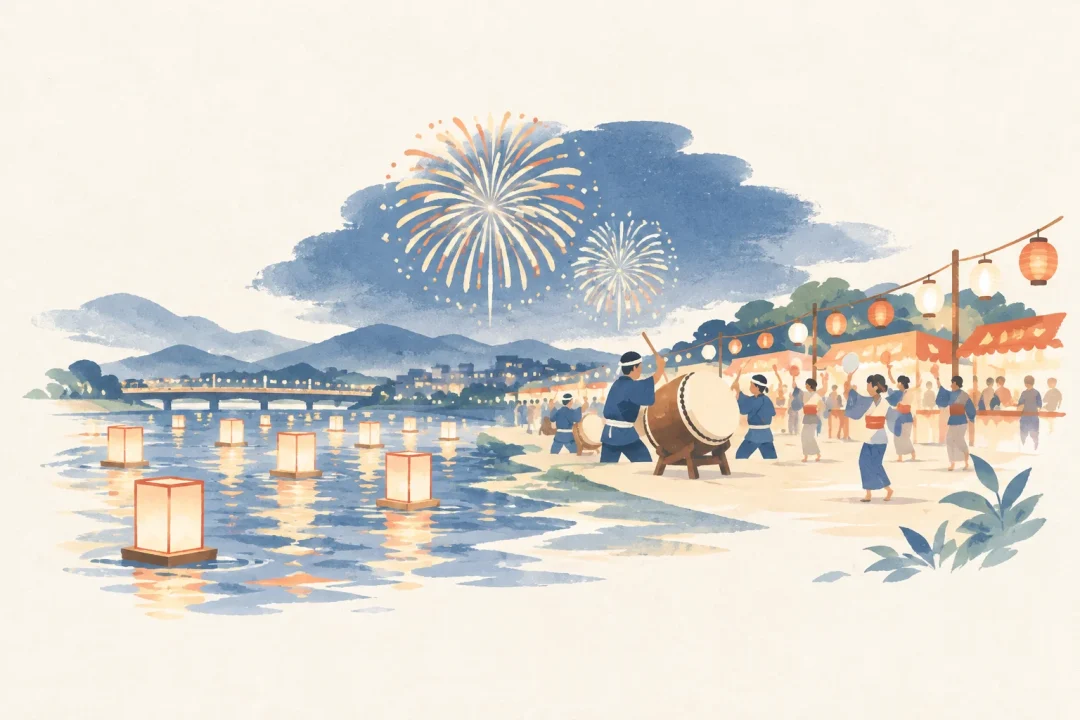
The Ayabe Minazuki Festival centers on the Mantō Nagashi lantern-floating ceremony on the Yura River and fireworks, with drumming and dancing as well. The lanterns carry prayers for peace and household safety, and the sight of their light spreading across the river is memorable.
Around the late Meiji periodA lantern-floating ceremony said to have begun as a rite to honor ancestorsis a festival of fire and water that carries the community’s hopes into the present.
Highlights of the Ayabe Minazuki Festival
The main highlights are the colorful Mantō lanterns slowly moving along the Yura River and the fireworks launched near the river. The lanterns are floated onto the river one by one from boats, and the washi-paper lanterns reflect their light on the water.
In addition to the fireworks, performances by Ayabe Taiko and dances by “Ayabe ” add to the festival atmosphere. From dusk into the night, you can enjoy lights, music, dancing, and fireworks one after another.
Location and access
- Venue and address
-
Across the Ayabe city area and around the Yura River. Address: Namimatsu-cho, Ayabe City, Kyoto Prefecture.
- Train and bus
-
A 15-minute walk from Ayabe Station on the JR Sanin Line. Another guide says it is about a 10-minute walk or about 5 minutes by taxi, etc., from Ayabe Station on the JR West Japan Maizuru Line.
- By car
-
It is about 5 minutes from Ayabe IC on the Maizuru-Wakasa Expressway. Viewing from bridges and stopping or parking on Tanba Bridge or Shin-Ayabe Bridge are prohibited.
- Parking
-
For 2026, temporary parking is available by advance reservation for a fee. Locations include Ayabe City Hall and the 2nd Municipal Sports Ground. The lot is open from 15:00 to 23:00, and parking tickets must be printed in advance.
AddressNamimatsu-cho, Ayabe, Kyoto Prefecture
Yamaguchi Tanabata Lantern Festival (Yamaguchi City, Yamaguchi Prefecture)
- Dates
- 2026/08/06 〜 2026/08/07
- Season / frequency
- Every year, August 6 and 7 / Every year
- Location
- Around Yamaguchi City central shopping streets and Park Road, Ōdono, Yuda Onsen, and other areas
- Area
- Yamaguchi Prefecture・Yamaguchi City
- Participation / viewing
- Open to public participation / spectators welcome
- Participation fee
- Free admission. Some activities are paid; the lantern workshop costs ¥500 per lantern
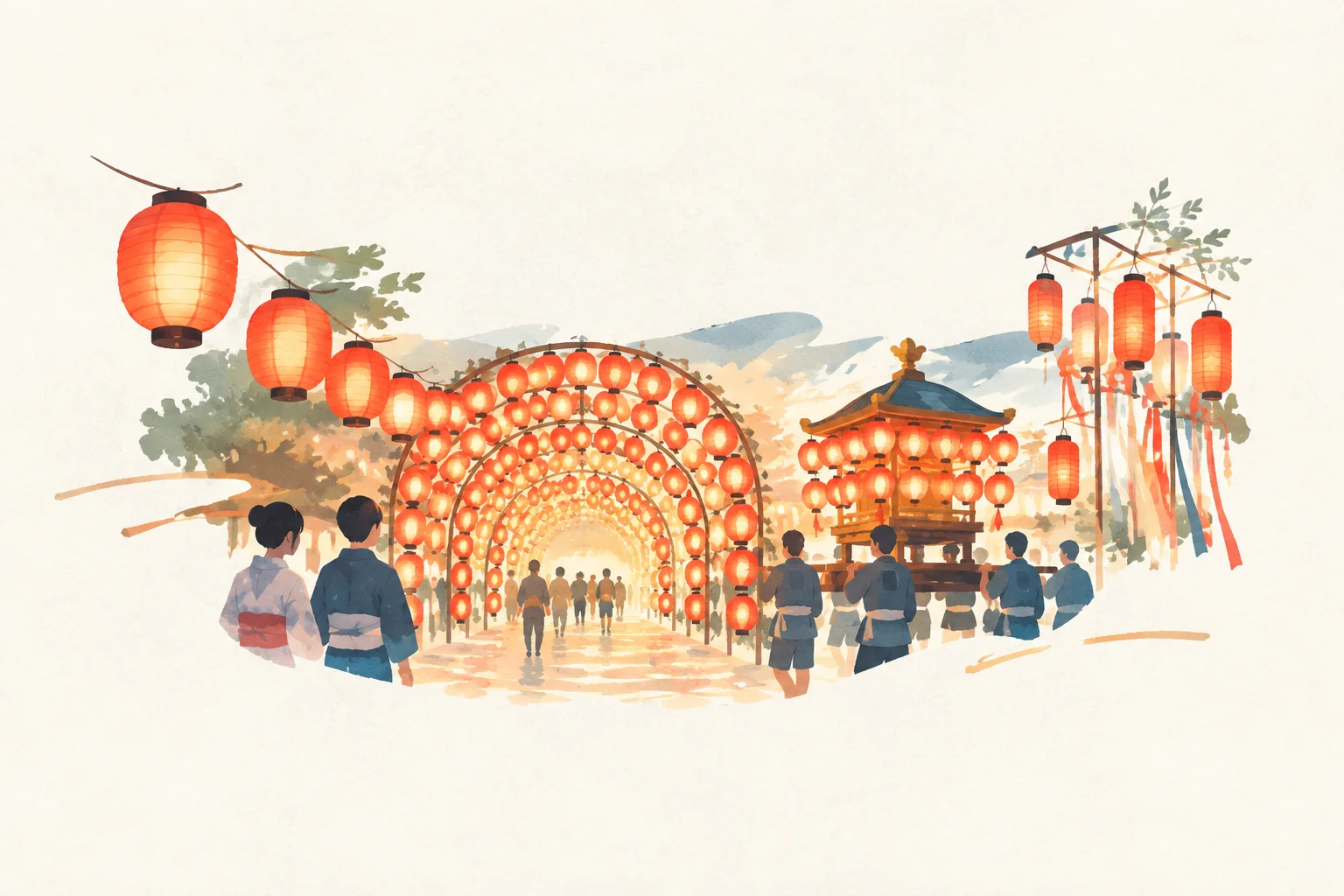
The Yamaguchi Lantern Festival carries on the Ōuchi clan’s Bon lantern tradition and decorates the city with tens of thousands of red lanterns. You can encounter different kinds of lights as you walk through the lantern tunnels and past lantern in the central shopping streets, and the large decorations in the plaza.
A Bon observance to pray for the peaceful repose of ancestorshas also grown into a brilliant spectacle that envelops the community.
Highlights of the Yamaguchi Tanabata Lantern Festival
The main highlight is a tunnel of red lanterns that appears along the central shopping streets and elsewhere. Lantern mikoshi appear near Prefectural Route 204, where you can watch them move, adorned with red lanterns.
A lantern tree and a lantern-covered yamakasa float are set up at Kameyama Park Fureai Plaza. Mini sudare lanterns and workshops are also offered at Ichinosaka River Traffic Exchange Plaza.

When you compare the different forms of light at each venue, you can see how prayers have spread through the ages, meow!
Location and access
- Venue and address
-
Yamaguchi City central shopping streets, Park Road, Prefectural Route 204, Ichinosaka River Traffic Exchange Plaza, Kameyama Park Fureai Plaza, and other locations. Address: central shopping streets and Park Road, Yamaguchi City, Yamaguchi Prefecture.
- Train and bus
-
It is a 5-minute walk from JR Yamaguchi Station, or a 30-minute bus ride from JR Shin-Yamaguchi Station.
- By car
-
It is a 20-minute drive from Ogori IC on the Chugoku Expressway. Traffic restrictions are announced for 2026 from 6 p.m. to 10 p.m.
- Parking
-
Parking is listed at the Yamaguchi Prefectural Education Hall, Yamaguchi Prefectural Library, and the parking lot reserved for Kameyama Park users, among other locations. In 2026, the temporary parking lot is open from 5:30 p.m. to 10 p.m.
AddressCentral Shopping Arcade and Park Road, Yamaguchi City, Yamaguchi Prefecture
View detailed information about the Yamaguchi Tanabata Lantern Festival
Kokokuji Temple Lantern-Burning Ceremony (Yura, Wakayama Prefecture)
- Dates
- 2026/08/15
- Season / frequency
- August 15
- Location
- Kokokuji Temple
- Area
- Wakayama Prefecture・Yura Town
- Participation fee
- Free
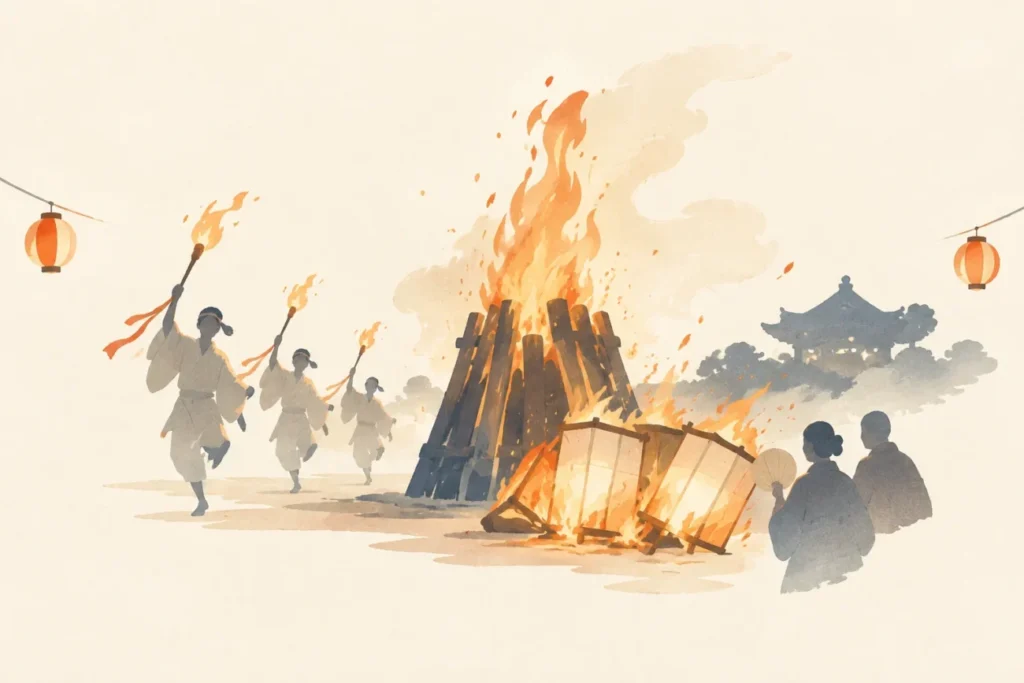
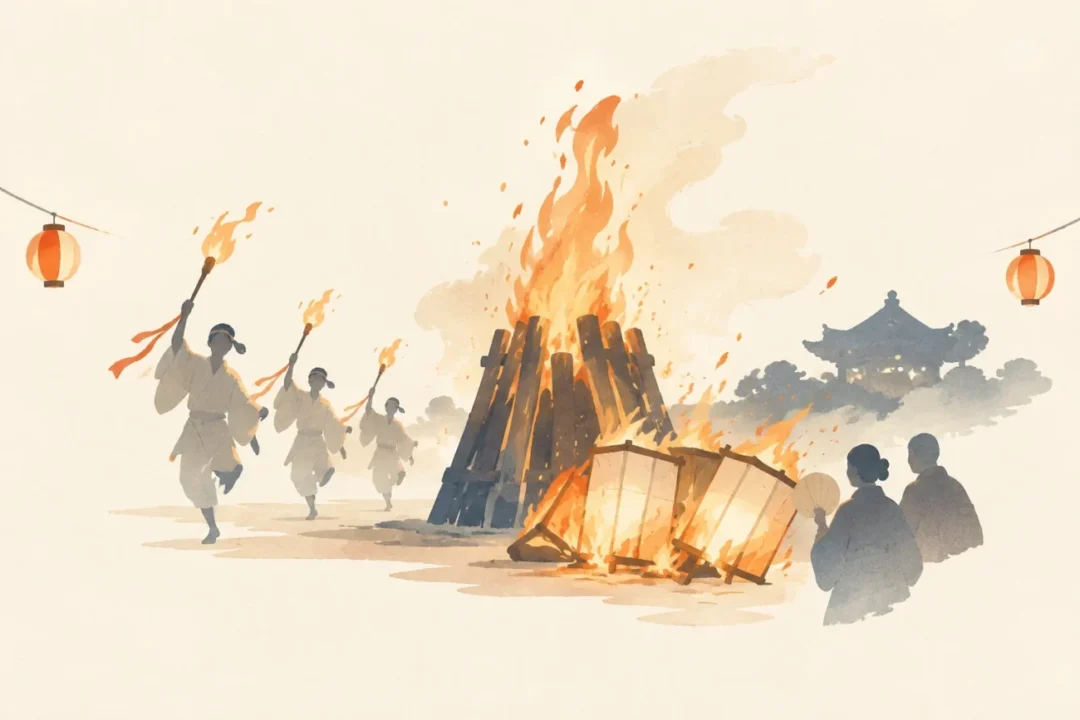
The Kokokuji Temple Lantern-Burning Ceremony isSpirit-sending rite during the Urabon observanceThis event has been passed down as a ritual. After the Buddhist service, the torch dance and the lighting of the giant torch follow. As Buddhist chants, bells, and shakuhachi music ring out, lanterns from each household are sent into the flames. Beyond the spectacle of the great blaze, the ritual acts of memorializing the dead and the layering of sounds convey prayers that have been upheld for generations.
Highlights of the Kokokuji Temple Lantern-Burning Ceremony
The highlight is the lighting of the giant torch, which follows the torch dance. The festival lights 4 giant torches called doyō, each 4 meters long and weighing 300 kilograms, and puts on a display of skill. Afterward, as Buddhist chants, bells, and shakuhachi music are performed, lanterns from each household are cast into the flames, led by the founder’s lantern.
This event is characterized by memorial rites involving the movement of fire and the sound of music.
If you listen not only to the roar of the flames but also to the Buddhist chants and bells, you can feel what the event means, meow!
Location and access
- Venue and address
-
Kokokuji Temple (801 Monzen, Yura-cho, Hidaka District, Wakayama Prefecture)
- Train and bus
-
A 10-minute walk from JR Kii-Yura Station
- By car
-
7 km via National Route 42 from Hirokawa IC on the Yuasa-Gobo Road; 15 minutes by car
- Parking
-
100 cars · free
Address801 Monzen, Yura Town, Hidaka District, Wakayama Prefecture
View detailed information about the Kokokuji Temple Lantern-Burning Ceremony
Innoshima Suigun Festival (Onomichi, Hiroshima Prefecture)

- Dates
- 2026/08/30 〜 2026/09/20
- Season / frequency
- Usually August / Every year
- Location
- Innoshima Amenity Park and Shimanami Beach
- Area
- Hiroshima Prefecture・Onomichi City
- Participation / viewing
- Open to public participation / spectators welcome
- Participation fee
- Free (some paid viewing seats available)
- Required number of participants
- 16 people
The Innoshima Suigun Festival is a local event honoring the Murakami naval forces and bringing their valiant image to life today. After the ko-haya boat races on the water, the evening features armored warriors entering the grounds, the lighting of fires,Parading the giant torchesthe Yōraku dance, and fireworks follow.
Its appeal lies in the way stories that carry on memories of those who came before are connected with the flames that symbolize the festival.
Highlights of the Innoshima Suigun Festival
Highlights include races between wooden ko-haya boats on the water and the Shimabi Festival, held on the beach at night. Each ko-haya is crewed by 16 people in total: rowers, a helmsman, and a taiko drummer. Teams compete in several divisions for speed and teamwork.
At the fire festival, armored warriors enter the grounds, giant torches are paraded, the Yōraku dance is performed, and large fireworks are set off, in that order.
Location and access
- Venue and address
-
Innoshima Amenity Park and Shimanami Beach (57 Innoshima Ohama-cho, Onomichi City, Hiroshima Prefecture)
- Train and bus
-
Take a bus from JR Onomichi Station bound for Innoshima Habu Port for about 25 minutes, get off at Innoshima Ohashi, then walk about 10 minutes.
- By car
-
It is about 5 minutes by car from Innoshima-Kita IC and about 10 minutes by car from Innoshima-Minami IC on the Shimanami Kaido.
- Parking
-
The sea festival uses the parking lot at the venue, but spaces are limited. The fire festival has no parking at the venue; take a shuttle bus from the temporary parking lots at Shigei Junior High School and Innokita Elementary School.
Address57 Innoshima-ohama-cho, Onomichi, Hiroshima Prefecture
View detailed information about the Innoshima Suigun Festival
At a glance
The festivals introduced here are passed down not as mere spectacles of fire and light, but asWays of honoring those who came before and entrusting the community’s hopesis passed down. Each has its own story: fire representing warriors’ return by the sea, lanterns sent off with Buddhist chants, paper lanterns decorating the town, Mantō lanterns moving along the river, and torches traveling through farmland.
Memorial rites involving the movement of fire and the sound of musicPaying attention to these details can help you feel more deeply the prayers behind the festival. Check the event information, and take note of the meaning of each event and how its expressions differ from place to place.
Festivals related to this article

Innoshima Suigun Festival
A festival on Innoshima where the history of the Murakami Suigun comes alive amid the sea and flames
Kokokuji Temple’s Lantern Burning
A spirit-sending ceremony passed down in Yura, lit by Buddhist chants and giant torches

Yamaguchi Tanabata Lantern Festival
A traditional summer festival as red lantern light envelops the streets of Yamaguchi
Ayabe Minazuki Festival
The Minazuki Festival lights up Ayabe’s summer with lanterns on the Yura River and fireworks
Owari Mushi-okuri Events
An Owari tradition of driving away pests, praying for a good rice harvest with fire and drums
