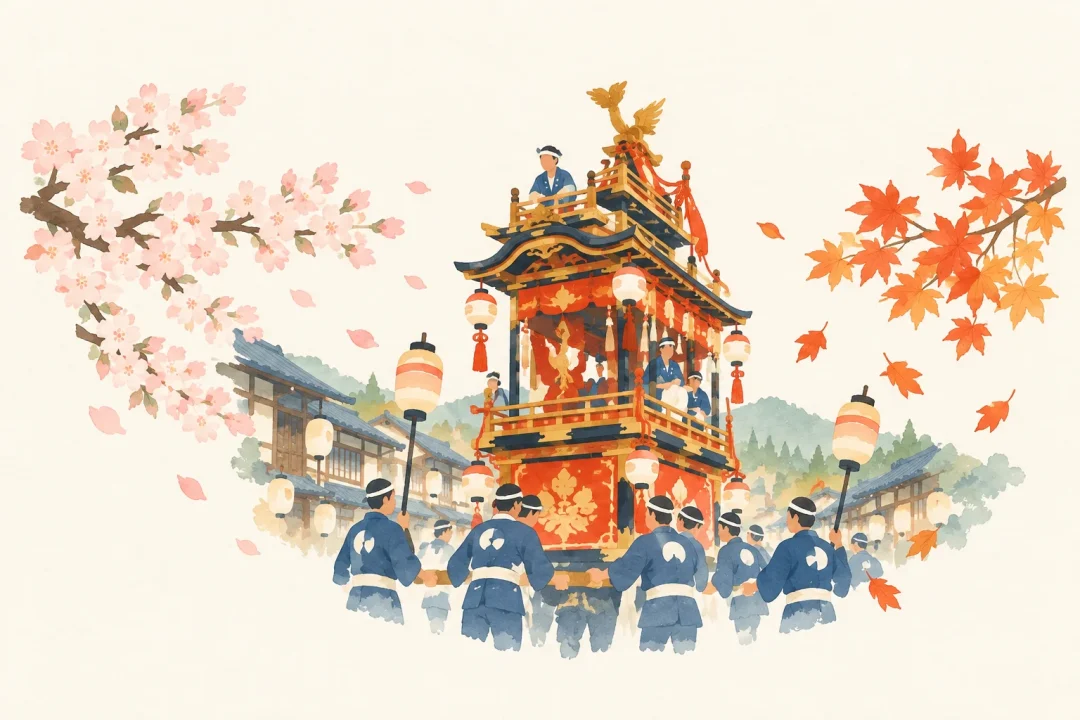
Kishiwada Danjiri Festival through its carvings and the movement of its people: how the town changes between day and night
To enjoy not only the thrill of yarimawashi, but also the danjiri’s craftsmanship and the coordination of the people pulling it.
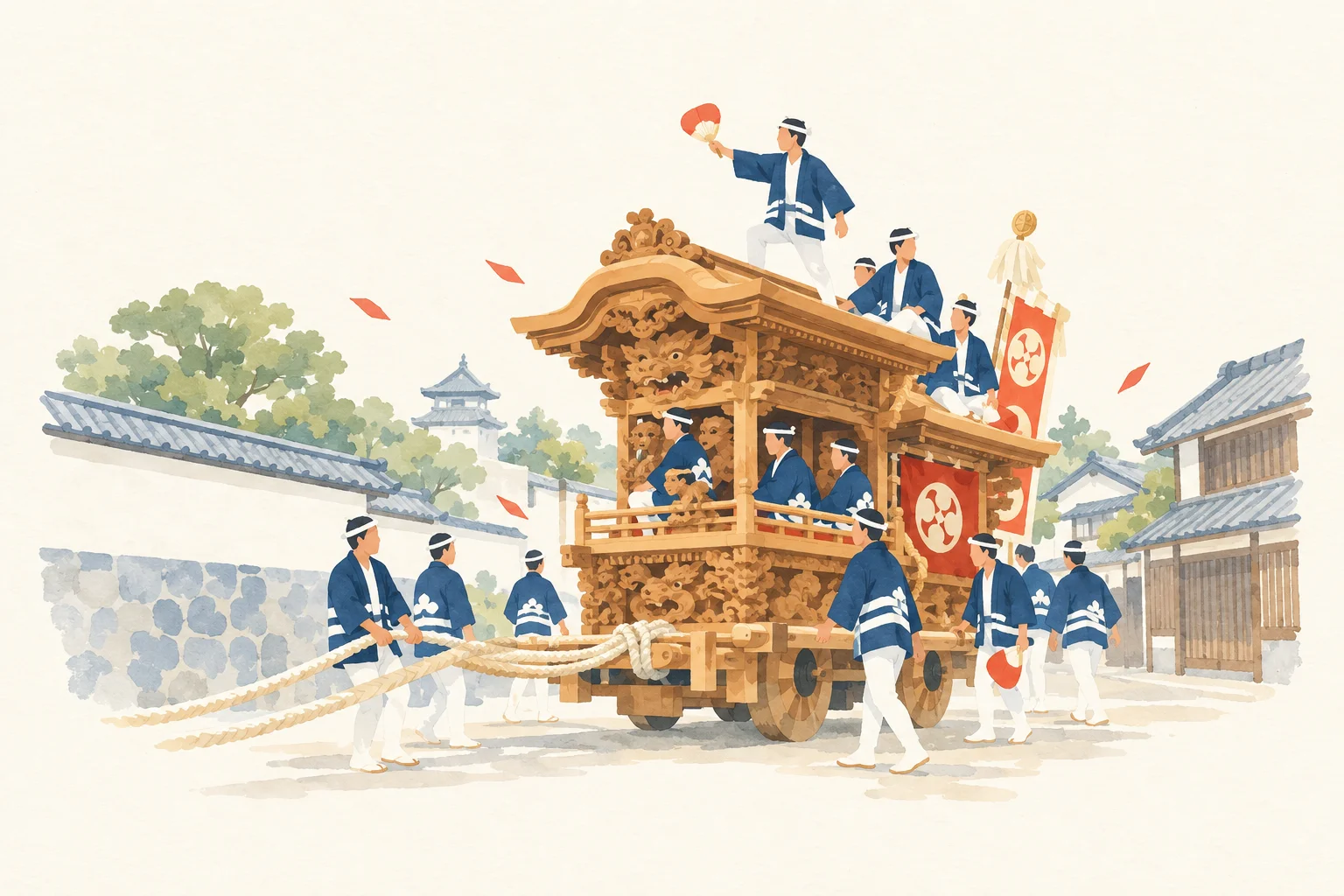
Kishiwada Festival is well known for yarimawashi, the forceful maneuver of turning a corner. If you focus only on that moment, you may remember little beyond how quickly the danjiri rushes past. The danjiri’s carvings, the way people work together to move it, and the lanterns at night. A change in perspective reveals many different things to appreciate in a single festival.
First, check the district and dates you plan to visit
Kishiwada City’s official guide presents the September festival and the October festival separately. Don’t decide where to go based only on the phrase “Kishiwada danjiri.” First check which district and which festival you want to see. The official website also has information introducing the danjiri from each district, offering a starting point for choosing one you’d like to see before your trip. (Kishiwada City, “Kishiwada Danjiri Festival”)
When looking into accommodation and transportation, it’s a good idea to mark the viewing district on a map, rather than searching only for the festival name. Check the nearest station, passable roads, and your route home together so you won’t need to try to cross to the other side of the procession at the venue. Bring a traffic restriction map for the year of your visit as well as a standard tourist map.
After watching the speed, take a closer look at the wood
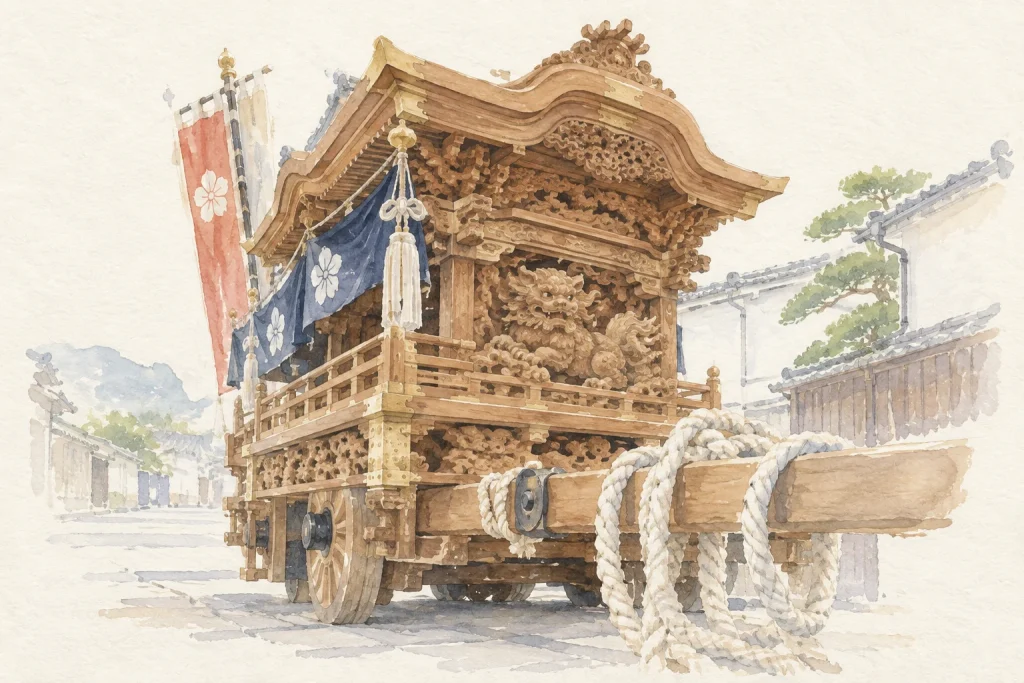
When it’s appropriate to view a danjiri up close, take a look at the overlapping roof sections, the wooden framework, and the carvings. Comparing them while reading the city’s introductions to each district lets you see the danjiri not simply as a vehicle, but as a work of craftsmanship with features unique to each district. You don’t need to know the names of all the subjects depicted; simply looking for figures and a sense of depth is enough to enjoy them. (Kishiwada City, “Kishiwada Danjiri Festival”)
Photography can also reveal different things: one shot that captures the whole danjiri and another that focuses on details. However, even when it looks as if the danjiri has stopped, the people involved may still be preparing. The basic rule is to watch from areas open to the public, and not to touch the carvings or step into the route to take photos.
Many roles come together to move a single danjiri
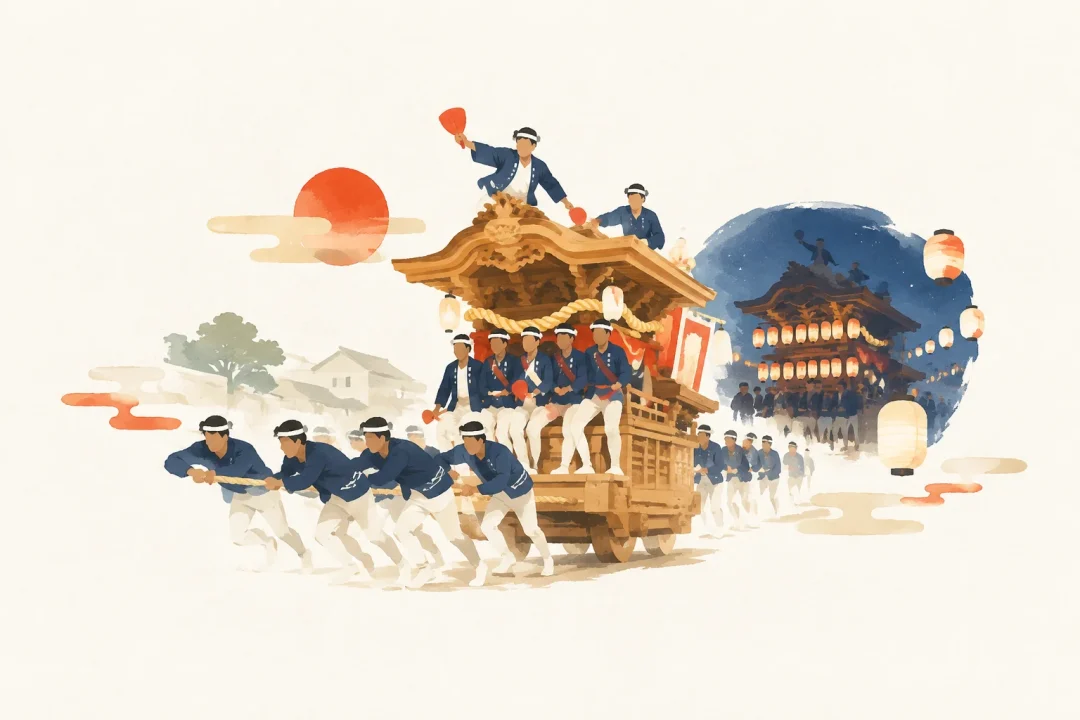
When the danjiri is moving, look beyond the people on the roof, following the ropes from their front to the people behind. People’s calls and the directions they face change, and the large vehicle follows their lead. That coordination is what makes the festival fascinating in ways that a brief moment on video can’t easily convey. Rather than getting close to a particular spot, you can better understand the different roles by watching how the movement connects from a viewing place with a clear overall view.
Avoid crowding into a corner just to see yarimawashi. Rather than lingering in a crowded spot where it’s hard to see, you can enjoy the danjiri moving along the street from a viewing area indicated by staff. Knowing which places are for stopping and which are for moving makes it easier to share space with other spectators.
At night, take your time enjoying the lanterns
Kishiwada City describes how lanterns are attached at night and the danjiri is slowly pulled through the streets, without running or performing yarimawashi as it does during the day. Rather than repeating the daytime spectacle in the dark, this is a time to take in the lantern-lit danjiri against the town’s scenery. (Kishiwada City, “Danjiri Festival Lantern-Lighting Procession”)
| Choosing when to go | A good way to watch |
|---|---|
| Watching during the day | Enjoy the danjiri’s movement, people working together, and the three-dimensional quality of its woodcarvings |
| Watching at night | Enjoy the lanterns, the townscape, and the slow procession |
| Both day and night | Build in breaks and meals, and compare a few selected viewing spots |
If you plan to watch from day into night, don’t plan to stand in the same place for a long time. Take a break, check your return transportation, then come back for the lantern-lit procession; you’ll find it easier to notice the contrast. Seeing both the power and the delicacy of Kishiwada’s danjiri makes it feel a little more familiar.
Official sources referenced
- Kishiwada City, “Kishiwada Danjiri Festival”
- Kishiwada City, “Danjiri Festival Lantern-Lighting Procession”
This article is based on publicly available information from official sources, local governments, and tourism associations. Information checked: 2026/10/01. Check the official information for the year of your visit for event dates, venues, traffic restrictions, and participation requirements.
Festivals related to this article
Kishiwada Danjiri Festival
Kishiwada’s danjiri festival: powerful by day, illuminated by lanterns at night

Find one thing that catches your interest.
Find a little “first” beyond the familiar everyday. Why not start with a region or way of enjoying yourself that catches your interest, and see where it leads?
Find festivals