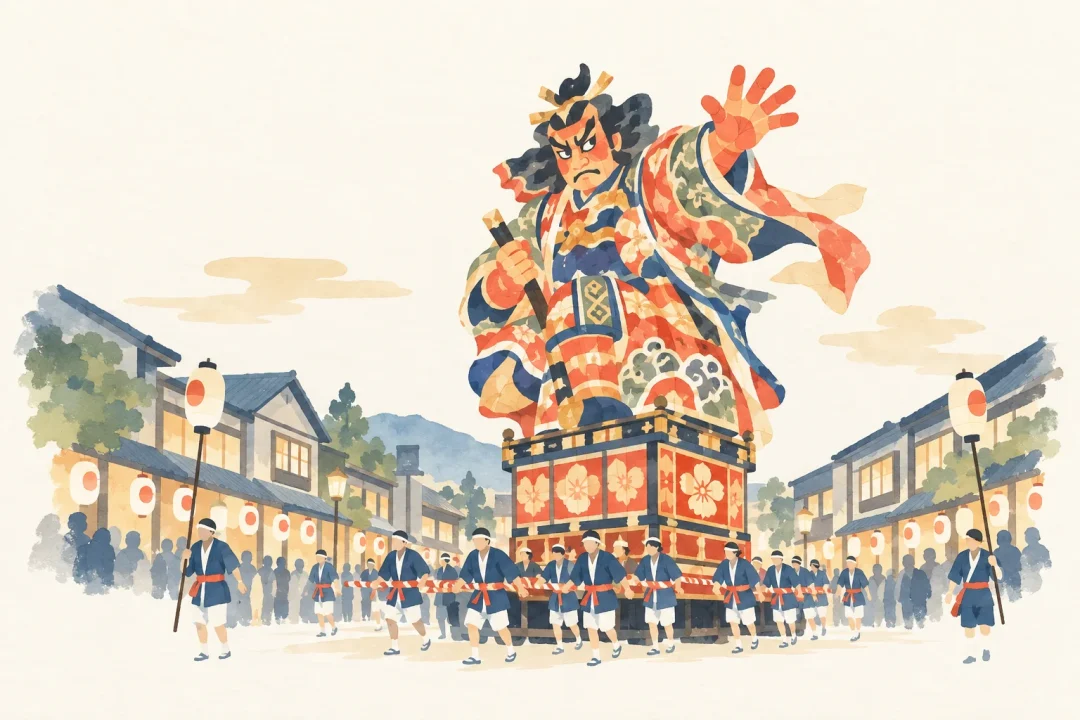
A tradition of distinctive night kagura thriving in 26 mountain communities
Shiiba Kagura
Festival information
EVENT INFORMATION- Season / frequency
- Every year, November–December / Every year
- Location
- Shrine worship halls, community centers, public halls, and other venues in the 26 districts of Shiiba Village
- Area
- Miyazaki Prefecture・Shiiba Village(From Tokyo: approx. 1 h 40 min–2 h · flight time only)Prefecture-level estimate to a main station or airport, not the venue. Airport access, check-in and onward travel are extra; remote areas and islands can take much longer.
- Highlights and activities
- Wishes behind the festival
- Participation / viewing
- Open to public participation / spectators welcome
- Last updated
- 2026/10/19
Shiiba , passed down in 26 districts of Shiiba Village, Miyazaki Prefecture, is a traditional performing art that preserves dances, music, and costumes unique to each community. Dedicated at major shrine festivals, it carries memories of mountain life and hunting culture into the present.
About Shiiba Kagura
Photo credits and terms of use
Photographer: Miya.m File:Shiibaminka03.jpg / Wikimedia Commons / CC BY-SA 4.0 Own work by the contributorDisplay size only adjusted.May differ from the event currently featured.Shiiba Kagura is a form of kagura passed down in communities throughout Shiiba Village, Miyazaki Prefecture.
It is passed down in 26 districts in the village, with differences in dances, performances, and costumes from one community to another.
It has been dedicated at major shrine festivals, reflecting mountain life, hunting, and the culture of slash-and-burn farming.
It was designated an Important Intangible Folk Cultural Property of Japan in Heisei 3.
Source: 椎葉神楽 | 神話のふるさと特集 | 宮崎県公式観光サイト「みやざき観光ナビ」 / 【終了】第15回 椎葉神楽まつり | イベント | 宮崎県公式観光サイト「みやざき観光ナビ」
Festival highlights
A highlight is the variety of dances performed in a festival space called the Omiya.
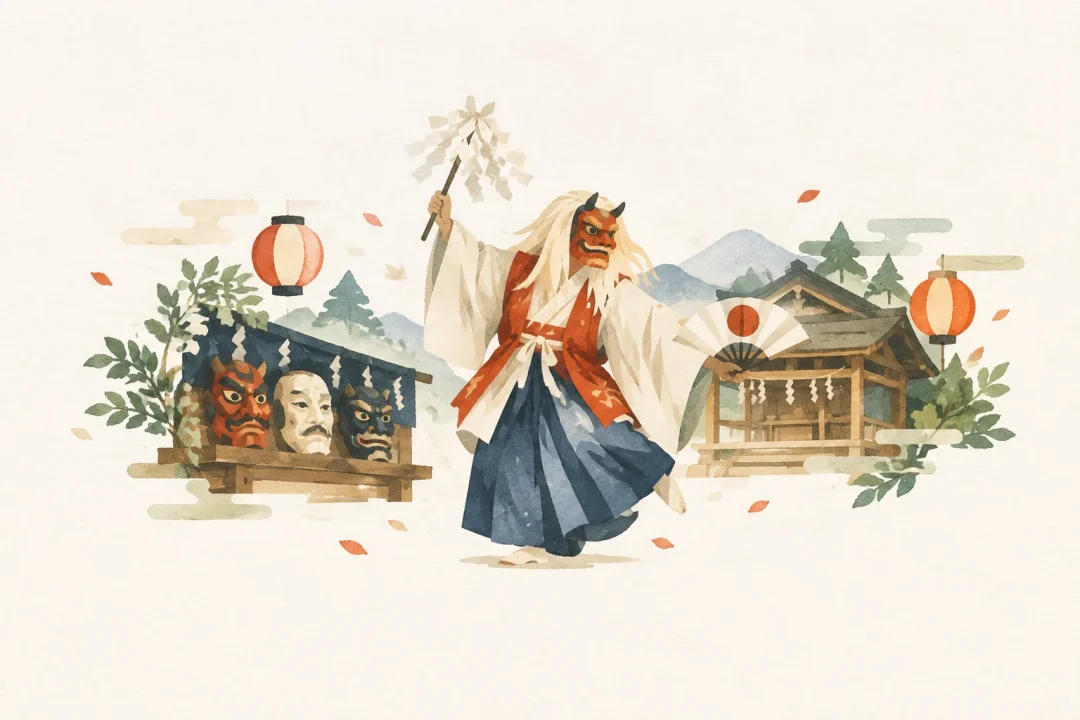
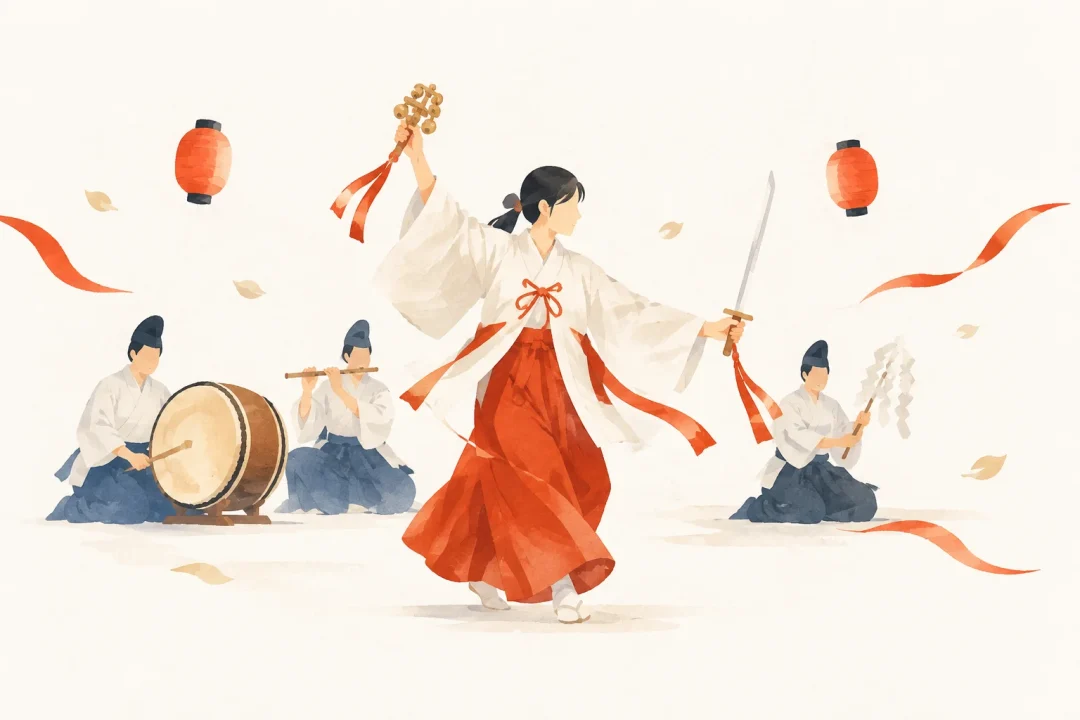
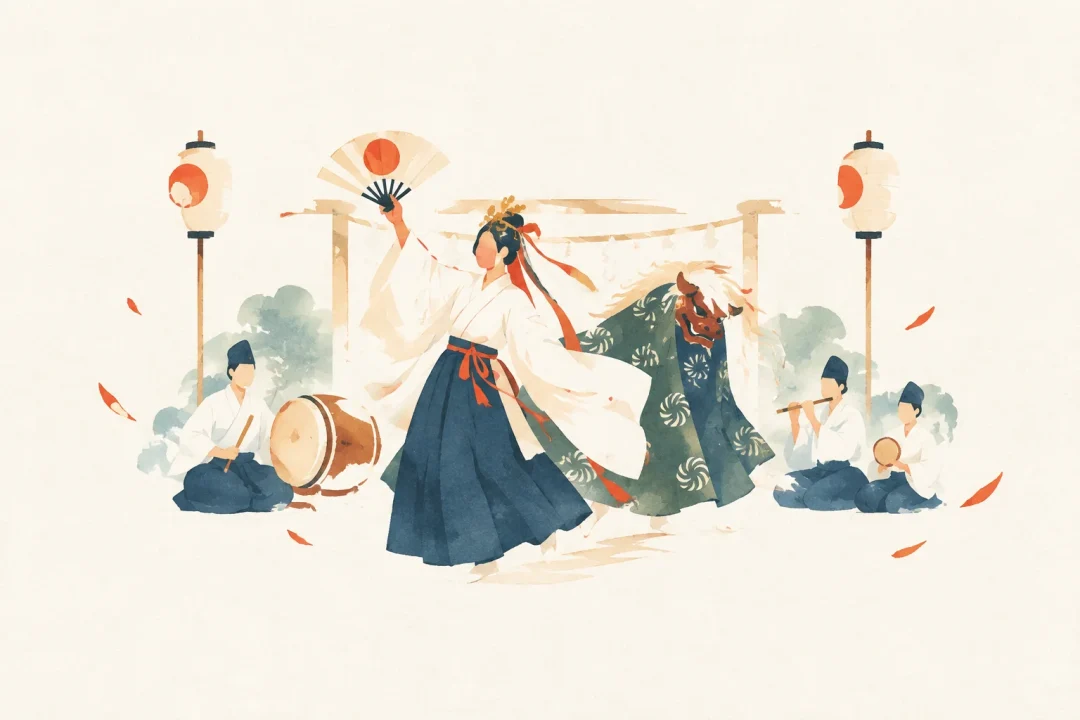
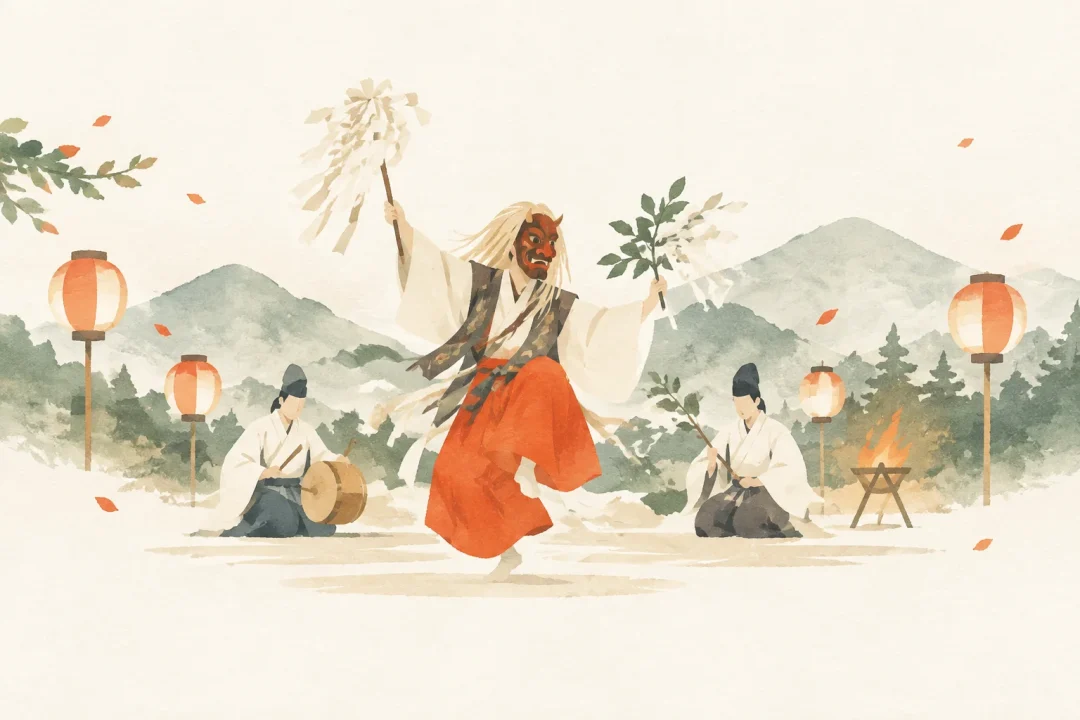
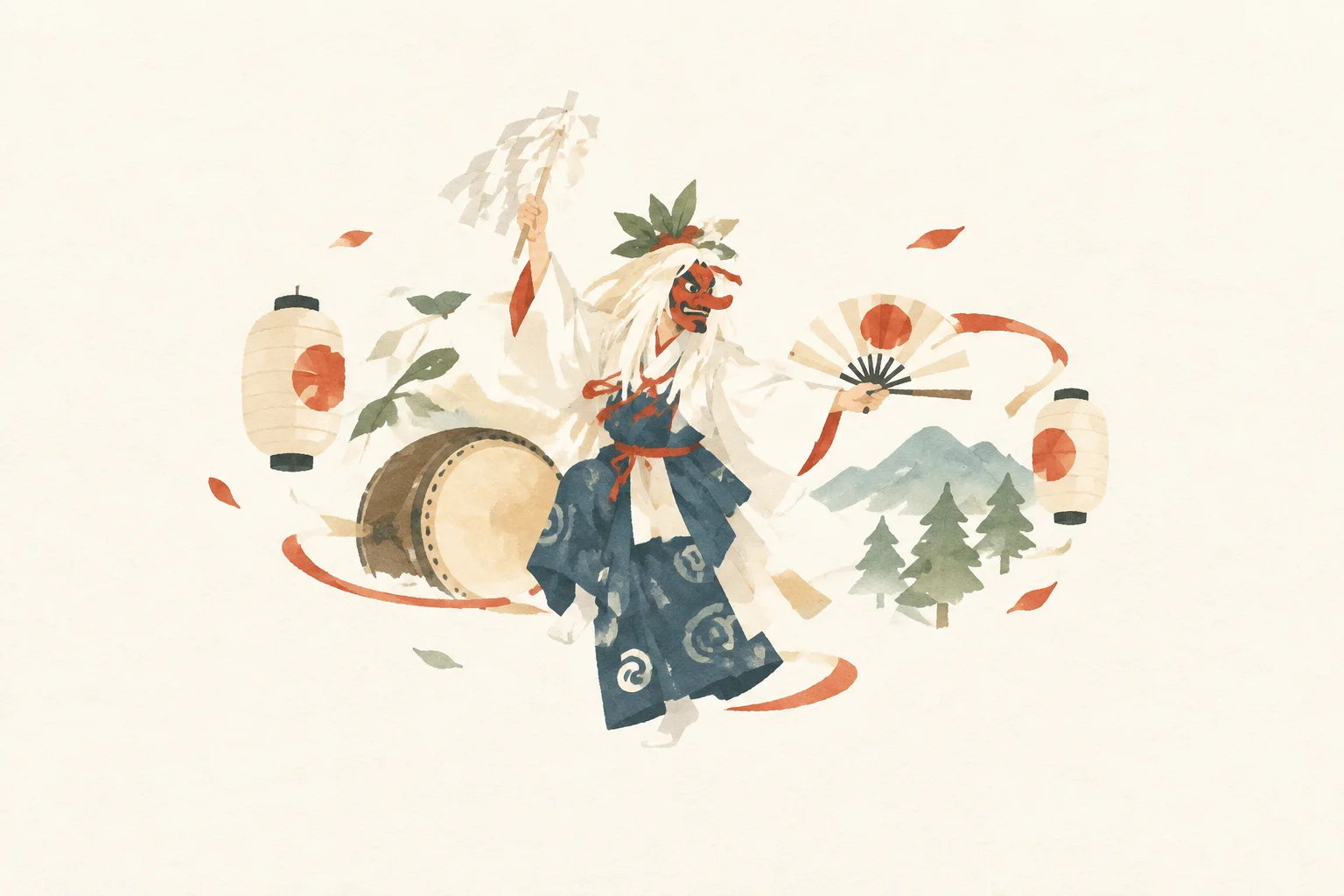
There are dances with ritual objects, in which performers hold items such as , bells, fans, branches, swords, and bows, as well as masked dances featuring masks such as those of demon gods. The performances vary in formation, from solo dances to dances with four performers.
Dance tempos and performances differ from one community to another, while serikauta songs and the canopy’s “kumo” create a distinctive atmosphere.
Source: 椎葉神楽|教育委員会|椎葉村
A tradition of distinctive night kagura thriving in 26 mountain communities
What to expect
Preparations include arranging offerings and cutting gohei paper streamers. The kagura performances follow the welcoming of the gods and conclude with the sending off of the gods.
A is hung around the festival space, and a canopy called a “kumo” is suspended from the ceiling.
In some districts, people exchange serikauta songs while watching the dances or share dishes made with wild boar, venison, and other ingredients.
Source: 国指定文化財等データベース / 神話のふるさと宮崎 神楽体験レポート~大河内神楽~ | 神話のふるさと特集 | 宮崎県公式観光サイト「みやざき観光ナビ」
How to take part
Kagura is a local festival tradition, but people from outside the area can join in some performances.
At Omae Kagura, it is said that anyone may take part in “Yumitoshi,” passing through the space between the bows, following a baby.
Since members of the public cannot join every performance, it is important to check with each district which parts are open to participation and what the proper etiquette is.
If a performance is open to participation, join in according to the local instructions, taking care not to obstruct the line or proceedings.
At night kagura, it is customary to bring shochu as an offering, or around 3,000–5,000 yen as a congratulatory gift.
Groups of 10 or more are advised to contact the preservation association in advance and obtain permission.
Source: 椎葉神楽 | 全国神楽継承・振興協議会
Source: 神話のふるさと宮崎 神楽体験レポート~尾前神楽~ | 神話のふるさと特集 | 宮崎県公式観光サイト「みやざき観光ナビ」
Location and access
- Venue and address
Performances are held in shrine worship halls, community centers, public halls, and other venues in the 26 districts of Shiiba Village.
Venues vary by district, so check with the kagura preservation society or the district hosting the event before you visit.
Event venue 宮崎県椎葉村 椎葉村内26地区の各神社拝殿
This map uses the venue name. Check the official guide for the event area and entrances.
Dates and season
Shiiba Kagura is performed as at grand festivals at throughout the village each year from November to December.
Dates vary by district; examples are described as taking place mainly on weekends from late November through December.
Accommodation and hotels PR
Showing nearby accommodation.
Prices and availability are current at the time of retrieval. For multi-night stays, only the first night’s price is shown. Confirm the final price and directions to the venue with the booking provider. Select your dates again when using the area search link. Search area: within 3 km of Central Miyazaki Prefecture / Shiiba Village (the search is not centered on the festival venue)
Tips for your visit
Some kagura performances continue through the night, so bring warm clothing and be prepared to sit for a long time.
If you wish to take photos or videos, obtain permission from the preservation society in advance.
Kagura is a festival held in honor of the local community’s traditions, so visitors are encouraged to come with the mindset of taking part in a local festival, rather than treating it solely as a tourist event.
Nearby attractions
Nearby attractions around Shiiba Kagura venues include Tsurutomi Residence, Shiiba Itsukushima Shrine, Kamishiiba Dam (Hyuga Shiiba Lake), and Gokasho Plateau.
Other places where you can experience Shiiba Village’s culture and nature include the Tonegawa Settlement (Yamura Cedar), Sennin’s Terraced Rice Fields, and the Great Ginkgo Observatory.
Check the locations of the kagura district you plan to visit and the various facilities when making your plans.

椎葉民俗芸能博物館
宮崎県椎葉村にある博物館
Origins and History of Shiiba Kagura
There are no reliable records showing the origins of Shiiba Kagura. In the Tsugao district, local lore says it was brought from Aso Shrine in Higo during the Tensho era.
A kagura mask bearing an ink inscription dated Kan'ei 9 (1632) has also been passed down.
It was selected as an Intangible Folk Cultural Property of Japan in Showa 55, and designated an Important Intangible Folk Cultural Property of Japan in Heisei 3 February 21.
Official information
The Shiiba Village Board of Education page on the village’s official website introduces the districts where Shiiba Kagura is passed down, its distinctive features, and the process leading to its designation as an Important Intangible Folk Cultural Property.
The official Miyazaki Prefecture tourism website also lists event venues and dates in each district, as well as features of Shiiba Kagura.
Shiiba Kagura at a Glance
Shiiba Kagura is a collective name for the diverse forms of kagura passed down in Shiiba Village’s 26 districts.
The mountain way of life and traditions unique to each community are reflected in the dances with ritual objects, masked dances, serikauta songs, and the setting of the Omiya.
This traditional performing art, rooted in the local community, is dedicated in various areas from November to December and has been designated an Important Intangible Folk Cultural Property of Japan.
Japanese Festivals.jp Editorial Team
Celebrating local culture and helping you discover a side of Japan you never knew.
Article updated: 2026/10/19
Submit information or a correction Submit photos of this festival