Kagura in Mera’s mountain villages, where dances welcoming the deities live on
Mera Kagura
Festival information
EVENT INFORMATION- Season / frequency
- Mainly from November to December / It varies by : some are held every year, while others take place once every 2 years or once every 4 years.
- Location
- Multiple venues, including local shrines and community centers
- Area
- Miyazaki Prefecture・Saito City, Kijo Town, Nishimera Village(From Tokyo: approx. 1 h 40 min–2 h · flight time only)Prefecture-level estimate to a main station or airport, not the venue. Airport access, check-in and onward travel are extra; remote areas and islands can take much longer.
- Highlights and activities
- Participation / viewing
- Spectators welcome
- Last updated
- 2026/10/19
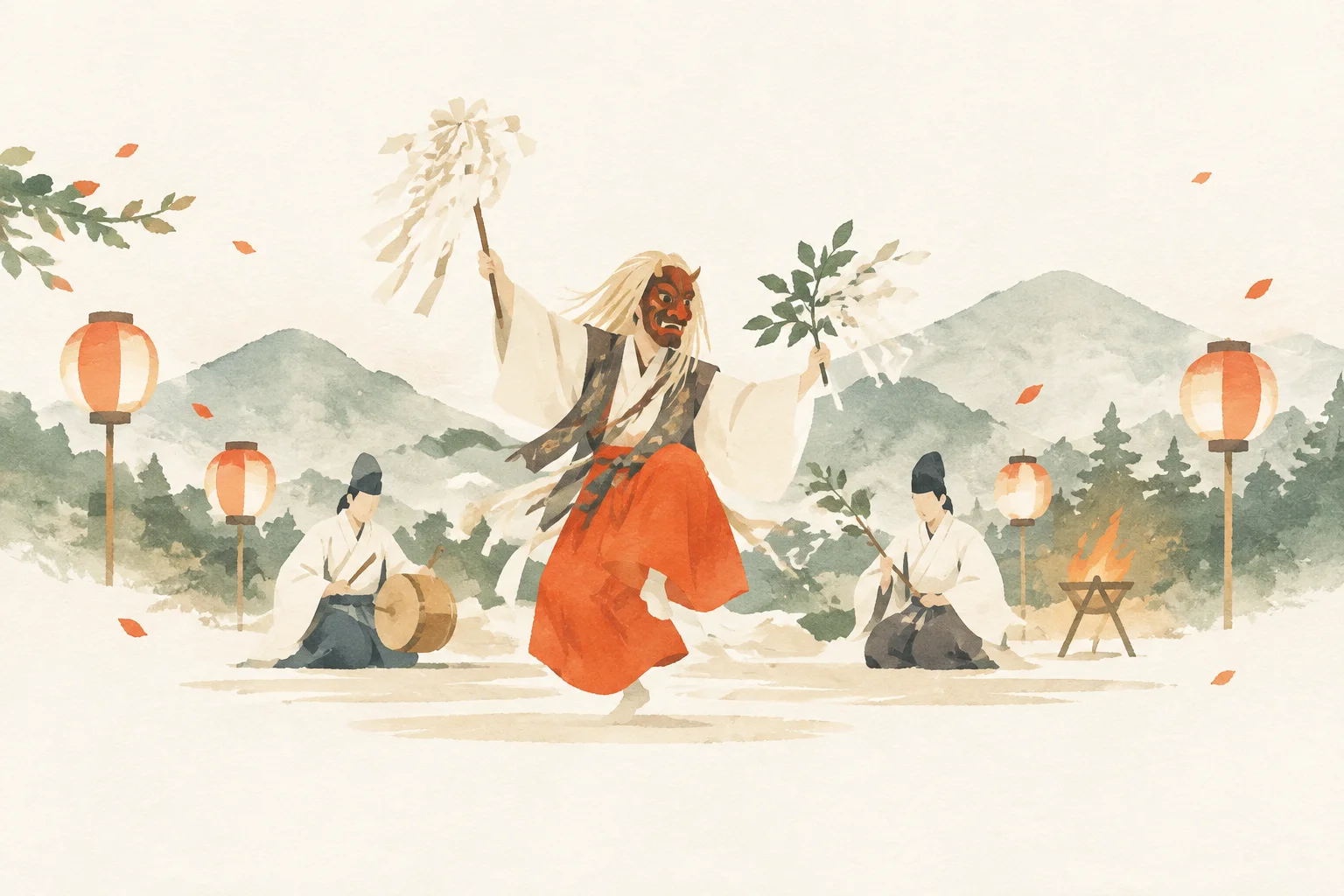
Mera Kagura is a kagura tradition designated as a National Important Intangible Folk Cultural Property, passed down in the Nishimera region of Miyazaki Prefecture and surrounding areas. The lives and prayers of mountain villages are reflected in the dances, from the O-gamiya where deities are welcomed to offerings that continue through the night and performances that convey hunting customs.
About Mera Kagura
Mera Kagura is the collective name for kagura traditions handed down in the Mera region of western Miyazaki Prefecture.
Each village preserves its own kagura, including those in Nishimera Village, Ohae and Shiro-mi in Saito City, and Nakanomata in Kijo Town.
This distinctive local folk performing art features elaborate O-gamiya structures, where the deities are welcomed and dances are offered.
Festival highlights
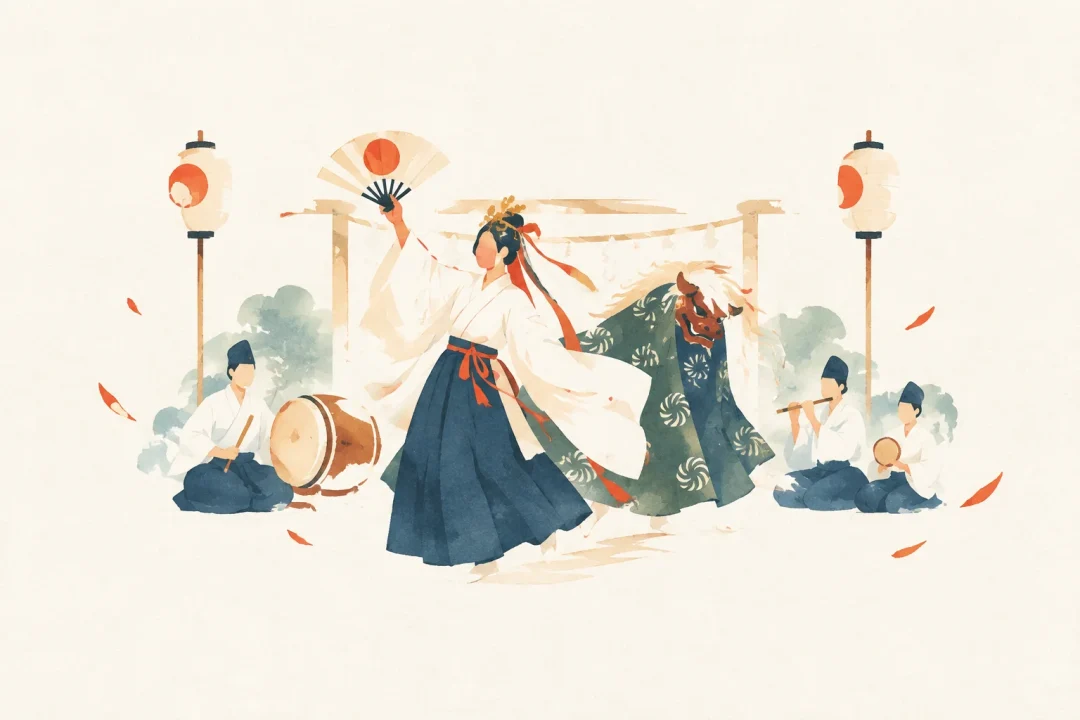
A highlight is watching a succession of deities appear as “降居” and dance in the sacred space known as the O-gamiya.
At Shiro-mi Kagura, performances begin with “Omen-mukae” and include a variety of dances, such as the Star Dance, Flower Dance, , and Fire God Dance.
“Shishitogiri,” which conveys the region’s hunting culture, is also known as a distinctive feature of the Mera region.
Source: 国指定文化財等データベース
Kagura in Mera’s mountain villages, where dances welcoming the deities live on
What to expect
Kagura begins with a ritual to welcome the deities, followed by a series of performances centered on the O-gamiya.
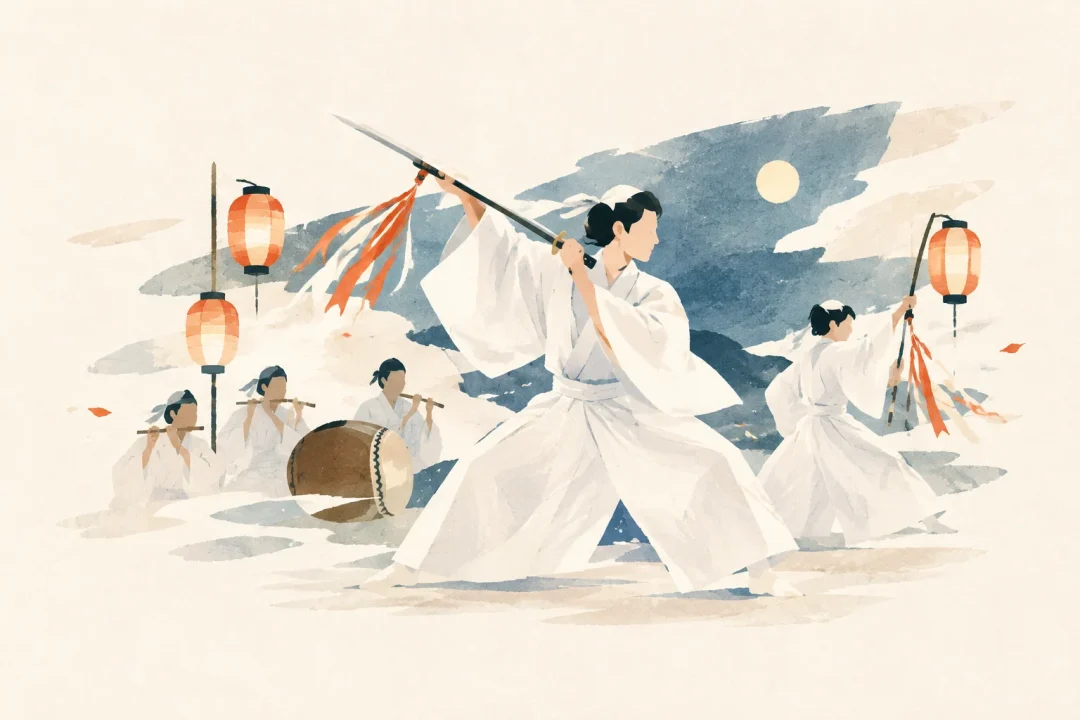
At Shiro-mi Kagura, dances are offered after the deities are welcomed. You can see ritual gestures welcoming the deities into the O-gamiya, as well as dances using swords, bows, and arrows.
The performances and order of events vary by area, but some kagura are offered through the night.
Source: 神話のふるさと宮崎 神楽体験レポート~銀鏡神楽~ | 神話のふるさと特集 | 宮崎県公式観光サイト「みやざき観光ナビ」
How to take part
Visitors can watch the event.
Location and access
- Venue and address
The performances are offered at shrines, community centers, and other venues in each region.
Ogawa Kagura is held at Mera Shrine (988 Ogawa, Nishimera Village, Miyazaki Prefecture).
- By car
Mera Shrine is about 1 hour from Saito IC on the Higashi-Kyushu Expressway.
- Parking
There is free parking at Mera Shrine.
Source: 米良神社 | 観光スポット | 宮崎県公式観光サイト「みやざき観光ナビ」
Event venue 宮崎県西都市、木城町、西米良村 各地域の神社
This map uses the venue name. Check the official guide for the event area and entrances.
Dates and season
The season varies by kagura.
Shiromi Kagura is scheduled from December 14 through the 15th; Obae Kagura from the 4th Saturday of November through Sunday; and Nakanomata Kagura, Ogawa Kagura, and others on a weekend in December.
Tips for your visit
The venue, program, and date vary by kagura, so it is important to decide which one you plan to visit and check its details.
Some kagura feature 33 dances performed through the night. At Shiromi Kagura, the night kagura takes place from December 14 through the 15th.
As viewing may take place at night or in winter, please check the schedule if you plan to stay for a long time.
Nearby attractions
Mera Shrine, the venue for Ogawa Kagura, is the guardian shrine of the Ogawa district in Nishimera Village.
On the , you can learn about the story associated with the enshrined deity Iwanagahime no Mikoto and Ogawa Kagura, which is offered every year.
Nearby attractions include Ogawa Sakugoya Village and Nishimera Onsen Karikobo's Yu Yutato.
Origins and History of Mera Kagura
Mera Kagura has been passed down over many years in villages throughout the Mera region.
In Showa 52, Shiro-mi Kagura was designated a National Important Intangible Folk Cultural Property under the name “Mera Kagura.” In Reiwa 5, the kagura traditions of Ohae, Nakanomata, Koshinoo, Murasho, and Ogawa were added, and the name was changed to “Mera Kagura.”
It has been passed down as a culture that reflects the region’s history and way of life, including kagura masks and hunting customs.
Source: 館内説明 - 西米良神楽伝承館
Official information
The official Miyazaki Prefecture tourism website introduces the features of Mera Kagura, as well as the venues and times of year when each kagura is held.
Designation information for cultural properties can be checked in the Agency for Cultural Affairs’ Database of Nationally Designated Cultural Properties.
The Nishimera Kagura Heritage Center introduces the history and culture of kagura, along with masks and videos.
Mera Kagura at a Glance
Mera Kagura is the collective name for kagura traditions handed down in Nishimera Village, Saito City, and Kijo Town, with each village preserving its own performances and style.
A major feature is kagura performed through the night in an O-gamiya, where the deities are welcomed, along with performances that preserve hunting customs.
When visiting, choose the kagura you want to see, such as Shiro-mi Kagura or Ogawa Kagura, and check the venue and schedule.
Japanese Festivals.jp Editorial Team
Celebrating local culture and helping you discover a side of Japan you never knew.
Article updated: 2026/10/19
Submit information or a correction Submit photos of this festival