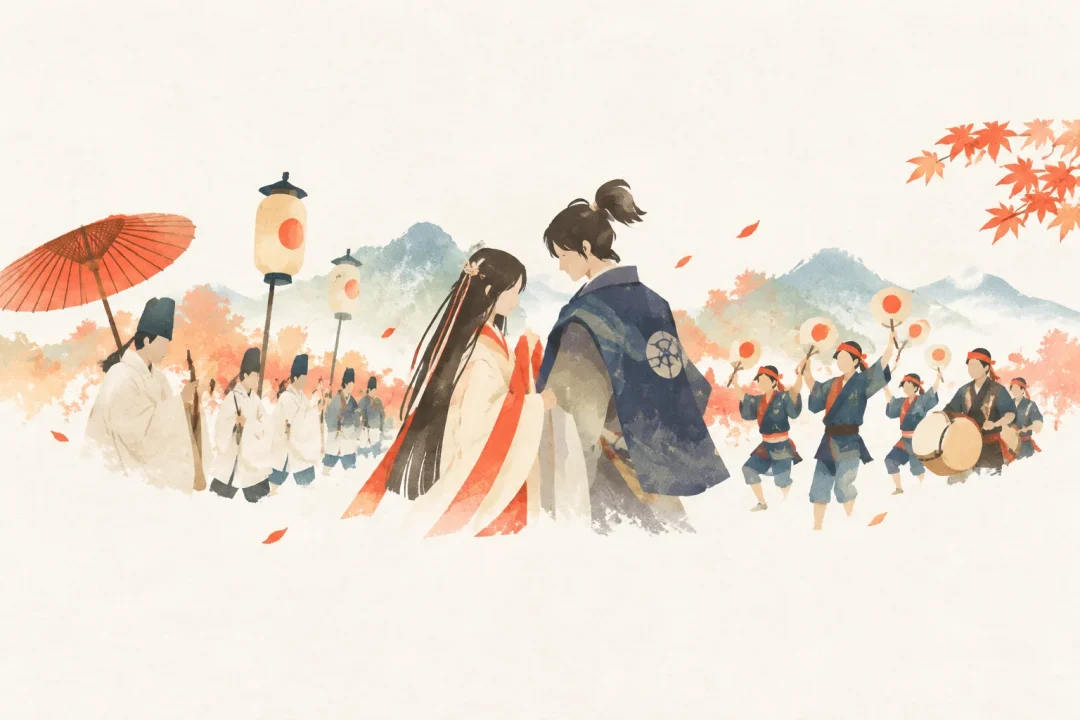
A traditional kagura dance resounds through the shrines of Hitoyoshi and Kuma
Kuma Kagura
Festival information
EVENT INFORMATION- Season / frequency
- Usually from October 8 until around December 15 / Every year
- Location
- Shrines in Hitoyoshi City and the towns and villages of Kuma District, including Aoi Aso Shrine
- Area
- Kumamoto Prefecture・Hitoyoshi City, Nishiki Town, Taragi Town, Yunomae Town, Mizukami Village, Sagara Village, Itsuki Village, Yamae Village, Kuma Village, Asagiri Town(From Tokyo: approx. 1 h 50 min–2 h 10 min · flight time only)Prefecture-level estimate to a main station or airport, not the venue. Airport access, check-in and onward travel are extra; remote areas and islands can take much longer.
- Highlights and activities
- Wishes behind the festival
- Last updated
- 2026/10/19
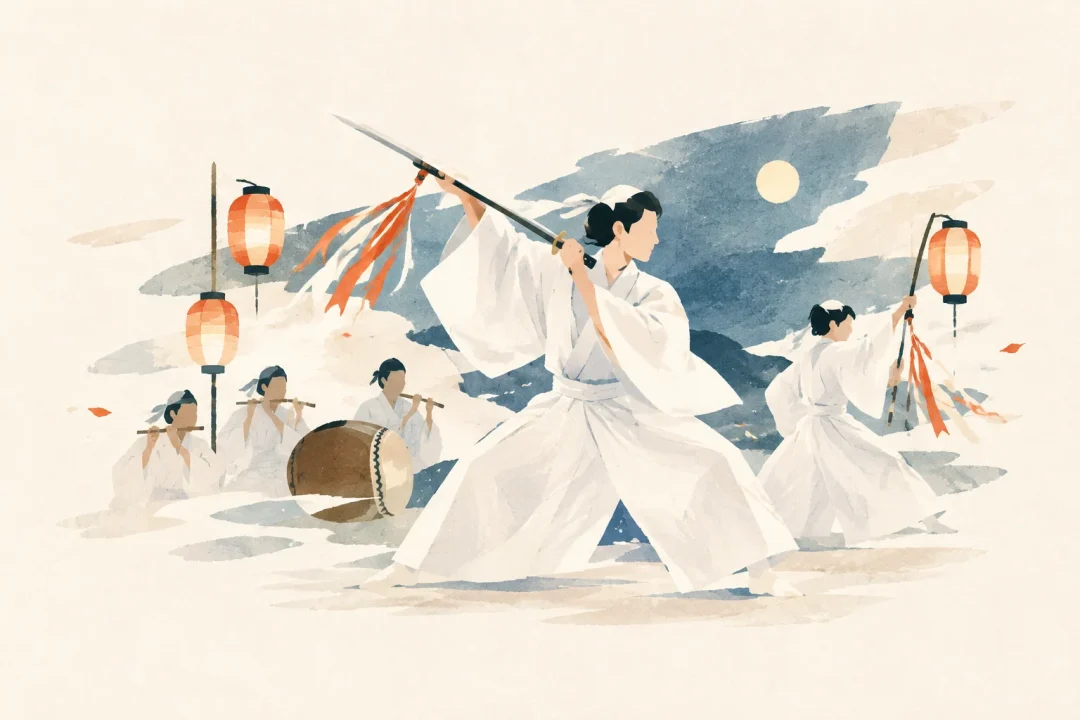
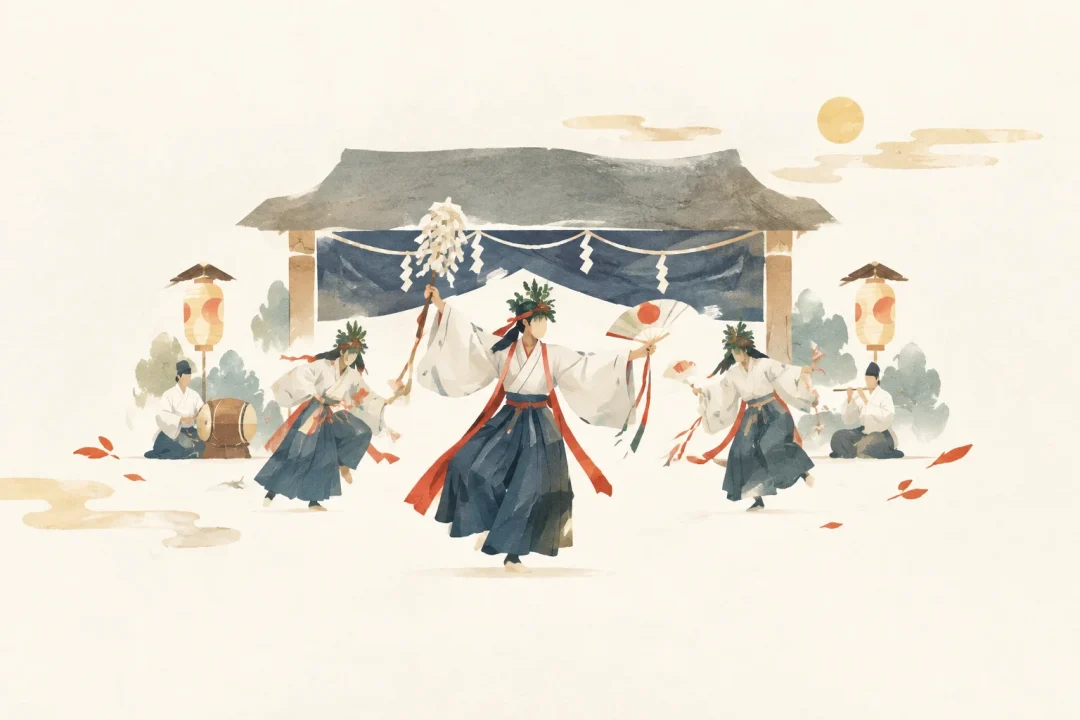
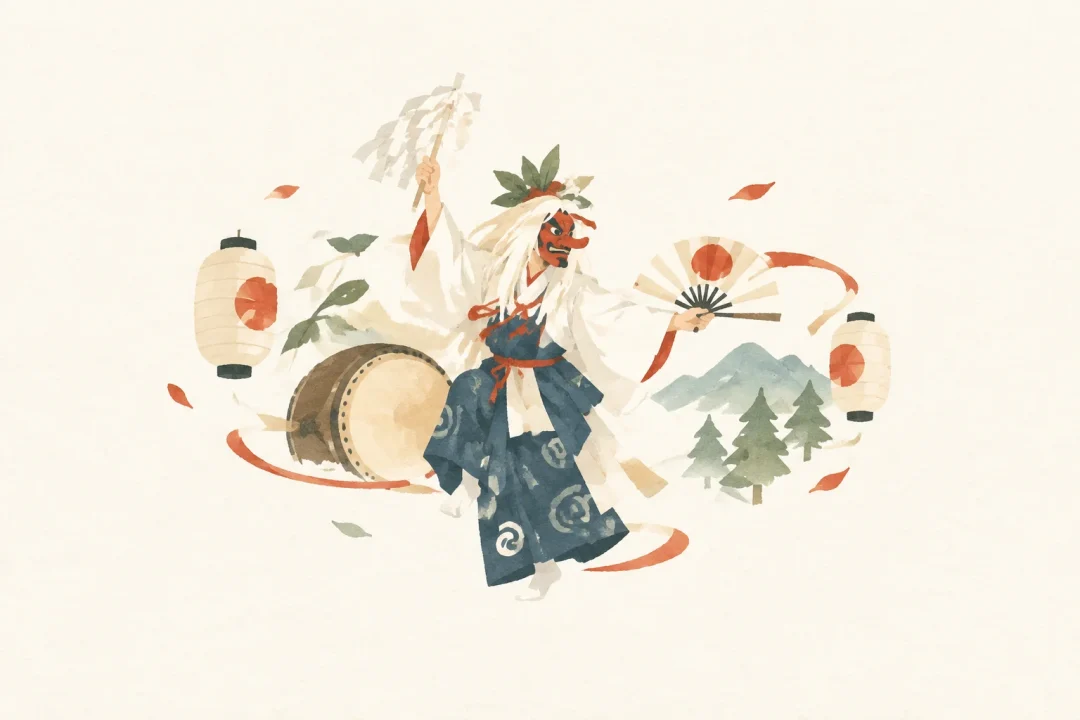
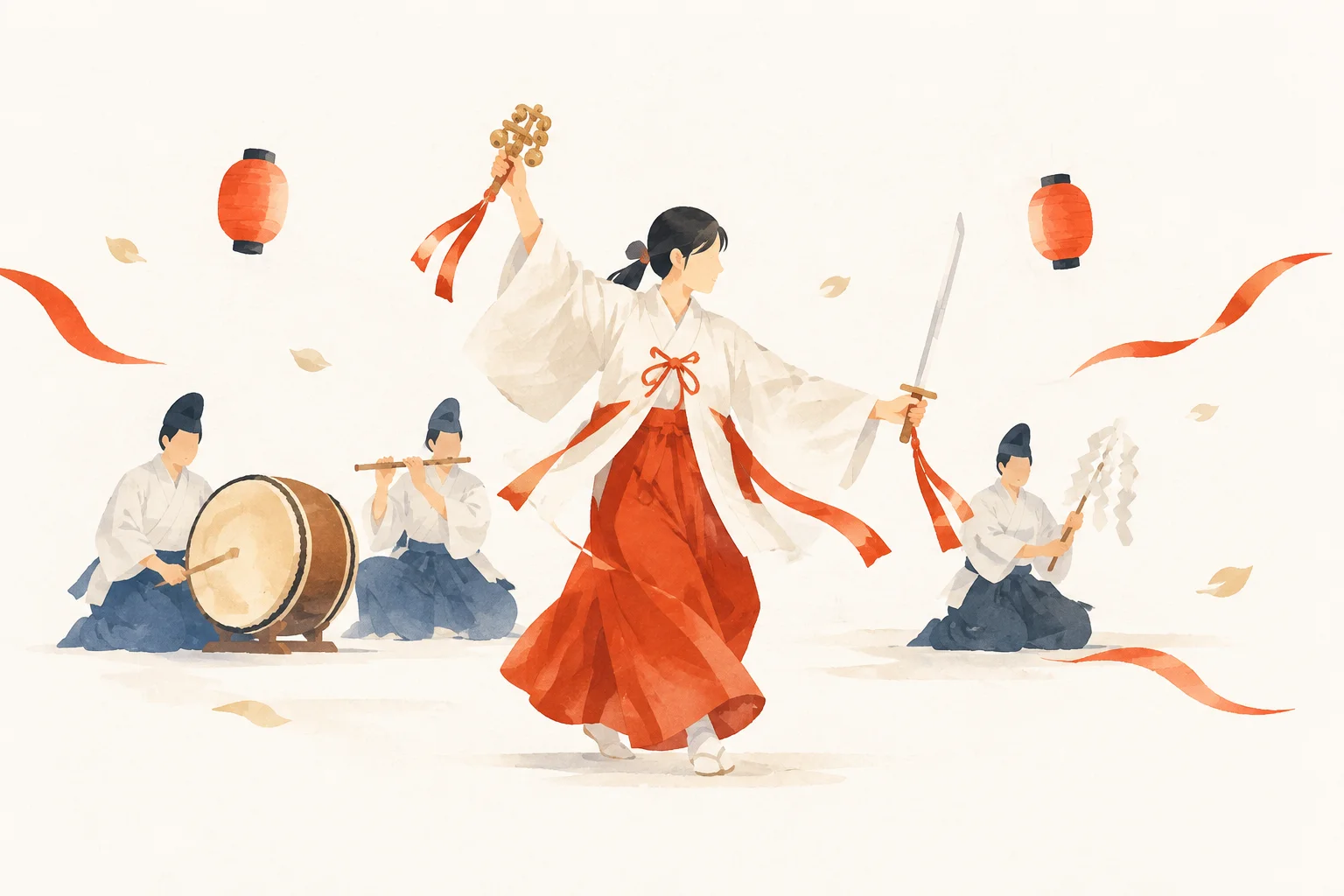
Kuma , in which unmasked performers dance holding bells, streamers, or swords, is an Important Intangible Folk Cultural Property passed down at shrine festivals in the Hitoyoshi and Kuma region. The footwork and changes in formation, set to drums, flutes, and old songs, showcase a performing art unique to the region.
About Kuma Kagura
Kuma Kagura is a form of kagura passed down in Hitoyoshi City and Kuma District, Kumamoto Prefecture, centered on torimono dances performed with bells, gohei streamers, swords, and other objects in hand.
It is performed at shrine festivals throughout Hitoyoshi and Kuma, beginning with the eve of the Aoi Aso Shrine festival on October 8.
The dances are primarily performed without masks, and 17 pieces have been passed down.
In 2013, it was designated an Important Intangible Folk Cultural Property of Japan.
Source: 球磨神楽|日本遺産ポータルサイト
Festival highlights
One highlight is the distinctive style of dancing, in which performers spin and turn back around while keeping a lively beat with their feet.
There are dances for 1 to 4 performers, and groups change formations by lining up horizontally or vertically, or facing one another.
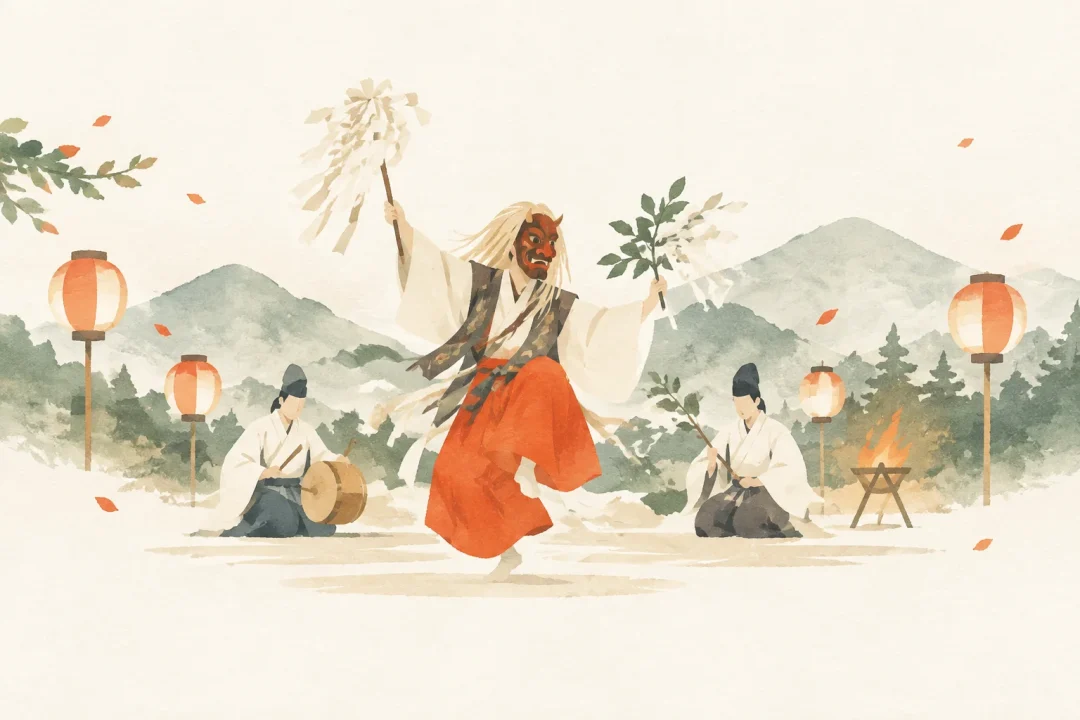
A shishi lion head appears in “Shishi,” while performers whose faces are covered by long hair appear in “Daishomai” and “Munakata.”
The dance is also accompanied by drums, gakuban percussion, flutes, and old songs.
Source: 国指定文化財等データベース
A traditional kagura dance resounds through the shrines of Hitoyoshi and Kuma
What to expect
Kagura is performed facing the main sanctuary, with the shrine’s serving as the performance space.
The performance generally begins with “Sanban Kagura” and ends with “Gozen,” with other pieces added in between depending on the number of performers and other factors.
At Aoi Aso Shrine, all 17 pieces have been passed down; in “Mikasa,” performers also dance using suspended ornaments and ropes.
Along with the performers’ movements, listen for the singers accompanying the drums and the sound of the flutes.
Location and access
- Venue and address
Performances are held in the haiden of shrines in Hitoyoshi City and the towns and villages of Kuma District.
At Aoi Aso Shrine, performances take place in the kagura hall.
- Train and bus
Hitoyoshi City has rail services, local bus routes, and shared taxis.
- By car
Hitoyoshi City can be reached via the Hitoyoshi Interchange on the Kyushu Expressway; the drive from the Kumamoto Interchange is listed as taking about 1 hour.
Source: 交通アクセス / 人吉市
Event venue 熊本県人吉市、錦町、多良木町、湯前町、水上村、相良村、五木村、山江村、球磨村、あさぎり町 人吉市および球磨郡内各町村の神社
This map uses the venue name. Check the official guide for the event area and entrances.
Dates and season
Each year, the performances begin at the eve-of-festival ceremony at Aoi Aso Shrine on October 8, and continue for about 2 months at shrine festivals in Hitoyoshi City and Kuma District.
The Cultural Digital Library lists the festival dates as October 8 through December 15.
Source: 球磨神楽|文化デジタルライブラリー
Origins and History of Kuma Kagura
The origins of Kuma Kagura are unknown, but the earliest record is of a sacred kagura offering at Aoi Aso Shrine to pray for rain during a drought in Bunmei 4 (1472).
It developed as a form of kagura with distinctive features in the Hitoyoshi and Kuma region, which was under the protection of the Sagara clan.
In the past, shrine priests were central to the tradition, but it was also taught to parishioners from around the Taisho era. In Showa 37, the Kuma Kagura Preservation Society was formed by shrine priests and parishioners.
Official information
The Database of National Cultural Properties introduces Kuma Kagura as an Important Intangible Folk Cultural Property.
The preservation group is the Kuma Kagura Preservation Society.
The locations and offering schedules differ by shrine, so check with the relevant municipal board of education or similar authority before visiting.
Kuma Kagura at a Glance
Kuma Kagura is a torimono kagura that has been passed down through shrine festivals in the Hitoyoshi and Kuma region.
Unmasked performers dance holding bells, gohei streamers, or swords, spinning to the sounds of drums, gakuban percussion, and flutes, while performing rhythmic footwork and changing formations.
The 17 pieces include distinctive expressions, such as a shishi and dances in which performers cover their faces with long hair.
As an Important Intangible Folk Cultural Property of Japan, it is being carried on by the preservation society.
Japanese Festivals.jp Editorial Team
Celebrating local culture and helping you discover a side of Japan you never knew.
Article updated: 2026/10/19
Submit information or a correction Submit photos of this festival