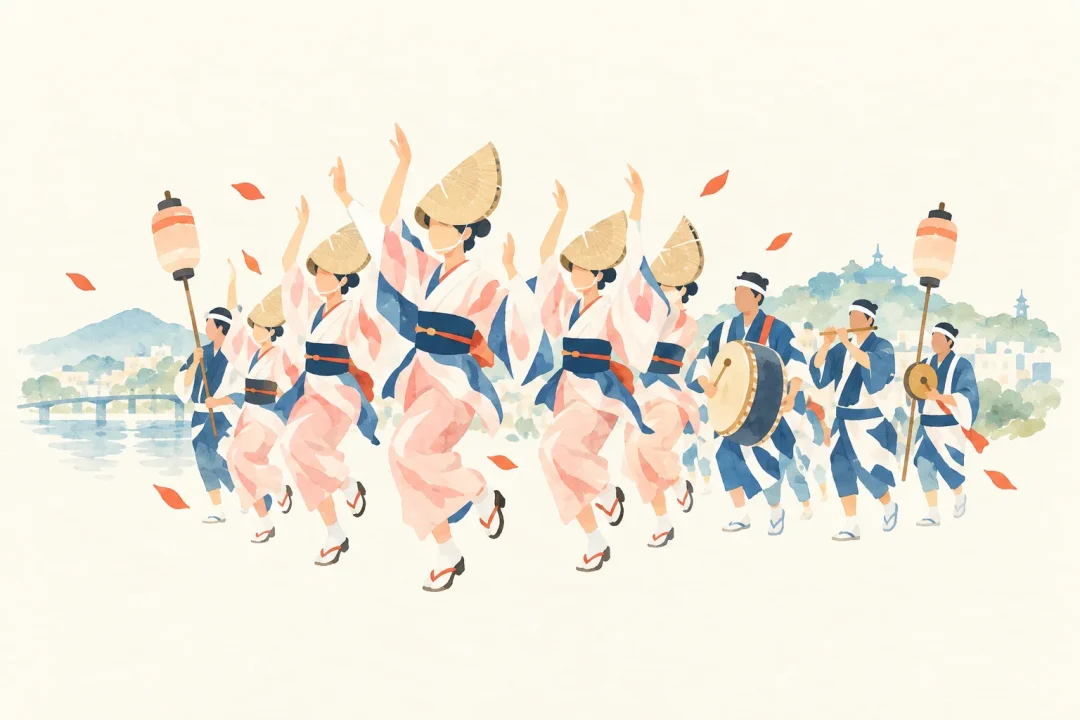
Solemn and varied night kagura, passed down through the six shrines of the former Takanabe Domain
Takanabe Kagura
Festival information
EVENT INFORMATION- Season / frequency
- Around January 2nd Saturday (Six-Shrine Joint Grand Ritual) / Every year
- Area
- Miyazaki Prefecture・Takanabe Town, Kijo Town, Kawaminami Town, Tsuno Town, Shintomi Town, Misato Town(From Tokyo: approx. 1 h 40 min–2 h · flight time only)Prefecture-level estimate to a main station or airport, not the venue. Airport access, check-in and onward travel are extra; remote areas and islands can take much longer.
- Highlights and activities
- Wishes behind the festival
- Last updated
- 2026/10/19
passed down at six shrines in the former Takanabe Domain is dedicated in rotation at local shrines.
About Takanabe Kagura
Takanabe Kagura is a collective name for night kagura passed down at shrines in Miyazaki Prefecture, mainly in the former Takanabe Domain.
It has been handed down at shrines in Takanabe Town, Kijo Town, Shintomi Town, Kawaminami Town, and other areas, with the six shrines taking turns holding the grand ritual.
The performances range from solemn dances to humorous ones, and local preservation societies help pass on the tradition.
It has also been selected as an Intangible Folk Cultural Property for which measures such as the creation of records should be undertaken by the national government.
Source: 高鍋神楽 | 神話のふるさと特集 | 宮崎県公式観光サイト「みやざき観光ナビ」 / 国指定文化財等データベース
Festival highlights
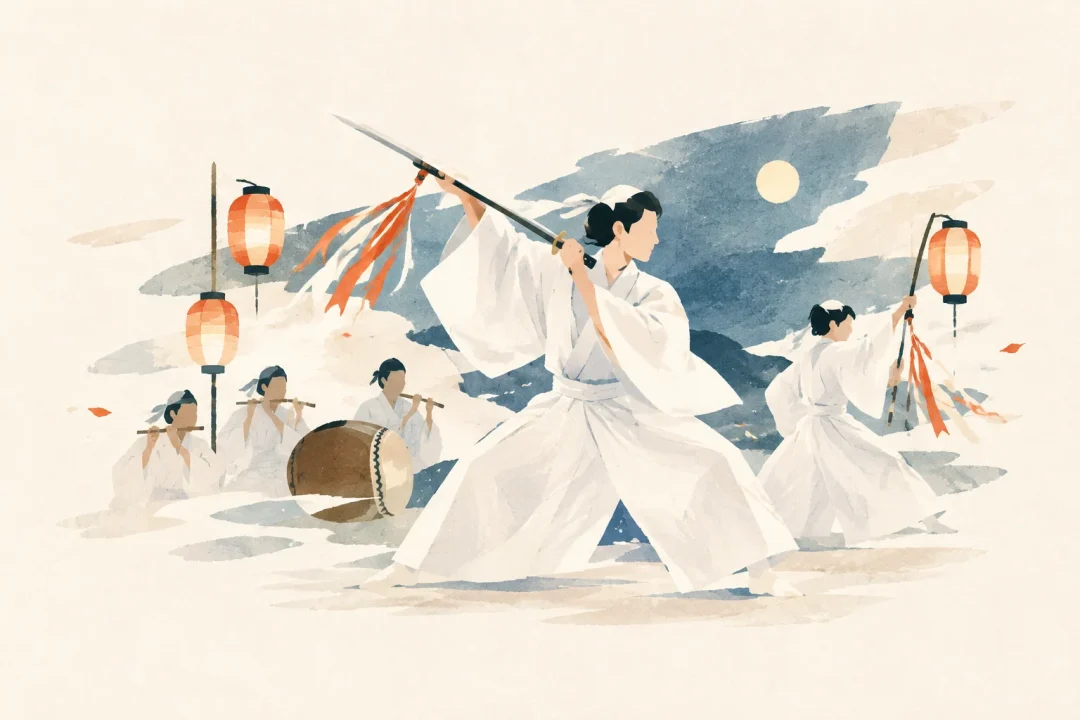
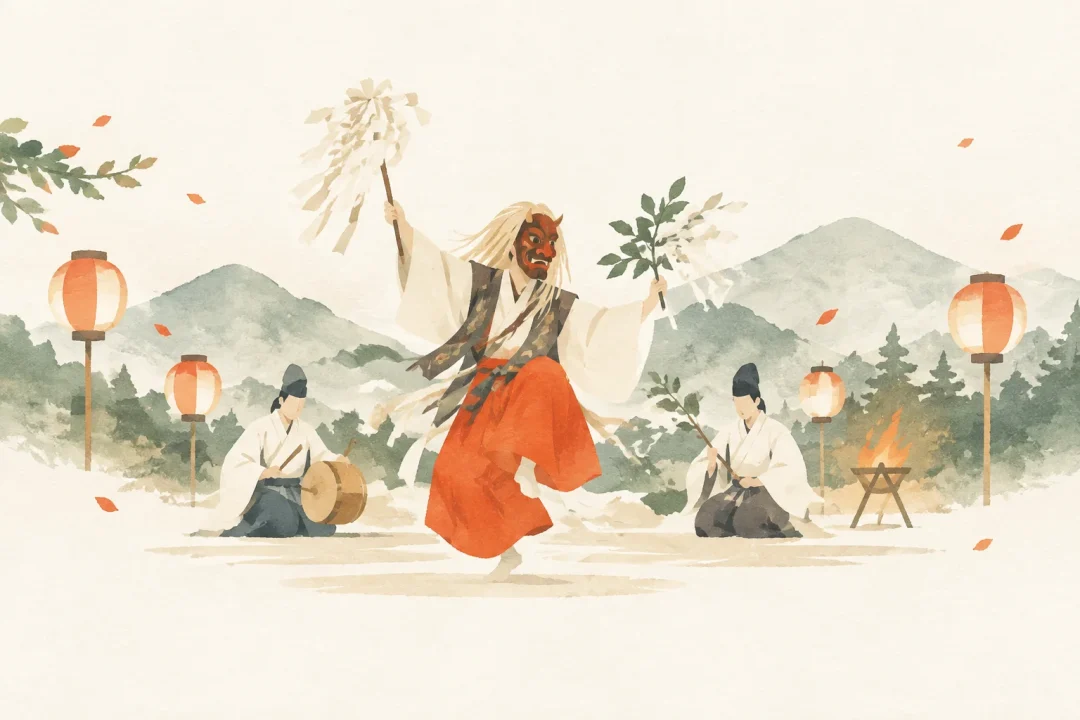
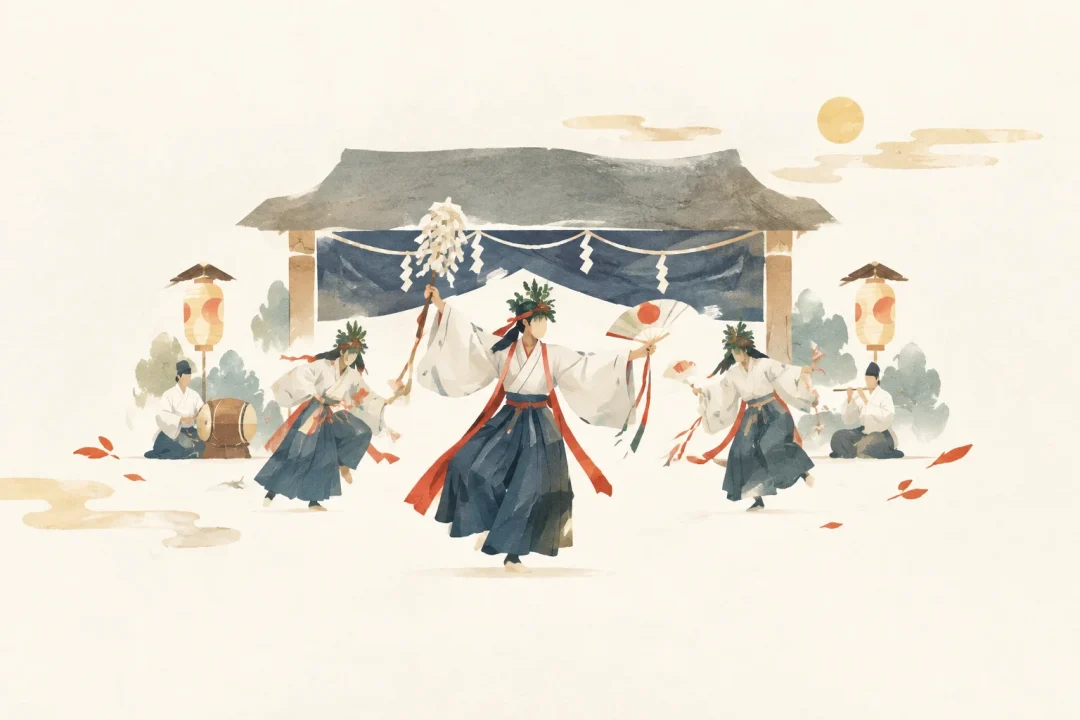
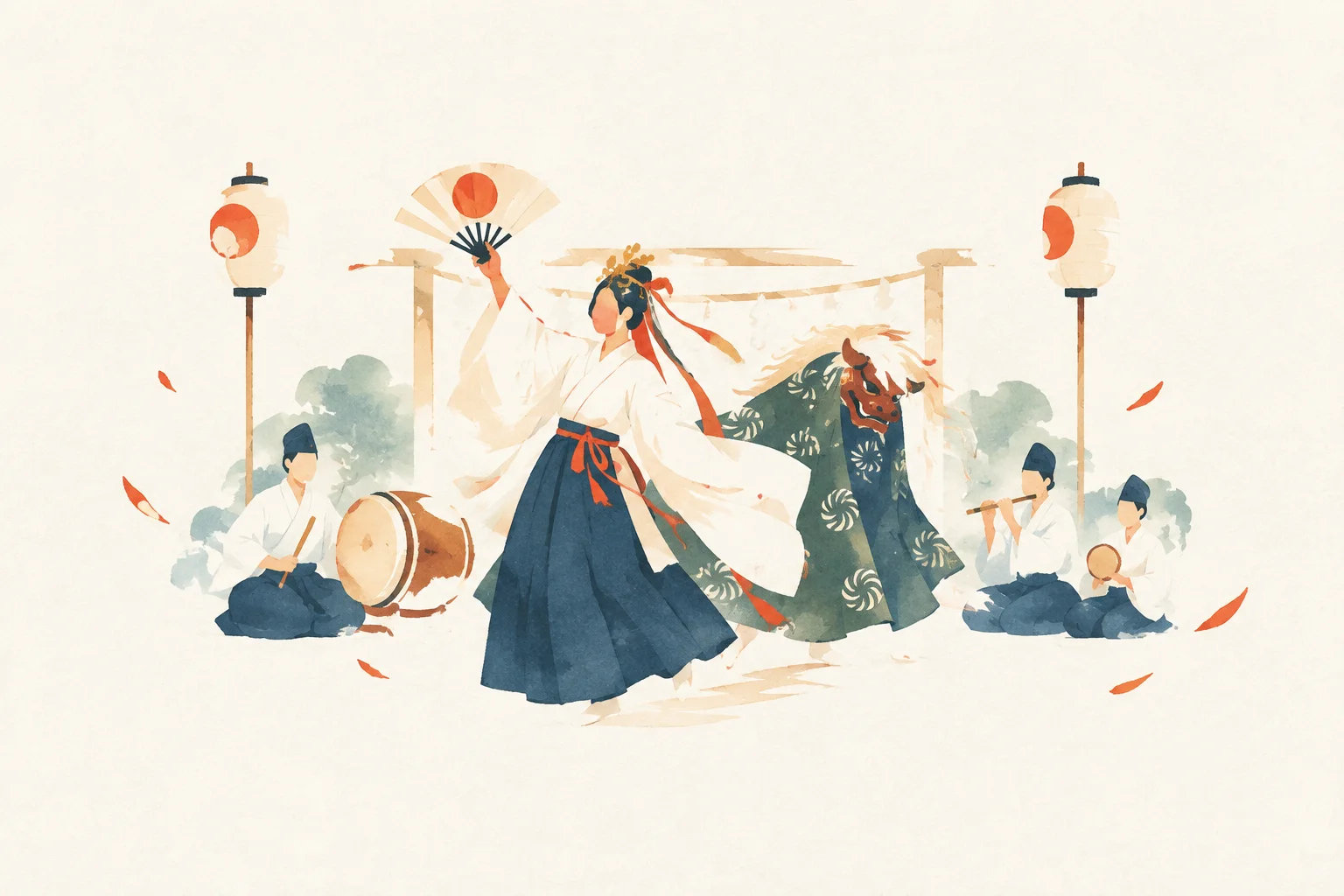
Highlights include the movements of seated and standing dances performed with the body low to the ground, as well as the varied performances using masks, sacred streamers, bells, and fans.
Each dance has its own character, including “Kotobuki no Mai,” in which a deity wearing an old man’s mask is carried in, and “Ogami Kagura,” in which five deities exchange questions and answers.
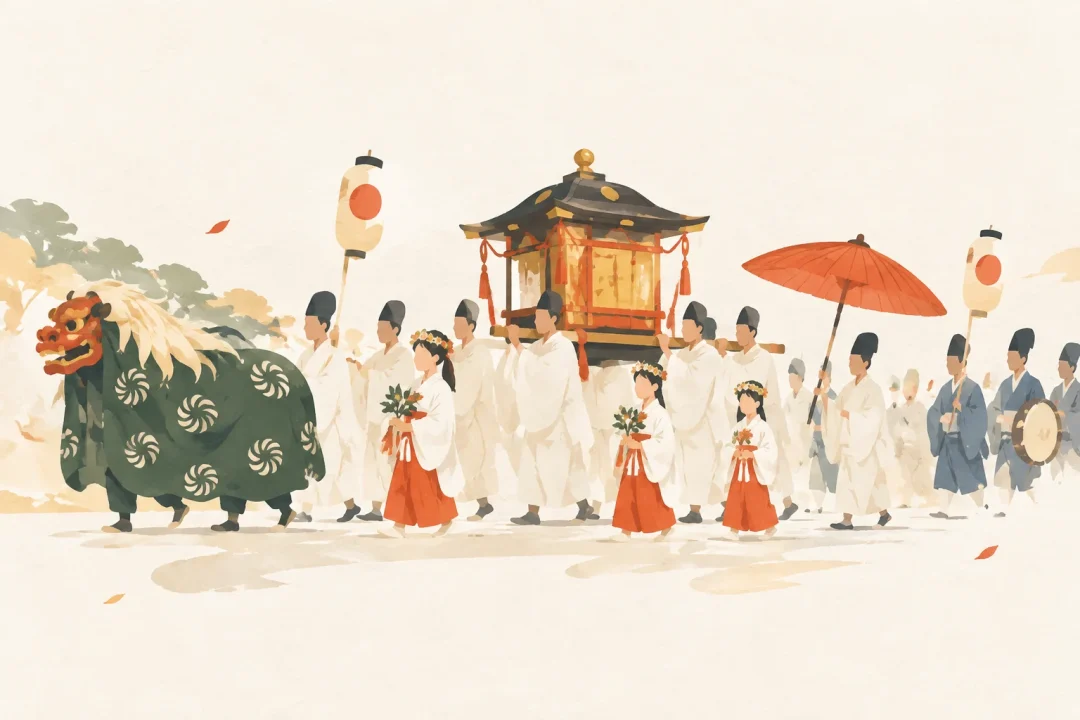
Some performances feature female dancers, while others include a lion, allowing you to experience both quiet sacred rites and varied performing arts in a single night.
Source: 高鍋町の文化財一覧/高鍋町 / 神話のふるさと みやざきの神楽|県広報みやざき
Solemn and varied night kagura, passed down through the six shrines of the former Takanabe Domain
What to expect
At the Six-Shrine Joint Grand Ritual, a himorogi is set up in the , and night kagura is dedicated following the sacred rites.
It is said to have traditionally taken place on a Saturday or Sunday close to the 2nd day of the 12th month of the lunar calendar, with many dances performed from night until the following morning.
The shrine serving as the venue takes its turn once every 6 years. In its designated year, it prepares a himorogi called a “mountain” and a large sacred dance space.
Kagura is not merely a performance to watch; it is performed as an offering to the shrine.
Source: 高鍋神楽 六社連合大神事|みやざきの文化財情報 / 比木神楽(高鍋神楽) 1/8Page(トップページ)
Location and access
- Venue and address
The six shrines of the former Takanabe Domain take turns serving as venues for the dedication.
The shrines named are Shirahige Shrine (Kawaminami Town), Hirata Shrine (Kawaminami Town), Yasaka Shrine (Takanabe Town), Atago Shrine (Takanabe Town), Hachiman Shrine (Shintomi Town), and Hiki Shrine (Kijo Town).
- By car
The route differs depending on which shrine is hosting that year, so details should be announced once the venue is confirmed.
Event venue 宮崎県高鍋町、木城町、川南町、都農町、新富町、美郷町 旧高鍋藩領の六社を輪番で奉納会場とします
This map uses the venue name. Check the official guide for the event area and entrances.
Dates and season
The Rokusha Rengō Daishinji of Takanabe Kagura is reported to take place around the second Saturday of January.
It is also said that the six shrines take turns hosting each year, offering performances on a Saturday and Sunday near the second day of the twelfth month in the old lunar calendar.
Kagura based at individual shrines, such as Mikado Kagura and Hiki Kagura, has different dates. If you plan to visit Takanabe Kagura as a whole, check the event name and which shrine is hosting.
Tips for your visit
Since the night kagura is performed as an offering to the shrine, please watch the sacred rites quietly and take care not to enter the sacred dance area.
As the event may take place from a winter night until morning, it is a good idea to bring warm clothing and something to sit on.
If you plan to take photographs, check the venue’s rules regarding flash, tripods, and shutter sounds during the sacred rites.
If traveling by car, avoid drinking and driving and pay attention to road conditions around the shrine hosting the event.
Origins and History of Takanabe Kagura
Takanabe Kagura has been handed down at shrines in the former Takanabe Domain. Records show that during the Edo period, it was performed as kagura to pray for the fulfillment of the Takanabe Domain’s wishes.
The Six-Shrine Joint Grand Ritual is said to have originated when someone visited Hiki Shrine to pray for the recovery of a princess of the Akizuki clan, then dedicated kagura in gratitude after she recovered.
It faced the threat of disappearing during the Meiji period, but was carried on in its present rotating dedication format after plans to establish a preservation society and its subsequent reorganization.
Official information
The official Miyazaki Prefecture tourism website introduces Takanabe Kagura as night kagura from the former Takanabe Domain and gives the venue and timing of the Six-Shrine Joint Grand Ritual.
The official Takanabe Town website provides an overview of the kagura passed down at the six shrines, as well as the background to its designation as an Important Intangible Folk Cultural Property of Japan in 2026.
Information about cultural properties can also be checked in the Agency for Cultural Affairs’ Database of Nationally Designated Cultural Properties.
Takanabe Kagura at a Glance
Takanabe Kagura is night kagura passed down mainly at six shrines in the former Takanabe Domain, with the Six-Shrine Joint Grand Ritual, which rotates among the shrines, as its central event.
You can enjoy a variety of expressions that bring sacred rites and performing arts together, including seated and standing dances performed in a low posture, masked dances, and performances featuring exchanges of questions and answers.
The specific date for 2026 is currently being confirmed, but the kagura is usually dedicated on a winter night and continues until the following morning.
Japanese Festivals.jp Editorial Team
Celebrating local culture and helping you discover a side of Japan you never knew.
Article updated: 2026/10/19
Submit information or a correction Submit photos of this festival