An ancient 12-stage Bugaku from Mori Town, passed down by children and adults
Bugaku of Oguni Shrine
The 2026 edition of of Oguni Shrine has ended.
Festival information
EVENT INFORMATION- Dates
- 2026/04/18 〜 2026/04/19Ended
- Season / frequency
- Saturday and Sunday closest to April 18 each year / Every year
- Location
- Toto-no-kuni Ichinomiya, Oguni Shrine
- Area
- Shizuoka Prefecture・Mori Town(From Tokyo: approx. 1 h–1 h 30 min · bullet train)Prefecture-level estimate to a main station or airport, not the venue. Airport access, check-in and onward travel are extra; remote areas and islands can take much longer.
- Features
- Highlights and activities
- Wishes behind the festival
- Participation / viewing
- Spectators welcome
- Participation fee
- Free
- Last updated
- 2026/10/19
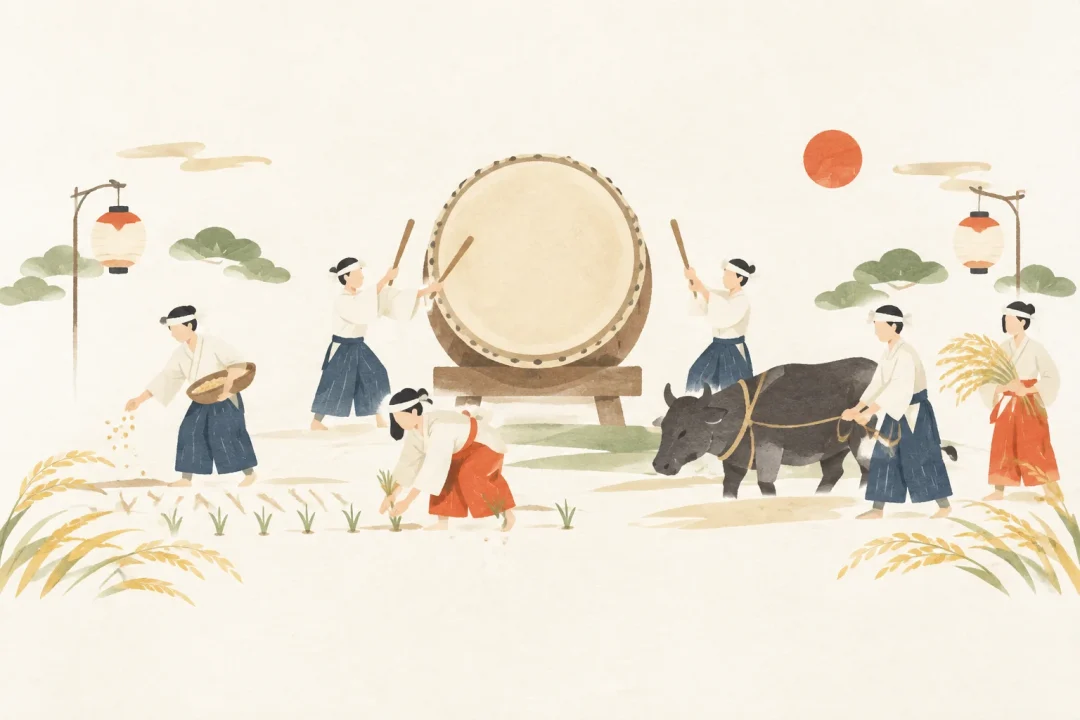
The Bugaku of Oguni Shrine is a 12-stage offering dance passed down by children and adults. See colorful costumes and masks, , and other distinctive performance styles that took root in the Tokai region at the dance pavilion of Oguni Shrine.
About Bugaku of Oguni Shrine
The Bugaku of Oguni Shrine is an ancient 12-stage dance performed before the gods during the shrine's annual festival.
It is designated a National Important Intangible Folk Cultural Property, and local people have formed a preservation society to pass it down.
The children's dances and adult dances have been preserved, and the art continues as an offering expressing hopes for the prosperity of the Enshu region and the peace of the nation.
The main stage is the dance pavilion on the grounds of Oguni Shrine.
Festival highlights
Highlights include the extra piece Hana no Mai and a varied program of 12 dances.
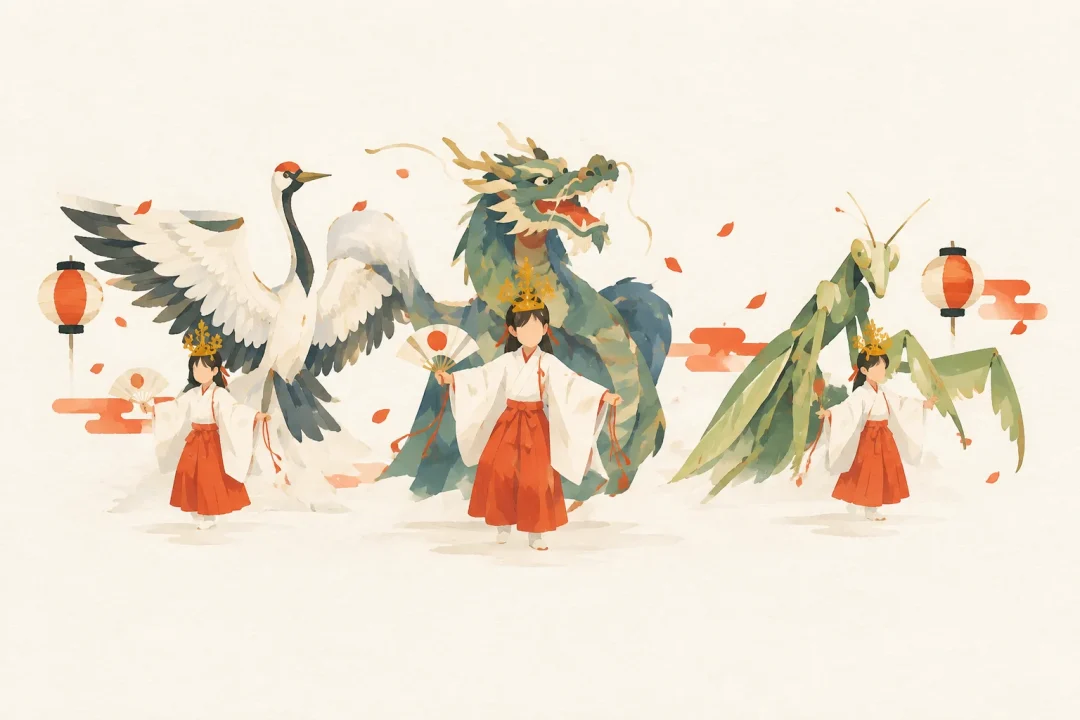
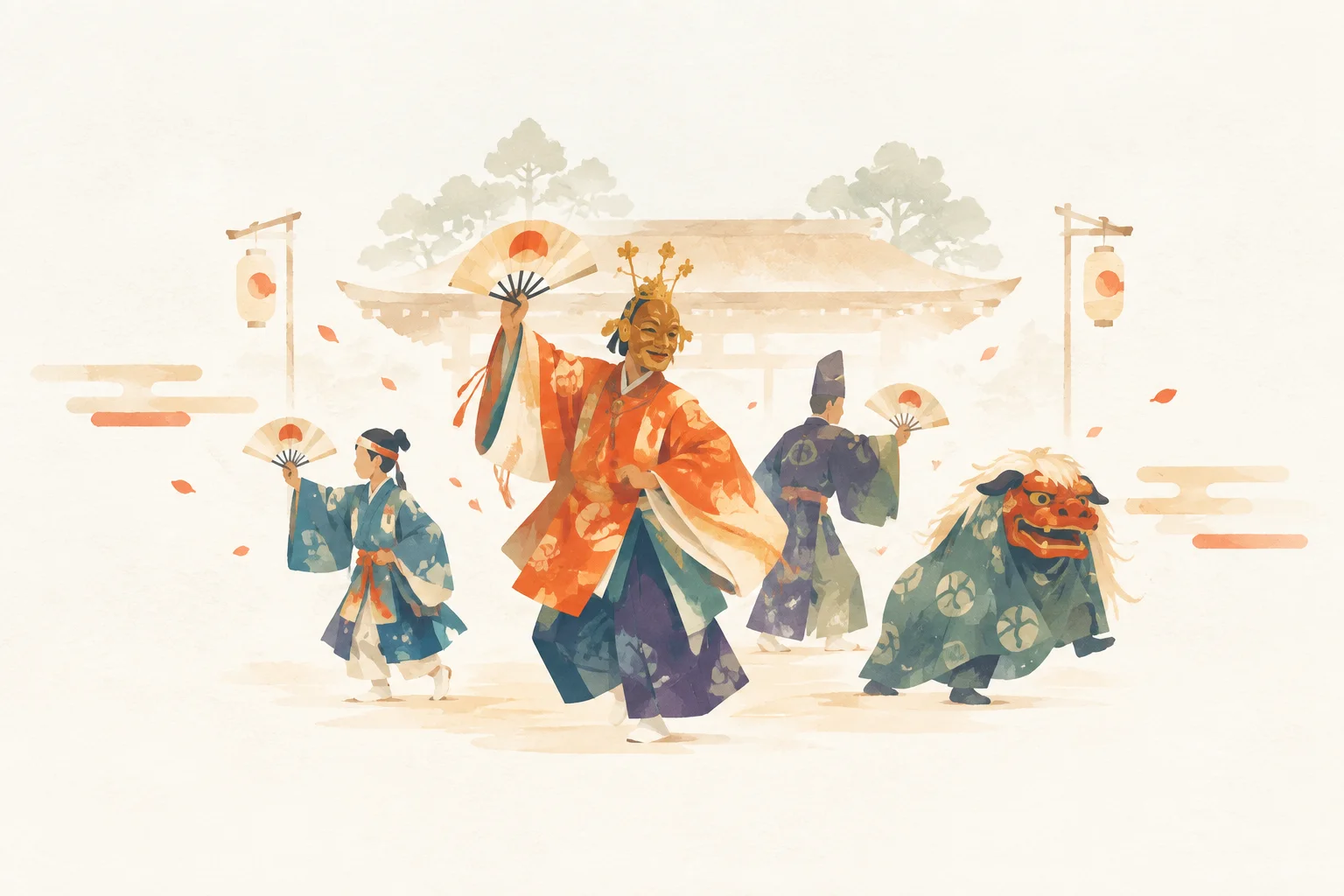
Children perform dances depicting the movements of butterflies and birds, while adults perform dances using masks and costumes, including Ryouou, Nasori, and Shishi.
In Taiheiraku, children dance holding halberds, while the lion dance carries prayers to ward off evil and bring a good harvest.
Another distinctive feature is that the costumes, masks, movements, and roles differ from one dance to another.
An ancient 12-stage Bugaku from Mori Town, passed down by children and adults
What to expect
The performances begin with Hana no Mai, followed by Renmai, Shikō, Chō no Mai, Tori no Mai, Taiheiraku, Shinmakkū, Amma, Ni no Mai, Ryouou, Battou, Nasori, and Shishi.
Child dancers perform the children's dances and wield the sword in Taiheiraku, while adults perform the larger dances.
Depending on the dance, performers use masks, halberds, scepters, or drumsticks. Some dances also imitate other dances, as in Ni no Mai.
The Bugaku is performed over most of the day in conjunction with the annual festival.
How to take part
The general public can watch the bugaku performances offered to the shrine.
Shizuoka Prefecture’s cultural heritage guide lists the bugaku at Oguni as “open to the public,” and the 2026 event information also gives the venue and times.
However, separate confirmation is needed about whether the general public can apply to perform as a child dancer or as a participant in the large-scale dance.
The preservation association works to train people to carry on the tradition.
Source: しずおか文化財ナビ 遠江森町の舞楽 小国神社の舞楽|静岡県公式ホームページ / 小國神社十二段舞楽(静岡県/森町(静岡県))|開催期間・アクセス|るるぶ&more.
Location and access
- Venue and address
Toto-no-kuni Ichinomiya, Oguni Shrine (3956-1 Ichinomiya, Mori, Shuchi District, Shizuoka Prefecture).
- Train and bus
From JR Fukuroi Station, take the direct Akiba Bus on the Oguni Shrine Kaiun Line. The ride takes about 40 minutes, followed by a short walk.
From Tenryu Hamanako Railroad's Enshu-Mori Station, take the same line for 15 minutes, then walk a short distance after getting off.
- By car
About 7 minutes from the Enshu-Morimachi Smart IC on the Shin-Tomei Expressway, or about 15 minutes from the Mori-Kakegawa IC.
About 20 minutes from the Fukuroi IC on the Tomei Expressway.
- Parking
About 700 free parking spaces are available.
The 5th parking lot is reported to be closed due to construction, so please check the signs at the site.
Address 3956-1 Ichinomiya, Mori, Shuchi District, Shizuoka Prefecture
Dates and season
2026 event information (the listed dates have passed)
The 12-stage Bugaku is usually performed on the Saturday and Sunday closest to April 18.
In 2026, the event will be held on April 18 (Saturday) and the 19th (Sunday). The listed hours are 2 p.m. to 8 p.m. on the 18th and 10:50 a.m. to 8:45 p.m. on the 19th.
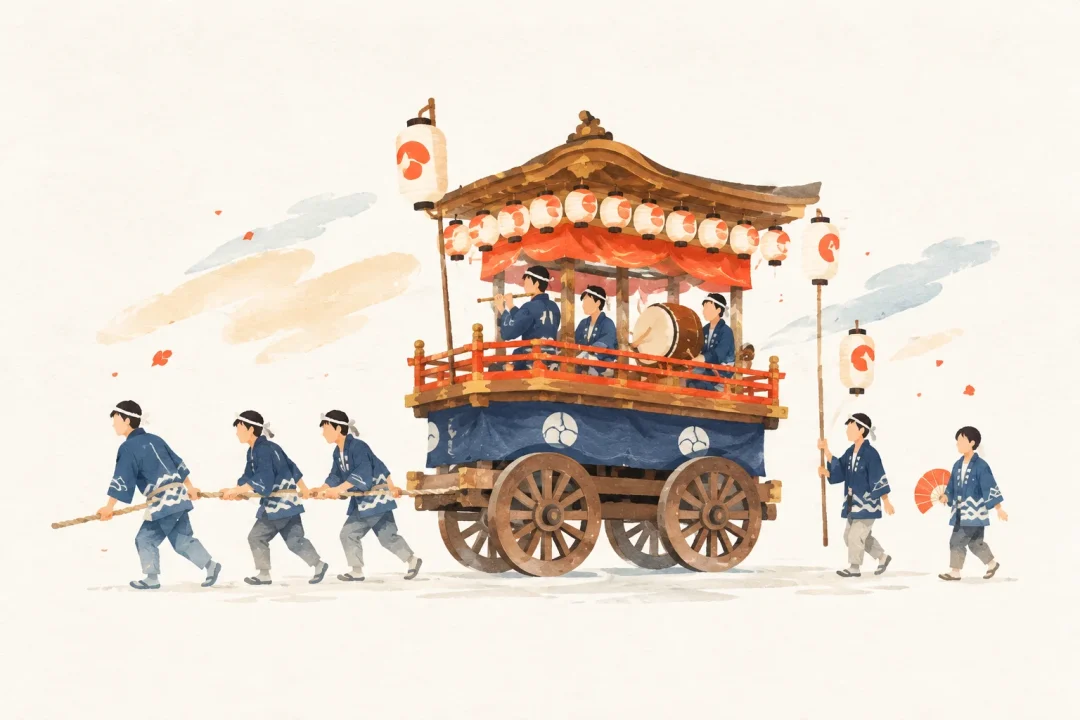
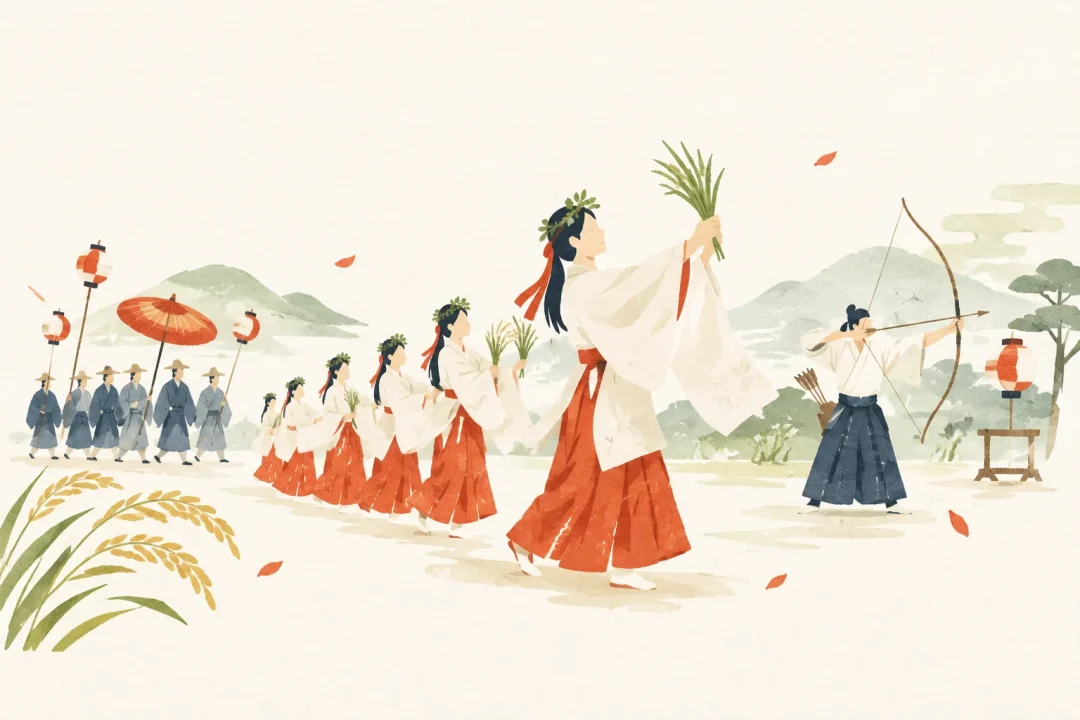
On Sunday, the shrine's annual procession festival, featuring a procession, is also held alongside the Bugaku.
Accommodation and hotels PR
Showing nearby accommodation.
Prices and availability are current at the time of retrieval. For multi-night stays, only the first night’s price is shown. Confirm the final price and directions to the venue with the booking provider. Select your dates again when using the area search link. Search area: within 3 km of Central Shizuoka Prefecture / Mori Town (the search is not centered on the festival venue)
Tips for your visit
The offerings take place over an extended period, so it’s best to check the performances and times you want to see in advance before visiting.
When watching the shrine rituals and bugaku in the grounds, follow the shrine’s guidance and the instructions of staff on site, and watch quietly so as not to disrupt the offerings.
If you’re driving, check the terms for using the parking lot.
Traffic restrictions may be in place when the area is crowded.
Source: 交通案内 | 遠江国一宮 小國神社
Nearby attractions
Nearby attractions include Mori Town Experience Village Acty Mori, Osadaen Main Store, Mori Town Museum of History and Folklore, Yamana Shrine, and Amamiya Shrine.
Rurubu's list of tourist attractions in Mori Town includes these as attractions in the same town as Oguni Shrine.
Some nearby sites are also connected with local culture, shrines, and temples. If you plan to visit several places, check each facility's opening status and event schedule.
Source: 「森町(静岡県) 見る 遊ぶ 買う 温泉他 その他」のスポット一覧|るるぶ&more.

小国神社
静岡県周智郡森町一宮にある神社
Origins and History of Bugaku of Oguni Shrine
According to tradition, the Bugaku of Oguni Shrine began in 701, when an imperial envoy visited the area, established a village shrine at the site of the present shrine, and offered 12 dances.
During the Edo period, the Suzuki Sakon family served as instructors for generations. Today, the preservation society and the parishioners' youth association work together to pass it down.
The dances are considered culturally valuable because this form of Bugaku, transmitted to the region and established in the Tokai region, preserves children's dances and performance and musical styles that differ from those of the capital.
It was designated a National Important Intangible Folk Cultural Property in 1982.
Official information
Official information is available on the “12-Stage Bugaku” and “Festivals and Rituals” pages of Toto-no-kuni Ichinomiya Oguni Shrine.
The program describes the dances, the purpose of the offerings, their history of transmission, and their usual time of year.
The official Oguni Shrine access page provides information on public transportation and parking.
Source: 祭典・神事 | 遠江国一宮 小國神社
Bugaku of Oguni Shrine at a Glance
The Bugaku of Oguni Shrine is an ancient form of court dance passed down in Mori Town, performed as 12 dances by children and adults.
Enjoy the distinct costumes and movements of each dance, including flower dances, dances depicting butterflies and birds, masked dances, and lion dances.
In 2026, performances will be offered at Oguni Shrine on April 18 and the 19th. The venue is accessible by public transportation and car.
Japanese Festivals.jp Editorial Team
Celebrating local culture and helping you discover a side of Japan you never knew.
Article updated: 2026/10/19
Submit information or a correction Submit photos of this festival