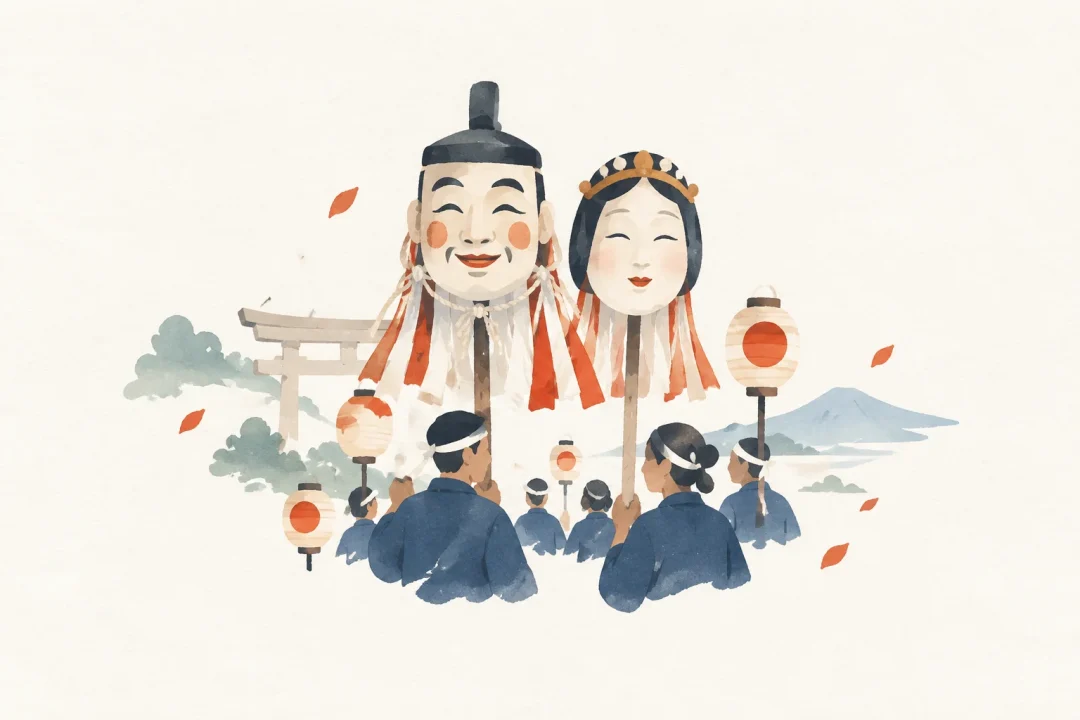
A dedication performance in Satsumasendai that expresses hopes for rice cultivation through gestures of tilling the fields
Performance at the Spring Festival of Minamikata Shrine (Ta-uchi)
Festival information
EVENT INFORMATION- Season / frequency
- Marchfirst Sunday
- Location
- The grounds of Minamikata Shrine
- Area
- Kagoshima Prefecture・Satsumasendai City(From Tokyo: approx. 1 h 50 min–2 h 20 min · flight time only)Prefecture-level estimate to a main station or airport, not the venue. Airport access, check-in and onward travel are extra; remote areas and islands can take much longer.
- Last updated
- 2026/10/21
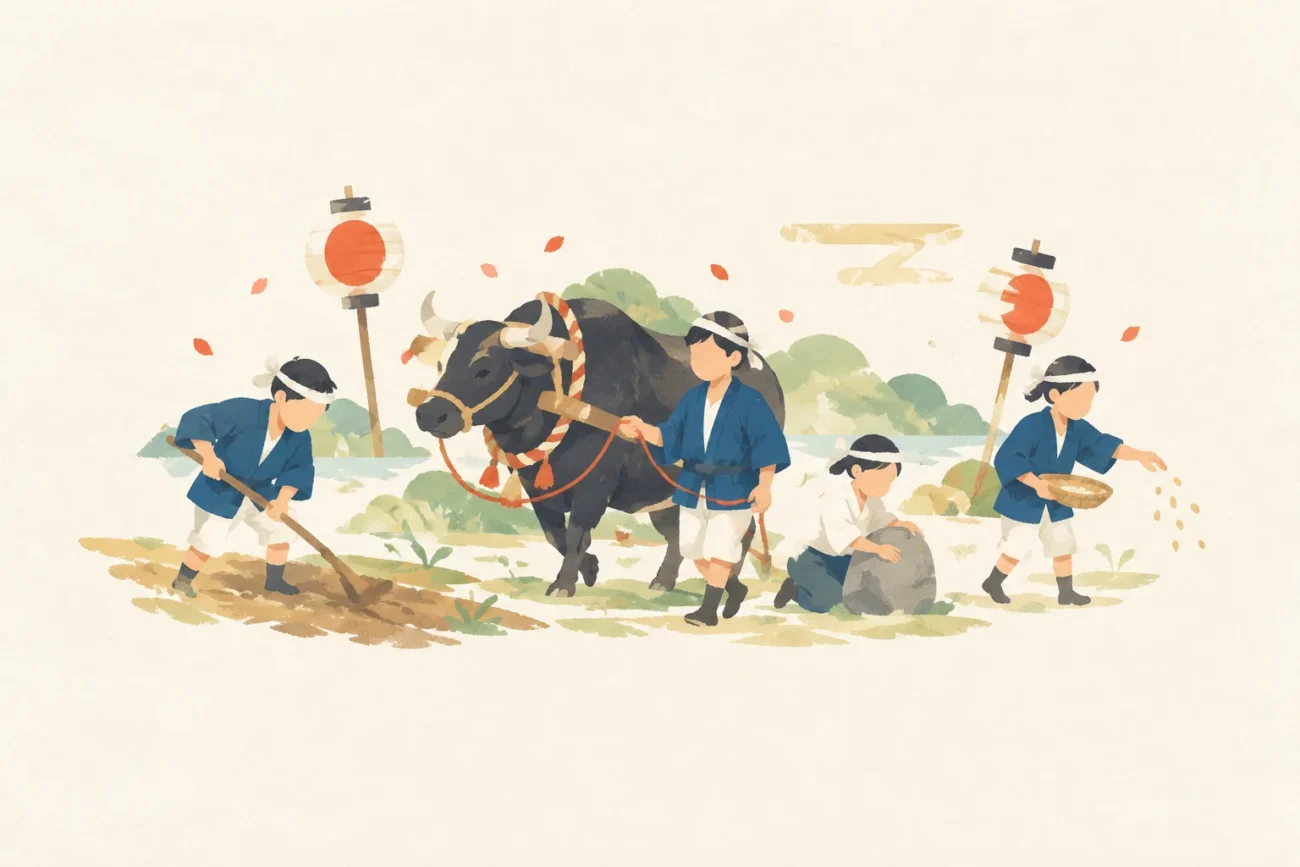
“Ta-uchi,” dedicated at the spring festival of Minamikata Shrine, is a traditional performance from Takae depicting children tilling the ground, the arrival of a cow, the naming of the stone child, and the sowing of rice seeds.
About Performance at the Spring Festival of Minamikata Shrine (Ta-uchi)
This performance is dedicated at the spring festival of Minamikata Shrine and is also known as “Takae Taro Taro Odori.”
It was passed down at Shinao Shrine and began to be performed at Minamikata Shrine after the two shrines were enshrined together there.
Formerly called “Ueue Matsuri,” it is a traditional performance depicting scenes related to tilling fields and rice cultivation.
Source: 鹿児島県/南方神社春祭に伴う芸能「田打」
Festival highlights
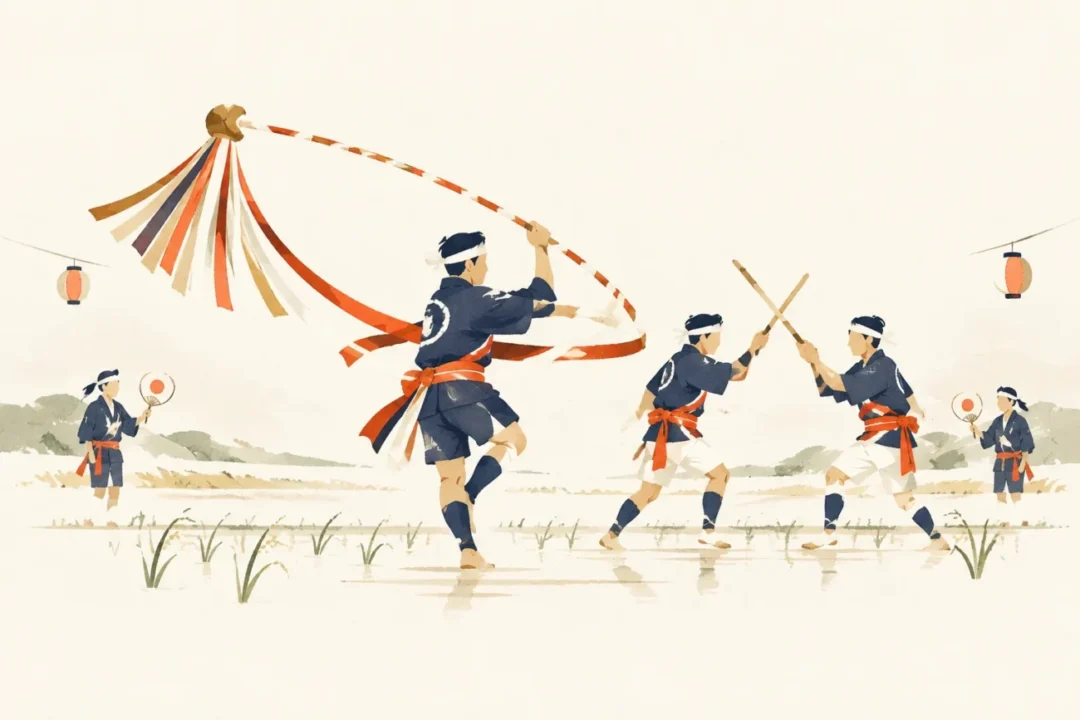
A highlight is the scene where children strike and till the ground in the with wooden hoes with hooked blades.
Next, Onjo and Techo, Taro, a cow covered in black cloth, and Yomejo dressed as a woman appear.
The performance also depicts the round stone child being made up and named “Yonematsujo,” as well as the priest scattering rice seeds and spectators picking them up.
A dedication performance in Satsumasendai that expresses hopes for rice cultivation through gestures of tilling the fields
What to expect
The performance begins with children tilling the ground with wooden hoes.
Onjo and Techo inspect how well the ground has been tilled, and when Taro brings in a cow, it runs amok.
After that, Yomejo gives birth to a child in the form of a round stone. The stone is made up and given a name, then the priest scatters rice seeds from a field boat.
Location and access
- Venue and address
The grounds of Minamikata Shrine (2255 Takae-cho, Satsumasendai City)
Address 2255 Takae-cho, Satsumasendai City
Dates and season
- Date
Marchfirst Sunday
Accommodation and hotels PR
Showing nearby accommodation.
Prices and availability are current at the time of retrieval. For multi-night stays, only the first night’s price is shown. Confirm the final price and directions to the venue with the booking provider. Select your dates again when using the area search link. Search area: within 3 km of Central Kagoshima Prefecture / Satsumasendai City (the search is not centered on the festival venue)
Nearby attractions

新田神社
鹿児島県薩摩川内市にある神社
写真:ja:User:MK Products upload by Sakoppi / CC BY-SA 3.0
Photo source ·
薩摩川内市せんだい宇宙館
鹿児島県薩摩川内市にある科学展示館、天文台
Origins and History of Performance at the Spring Festival of Minamikata Shrine (Ta-uchi)
This performance was originally passed down at Shinao Shrine in Takae, and began to be performed at Minamikata Shrine after Shinao Shrine was enshrined there.
It was once called “Ueue Matsuri” and is now also known as “Takae Taro Taro Odori.”
In 1962 (Showa 37)October 24, it was designated a Kagoshima Prefectural Intangible Folk Cultural Property.
Official information
Listed by Kagoshima Prefecture as a regional traditional performance of Satsumasendai City: “Ta-uchi,” performed at the spring festival of Minamikata Shrine.
For inquiries, contact Satsumasendai City Hall.
Performance at the Spring Festival of Minamikata Shrine (Ta-uchi) at a Glance
“Ta-uchi,” dedicated at the spring festival of Minamikata Shrine, is a traditional performance from Takae, passed down from Shinao Shrine.
The scenes progress from children tilling the ground and the arrival of a cow to the naming of the stone child and the priest scattering rice seeds.
It is performed in the grounds of Minamikata Shrine on Marchfirst Sunday and was designated a Kagoshima Prefectural Intangible Folk Cultural Property in 1962 (Showa 37).
Japanese Festivals.jp Editorial Team
Celebrating local culture and helping you discover a side of Japan you never knew.
Article updated: 2026/10/21
Submit information or a correction Submit photos of this festival