Kajiki’s dedicatory performance, brought together by fox characters and the sound of taiko drums
Kiso Odori and Taiko Odori
Festival information
EVENT INFORMATION- Season / frequency
- Every year on August 16 and the 17th / Every year
- Location
- Kariya Baba Street, Kajiki Town, and other locations
- Area
- Kagoshima Prefecture・Aira City(From Tokyo: approx. 1 h 50 min–2 h 20 min · flight time only)Prefecture-level estimate to a main station or airport, not the venue. Airport access, check-in and onward travel are extra; remote areas and islands can take much longer.
- Highlights and activities
- Wishes behind the festival
- Required number of participants
- Kichiso Odori has between 10 and 20 dancers. Odori includes at least 20 taiko drummers, 4 kane players, 1 hota-furi performer, and others.
- Last updated
- 2026/10/19
Kiso Odori and Taiko Odori, passed down in Kajiki Town, Aira City, are dedicatory performances featuring dancers portraying foxes and troops, hota-furi, taiko drums, and kane. Through processions and garden dances, you can enjoy the rich expressions passed down through the community.
About Kiso Odori and Taiko Odori
Kiso Odori and Taiko Odori are folk performing arts passed down in the Nishibeppu district of Kajiki Town, Aira City, Kagoshima Prefecture.
Kiso Odori accompanies Taiko Odori, and both have been passed down primarily through dedications at shrines and other venues.
“Kiso” in Kiso Odori means “to celebrate good tidings.”
As a prefecturally designated intangible folk cultural property, it is being passed down by local preservation groups.
Source: 姶良市/県指定文化財
Festival highlights
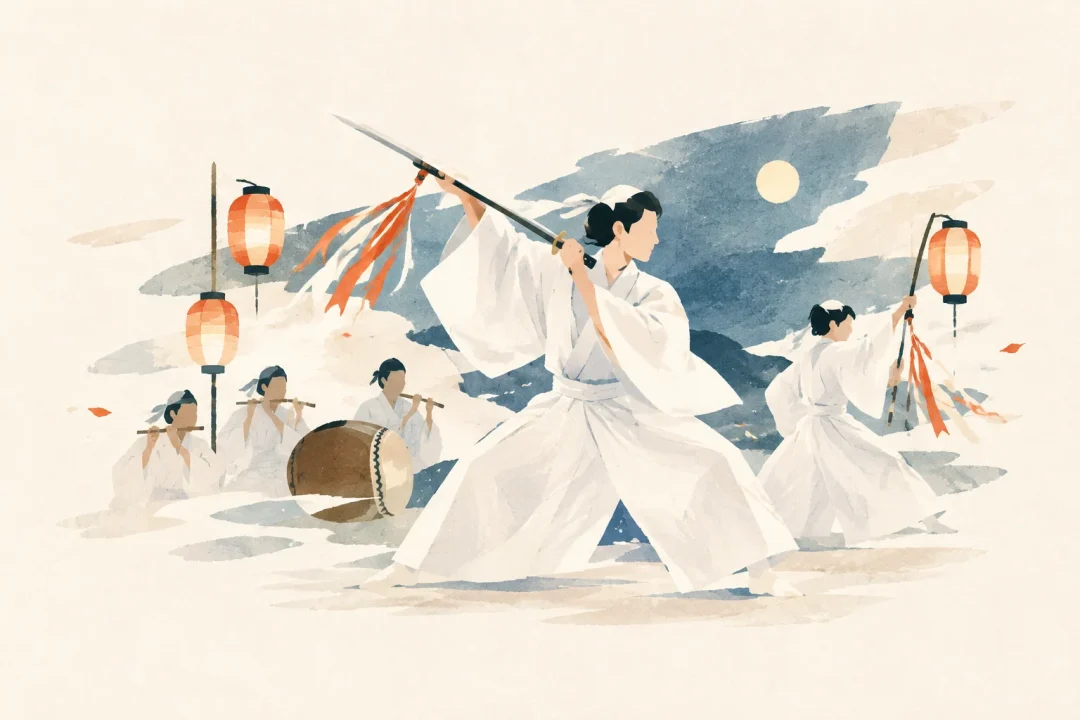
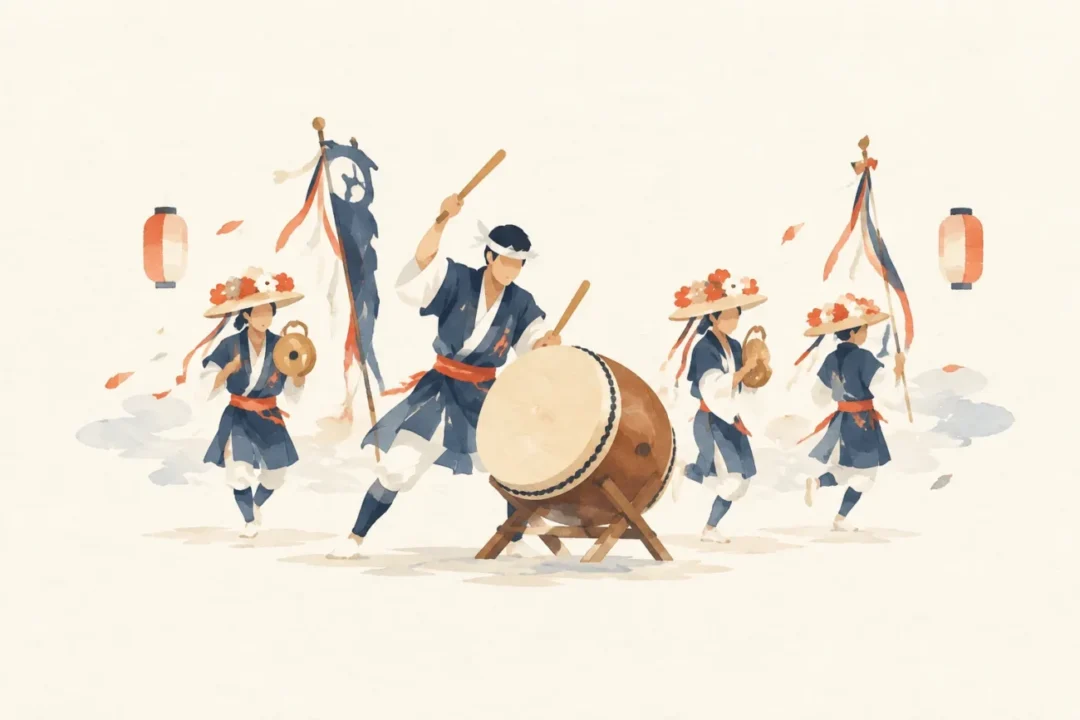
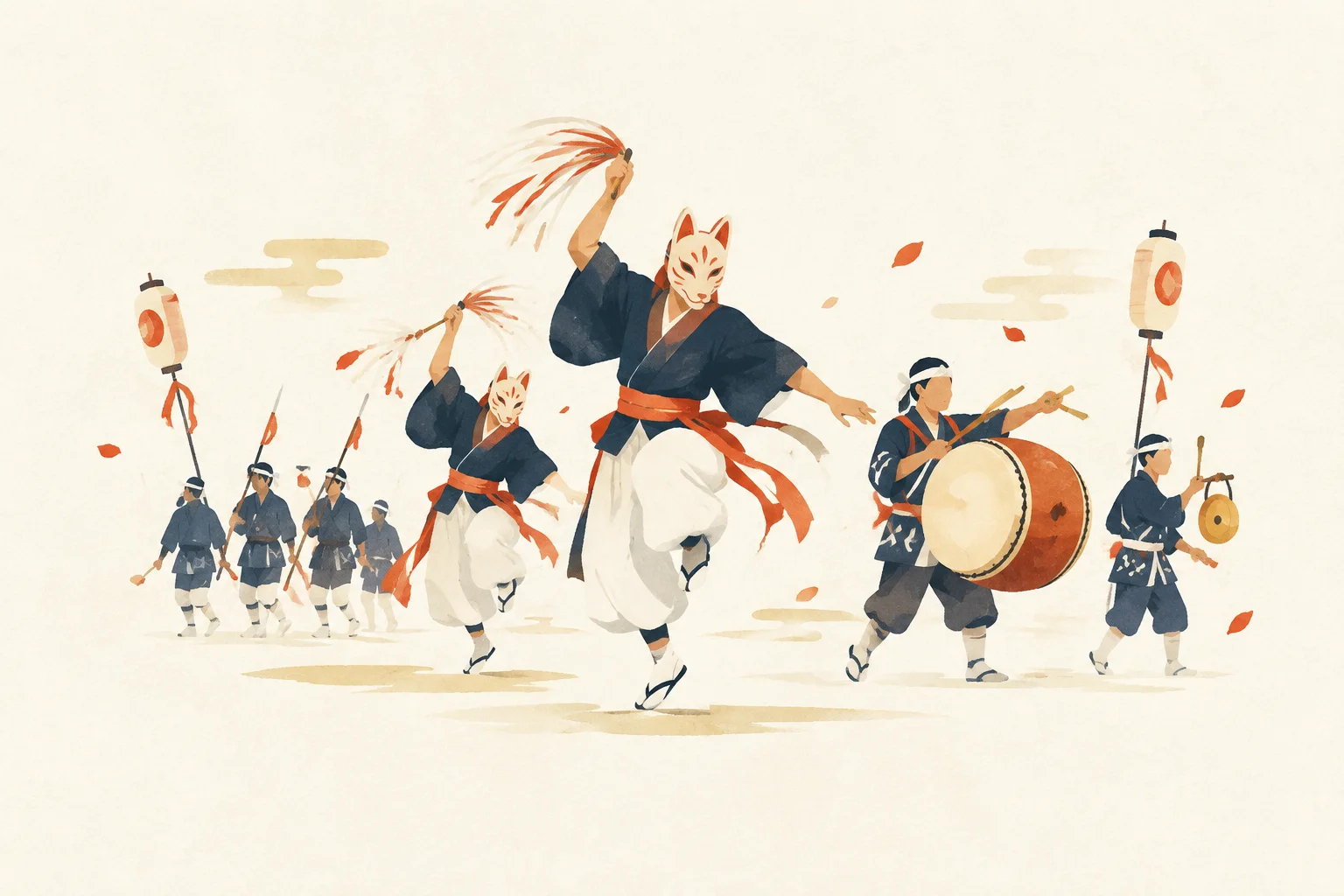
Highlights include dora players dressed as white and red foxes, color-coded dancers, and ensemble dances featuring taiko drums and kane.
In Kiso Odori, dancers divided into Korean and Shimazu forces act out a battle, while a dancer playing a fox adds humorous movements to the scene.
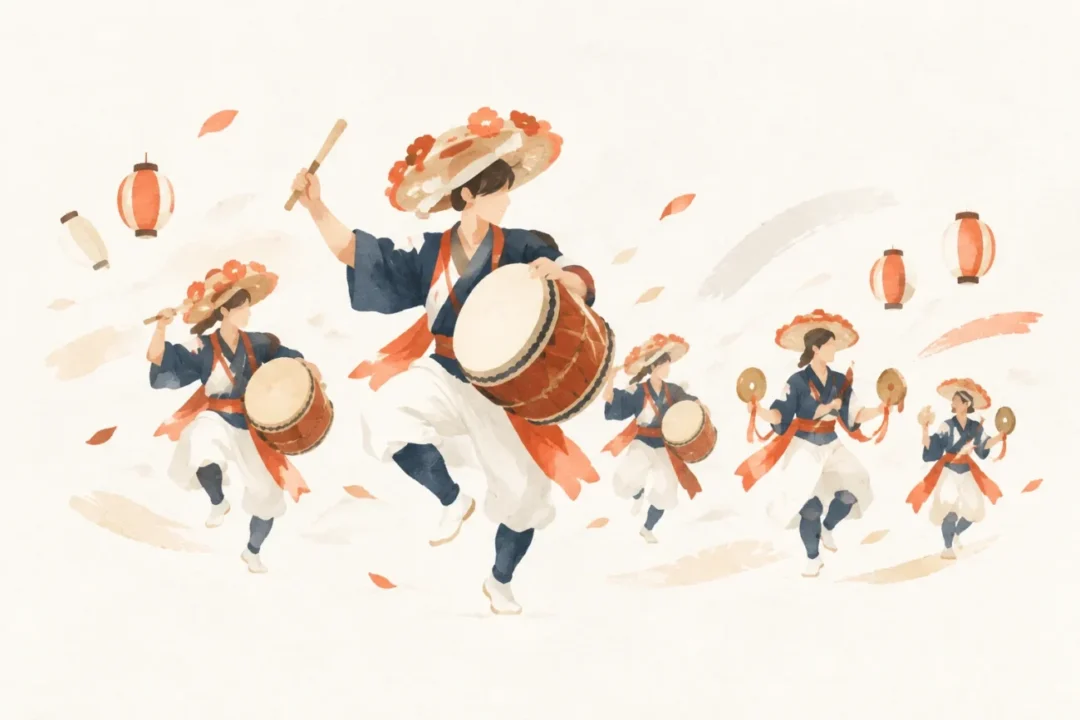
In Taiko Odori, hota-furi dances at the head of the procession and directs the group, while the taiko drummers perform during processions and garden dances.
Source: 鹿児島県/加治木の太鼓踊り
Kajiki’s , brought together by fox characters and the sound of taiko drums
What to expect
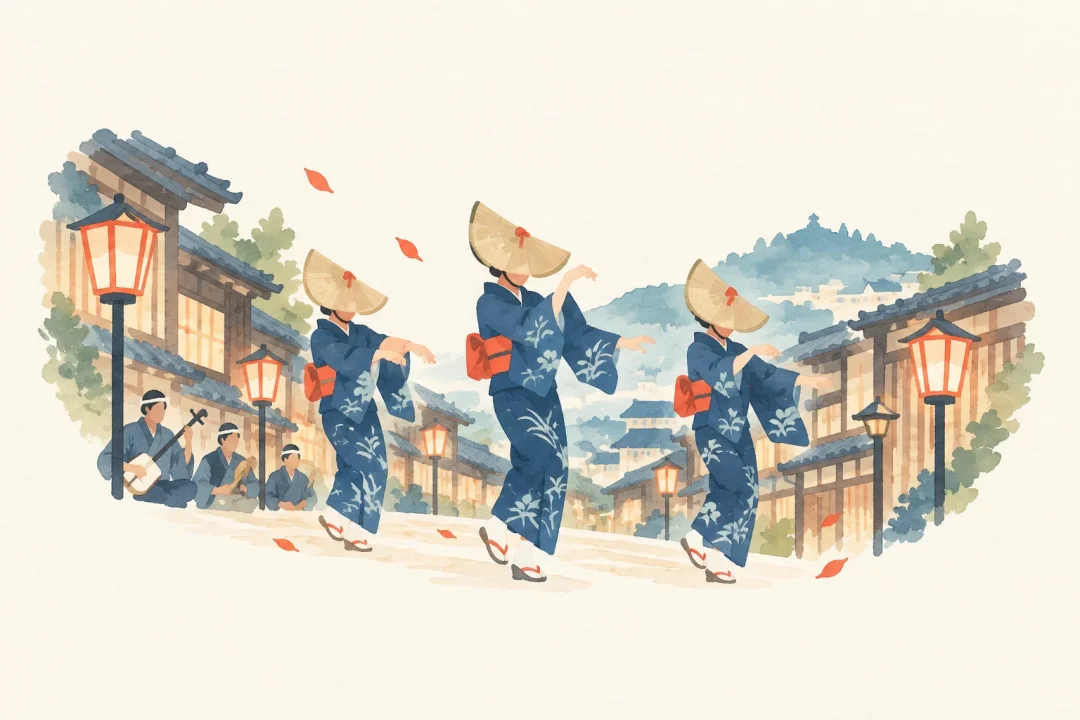
The dedication includes michi-odori, in which dancers proceed in formation, and niwa-odori, in which they dance in a circle in a garden.
In Kiso Odori, after the dora players and dancers appear, Taiko Odori follows.
Taiko Odori includes roles such as hota-furi, kane players, taiko drummers, and small kane players, each contributing to the music and dance.
Source: 国指定文化財等データベース
How to take part
必要人数:吉左右踊は踊り子10人以上20人以下。
Taiko Odori includes at least 20 taiko drummers, 4 kane players, 1 hota-furi performer, and others.
Location and access
- Venue and address
Kariya Baba Street, Kajiki Town, and other locations.
Kasuga Shrine, Sugawara Shrine, Seibō Shrine, and Suwa Shrine are listed as dedication sites.
Event venue 鹿児島県姶良市 加治木町仮屋馬場通り
This map uses the venue name. Check the official guide for the event area and entrances.
Dates and season
As in other years, the dances are dedicated at Kasuga and other locations over 2 days, on August 16 and the 17th.
Kagoshima Prefecture’s information lists the public viewing date as August 16 and the viewing locations as Kariya-Baba Street in Kajiki and other places.
Accommodation and hotels PR
Showing nearby accommodation.
Prices and availability are current at the time of retrieval. For multi-night stays, only the first night’s price is shown. Confirm the final price and directions to the venue with the booking provider. Select your dates again when using the area search link. Search area: within 3 km of Central Kagoshima Prefecture / Aira City (the search is not centered on the festival venue)
Nearby attractions

スターランドAIRA
鹿児島県の博物館・美術館のスポットです。

姶良市歴史民俗資料館
鹿児島県の博物館・美術館のスポットです。
Origins and History of Kiso Odori and Taiko Odori
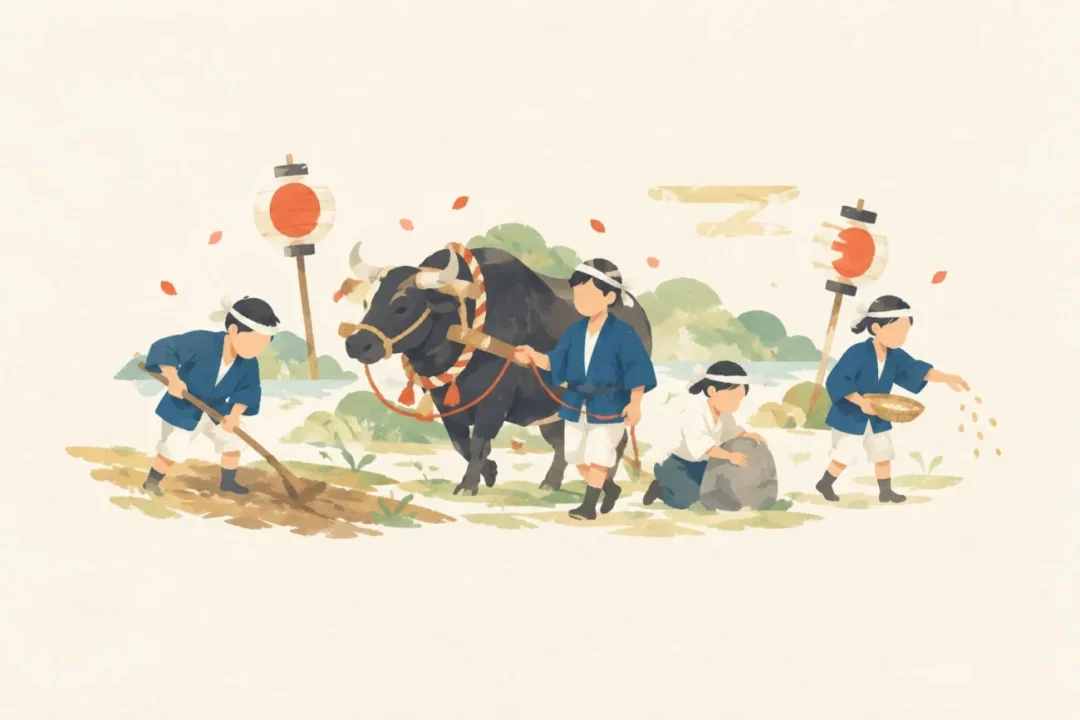
Kiso Odori is believed to have developed from a stick dance originally performed to pray for a good harvest.
One account of the origins of Taiko Odori says that Shimazu Yoshihiro heard about a nenbutsu dance performed after an epidemic began to subside, and had his retainers learn it to celebrate their return from the Bunroku and Keicho campaigns; it was then brought to Satsuma.
Kiso Odori and Taiko Odori were designated Kagoshima Prefectural Intangible Folk Cultural Properties on August 16, 1961.
Official information
Kagoshima Prefecture’s guide to “Kajiki Taiko Odori” introduces its origins, program, performance dates and times, and venues.
Aira City’s cultural property guide lists Kiso Odori and Taiko Odori as prefecturally designated intangible folk cultural properties.
The National Database of Cultural Properties also records the names Kiso Odori and Taiko Odori, along with the sequence of the dedication.
Kiso Odori and Taiko Odori at a Glance
Kiso Odori and Taiko Odori are folk performing arts passed down in the Nishibeppu district of Kajiki Town, Aira City, comprising Kiso Odori and Taiko Odori.
Dancers portraying foxes and troops, hota-furi, taiko drums, and kane appear in the performance, which is dedicated through a combination of processions and garden dances.
They are held annually on August 16 and the 17th, and have been associated with prayers for a good harvest, rain, and the pacification of calamities.
Japanese Festivals.jp Editorial Team
Celebrating local culture and helping you discover a side of Japan you never knew.
Article updated: 2026/10/19
Submit information or a correction Submit photos of this festival