Night Kagura in a Mountain Village Where Deities and Hunting Culture Live On
Mera Mountain Kagura
Festival information
EVENT INFORMATION- Season / frequency
- November–December / Held in conjunction with each shrine’s festival
- Location
- venues in Saito City, Kijo Town, and Nishimera Village
- Area
- Miyazaki Prefecture・Saito City, Kijo Town, Nishimera Village(From Tokyo: approx. 1 h 40 min–2 h · flight time only)Prefecture-level estimate to a main station or airport, not the venue. Airport access, check-in and onward travel are extra; remote areas and islands can take much longer.
- Highlights and activities
- Last updated
- 2026/10/19
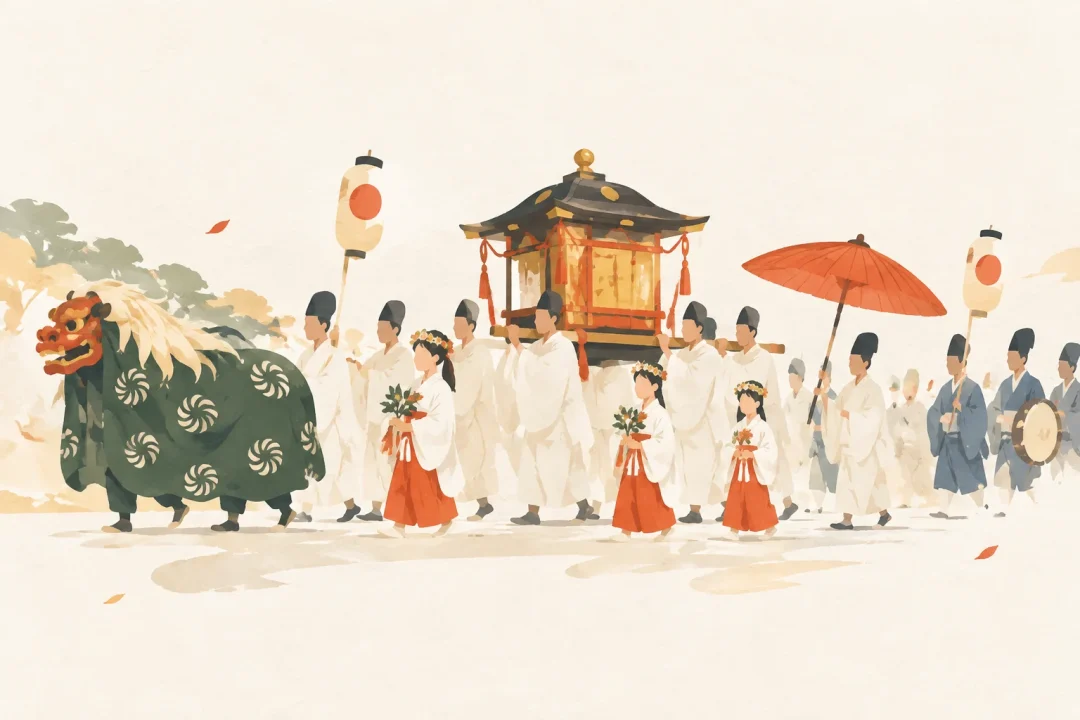
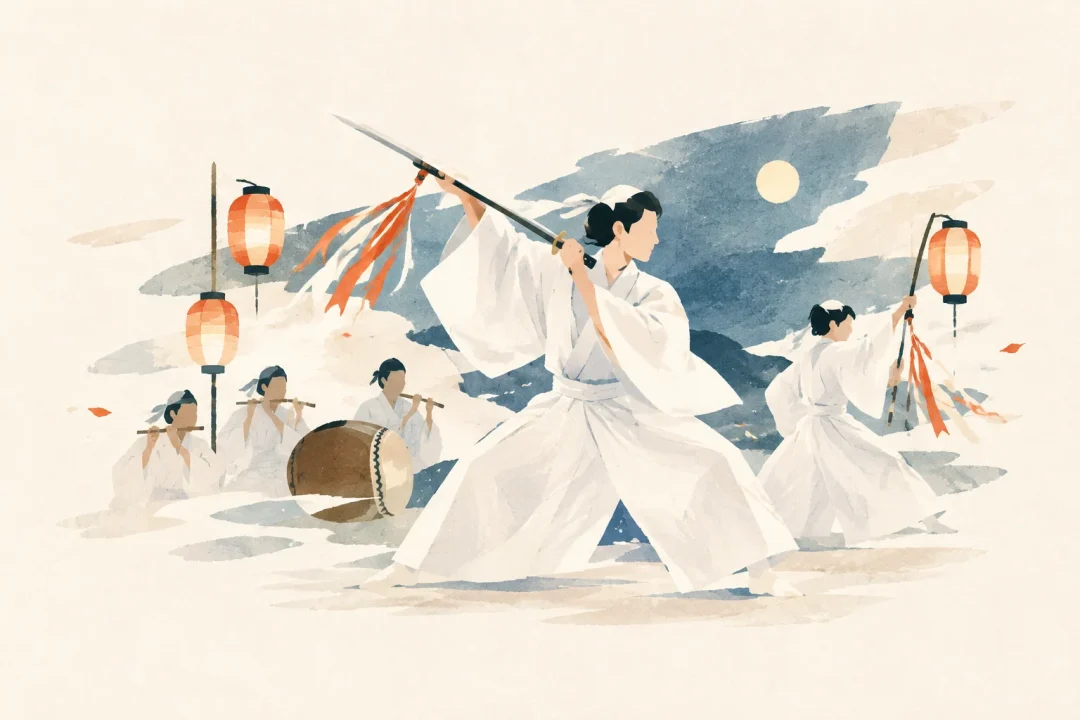
Mera Mountain Kagura, passed down in Saito City, Kijo Town, and Nishimera Village in Miyazaki Prefecture. With a large goshinya as the dance area, dances welcoming the deities and performances depicting hunting culture are dedicated through the night.
About Mera Mountain Kagura
Mera Mountain Kagura is a collective term for night kagura traditions passed down in the upper reaches of the Hitotsuse River in central Miyazaki Prefecture.
The tradition is passed down in communities across Saito City, Kijo Town, and Nishimera Village as part of shrine festivals.
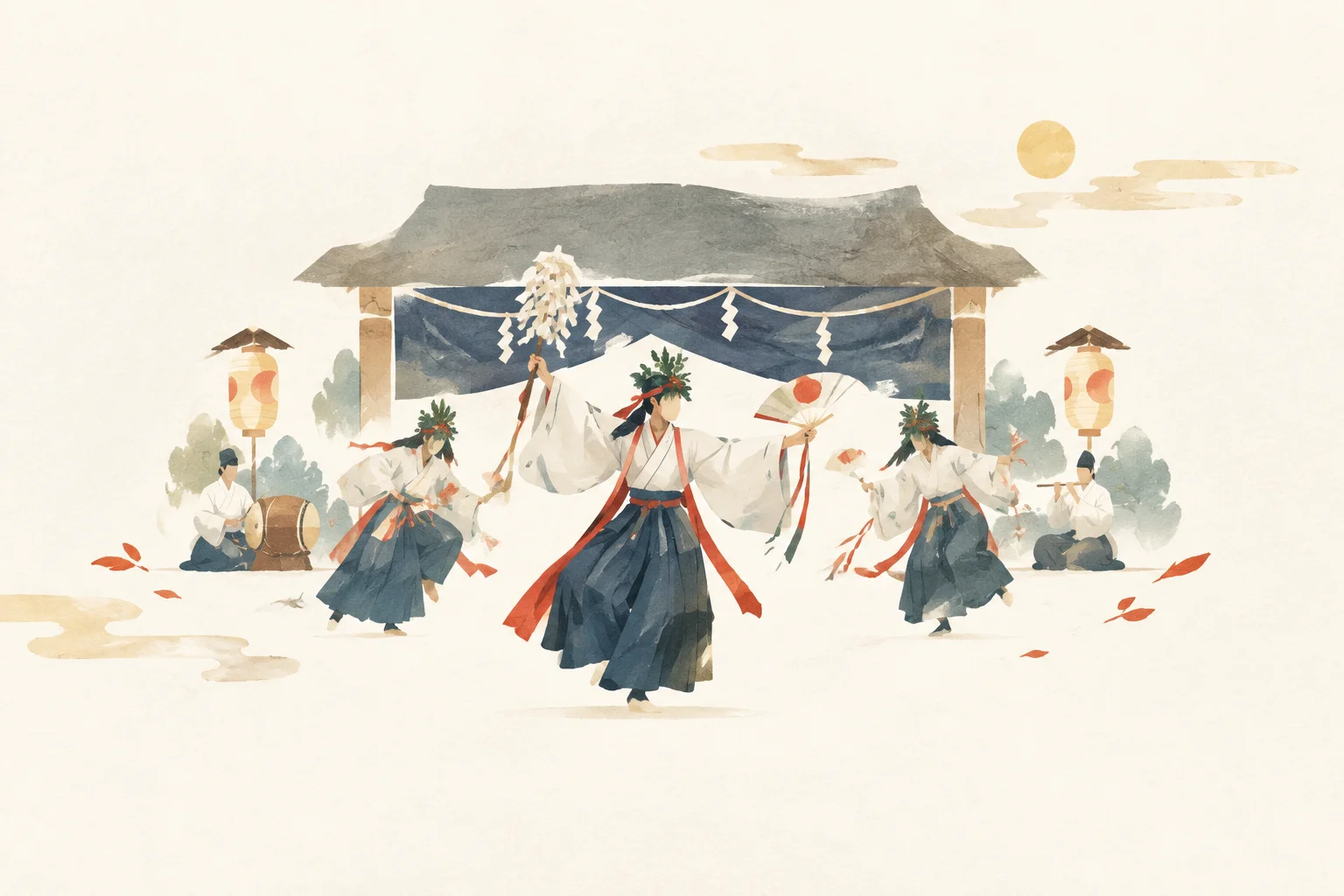
One of its defining features is the construction of a large goshinya, where priests, noriko, and shrine attendants perform thirty-three dances through the night.
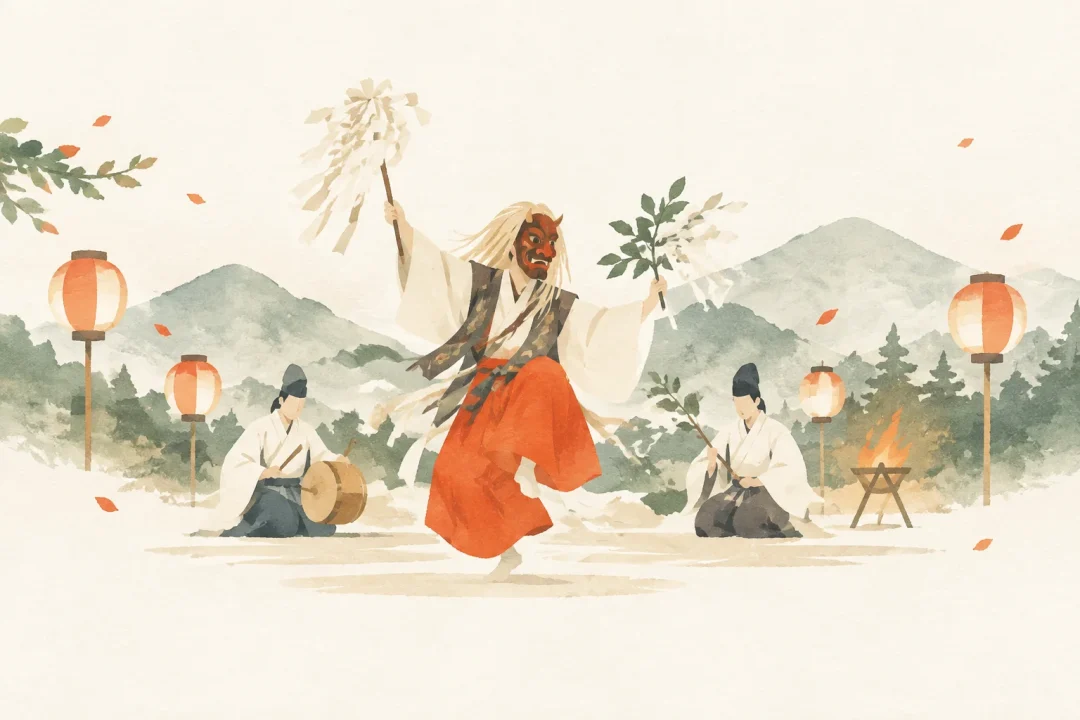
Performances depicting local deities and hunting culture are preserved as traditions unique to each community.
Source: 国指定文化財等データベース
Festival highlights
A highlight is the night-long dedication of a variety of dances in a goshinya decorated with distinctive ornaments, as the deities are welcomed.
The program moves from highly ritualistic kagura to folk kagura with an entertainment element, and in some communities it also includes dances related to hunting.
At Murasho Kagura, kagura begins after the “Omote-sama Mukae” ritual, while at Obae Kagura, there are accounts of spectators entering the dance area toward the end.
Source: 神話のふるさと宮崎 神楽体験レポート~尾八重神楽~ | 神話のふるさと特集 | 宮崎県公式観光サイト「みやざき観光ナビ」
Night Kagura in a Mountain Village Where Deities and Hunting Culture Live On
What to expect
At the festival, a dance area called the goshinya is first set up, and priests, noriko, and shrine attendants take turns dedicating dances.
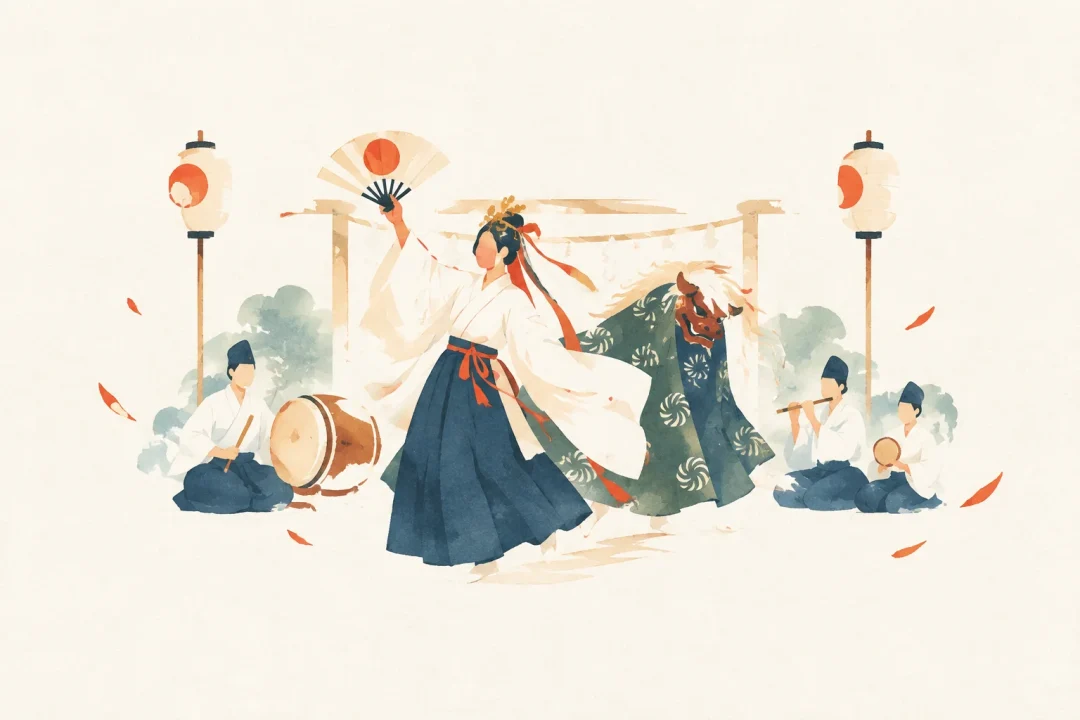
The thirty-three dances include highly ritualistic performances that welcome local deities, as well as others reflecting the region’s history and hunting customs.
The music is performed on a long-bodied shime-daiko drum, flute, and bronze cymbals, accompanying dances that continue through the night.
Location and access
- Venue and address
Events are held at the venues for the various kagura traditions passed down in Saito City, Kijo Town, and Nishimera Village.
For example, Shirohimi Kagura is held in the grounds of Shirohimi Shrine, Oyae Kagura at the former Oyae Elementary School, Murasho Kagura at Murasho Community Center, and Ogawa Kagura at Mera Shrine.
- By car
Mera Shrine is about 1 hour from the Saito IC on the Higashi-Kyushu Expressway.
- Parking
Mera Shrine has free parking.
Source: 米良神社 | 観光スポット | 宮崎県公式観光サイト「みやざき観光ナビ」
Event venue 宮崎県西都市、木城町、西米良村 西都市
This map uses the venue name. Check the official guide for the event area and entrances.
Dates and season
Mera Kagura is performed as an offering at shrine festivals throughout the area, usually from November to December.
Dates vary by kagura tradition: Shirohimi Kagura is scheduled for December, Oyae Kagura for the end of November, and Murasho Kagura and Ogawa Kagura for a weekend in December.
Tips for your visit
Many kagura performances continue through the night, and since they are held in mountain areas in winter, it’s a good idea to bring warm clothing.
Venues vary by kagura and may include or areas around community centers.
Since the dances are dedicated as part of religious rites in the goshinya, please follow local guidance and avoid disrupting the performances or the progress of the festival.
Source: 神話のふるさと宮崎 神楽体験レポート~村所神楽~ | 神話のふるさと特集 | 宮崎県公式観光サイト「みやざき観光ナビ」
Nearby attractions
In the Ogawa district of Nishimera Village, you can visit Mera Shrine, which has long been cherished as the local guardian shrine.
Ogawa Kagura is dedicated at Mera Shrine on a weekend in December every year, and Iwanaga-hime, the enshrined deity, appears in the dances.
The shrine provides information about its history and traditions related to mythology and local lore, making it a place to experience Mera’s culture alongside kagura.
Origins and History of Mera Mountain Kagura
Kagura has been passed down in the Mera region since ancient times.
In Showa 52, Shiromi Kagura was designated a National Important Intangible Folk Cultural Property. Later, kagura traditions in surrounding areas also became the subject of research and preservation.
In Heisei 29, it was selected as an Intangible Folk Cultural Property for which measures such as documentation should be undertaken under the name “Mera Mountain Kagura.” In Reiwa 5, the name was changed to “Mera Kagura,” encompassing six kagura traditions.
Official information
You can read about Mera Mountain Kagura in the Agency for Cultural Affairs’ Database of Nationally Designated Cultural Properties.
The official Miyazaki Prefecture tourism website introduces the venues and usual times of year for the individual kagura that make up Mera Kagura.
The official Saito City website also provides information about the designation of “Mera Kagura” as a Nationally Designated Important Intangible Folk Cultural Property, as well as kagura in Saito City.
Mera Mountain Kagura at a Glance
Mera Mountain Kagura is a collective term for night kagura traditions handed down in Saito City, Kijo Town, and Nishimera Village.
Thirty-three dances are dedicated through the night in the goshinya, with performances depicting mythology, local deities, and hunting culture.
Locations and dates vary by kagura, and performances are held at local festivals each year from November to December.
Japanese Festivals.jp Editorial Team
Celebrating local culture and helping you discover a side of Japan you never knew.
Article updated: 2026/10/19
Submit information or a correction Submit photos of this festival