An Ina Valley folk observance that sends misfortune away with sasa bamboo and Buddhist invocations
Ina Valley Koto Yōka observances
Festival information
EVENT INFORMATION- Season / frequency
- Held each year mainly around February 8 and the 9th, with events also taking place the previous day or several days earlier. / Every year
- Location
- Community boundaries and settlements in areas such as Chiyo, Kamihisakata, and Tatsue in Iida City
- Area
- Nagano Prefecture・Iida City, Komagane City, Takagi Village(From Tokyo: approx. 1 h 20 min–1 h 50 min · bullet train)Prefecture-level estimate to a main station or airport, not the venue. Airport access, check-in and onward travel are extra; remote areas and islands can take much longer.
- Features
- Highlights and activities
- Wishes behind the festival
- Last updated
- 2026/10/19
The Ina Valley Koto Yōka observances send misfortune afflicting the community away, using gongs, drums, Buddhist invocations, and sasa bamboo. They are held in areas such as Chiyo and Kamihisakata in Iida City, with each community preserving its own customs.
About Ina Valley Koto Yōka observances
The Ina Valley Koto Yōka observances are folk events related to Koto Yōka, passed down in the Ina Valley, mainly around Iida City in Nagano Prefecture.
Around February 8 and the 9th, the Koto Nenbutsu, Taishō Kōjin, and Koto no Kami Okuri observances are held.
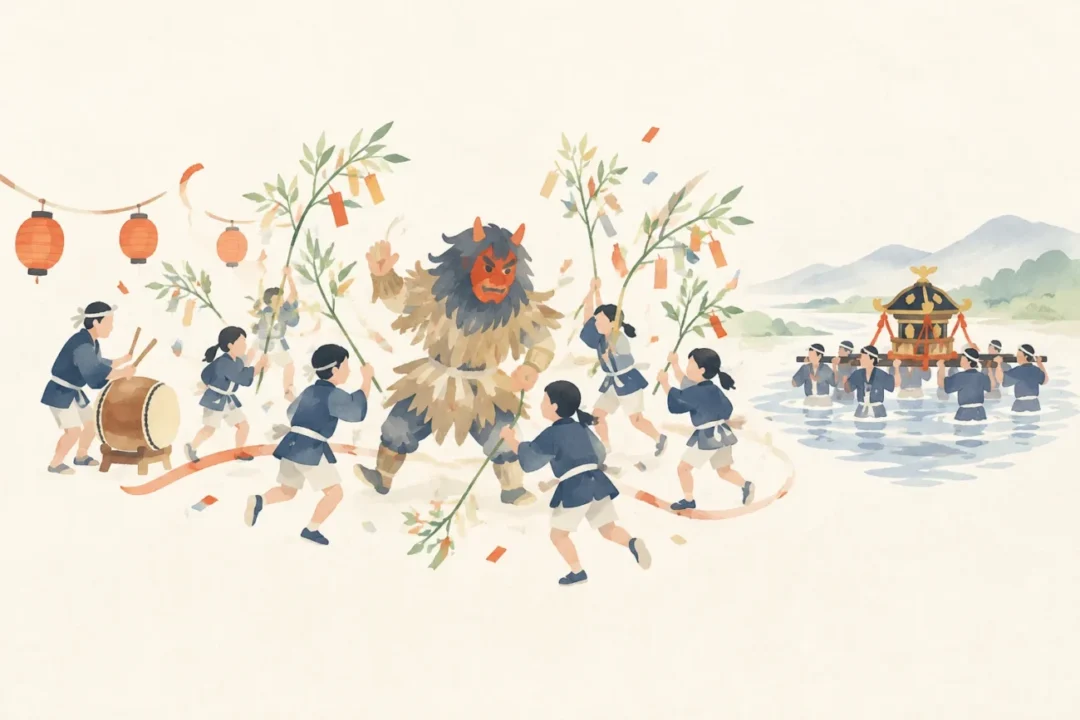
A distinctive feature is the chanting of Buddhist invocations to the beat of gongs and drums, entrusting the plague deity to sasa bamboo and other items and sending it out of the community.
In areas such as Chiyo and Kamihisakata in Iida City, the observances have been passed down in forms that differ from one community to another.
Source: 伊那谷のコト八日行事 - 飯田市ホームページ
Festival highlights
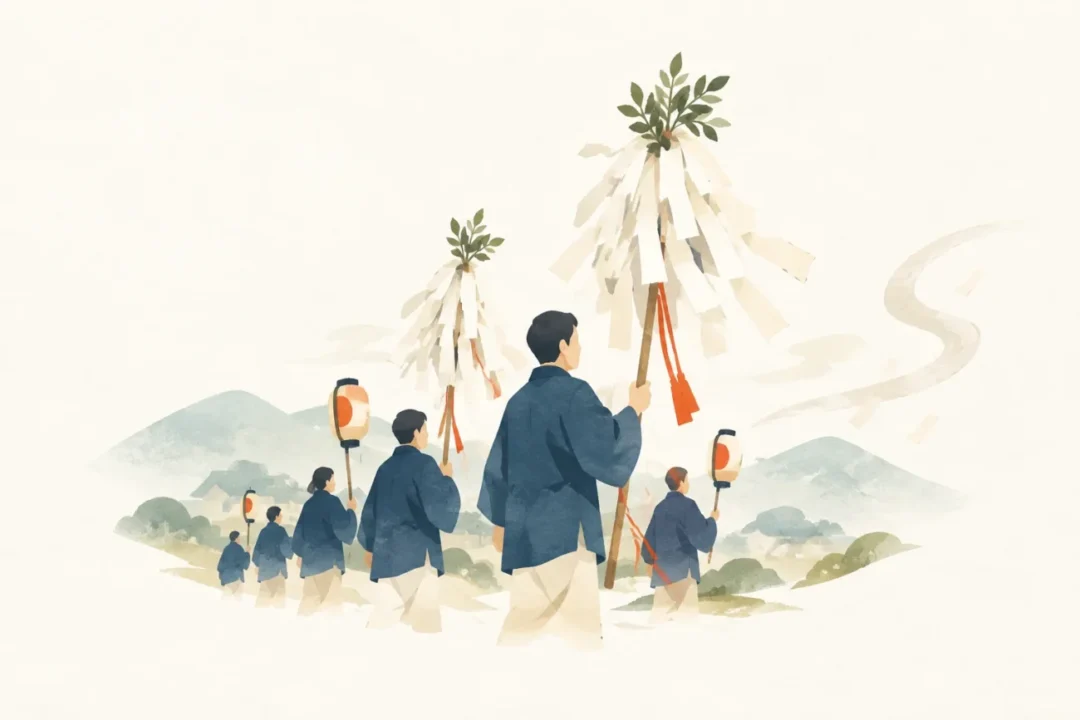
A highlight is the distinctive procession in which sasa bamboo and other items are passed from one community to the next.
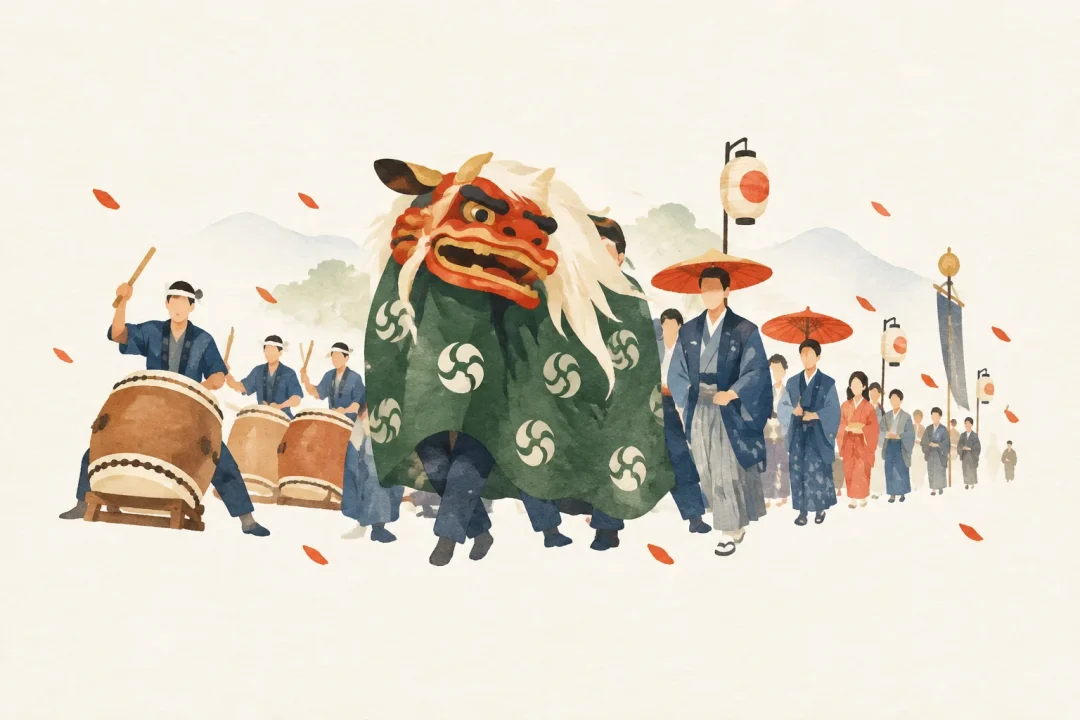
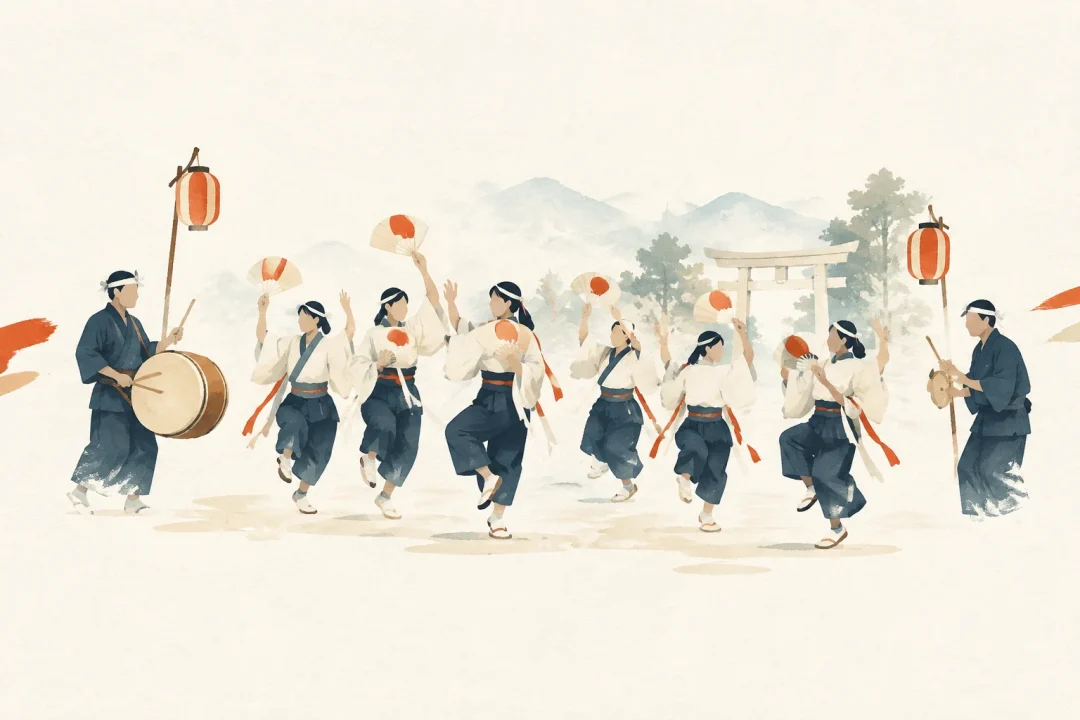
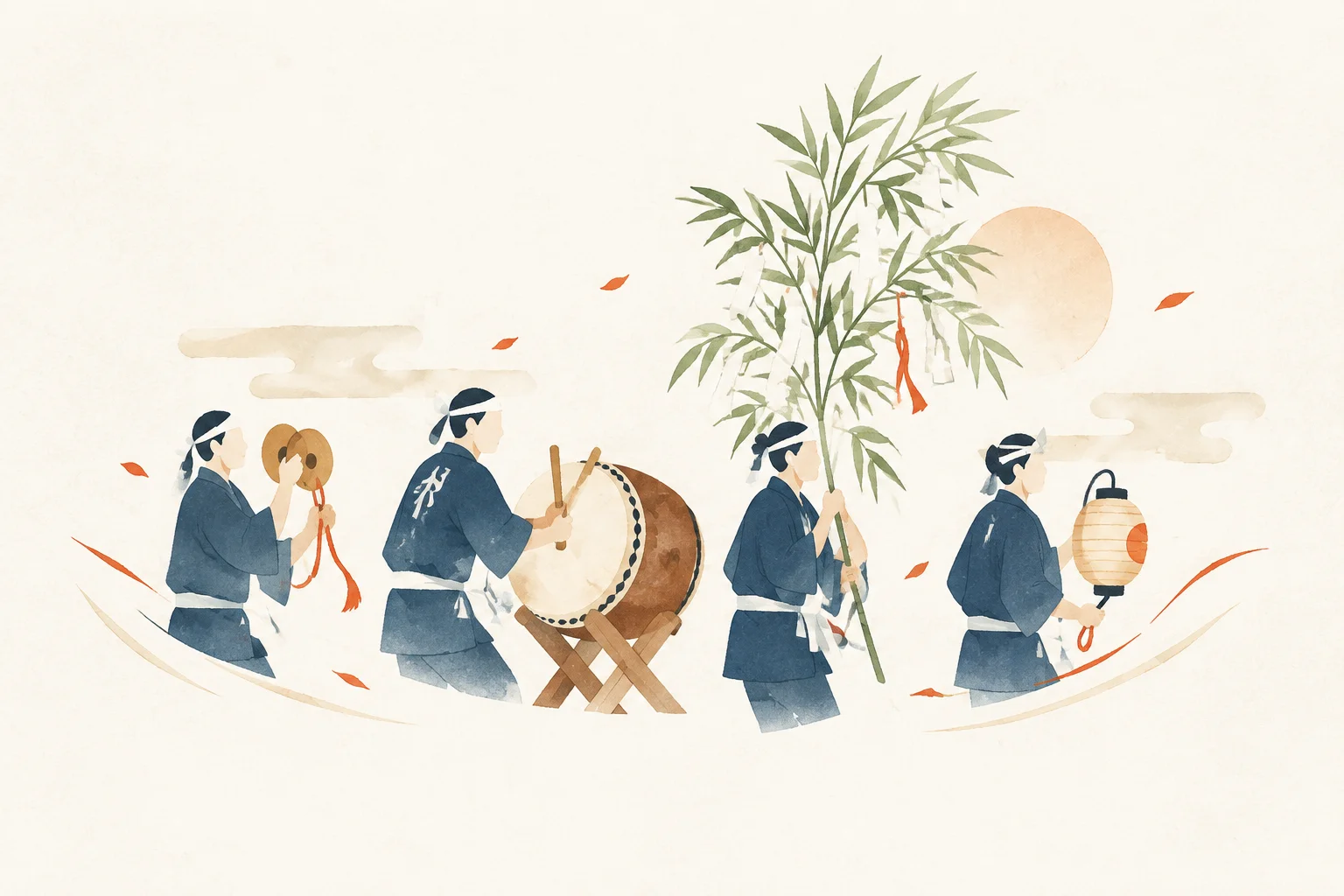
During the Koto Nenbutsu, children visit homes, shrines, and small shrines, chanting Buddhist invocations while playing gongs and drums.
In Koto no Kami Okuri, , flags, ritual paper streamers, and sasa bamboo form a procession and are handed on from the community boundary to the next community.
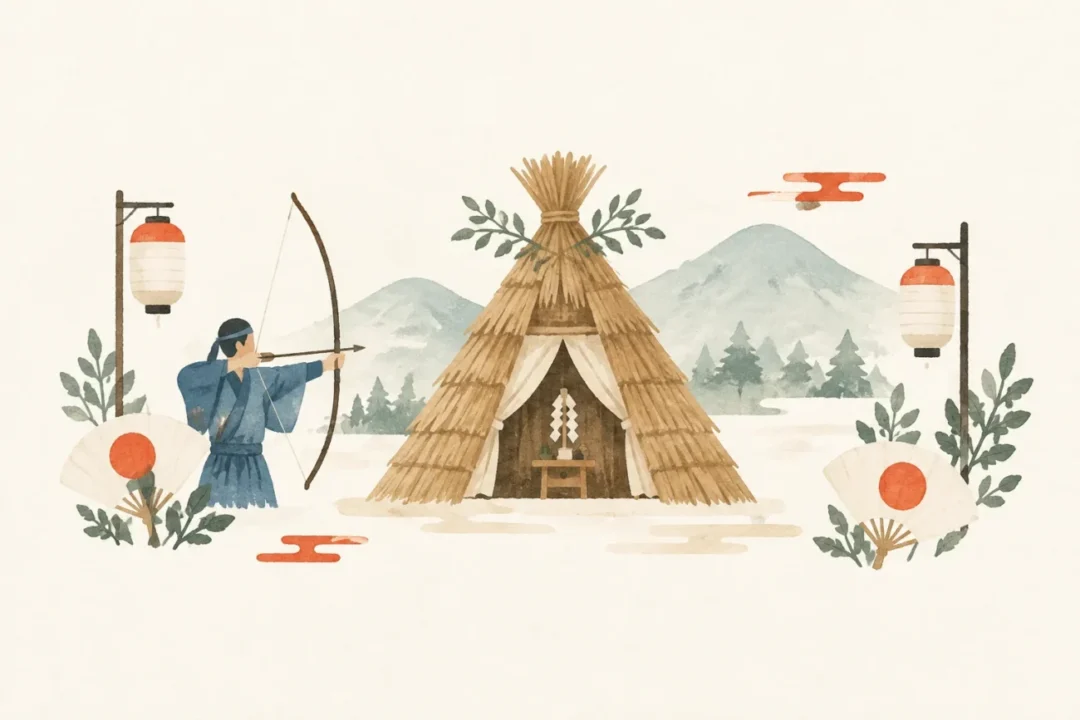
In Koshikubo, participants also compete by setting up flag-marked territories in events called “Head Bashing” and “Beheading.”
An Ina Valley folk observance that sends misfortune away with sasa bamboo and Buddhist invocations
What to expect
The observances begin with preparations and practice for the Koto Nenbutsu and Taishō Kōjin, followed by chanting as participants make their way through the community, and then Koto no Kami Okuri the next day.
Participants visit homes, shrines, and small shrines, chanting Buddhist invocations to the beat of gongs and drums and receiving offerings or small payments.
For the deity-sending rite, households prepare sasa bamboo and purify their homes, then carry the bamboo, flags, and other items to the community boundary.
At the end, some communities pray at the boundary or leave the ritual implements there, then return without looking back.
Source: 伊那谷のコト八日行事 - 祭り歳時記 - 文化庁広報誌 ぶんかる
How to take part
The events are led by local children and residents.
In the past, participation was restricted to boys or to one person per household, but today girls and adults also take part in many communities.
Whether members of the general public can join the procession or recitations, however, depends on the customs of each community.
If you would like to watch or visit, it is best to check in advance with the contact point for the host district.
Location and access
- Venue and address
Held mainly in settlements such as Chiyo, Kamihisakata, and Tatsue in Iida City, including homes, shrines, small shrines, halls, and community boundaries.
There is no single venue; locations vary depending on the district and route.
- By car
It takes about 40 minutes to drive from the Iida IC on the Chuo Expressway to Imodaira in the Chiyo district.
As the event takes place within the community, please be considerate of nearby traffic and residents’ daily lives.
Event venue 長野県飯田市、駒ヶ根市、喬木村 飯田市千代
This map uses the venue name. Check the official guide for the event area and entrances.
Dates and season
The events are usually held around February 8 and the 9th. In many districts, Koto Nenbutsu and Taisho Kojin take place the day before or several days earlier.
Some districts now hold them on dates such as the first or second Saturday instead of the traditional dates.
For the 2026 event dates in each district, check the latest information from the respective host locations.
Source: 国指定文化財等データベース
Tips for your visit
The observances move among homes, small shrines, shrines, and community boundaries, so they are unlike events with conventional spectator seating.
Schedules, routes, and forms of the observances vary by district, and some districts have suspended them.
As some Koto Nenbutsu observances take place at night or in the cold of winter, watch your footing, dress warmly, and observe without trespassing on private property or disrupting residents’ daily lives.
Origins and History of Ina Valley Koto Yōka observances
As for the origin of the deity-sending rite, tradition in Noike says it began about 400 years ago, but this has not been confirmed.
Some researchers believe the origins go back to the Sengoku period, based on the practice of passing sasa bamboo between communities and records of similar observances from that period.
Local tradition holds that the Koto Nenbutsu began in Tenmei 2 or Tenpō 4, and it has been suggested that the practice spread from around the middle of the Edo period onward.
In recent years, population decline and a falling birth rate have made it difficult to sustain the tradition.
Official information
Iida City’s cultural property guide introduces the Ina Valley Koto Yōka observances as intangible folk cultural properties for which measures such as documentation should be undertaken.
The observance is also listed in the Database of National Cultural Properties and was selected on March 9, 2011.
The Chiyo, Kamihisakata, and Tatsue Community Development Centers in Iida City are listed as contacts for checking district schedules.
Ina Valley Koto Yōka observances at a Glance
The Ina Valley Koto Yōka observances are local folk events that combine the Koto Nenbutsu and Taishō Kōjin observances with Koto no Kami Okuri.
Gongs, drums, Buddhist invocations, sasa bamboo, and mikoshi are used to send plague deities and misfortune out of the community.
In areas such as Chiyo and Kamihisakata in Iida City, a distinctive practice can be seen in which sasa bamboo is passed from one community to the next.
Dates and routes vary by district, so check before visiting.
Japanese Festivals.jp Editorial Team
Celebrating local culture and helping you discover a side of Japan you never knew.
Article updated: 2026/10/19
Submit information or a correction Submit photos of this festival