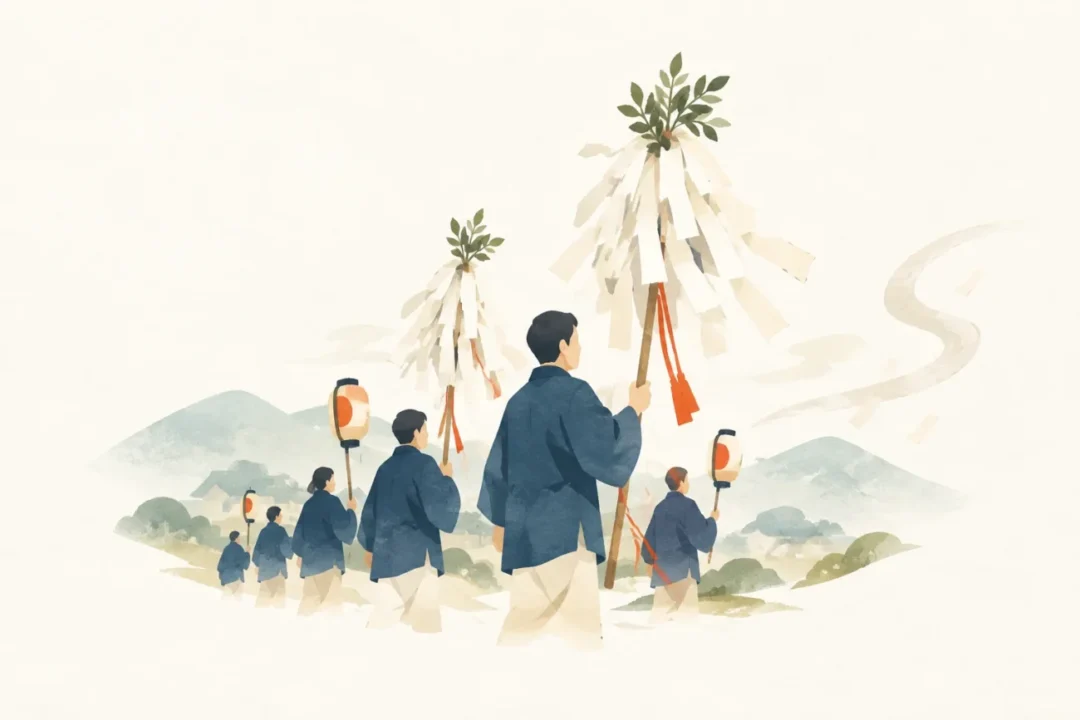
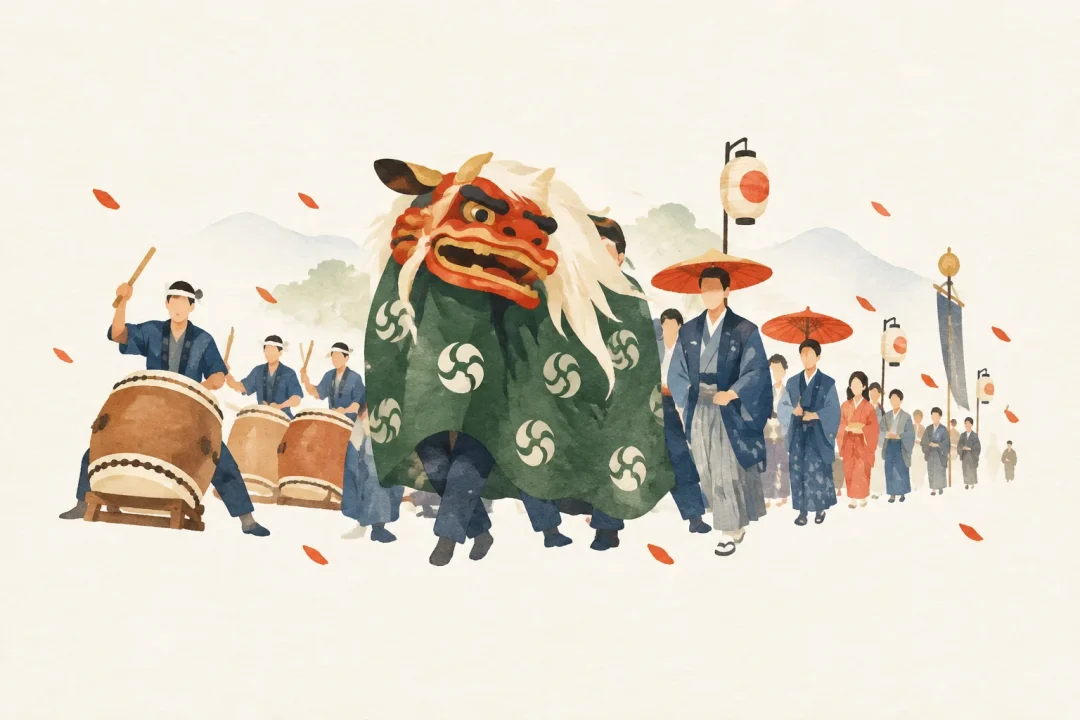
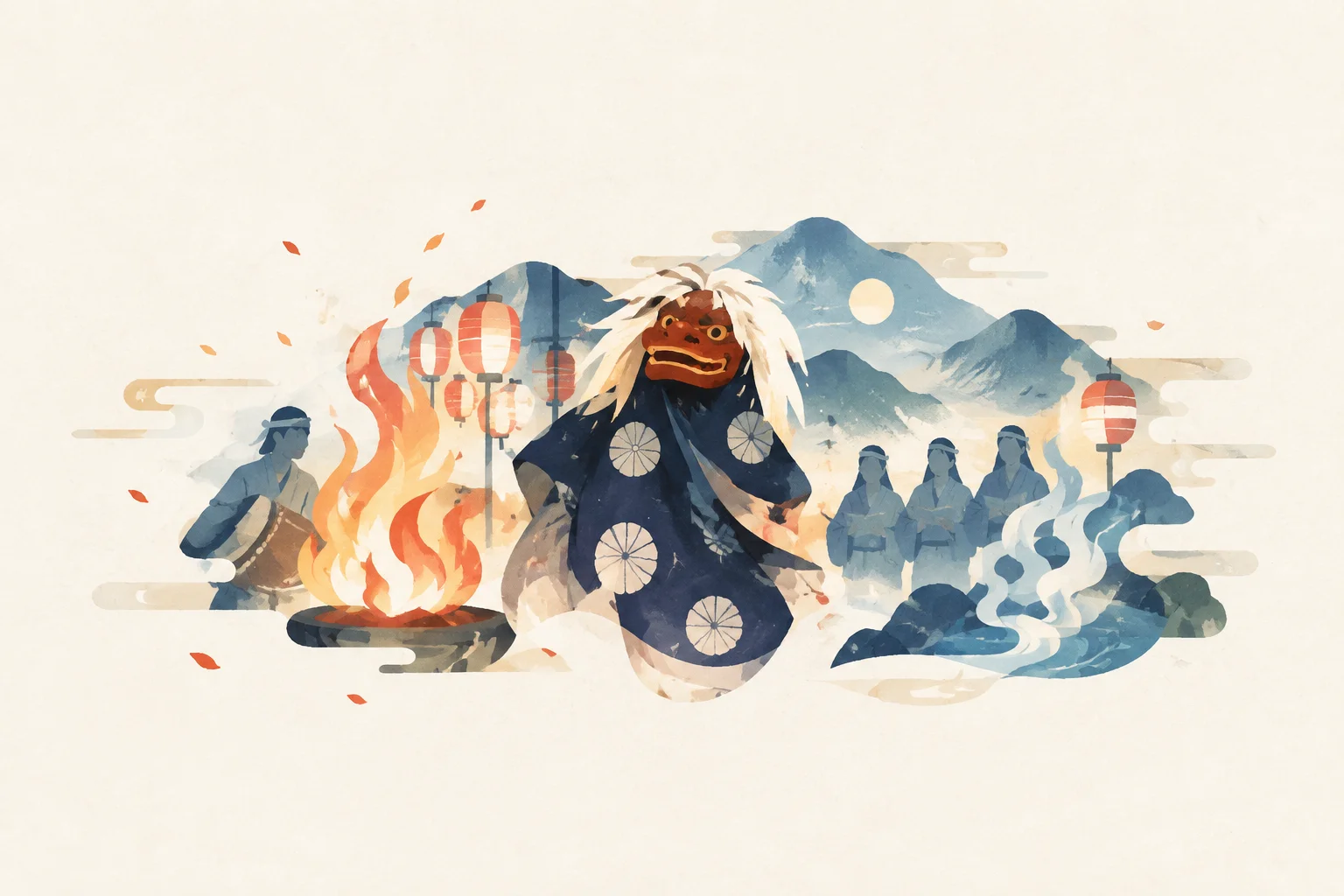
A traditional kagura of Toyama Valley, where cauldrons of hot water and sacred masks carry the night onward
Toyama’s Shimotsuki Festival
Festival information
EVENT INFORMATION- Season / frequency
- First half of December / Every year
- Location
- Shrines in the communities of Kamimura and Minamishinano, Iida City
- Area
- Nagano Prefecture・Iida City(From Tokyo: approx. 1 h 20 min–1 h 50 min · bullet train)Prefecture-level estimate to a main station or airport, not the venue. Airport access, check-in and onward travel are extra; remote areas and islands can take much longer.
- Highlights and activities
- Wishes behind the festival
- Participation / viewing
- Spectators welcome
- Last updated
- 2026/10/19
Toyama Valley’s Shimotsuki Festival: fire and water, songs and masked dances carrying through day and night. At shrines in Kamimura and Minamishinano, Iida City, ancient beliefs and local prayers continue to be passed down, taking on new forms over time.
About Toyama’s Shimotsuki Festival
Photo credits and terms of use
Photographer: NALA Wiki (talk) File:Toyama's Shimotsuki Festival 001.JPG / Wikimedia Commons / CC BY-SA 3.0 Own work by the contributorDisplay size only adjusted.May differ from the event currently featured.Toyama’s Shimotsuki Festival is a yudate kagura tradition passed down in Kamimura and Minamishinano, Iida City, Nagano Prefecture.
A cauldron of hot water is set up at the shrine festival site, where the gods are welcomed, entertained, and sent back through repeated yudate rituals and dances.
The festival invites deities from across Japan and prays for the renewal of life, while also featuring local gods and masks. It preserves traditions of syncretic Shinto-Buddhist belief and ancient ritual performing arts.
This festival is passed down by several communities and shrines, each preserving its own style.
Source: 遠山の霜月祭 - 飯田市ホームページ / 国指定文化財等データベース
Festival highlights
Highlights include rituals centered on a cauldron of hot water and the varied masked dances that appear toward the end.
The performances differ greatly depending on the style practiced in Toyama Valley: examples include a vigorous dance in which the Four Masks leap about, a quiet procession in which the Eight Shrine Deities circle the hearth, and a dance of ritual stamping to the beat of drums.
The yugiri ritual, in which hot water from the cauldron is splashed around by hand, is also well known. People bathe in the water offered to the gods and pray for good health.
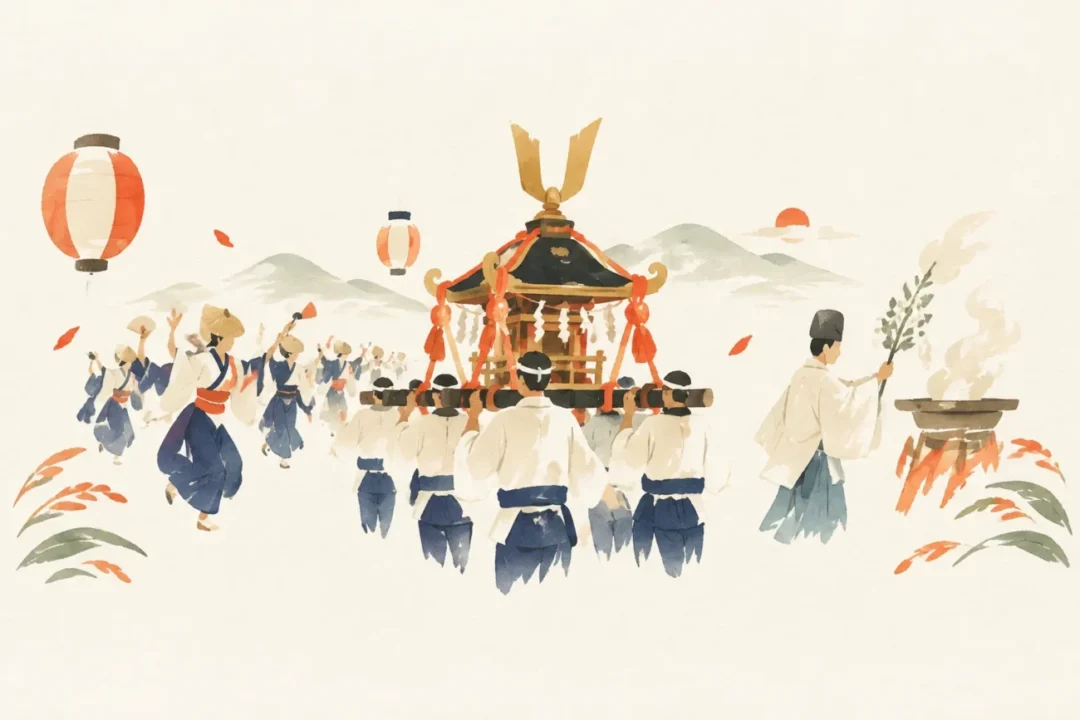
Another distinctive feature is the way fire, steam, kagura songs, and a procession of masks come together at the nighttime festival site.
A traditional kagura of Toyama Valley, where cauldrons of hot water and sacred masks carry the night onward
What to expect
The basic sequence begins with purification of the festival site and the welcoming of the gods through the recitation of the register of deity names. Yudate rituals and dances follow in succession. After the gods from across Japan are sent back in the middle of the night, the gods of the communities and shrines appear in the form of masks, making up the second part of the festival.
Kagura songs are sung, the cauldron’s hot water is purified, and yuki are used to invite the gods into the water.
The latter part includes processions of masks, the dance of the Four Masks, and yugiri, though the order and movements vary by shrine.
The rites span several days, including the evening festival, preparations, and cleanup.
How to take part
The central yutate rituals and dances are performed by local participants, including shrine priests, , and preservation groups.
Visitors are generally expected to observe the rituals respectfully. Guidance for the festival grounds states that access for people other than villagers is limited to the dance pavilion.
Participants who carry on the traditions also appear, including children’s and middle school students’ dances.
Whether general visitors can take part in ritual roles must be confirmed in the guidance provided by each shrine.
Source: 上町タイプ(遠山谷北部)の霜月祭 - 飯田市ホームページ
Location and access
- Venue and address
The festival takes place at shrines in the communities of Kamimura and Minamishinano, Iida City.
The festival is not held at a single venue; each shrine holds it on a different day.
Event venue 長野県飯田市 飯田市上村
This map uses the venue name. Check the official guide for the event area and entrances.
Dates and season
- Season
First half of December
- Frequency
Every year
Accommodation and hotels PR
Showing nearby accommodation.
Prices and availability are current at the time of retrieval. For multi-night stays, only the first night’s price is shown. Confirm the final price and directions to the venue with the booking provider. Select your dates again when using the area search link. Search area: within 3 km of Central Nagano Prefecture / Iida City (the search is not centered on the festival venue)
Tips for your visit
Fires are kept burning at the festival site, filling it with smoke, and the event lasts for many hours on a winter night.
Be prepared for the cold, as well as smoke, steam, and crowds.
During masked dances and yugiri, vigorous movements or splashes of hot water may occur close to spectators.
Stay within the permitted festival area, do not set up tripods or chairs, and follow the guidance of shrine parishioners and staff.
Source: 木沢タイプ(遠山谷中部)の霜月祭 - 飯田市ホームページ
Nearby attractions

飯田市立動物園
長野県飯田市にある動物園

飯田市美術博物館
長野県飯田市にある美術館兼博物館
Origins and History of Toyama’s Shimotsuki Festival
Toyama’s Shimotsuki Festival is thought to have originated in estate rituals introduced when Toyama Valley was part of the estate of Tsurugaoka Hachimangu Shrine during the Kamakura period.
It is said that processions of masks were added from the Edo period onward. Accounts of epidemics that spread after the Toyama clan was dispossessed are also said to have influenced the festival’s structure.
The masks and movements have changed over time, incorporating offerings and prayers from each era.
Distinct styles are still passed down at each shrine, and the festival was designated an Important Intangible Folk Cultural Property in 1979.
Official information
Iida City’s cultural heritage guide provides an overview of Toyama’s Shimotsuki Festival, regional features, the main festival sequence, and guidance for visitors.
The Database of Nationally Designated Cultural Properties provides details of its designation as an Important Intangible Folk Cultural Property and an explanation of yudate kagura.
Toyama’s Shimotsuki Festival at a Glance
Toyama’s Shimotsuki Festival is a yudate kagura tradition passed down at shrines in Kamimura and Minamishinano, Iida City.
Through the cauldron’s hot water, the gods are welcomed; purification, dances, and processions of sacred masks follow as people pray for the renewal of life and the well-being of the community.
Alongside powerful scenes such as yugiri and the dance of the Four Masks, the recitation of the register of deity names and the quiet processions reveal layers of ancient belief.
Dates and styles vary by shrine, so check the information provided by the shrine hosting the festival before you visit.
Japanese Festivals.jp Editorial Team
Celebrating local culture and helping you discover a side of Japan you never knew.
Article updated: 2026/10/19
Submit information or a correction Submit photos of this festival