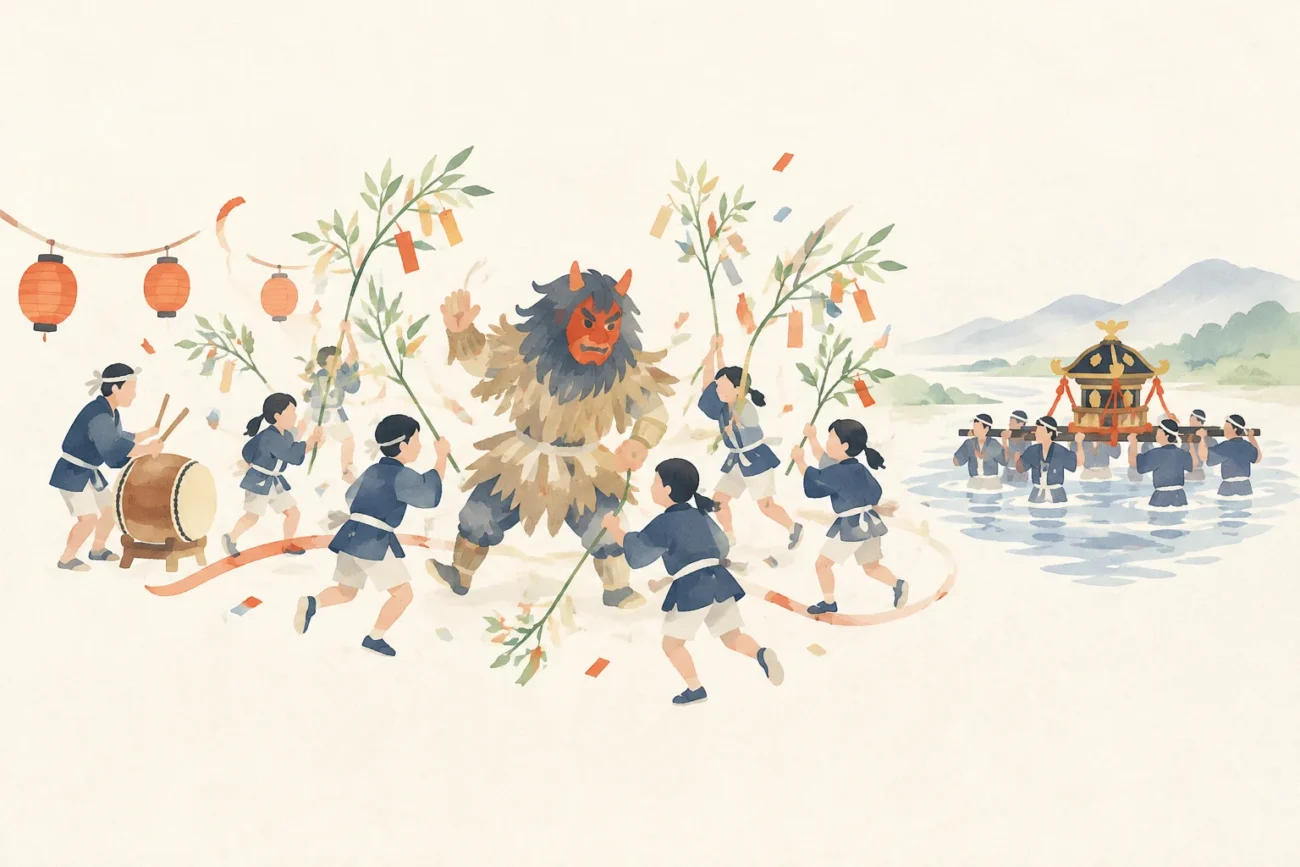
A traditional Ina event featuring Tanabata bamboo poles and a mikoshi crossing the Mibu River
Sanyori Koyori
Festival information
EVENT INFORMATION- Season / frequency
- Every year on August 7 / Every year
- Location
- Kawate Tenpaku Shrine, Sakurai Tenpaku Shrine
- Area
- Nagano Prefecture・Ina City(From Tokyo: approx. 1 h 20 min–1 h 50 min · bullet train)Prefecture-level estimate to a main station or airport, not the venue. Airport access, check-in and onward travel are extra; remote areas and islands can take much longer.
- Features
- Highlights and activities
- Wishes behind the festival
- Age restrictions
- Children taking part in the rites
- Required number of participants
- 2 adults play the demon roles
- Last updated
- 2026/10/19
Sanyori Koyori is a traditional event in Ina City in which children holding bamboo poles surround a demon and perform rites to chants and drumbeats. After the event, the crosses the Mibu River, linking the Tenpaku Shrines in Kawate and Sakurai.
About Sanyori Koyori
Sanyori Koyori is a Tanabata Festival at Tenpaku Shrine, handed down in the Kawate area of Misuzu, Ina City, and in Sakurai, Tomigata.
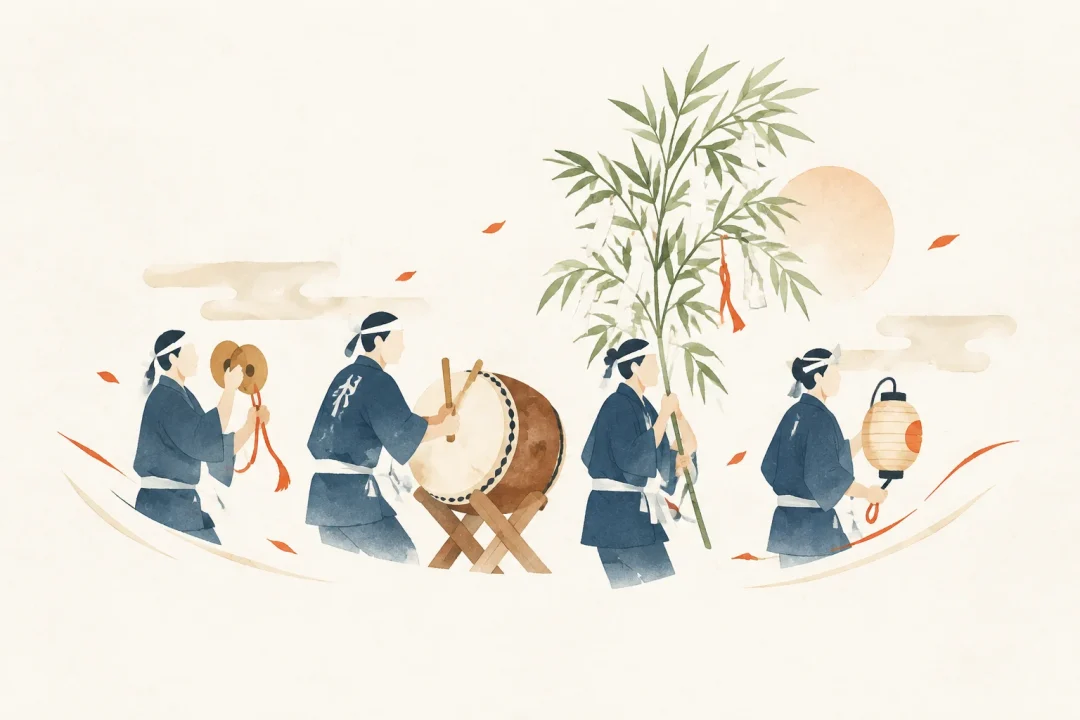
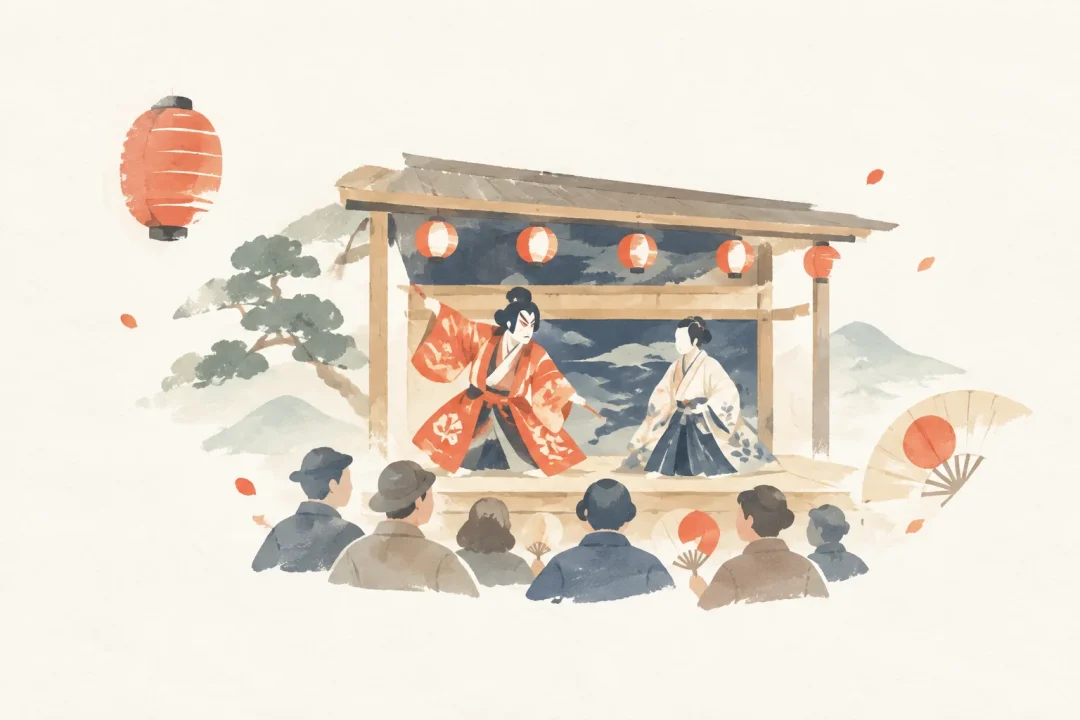
Children hold colorful, decorated Tanabata bamboo poles and perform rites around an adult dressed as a demon.
The demon represents a plague deity believed to cause floods, and the rite expresses a wish to appease it.
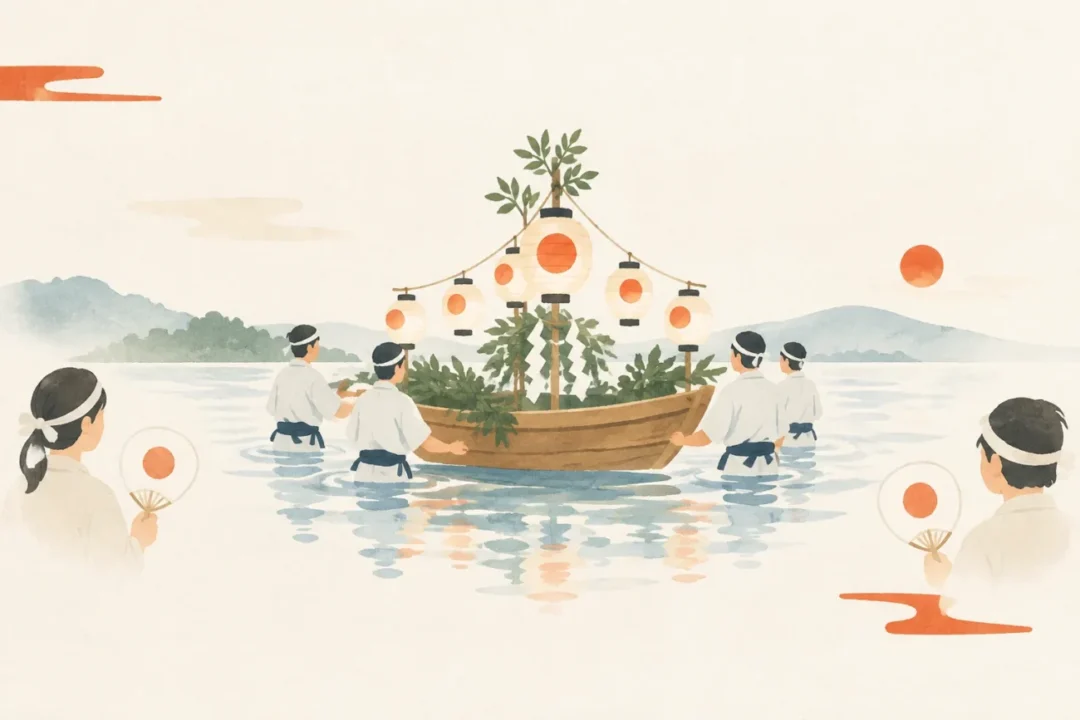
After the event, a procession carrying the sacred object crosses the Mibu River, heading from Tenpaku-sama in Kawate to Tenpaku-sama in Sakurai.
Source: さんよりこより(天伯社の七夕祭):伊那市公式ホームページ
Festival highlights
A highlight is the scene of children holding Tanabata bamboo poles, circling the demon 3 times while chanting “Sanyori Koyori.”
After circling 3 times, the demon beats a drum, and the children make a motion of striking the demon with the decorated bamboo.
This sequence of rites is repeated 3 times.
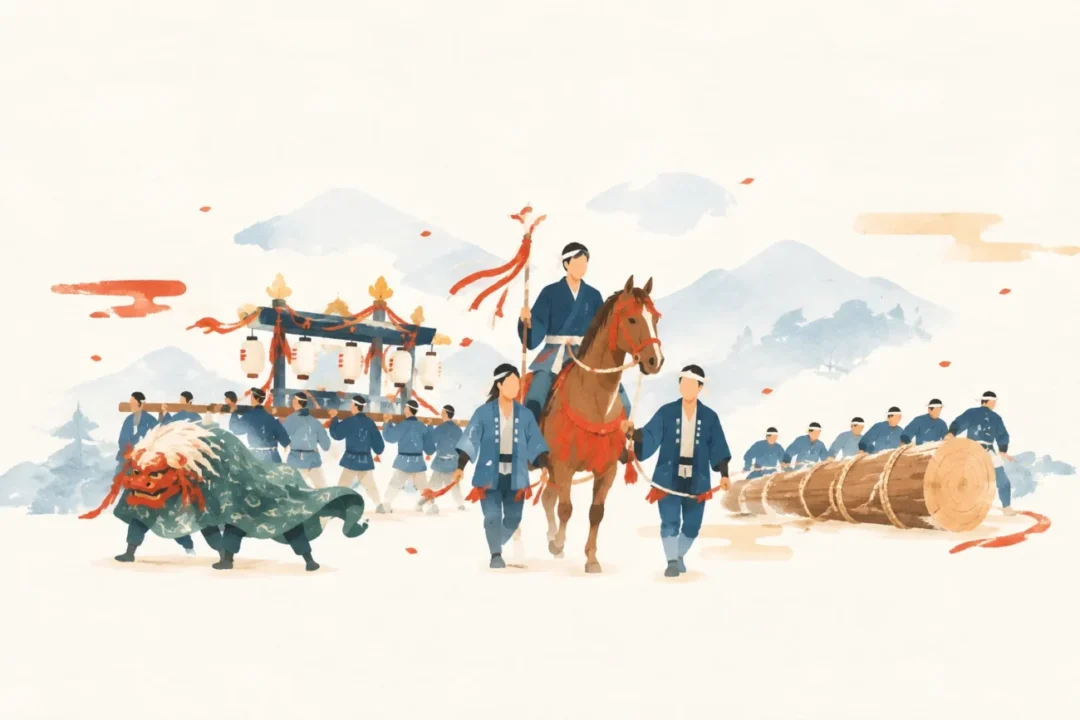
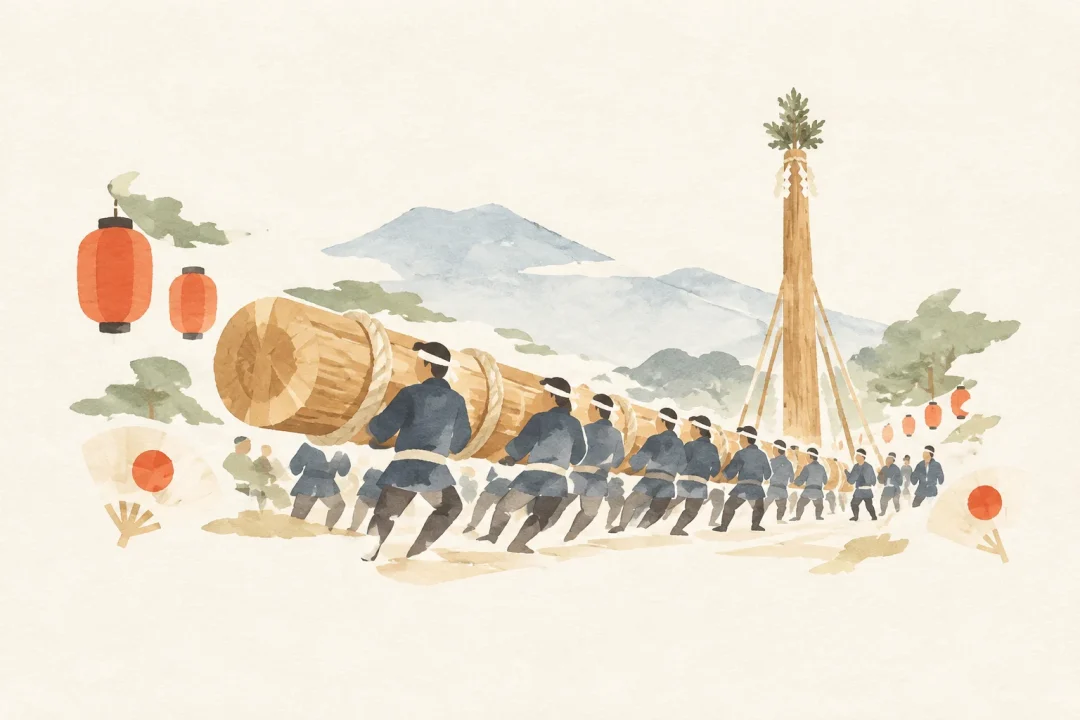
Another distinctive Tanabata Festival scene is the procession carrying the mikoshi with the sacred object as it crosses the Mibu River.
A traditional Ina event featuring Tanabata bamboo poles and a mikoshi crossing the Mibu River
What to expect
The event begins with children gathering at Tenpaku Shrine, carrying decorated Tanabata bamboo poles.
Two adults wearing straw hats and carrying drums dress as demons, while the children form a circle around them.
They circle the demon 3 times while chanting, then strike it with decorated bamboo at the drum cue; this sequence is performed 3 times.
Afterward, a procession carrying the sacred object in a mikoshi crosses the Mibu River and performs the same rites at the other Tenpaku Shrine.
How to take part
At the festival, children hold decorated bamboo poles and form a circle, joining the rites as they chant in response.
A procession carrying the mikoshi with the sacred object is also held.
However, based only on the information provided, it is not possible to determine whether general visitors from outside the area may take part in the rites or the mikoshi procession.
Anyone wishing to watch should respect local customs so as not to disrupt the event.
Children from the area gather at Tenpaku Shrine with decorated Tanabata bamboo poles and join the rites surrounding the demon.
Two adults wear straw hats, carry drums, and play the role of demons.
No information is provided about how visitors from outside the area can take on a role or about advance registration.
Anyone wishing to take part needs to check with the local organizers or people involved.
Location and access
- Venue and address
A procession carrying the sacred object crosses the Mibu River from Kawate Tenpaku Shrine (Shimokawate, Misuzu, Ina City) to Sakurai Tenpaku Shrine (Sakurai, Tomigata, Ina City).
Address Shimokawate, Misuzu, Ina City, Nagano Prefecture; Sakurai, Tomigata, Ina City, Nagano Prefecture
Dates and season
It is usually held on August 7.
It is listed as starting at 1 p.m. at Kawate Tenpaku Shrine and at 2 p.m. at Sakurai Tenpaku Shrine.
Accommodation and hotels PR
Showing nearby accommodation.
Prices and availability are current at the time of retrieval. For multi-night stays, only the first night’s price is shown. Confirm the final price and directions to the venue with the booking provider. Select your dates again when using the area search link. Search area: within 3 km of Central Nagano Prefecture / Ina City (the search is not centered on the festival venue)
Origins and History of Sanyori Koyori
According to local tradition, the festival began in 1427, in the middle of the Muromachi period, when Tenpaku-sama, who was in Katakura, Fujisawa, was carried by floodwaters to Sakurai, Tomigata, and then further downstream to Kawate, Misuzu.
In connection with this, Tenpaku-sama came to be enshrined in both Sakurai and Kawate.
The event is also said to have continued since 1472, during the Ashikaga period.
The rites to appease floods are said to have taken their present form through their connection to the relationship between the two Tenpaku-sama and the Tanabata legend.
Official information
The official Ina City website introduces the festival as “Sanyori Koyori (Tanabata Festival at Tenpaku Shrine),” describing its origins, the sequence of the rites, the venue, and the usual date.
For inquiries, the Public Relations and Public Opinion Section of the Secretary and Public Relations Division, General Affairs Department, Ina City Hall, is listed.
Sanyori Koyori at a Glance
Sanyori Koyori is a Tanabata Festival at Tenpaku Shrine, handed down in Kawate and Sakurai in Ina City.
The central rite involves children surrounding a demon and striking it with decorated bamboo to chants and drumbeats.
After the festival, the mikoshi procession crosses the Mibu River, and rites are also held at Tenpaku Shrine on the opposite bank.
例年の開催日は8月7日です。
Japanese Festivals.jp Editorial Team
Celebrating local culture and helping you discover a side of Japan you never knew.
Article updated: 2026/10/19
Submit information or a correction Submit photos of this festival