12 dances passed down in Mori Town, brought to life by children and masked dances
Amamiya Shrine’s 12-part Bugaku
The 2026 edition of Amamiya Shrine’s 12-part has ended.
Festival information
EVENT INFORMATION- Dates
- 2026/04/04 〜 2026/04/05Ended
- Season / frequency
- Usually held on the first Saturday and Sunday of April / Every year
- Location
- Amamiya Shrine
- Area
- Shizuoka Prefecture・Mori Town(From Tokyo: approx. 1 h–1 h 30 min · bullet train)Prefecture-level estimate to a main station or airport, not the venue. Airport access, check-in and onward travel are extra; remote areas and islands can take much longer.
- Highlights and activities
- Wishes behind the festival
- Participation / viewing
- Spectators welcome
- Participation fee
- Free admission
- Last updated
- 2026/10/19
A traditional performing art at Amamiya Shrine in Mori Town, where children and adults offer 12 dances.
About Amamiya Shrine’s 12-part Bugaku
Amamiya Shrine’s 12-part Bugaku is a dance performed at a shrine festival and passed down in Mori Town, Shizuoka Prefecture.
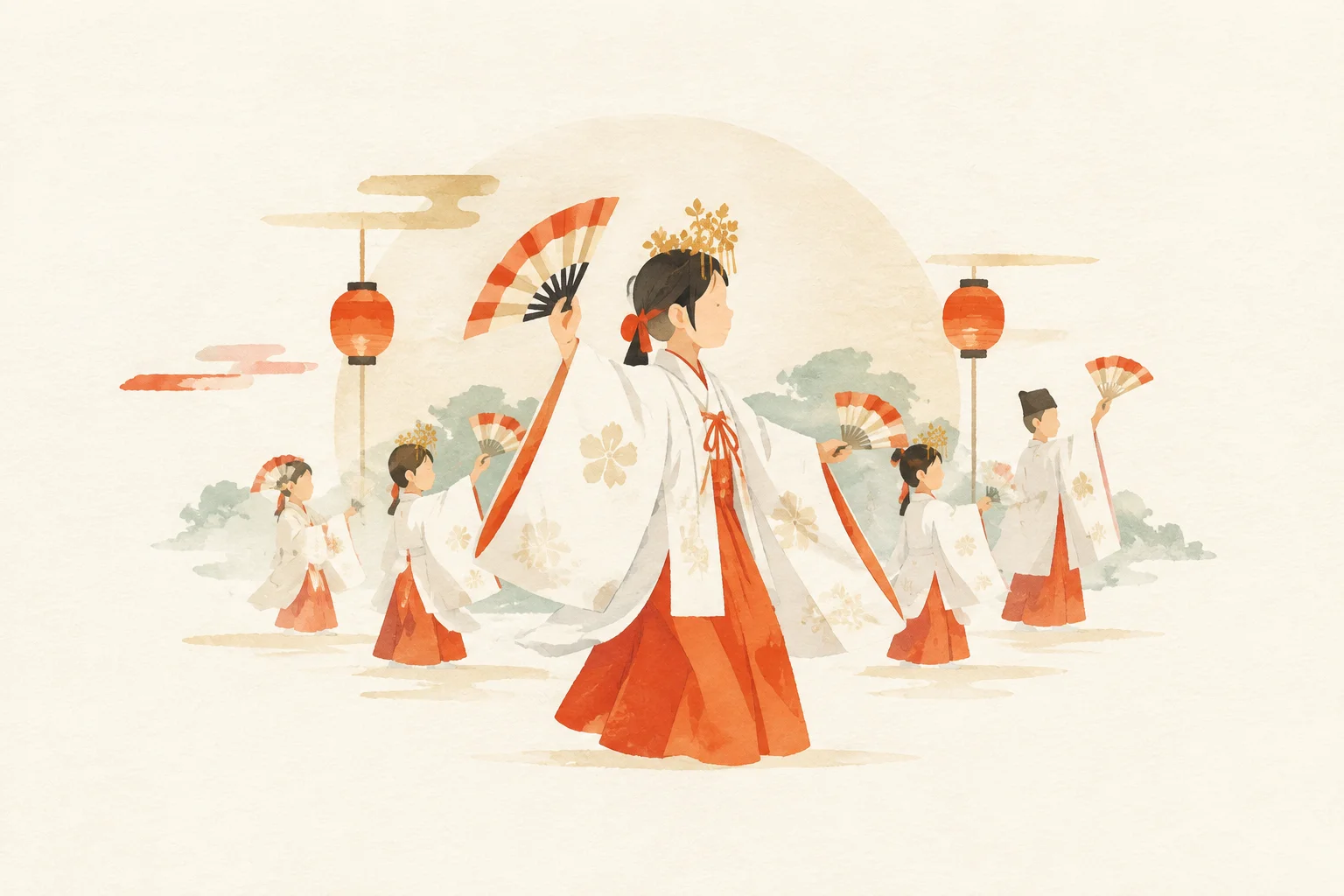
The shrine’s 12 traditional dances are performed as offerings by children, young men, and adult dancers.
The stage is the Bugakuden hall in front of Amamiya Shrine’s , and the dances are accompanied by large drums, gongs, hand drums, and flutes.
It has been passed down in connection with Mori Town’s festivals as a performing art offered in prayer for community well-being and bountiful harvests.
Source: 国指定文化財等データベース / 天宮神社例大祭[周智郡森町]|静岡新聞アットエス
Festival highlights
A highlight is the 12 dances, performed by dancers of different roles, from children to adults.
In Taiheiraku, children wield swords and pray for peace throughout the land.
In the , gestures to calm the rampaging lion express a wish to drive away epidemics.
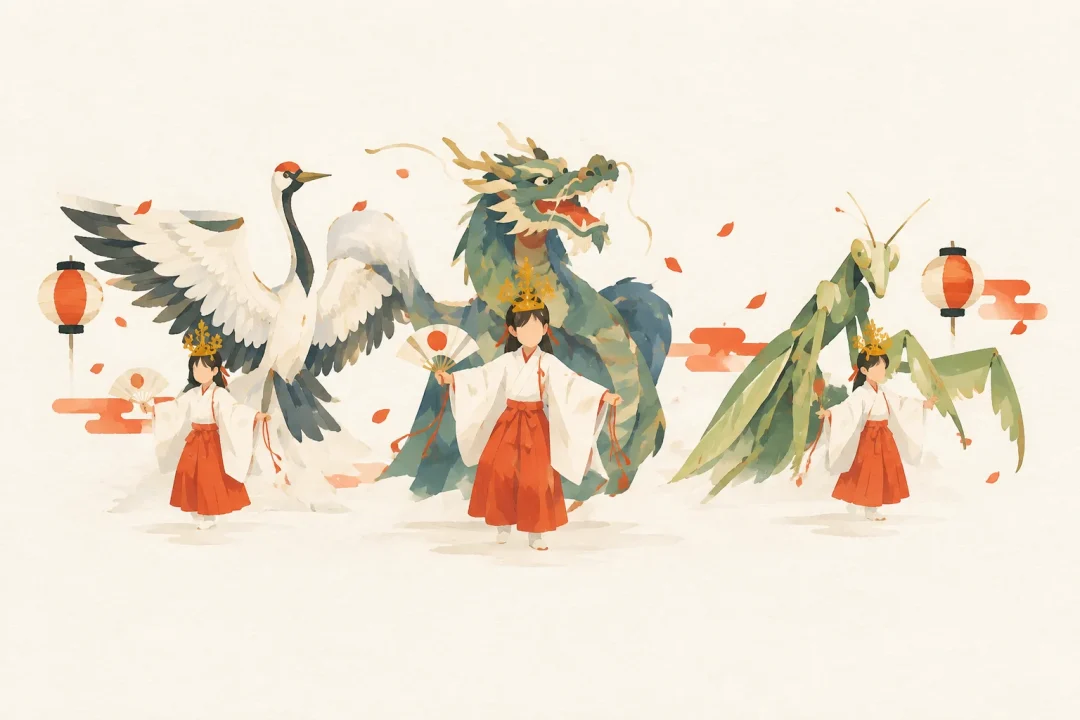
The solemn stage is distinguished by costumes and masks such as bird helmets and bodhisattva masks, accompanied by flutes, drums, and gongs.
Source: 十二段舞楽 - 天宮神社新公式ホーム ページ
12 dances passed down in Mori Town, brought to life by children and masked dances
What to expect
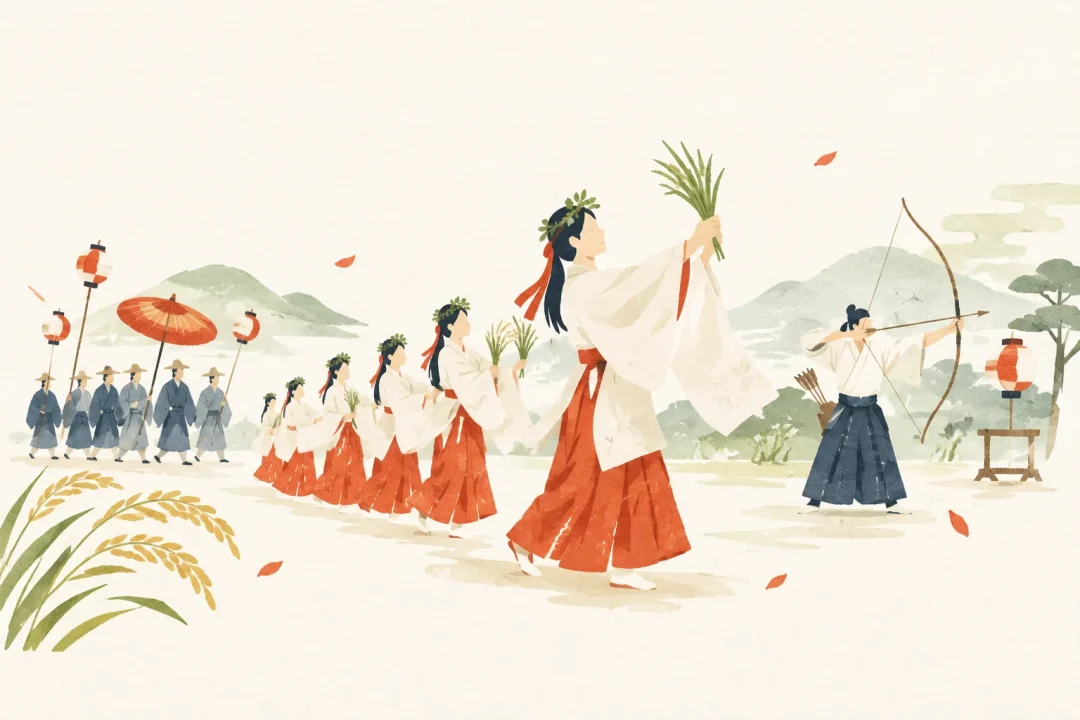
The festival features a procession that begins at the former Jingūji temple within the and circles the worship hall and main sanctuary. Afterward, dances are performed at the Bugakuden hall in front of the worship hall.
The dancers are children, young men, and adults; the number of performers and their roles vary by dance.
The 12 dances include dances that purify heaven, earth, and the stage; dances depicting butterflies and birds; dances using swords; Anma and Ni-no-mai; and dances such as Ranryōō, Nasori, and the lion dance.
The musicians accompany the dances with large drums, gongs, hand drums, and flutes.
How to take part
Local elementary school students, young parishioners, and members of the preservation association perform the dances.
Roles are divided among children, young men, adult dancers, and musicians, and the performances are given by local tradition-bearers who support the festival.
No information is available about recruitment for general visitors to take part as performers.
You can visit as a spectator and enjoy quietly watching the dances offered at the festival.
Location and access
- Venue and address
Amamiya Shrine (576 Amamiya, Mori Town, Shuchi District, Shizuoka Prefecture).
- Parking
About 80 spaces, free of charge.
Address 576 Amamiya, Mori Town, Shuchi District, Shizuoka Prefecture 437-0216
Dates and season
2026 Event Information (the dates listed have passed)
In 2026, it was held on April 4 (Saturday) and the 5th (Sunday).
The grand festival rites were held from 2 p.m. on the 4th and from 10 a.m. on the 5th. The 12-part Bugaku was performed at 3:30 p.m. on both days.
It is usually held on the first Saturday and Sunday of April.
Accommodation and hotels PR
Showing nearby accommodation.
Prices and availability are current at the time of retrieval. For multi-night stays, only the first night’s price is shown. Confirm the final price and directions to the venue with the booking provider. Select your dates again when using the area search link. Search area: within 3 km of Central Shizuoka Prefecture / Mori Town (the search is not centered on the festival venue)
Tips for your visit
The 2026 event was held on April 4 and the 5th. As the event times and details may change, check with the organizers or venue before visiting.
Admission is free, but as these dances are offerings at a shrine festival, please watch quietly and respectfully on the shrine grounds.
The parking lot is listed as having about 80 free spaces. Since it may fill up, it is a good idea to allow plenty of time for your visit.
Nearby attractions

小国神社
静岡県周智郡森町一宮にある神社
Origins and History of Amamiya Shrine’s 12-part Bugaku
The 12-part Bugaku is said to have originated when a shrine priest who came from Kyoto in 705 introduced the dances offered at the shrine.
Shrine rites later ceased during the Onin and Bunmei Wars and a period of regional warfare, but resumed in 1583. The tradition has continued to be preserved through the changes of the Meiji Restoration.
The dances are a localized form of a style from central Japan and have become a folk performing art that brings color to Mori Town’s festivals.
In 1982, it was designated an Important Intangible Folk Cultural Property of Japan.
Official information
Amamiya Shrine’s official website provides information on the history of the 12-part Bugaku, the 12 dances, shrine rites and annual events, and access.
The page on the 12-part Bugaku also notes that it is an Important Intangible Folk Cultural Property designated by the Japanese government.
Information about the event date and times can be checked alongside details of the grand festival rites.
Source: 天宮神社新公式ホームページ - 天宮神社新公式ホーム ページ
Amamiya Shrine’s 12-part Bugaku at a Glance
Amamiya Shrine’s 12-part Bugaku is a set of 12 dances offered at the shrine and passed down at Amamiya Shrine in Mori Town.
Children and adults dance with swords, masks, and costumes, accompanied by flutes, drums, and gongs.
In 2026, it was held on April 4 and the 5th, with the 12-part Bugaku performed at 3:30 p.m. on both days. Admission was free.
Japanese Festivals.jp Editorial Team
Celebrating local culture and helping you discover a side of Japan you never knew.
Article updated: 2026/10/19
Submit information or a correction Submit photos of this festival