An all-night ritual preserving myth-inspired dances in each village
Takachiho no Yo Kagura
Festival information
EVENT INFORMATION- Season / frequency
- From mid-November to early February the following year / Every year
- Location
- venues (private homes and community centers) in villages throughout Takachiho Town
- Area
- Miyazaki Prefecture・Takachiho Town(From Tokyo: approx. 1 h 40 min–2 h · flight time only)Prefecture-level estimate to a main station or airport, not the venue. Airport access, check-in and onward travel are extra; remote areas and islands can take much longer.
- Wishes behind the festival
- Participation / viewing
- Open to public participation / spectators welcome
- Participation fee
- Viewing is open to everyone. Pay “Offering Before the Deity” at the reception desk as a courtesy when attending the ritual
- Official website / social media
- Official website
- Last updated
- 2026/10/19
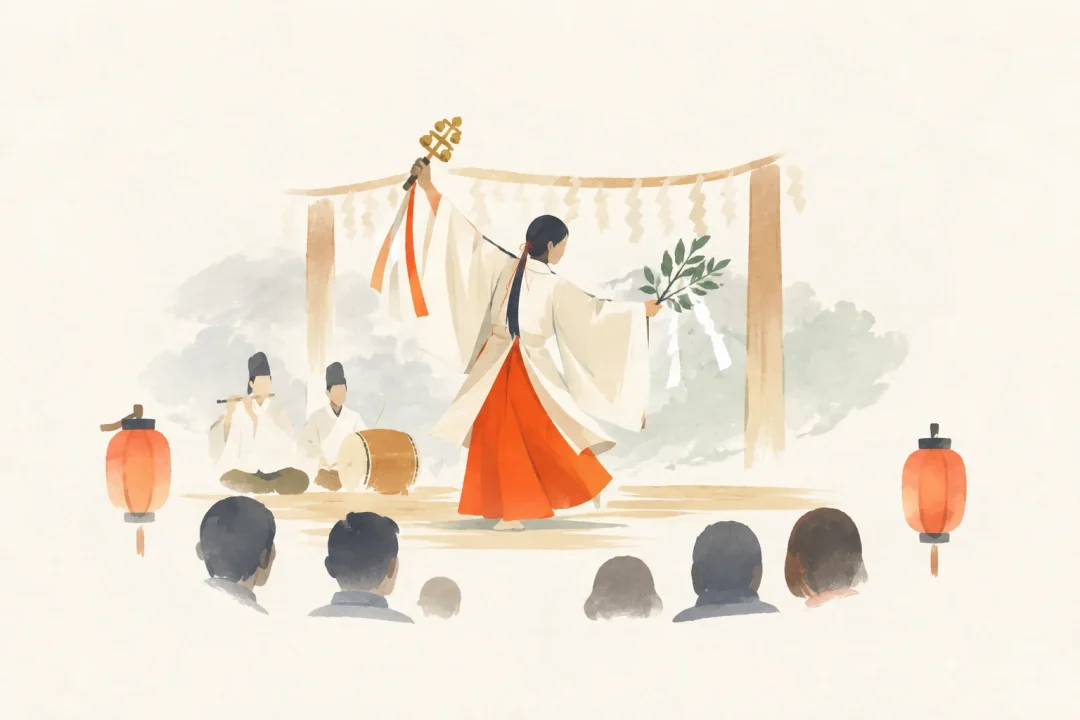
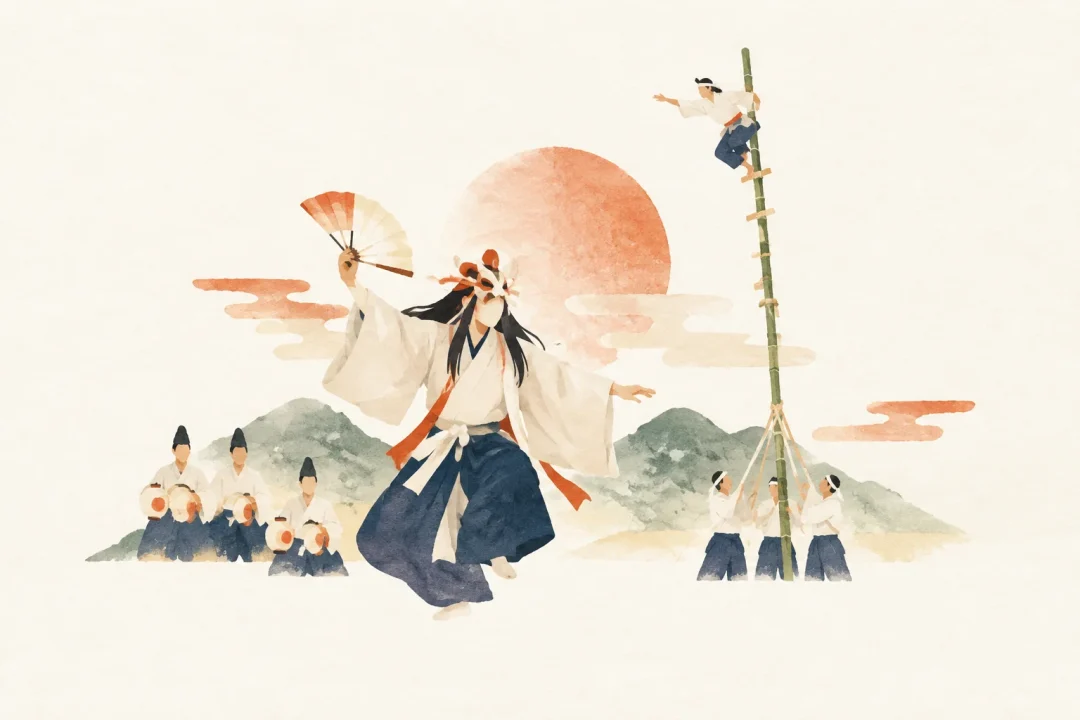
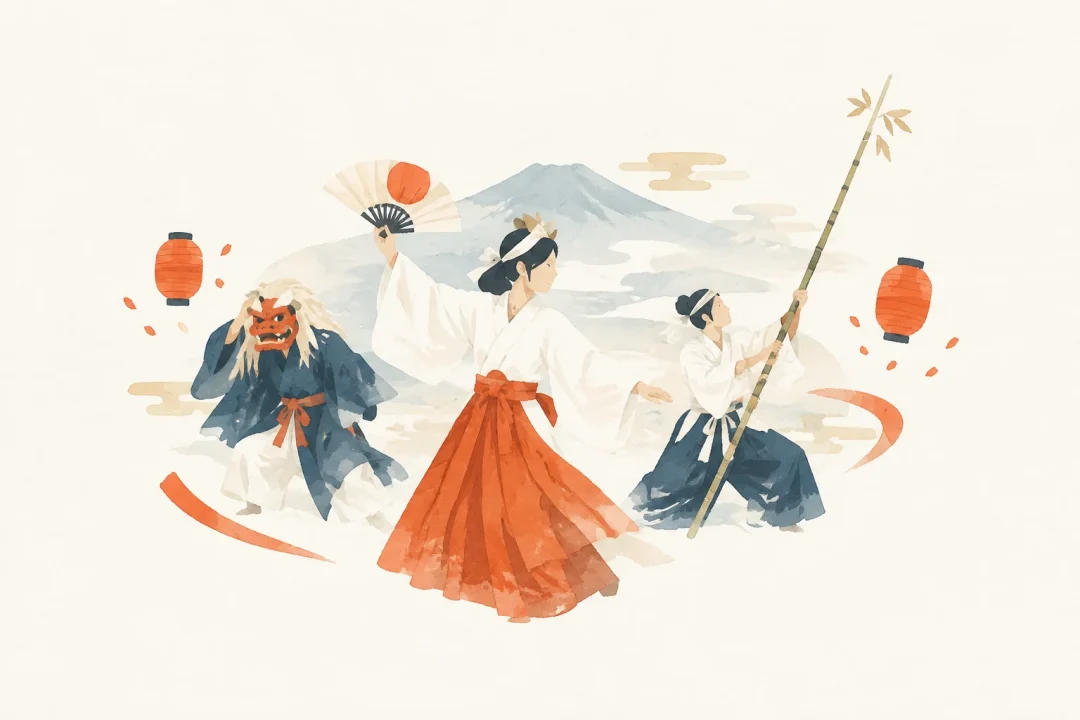
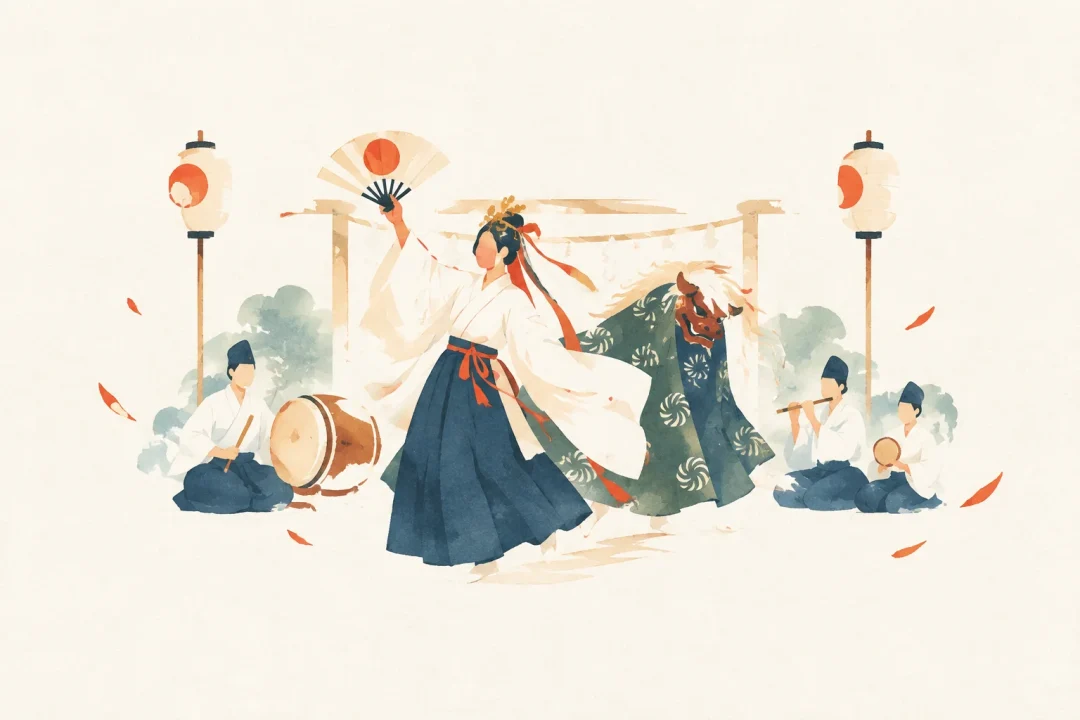
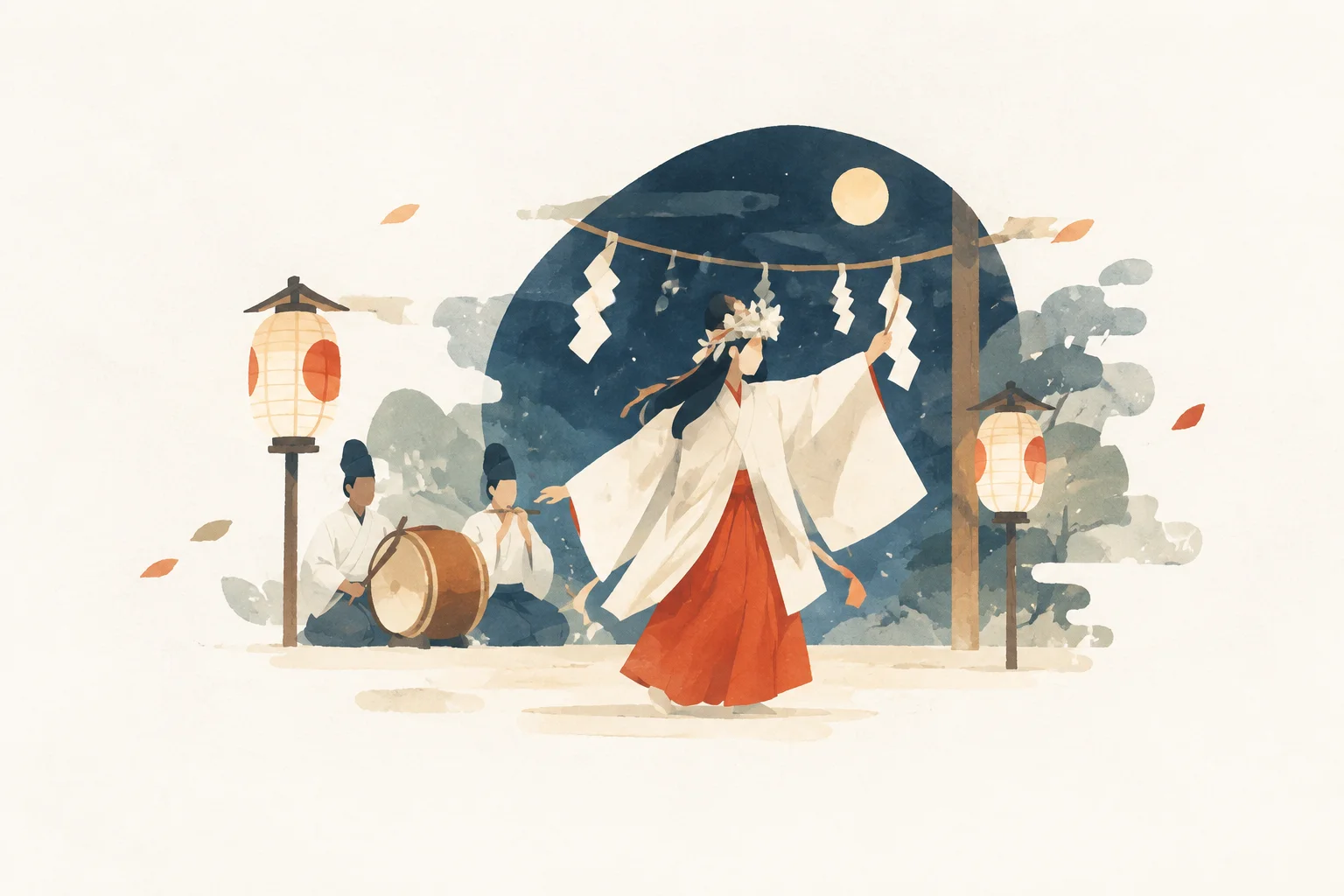
Takachiho no Yo Kagura is a ritual consisting of 33 pieces performed through the night at kagura venues in villages throughout the town. You can experience dances based on Japanese mythology and traditions that differ from village to village up close.
About Takachiho no Yo Kagura
Takachiho no Yo Kagura is a ritual in which each village in Takachiho Town welcomes its tutelary deity to a kagura venue and performs 33 kagura pieces through the night.
A kagura venue (kagura-yado) is a private home or community center, and the annual festival date varies by village.
The ritual is connected to the local residents’ faith in the gods of mountains and water sources, and it has been designated an Important Intangible Folk Cultural Property of Japan.
Source: 高千穂の夜神楽 | 高千穂町観光協会【公式】 宮崎県 高千穂の観光 · Accommodation · Event information
Festival highlights
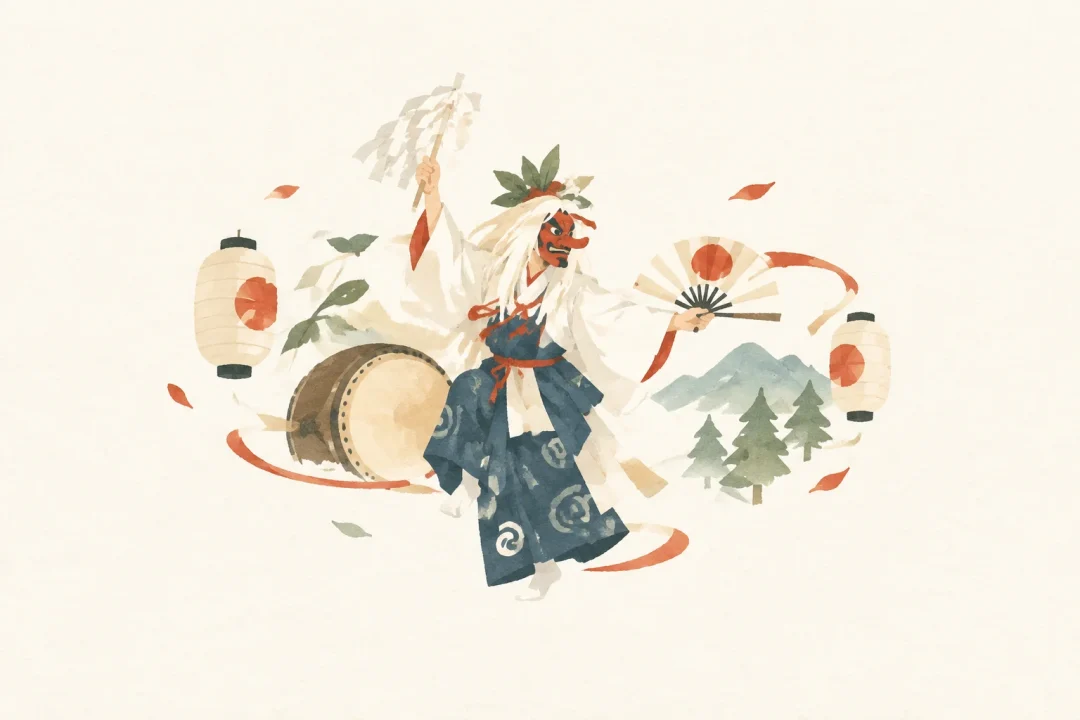
Highlights include the dances’ order, subjects, and styles, which vary from village to village.
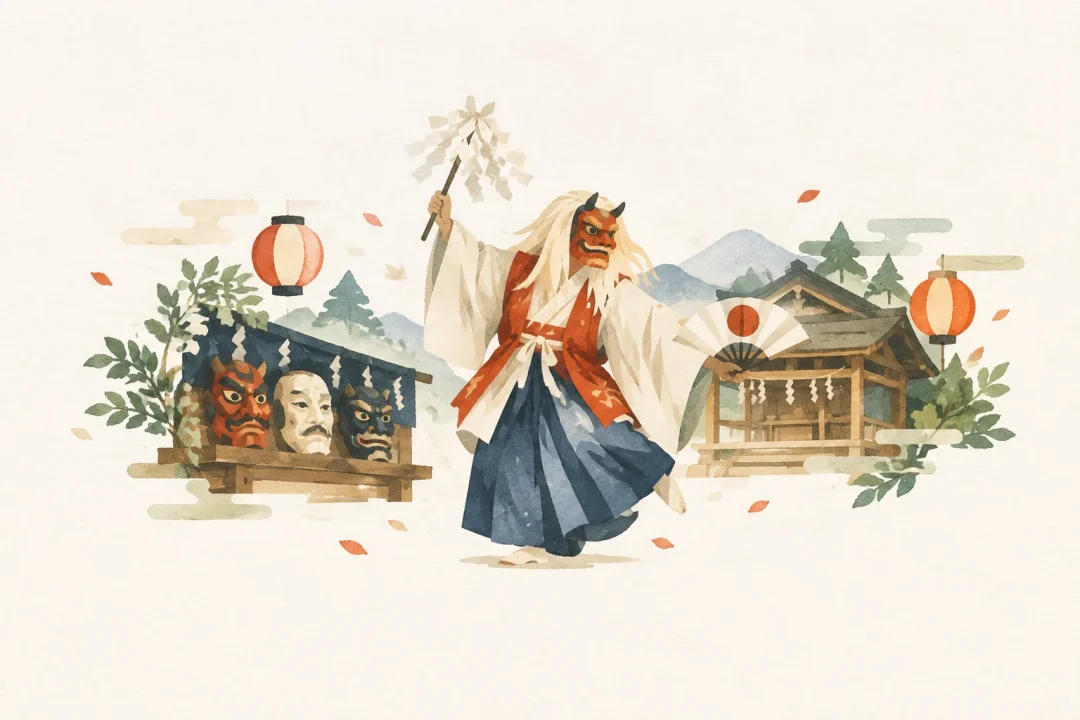
The Iwato Goban, performed around dawn, is a late-program piece based on the Japanese myth of Ama-no-Iwato and is considered a highlight of the all-night kagura.
The first 7 pieces, known as the Yodo Goban, include the three ceremonial dances: Kamioroshi, Chinju, and Sugिनobori. They are followed by dances wishing for safe childbirth, protection from misfortune, and a good harvest.
An all-night ritual preserving myth-inspired dances in each village
What to expect
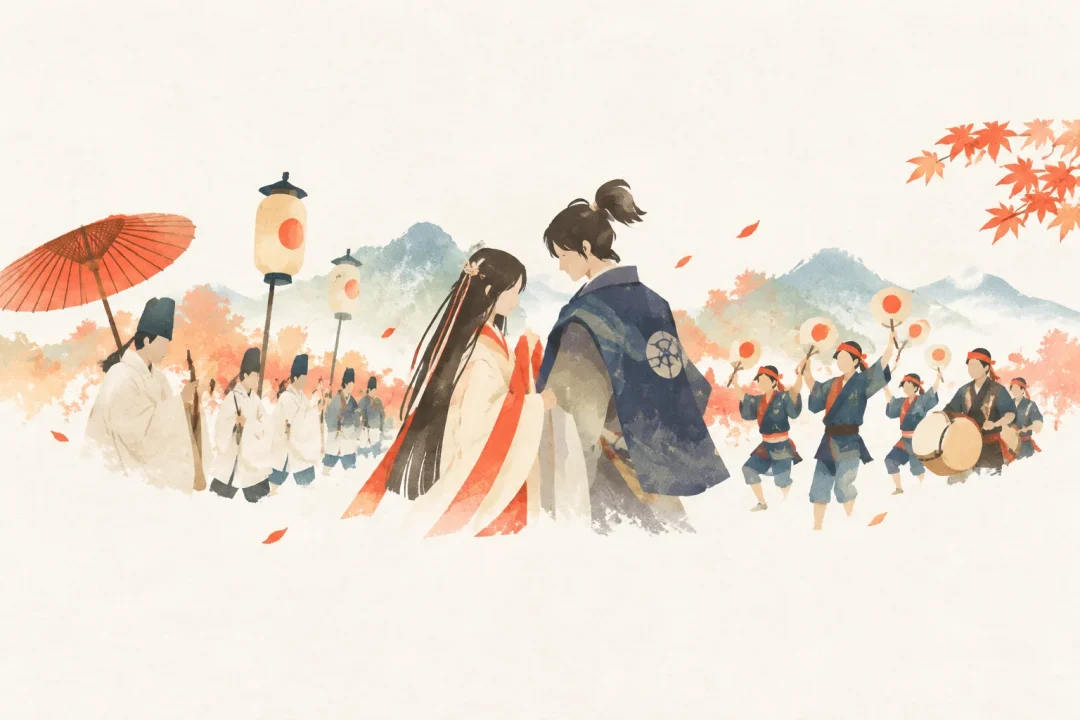
Yo Kagura begins with a ritual at the village’s guardian shrine, followed by a procession to the kagura venue accompanied by michi-kagura dances.
At the kagura venue, after the Maiire and Okanaya-hajime ceremonies, 33 pieces are performed through the night.
The timing and order of dances vary somewhat by district, and the Iwato Goban is performed around dawn.
Source: 高千穂の夜神楽 | 神話のふるさと特集 | 宮崎県公式観光サイト「みやざき観光ナビ」 / 夜神楽日程表 | 高千穂町観光協会【公式】 宮崎県 高千穂の観光 · Accommodation · Event information
How to take part
General viewing is described as open to everyone, and you can watch the hono performances at a village kagura lodging.
However, Y kagura is a local religious rite, so visitors pay “Offering Before the Deity” at the reception desk as a courtesy when attending the ritual.
In some villages, food and drink may be served as part of a naorai ritual, in which people and the gods come together as one.
Location and access
- Venue and address
Kagura venues (private homes and community centers) in villages throughout Takachiho Town.
The venue varies by village and changes each year.
For dates and locations, please contact the Takachiho Town Tourism Association.
- By car
Routes to each venue vary by village.
- Parking
Availability varies by venue.
Check the number of parking spaces listed for each venue on the schedule.
Source: イベント情報|宮崎神社めぐり
Address Villages throughout Takachiho Town, Nishiusuki District, Miyazaki Prefecture
Dates and season
Takachiho no Yo Kagura is performed in around 20 villages in Takachiho Town, usually from mid-November to early February the following year.
The season for fiscal year 2026 is listed as running from November 21, 2026 to February 7, 2027.
The dates vary by village, so check the schedule when deciding where to visit.
Accommodation and hotels PR
Showing nearby accommodation.
Prices and availability are current at the time of retrieval. For multi-night stays, only the first night’s price is shown. Confirm the final price and directions to the venue with the booking provider. Select your dates again when using the area search link. Search area: within 3 km of Central Miyazaki Prefecture / Takachiho Town (the search is not centered on the festival venue)
Tips for your visit
Check the dates and locations for Yo Kagura before setting out.
As the performances continue through the night, bring warm clothing. Bringing drinks and light snacks is also recommended.
Viewing is open to the public. However, as this is a place where a religious ritual is being held, respect local customs when watching, such as making an offering at the reception.
Origins and History of Takachiho no Yo Kagura
Takachiho no Yo Kagura is believed to have taken shape between the late Heian period and the Kamakura period.
Until around the end of the Edo period, it was passed down and performed mainly by priests of Takachiho Shrine. It was later organized into 33 pieces and came to be inherited by each village.
Today, local residents in each area continue to pass it down through generations.
Official information
The dates and venues vary by village. The schedule is set around October each year and posted on the Takachiho Town Tourism Association website.
For dates and locations, you can contact the Takachiho Town Tourism Association or the Takachiho Town Planning and Tourism Division.
Takachiho no Yo Kagura at a Glance
Takachiho no Yo Kagura is a traditional ritual in which each village in Takachiho Town welcomes its tutelary deity and performs 33 pieces through the night.
Venues and the order of dances vary by village, offering a chance to experience local traditions such as the Iwato Goban performed around dawn.
The season for fiscal year 2026 is listed as running from November 21, 2026 to February 7, 2027.
Japanese Festivals.jp Editorial Team
Celebrating local culture and helping you discover a side of Japan you never knew.
Article updated: 2026/10/19
Submit information or a correction Submit photos of this festival