Gujo Odori looks different when you join the circle. An introduction to enjoying the town and its dancing
Gujo is more than all-night dancing. Discover the castle town's Bon Odori at your own pace.
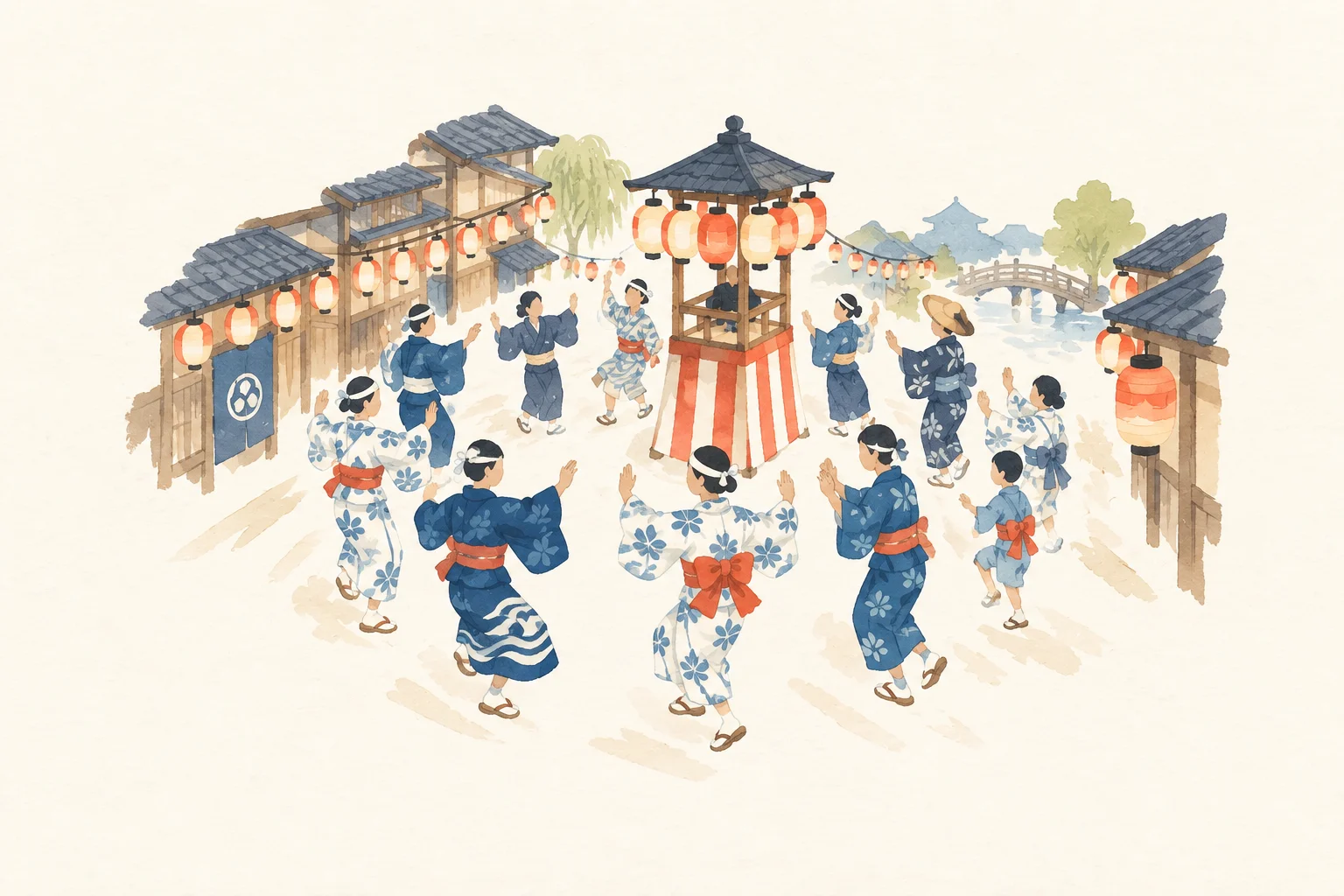
Gujo Odori is famous for its “all-night dances,” danced through the night. But first-timers don't need to dance until morning right away. Venues that change from one part of town to another, live music, and time spent dancing in the circle while watching how others move. Knowing how it works can help you find your own way to join in, even during a short stay.
More than just watching a performance: the dance circle
The Gujo Hachiman Tourism Association describes Gujo Odori as a dance anyone can join. Each song has its own dance, including “Kawasaki” and “Harukoma,” and both visitors and local residents can join the circle. The starting point for enjoying it is different from an event where you watch a polished performance from a spectator seat. (Gujo Hachiman Tourism Association, “Gujo Odori”)
If it's your first time, start by watching which way the circle moves and how people step. Don't try to learn everything at once. Check the hand movements one by one as the same song repeats. If you get tired along the way, look around and step out of the circle; return when you feel ready. With a plan like that, you'll feel less pressure to dance well.
Looking up the venues is a way to get to know the town.
The schedule lists each day's venues and information about events such as fairs. If you assume Gujo Odori takes place in the same square every night, you may head to the wrong place. The tourism association has published the schedule for 2026, but if you travel the following year, you'll need to check that year's schedule again. (Gujo Hachiman Tourism Association, “2026 Gujo Odori Schedule”)
Since the venue changes, make a note of the street and town names as well as the dates in your travel notes. Walking around the venue while it's still light can make it easier to plan your way back after the dancing begins. Because the streets lined with shops and homes become the setting, don't decide on your own where to leave your belongings or change clothes; it's also important to use facilities designated for that purpose.
Choosing an all-night dance night without overdoing it
Official information describes the all-night dances from August13 to 16. However, the Gujo Odori season is not limited to those 4 days. You can choose an all-night dance night for the lively atmosphere, or join in for a set amount of time on a regular scheduled night. Choosing a time that works for you is the first step to enjoying the dancing for years to come. (Gujo Hachiman Tourism Association, “Gujo Odori”)
Even if you go on an all-night dance night, don't make staying until morning a requirement for your trip. Decide in advance when to head back to your accommodation and when to take breaks, and check the operating hours of your transportation. An itinerary that separates travel and rest is easier to plan than one where you arrive at night and drive a long distance as soon as the dancing ends.
Pack and choose footwear differently for dancing than for watching.
On days when you plan to join the dancing, it's a good idea to carry only what you can manage easily with both hands free. Before bringing large bags to the venue, consider leaving them at your accommodation or using an available luggage-storage service. Don't prioritize appearance alone: check whether the outfit is comfortable and familiar to wear, and whether it lets you walk without straining your feet. If you're wearing footwear you're not used to, such as geta, try it out over a short distance beforehand to help you decide what to wear on the day.
Try setting aside separate times for taking photos and dancing. Rather than focusing only on your camera in the circle, first try moving to the music; you'll come away with a feel for the tempo that you couldn't get from watching alone. Part of what makes this festival special is that spectators can also help keep the dance circle going. The Agency for Cultural Affairs also describes it as an event that people enjoy by taking part. (Agency for Cultural Affairs, Japan Festival Exploration PROJECT, “Gujo Odori”)
You don't have to learn everything in one visit.
- Before setting out, check the venue and start time in that year's schedule.
- Start by watching one song and getting a feel for the direction of the dance and its repeating steps.
- Eat, take photos, and rest in places where you won't disrupt the flow of the dancing.
- Decide when to head home and how you'll get there, and leave yourself the option of calling it a night early.
When you get home and hear the song, you may find yourself naturally remembering one of the moves. For your first Gujo Odori, that alone is a worthwhile experience. The next night you visit, you might dance to the same song on a different street corner. Enjoy the experience at your own pace, as learning the dances and getting to know the town gradually come together.
Official sources consulted
- Gujo Hachiman Tourism Association, “Gujo Odori”
- Gujo Hachiman Tourism Association, “2026 Gujo Odori Schedule”
- Agency for Cultural Affairs, Japan Festival Exploration PROJECT, “Gujo Odori”
This article is based on publicly available information from official sources, local governments, tourism associations, and others. Information checked: 2026/10/01. Check the official information for the year you visit for dates, venues, traffic restrictions, and participation requirements.
Festivals related to this article

Find one thing that catches your interest.
Find a little “first” beyond the familiar everyday. Why not start with a region or way of enjoying yourself that catches your interest, and see where it leads?
Find festivals