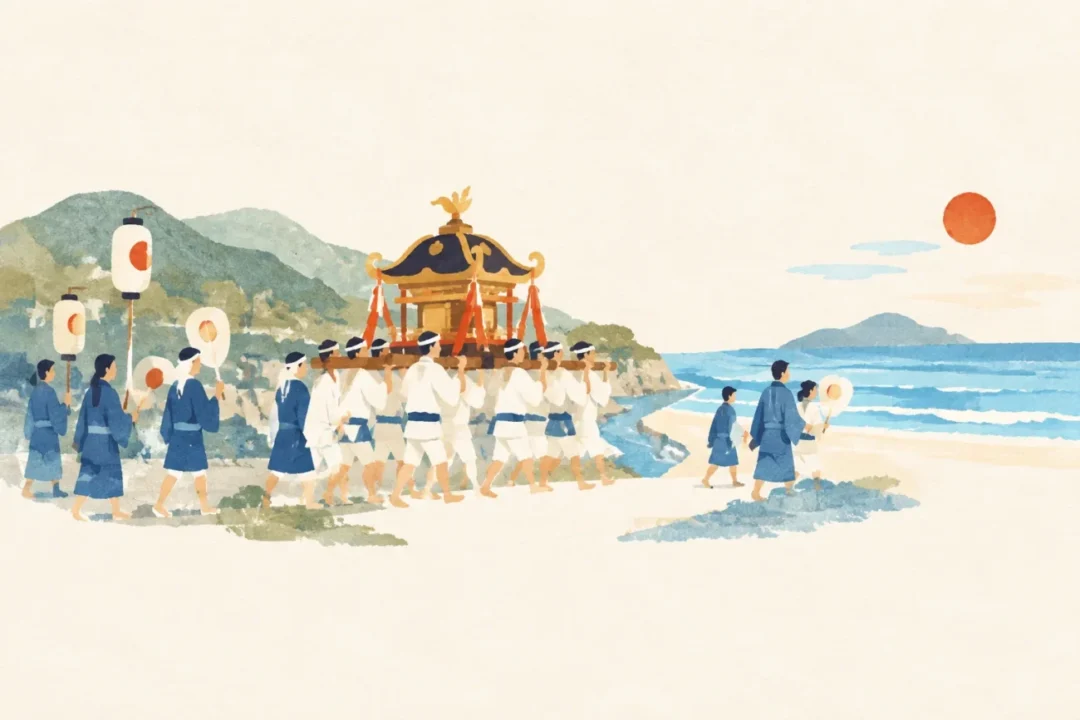
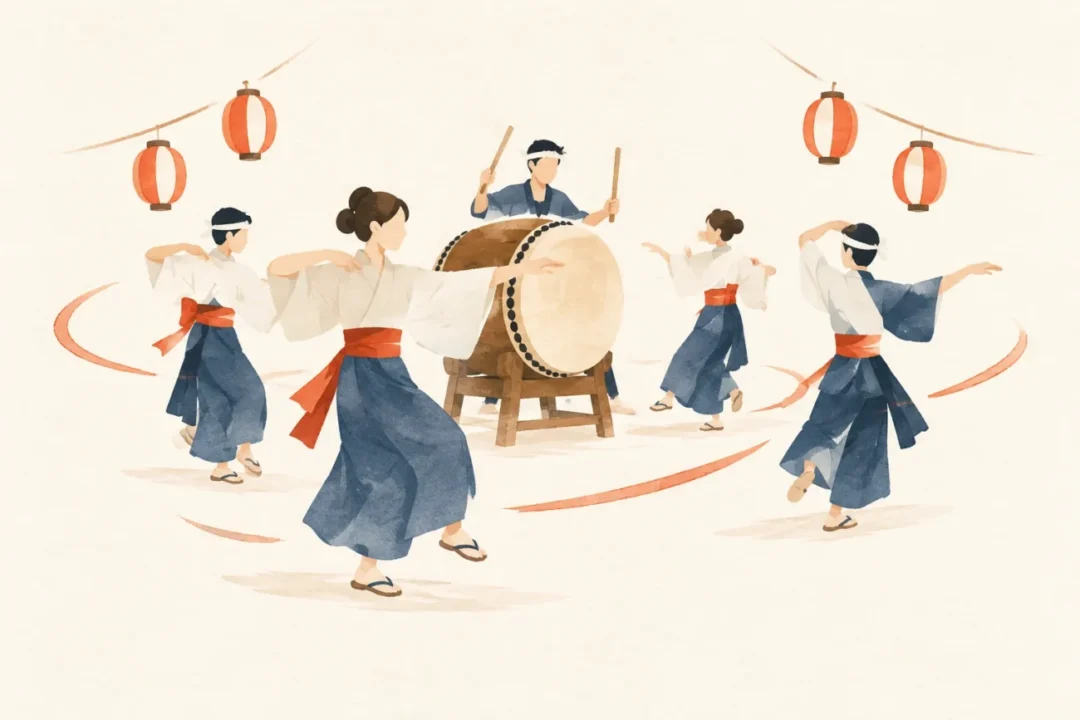
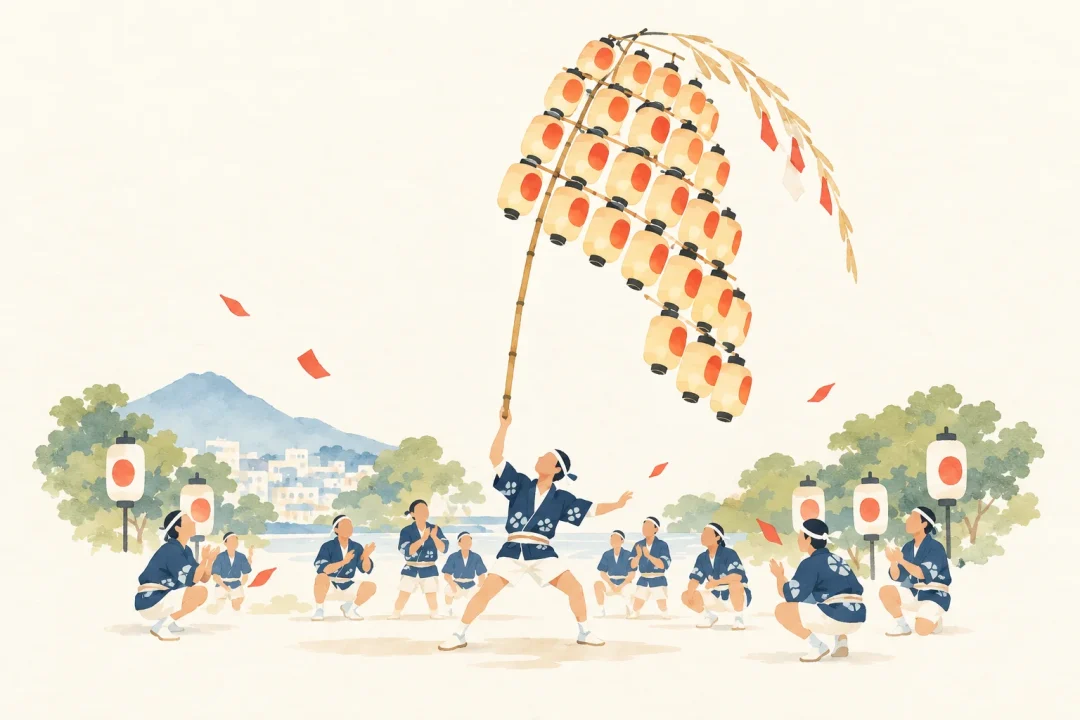
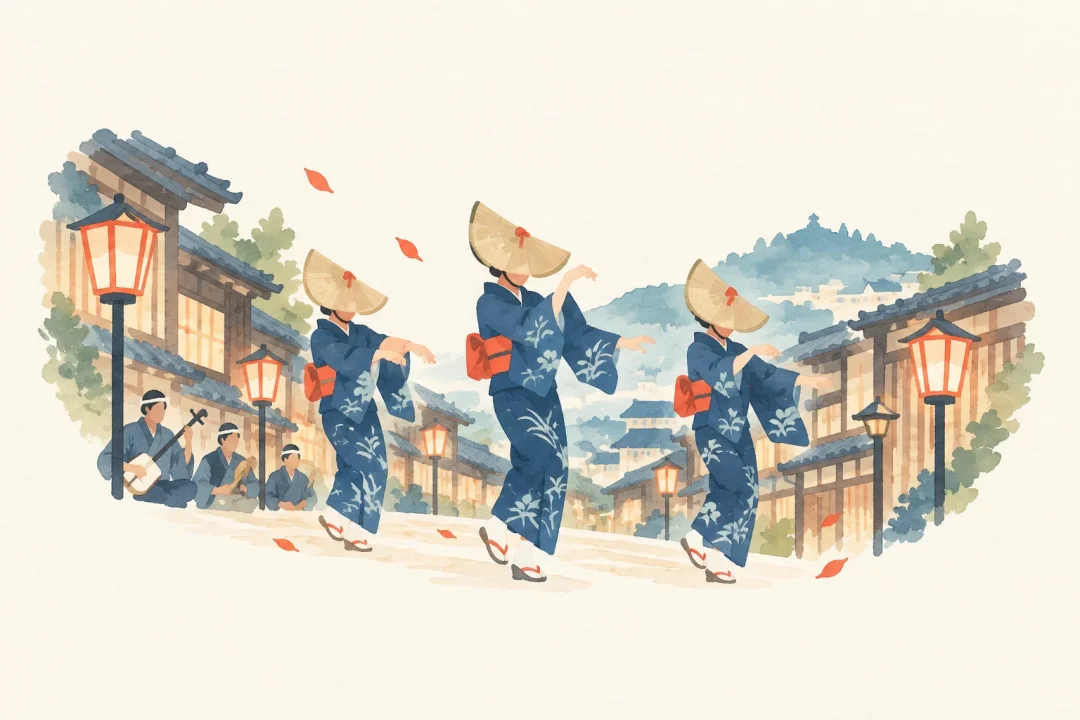
A procession of straw effigies and taiko drums carries hopes for a good harvest to the seaside in a pest-repelling ritual
The Sabā-okuri of the Kitaura region
Festival information
EVENT INFORMATION- Season / frequency
- Begins every year from late June to early July / Every year
- Location
- Starting at Iiyama Hachimangu Shrine, via the Heki and Yuya districts of Nagato City, to the Hōhoku area of Shimonoseki City
- Area
- Yamaguchi Prefecture・Nagato City, Shimonoseki City(From Tokyo: approx. 1 h 35 min–1 h 55 min · flight time only)Prefecture-level estimate to a main station or airport, not the venue. Airport access, check-in and onward travel are extra; remote areas and islands can take much longer.
- Features
- Highlights and activities
- Wishes behind the festival
- Last updated
- 2026/11/11
The Sabā-okuri of the Kitaura region is a post-rice-planting pest-repelling ritual in which straw effigies are passed from one community to the next, from Nagato City to Shimonoseki City.
About The Sabā-okuri of the Kitaura region
The Sabā-okuri of the Kitaura region is a folk pest-repelling ritual held from Nagato City to Shimonoseki City in Yamaguchi Prefecture.
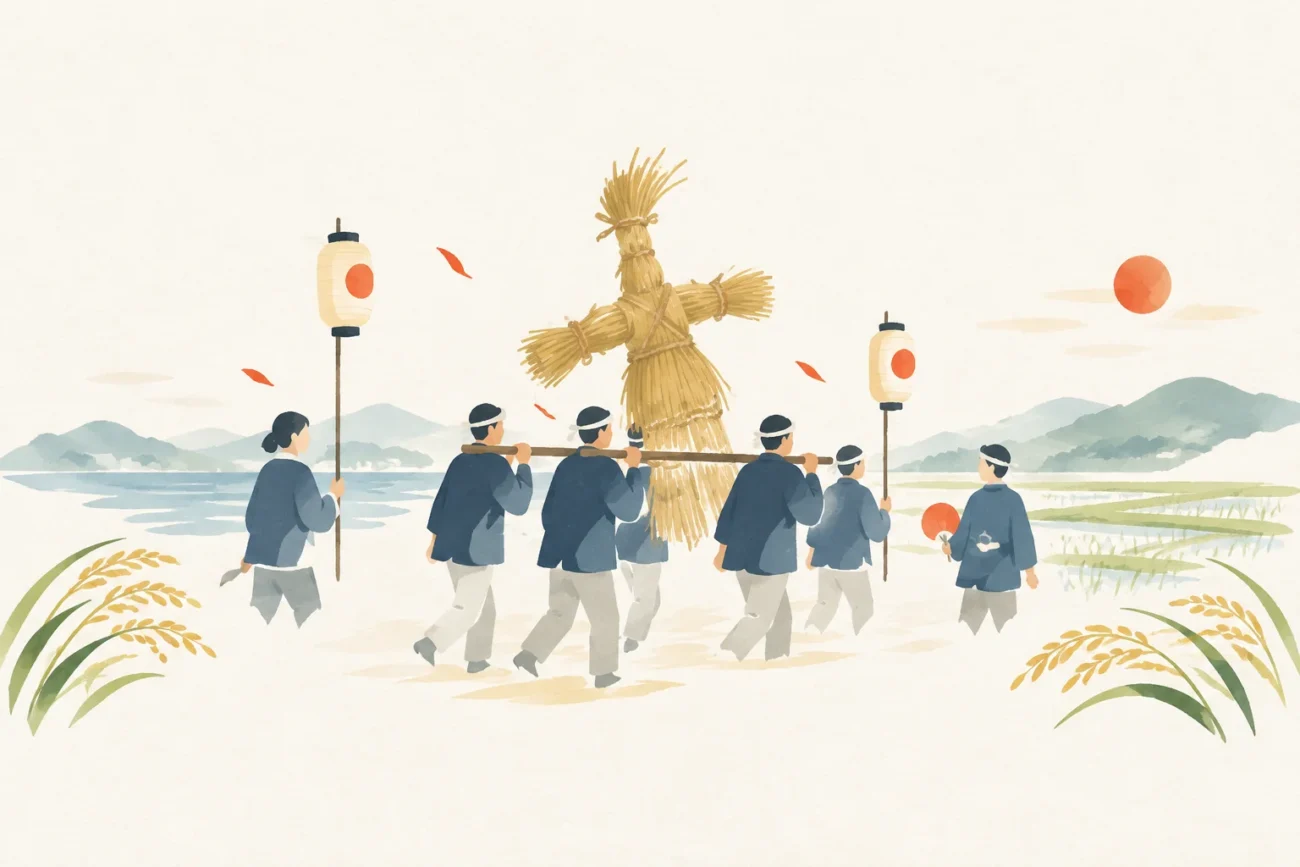
After rice planting, 2 straw effigies dressed as mounted warriors, called Sabā-sama and Sanemori-sama, are passed from one community to another to drive away pests that harm crops and pray for healthy growth.
Starting at Iiyama Hachimangu Shrine, the procession passes through various districts and often ends with the effigies being cast into the sea. It is an event that covers a wide area.
Festival highlights
A highlight is the straw effigies dressed as mounted warriors, made by local people.
The effigies are dressed with washi-paper faces, helmets, haori coats, and wooden swords, and marked with the Mori family crest.
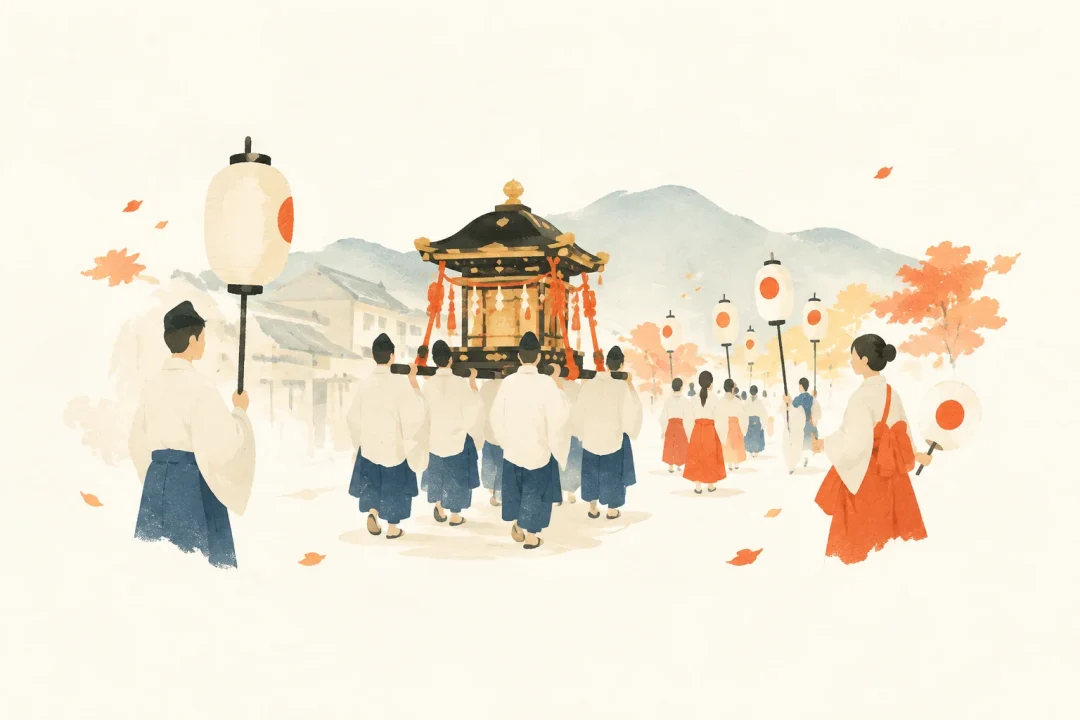
During the handoff, the procession is arranged in this order: bells, drums, banners, and straw effigies. In some areas, children sing as they carry the effigies to the neighboring community.
It is also distinctive for linking a wide area over several weeks.
A procession of straw effigies and taiko drums carries hopes for a good harvest to the seaside in a pest-repelling ritual
What to expect
Before the handoff procession begins, 2 straw effigies are made at the shrine office of Iiyama Hachimangu Shrine, and a pest-repelling is held during the 2 days beforehand.
On the day, a bag of cooked white rice is attached to each effigy’s waist. After the shinji, the procession sets out in the order of bells, taiko drums, banners, and effigies.
Along the way, Ogoku is delivered to homes. From Heki-kami Nagasaki onward, neighborhood associations, children’s groups, and others pass the effigies from one community to the next over several weeks.
Location and access
- Venue and address
飯山八幡宮を起点に、長門市日置・油谷地区を経由して豊北地域まで/電車・バス:資料に記載なし/車:資料に記載なし/駐車場:資料に記載なし
Event venue 山口県長門市,下関市 飯山八幡宮を起点に
This map uses the venue name. Check the official guide for the event area and entrances.
Dates and season
- Season
Begins every year from late June to early July
- Frequency
Every year
Origins and History of The Sabā-okuri of the Kitaura region
The Sabā-okuri of the Kitaura region is a folk pest-repelling ritual passed down since the Edo period.
Its precise origins are unclear, but records show that it was held at least as far back as the Tenpō era.
Yamaguchi Prefecture materials describe the custom of making straw effigies and, after prayers, sending them out to sea accompanied by music. An illustrated scroll from the Meiji period also records that they were finally thrown from a cliff.
Official information
The Nagato City website introduces the Sabā-okuri of the Kitaura region as a prefecture-designated Intangible Folk Cultural Property and a nationally selected intangible folk cultural property for which measures such as documentation should be undertaken.
Yamaguchi Prefecture’s cultural property materials list the Sabā-okuri Preservation Society as the custodian.
It is also listed on the Online Cultural Heritage platform as an intangible folk cultural property spanning Nagato City and Shimonoseki City.
The Sabā-okuri of the Kitaura region at a Glance
The Sabā-okuri of the Kitaura region is a mushi-okuri pest-repelling ritual held after rice planting. Two straw effigies are passed from one community to the next to drive away pests and pray for the rice to grow safely.
Starting at Iiyama Hachimangu Shrine, the effigies are carried to each area alongside bells, taiko drums, and banners, travelling over several weeks from Nagato City to Shimonoseki City.
This folk event has continued since the Edo period and is also designated an Intangible Folk Cultural Property by the prefecture.
Sources and references
Japanese Festivals.jp Editorial Team
Celebrating local culture and helping you discover a side of Japan you never knew.
Article updated: 2026/11/11