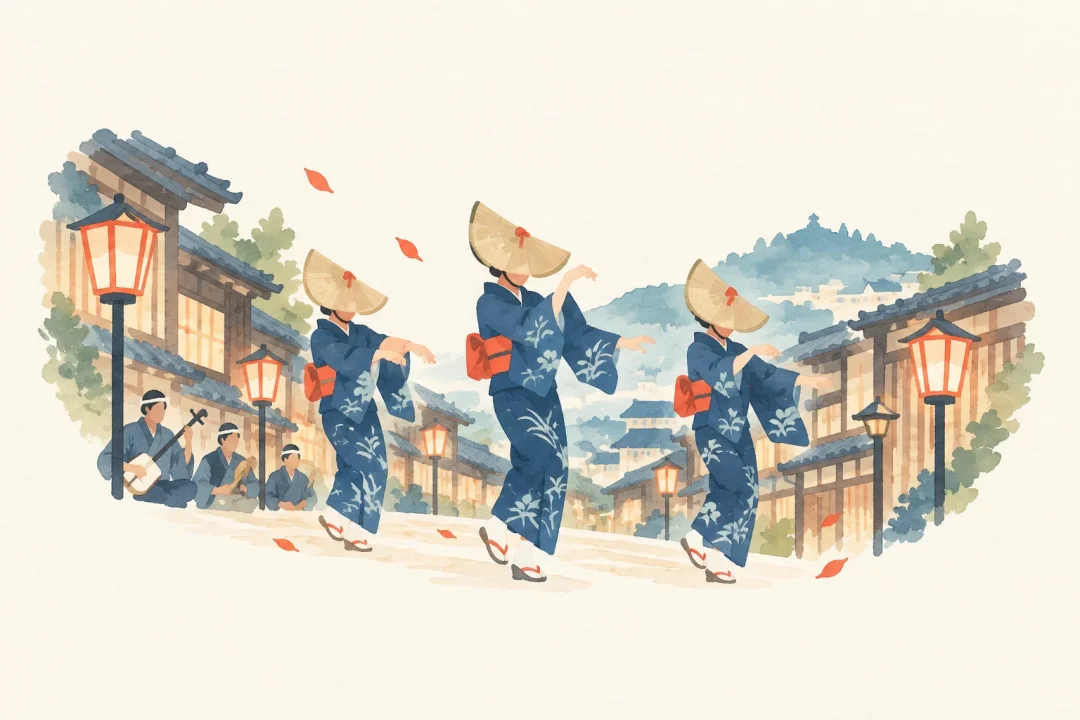
A Bon Odori led by a miya-daiko and kudoki songs, with striking bow-drawing gestures
Nōgyō no Bon Odori
Festival information
EVENT INFORMATION- Location
- Nagoyuki Nishi 2-chome Park
- Area
- Fukuoka Prefecture・Kitakyushu City(From Tokyo: approx. 1 h 50 min–2 h 10 min · flight time only)Prefecture-level estimate to a main station or airport, not the venue. Airport access, check-in and onward travel are extra; remote areas and islands can take much longer.
- Highlights and activities
- Last updated
- 2026/11/12
Nōgyō no is an Intangible Folk Cultural Property designated by Kitakyushu City and passed down in Nagoyuki Nishi, Kokuraminami Ward. The dancers move clockwise around a miya-daiko to kudoki songs, and the bow-drawing hand movements have also earned the dance the name “Yumihiki Odori” (Bow-Drawing Dance).
About Nōgyō no Bon Odori
Nōgyō no Bon Odori is a Bon dance passed down in Nagoyuki Nishi, Kokuraminami Ward, Kitakyushu. It is one of the Bon dances that were widely found in the rural areas of the former Kikugun district.
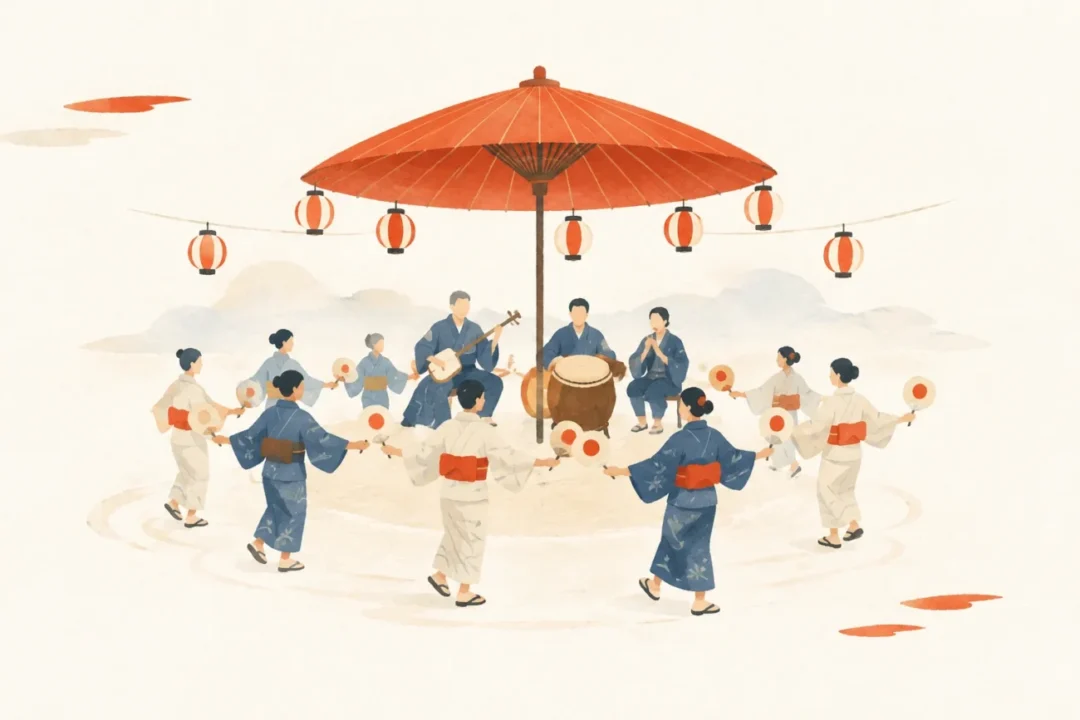
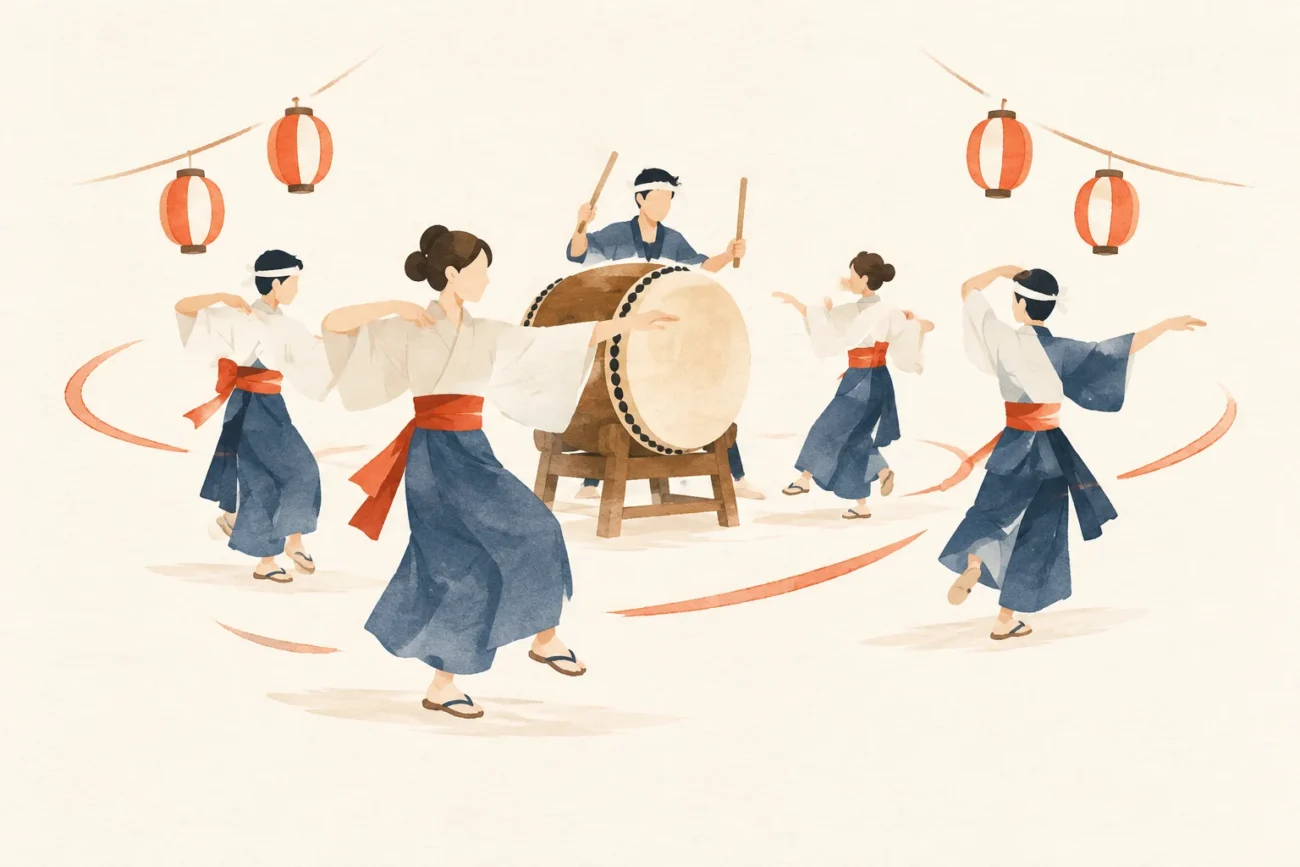
One miya-daiko is placed at the center of the dance circle, and the dancers move clockwise to kudoki songs sung by the lead singer.
The dance includes bow-drawing hand movements and is also called “Yumihiki Odori” (Bow-Drawing Dance).
It is designated an Intangible Folk Cultural Property of Kitakyushu City.
Festival highlights
A highlight is the miya-daiko at the center of the dance circle, with the dancers moving clockwise to its beat.
Its distinctive bow-drawing hand movements are linked to one of its names, “Yumihiki Odori” (Bow-Drawing Dance).
There is said to be only one type of dance and only one dance song, “Nōgyō Kudoki,” giving the performance a focused arrangement of taiko, song, and movements.
A Bon Odori led by a miya-daiko and kudoki songs, with striking bow-drawing gestures
What to expect
The dance is performed by placing a miya-daiko at the center of the dance circle and moving clockwise to “Nōgyō Kudoki,” sung by the lead singer.
The dance includes hand movements that look like drawing a bow.
There is said to be only one type of dance, and “Nōgyō Kudoki” is the only song.
Location and access
- Venue and address
Nagoyuki Nishi 2-chome Park (2-2 Nagoyuki Nishi, Kokuraminami Ward, Kitakyushu)
Address 2-2 Nagoyuki Nishi, Kokuraminami Ward, Kitakyushu
Accommodation and hotels PR
Showing nearby accommodation.
Prices and availability are current at the time of retrieval. For multi-night stays, only the first night’s price is shown. Confirm the final price and directions to the venue with the booking provider. Select your dates again when using the area search link. Search area: within 3 km of Central Fukuoka Prefecture / Kitakyushu City (the search is not centered on the festival venue)
Nearby attractions

九州鉄道記念館
北九州市にある鉄道博物館

北九州市立いのちのたび博物館
北九州市八幡東区にある博物館

北九州市立松本清張記念館
日本の文学館

北九州市立美術館
北九州市にある美術館

Mekari Shrine
北九州市門司区にある神社

小倉城
福岡県北九州市小倉北区にあった城
写真:No machine-readable author provided. Historian~commonswiki assumed (based on copyright claims). / CC BY 2.5
Photo source ·
河内藤園
福岡県の公園・庭園のスポットです。
Origins and History of Nōgyō no Bon Odori
“Nōgyō Kudoki” is a song written about the double-suicide incident involving Ochiyo and Gihei, which actually took place in Nōgyō Village in Tenpo 6 (1835).
In the following year, Tenpo 7, it spread to nearby areas through broadsheets, and later became a representative kudoki song of the former Kikugun district.
As a cultural property preserving the songs and dance form inspired by local events, Nōgyō no Bon Odori was designated an Intangible Folk Cultural Property of the city in Showa 59February 1.
Official information
The Kitakyushu City website’s “City-Designated: Nōgyō no Bon Odori” page provides information on its designation, location, dance features, and the origins of Nōgyō Kudoki.
Nōgyō no Bon Odori at a Glance
Nōgyō no Bon Odori is an Intangible Folk Cultural Property designated by Kitakyushu City, with Nagoyuki Nishi 2-chome Park as its location.
A miya-daiko is placed at the center of the dance circle, and the dancers move clockwise to “Nōgyō Kudoki.” The dance is also distinguished by bow-drawing hand movements.
The song was written about an event in Nōgyō Village in Tenpo 6 (1835), and spread to nearby areas through broadsheets the following year.
Sources and references
Japanese Festivals.jp Editorial Team
Celebrating local culture and helping you discover a side of Japan you never knew.
Article updated: 2026/11/12