The world of Nagato’s prayers and kagura, passed down in a small dance space
Takisaka Kagura
Festival information
EVENT INFORMATION- Season / frequency
- Every year
- Location
- Koban Shrine
- Area
- Yamaguchi Prefecture・Nagato City(From Tokyo: approx. 1 h 35 min–1 h 55 min · flight time only)Prefecture-level estimate to a main station or airport, not the venue. Airport access, check-in and onward travel are extra; remote areas and islands can take much longer.
- Highlights and activities
- Wishes behind the festival
- Last updated
- 2026/10/19
Takisaka , passed down through generations at Koban Shrine in Nagato City, where the narrow serves as its dance space. Dances featuring fire, masks, and humorous movements are performed to the sounds of drums and flutes.
About Takisaka Kagura
Takisaka Kagura is a form of kagura offered at Koban Shrine in Nagato City, Yamaguchi Prefecture.
A space of about one ken square inside the shrine worship hall serves as the dance area. The dances are distinctive for being performed with awareness of all four directions.
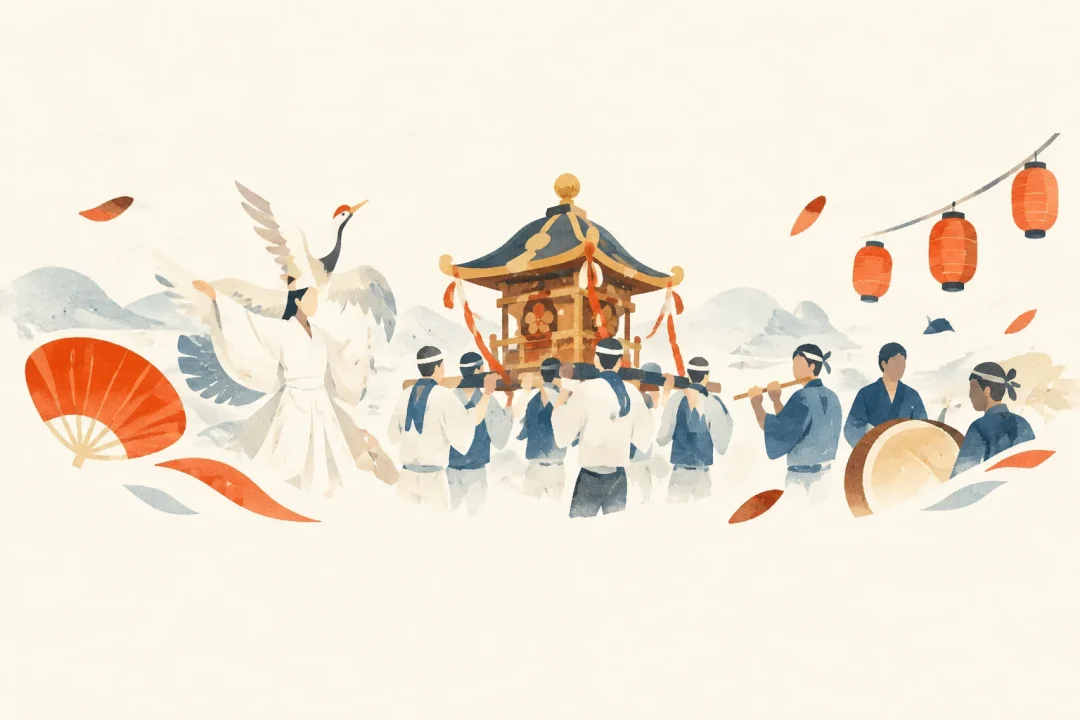
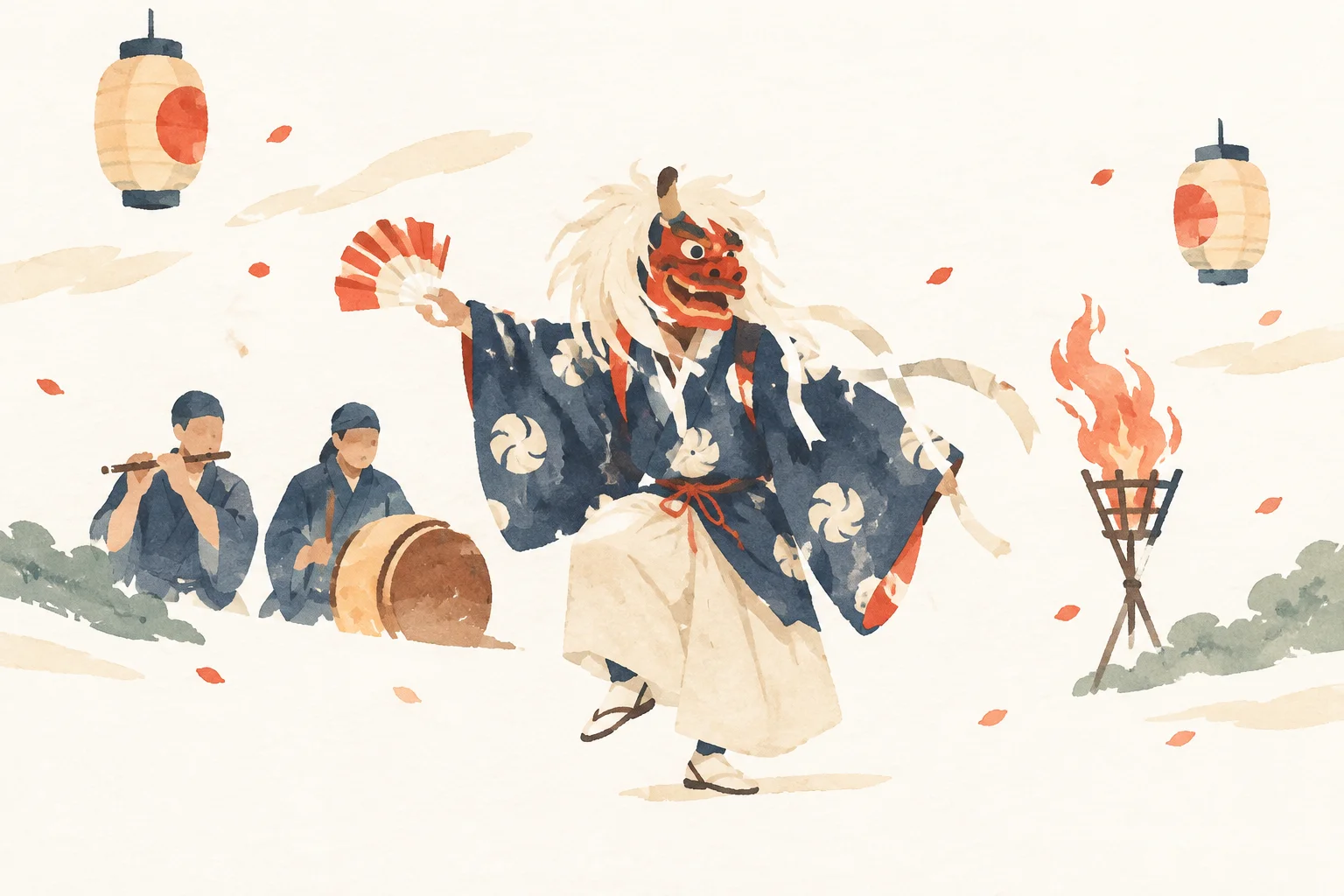
Performances passed down to the present include ritual dances, masked dances, and dances featuring comic movements, accompanied by nailed taiko drums, bronze clappers, and flutes.
One of Nagato City’s representative folk performing arts, passed down by a local preservation society.
Source: 国指定文化財等データベース / 滝坂神楽舞|観光スポット|【公式】山口県観光/旅行サイト おいでませ山口へ
Festival highlights
A highlight is the dancers’ distinctive movements as they turn right and left within the limited space of the dance area.
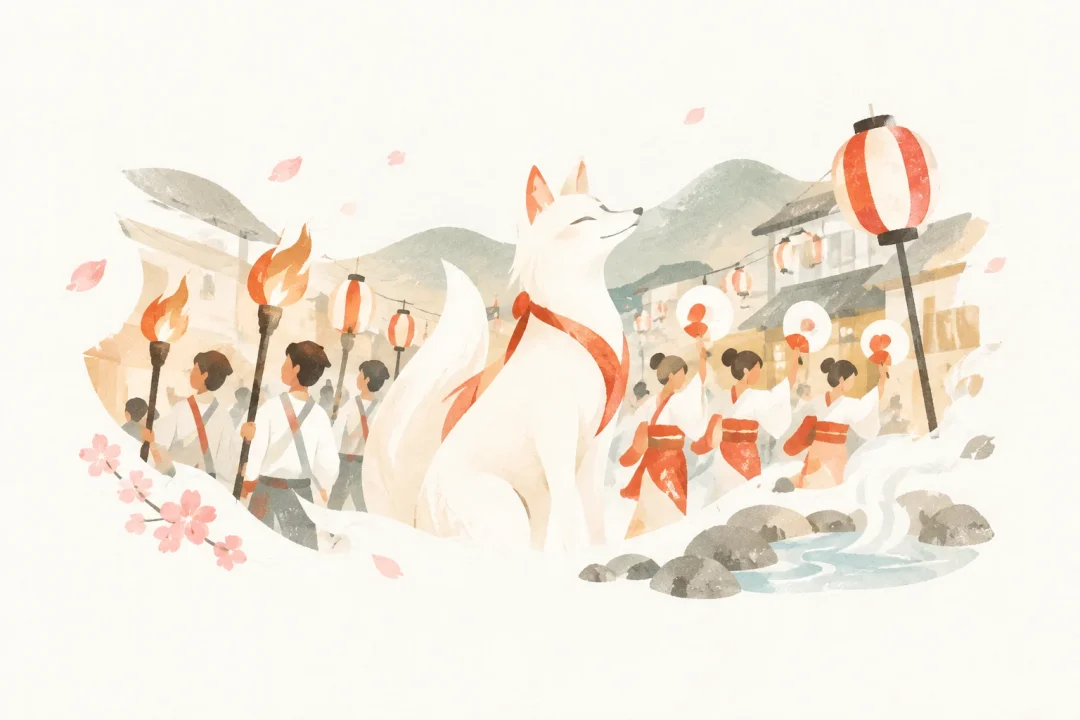
Performances of different character have been passed down, including the “Fire Dance,” performed by children holding torches, and the “Ebisu Dance,” featuring comic movements and dialogue.
Some dances are performed with bells, ritual streamers, fans, swords, or bows in hand; others use masks to depict scenes from mythology. As many as 24 types of performances have been passed down.
The world of Nagato’s prayers and kagura, passed down in a small dance space
What to expect
During the offering, a space on the straw mats laid in the worship hall serves as the dance area, and performances proceed to the accompaniment of taiko drums, bronze clappers, and flutes.
Dancers combine 8 basic movements, turning and arching their bodies while placing their hands on the floor.
You can enjoy a succession of distinct styles, including ritual dances in which performers handle props without wearing masks, masked dances, and dances with dialogue in the local dialect.
Location and access
- Venue and address
It is performed as an offering at Koban Shrine in the Takisaka district of Nagato City, Yamaguchi Prefecture.
- Train and bus
A 15-minute walk from Nagato-Misumi Station on the JR San’in Main Line.
Address 759-3801 Takisaka district, Nagato City, Yamaguchi Prefecture
Dates and season
- Frequency
Every year
Accommodation and hotels PR
Showing nearby accommodation.
Prices and availability are current at the time of retrieval. For multi-night stays, only the first night’s price is shown. Confirm the final price and directions to the venue with the booking provider. Select your dates again when using the area search link. Search area: within 3 km of Central Yamaguchi Prefecture / Nagato City (the search is not centered on the festival venue)
Tips for your visit
The offering dances take place in a narrow dance space inside the shrine worship hall, and some event information indicates that they continue from night until the early hours of the morning.
When watching, follow local guidance and view quietly without obstructing the dance area or the routes used by worshippers.
A “Fire Dance” using torches has also been passed down, so stay away from the dance area during the performance and watch from a safe place.
Nearby attractions

くじら資料館
山口県の博物館・美術館のスポットです。

金子みすゞ記念館
山口県の博物館・美術館のスポットです。
Origins and History of Takisaka Kagura
Takisaka Kaguramai is said to have begun as an offering to pray for protection from misfortune, including a great famine and epidemics among cattle and horses that continued around the time Koban Shrine was established.
Koban Shrine is said to have been enshrined in 1636, with its shrine building constructed in 1764.
In the early Meiji period, a ban on shrine attendants performing kagura led to the tradition passing into the hands of farmers, and a custom developed of having the eldest son of a farming family become a dancer.
The offering date is said to have changed to November 2 starting in Heisei 12.
Source: 山口県/観光スポーツ文化部文化振興課/文化財・山口県の文化財 / 滝坂神楽舞 - 長門の話題 - 長門市ホームページ
Official information
Explanations of its status as a cultural property can be found in the Database of Nationally Designated Cultural Properties and Yamaguchi Prefecture’s cultural properties information.
Venue and transport information is available on the Takisaka Kaguramai page of Yamaguchi Prefecture’s tourism website.
Nagato City Board of Education, Cultural Properties Protection Office, is listed as the contact.
Takisaka Kagura at a Glance
Takisaka Kagura is performed as an offering in a small dance space set up in the worship hall of Koban Shrine in Nagato City, accompanied by taiko drums and flutes.
It features a wide variety of performances, including the Fire Dance, Ebisu Dance, and masked dances, and is said to have originated as a prayer for protection from misfortune, including famine and epidemics among cattle and horses.
Since some event information indicates that it takes place from night until the early hours of the morning, check the schedule and local visitor guidance before you go.
Japanese Festivals.jp Editorial Team
Celebrating local culture and helping you discover a side of Japan you never knew.
Article updated: 2026/10/19
Submit information or a correction Submit photos of this festival