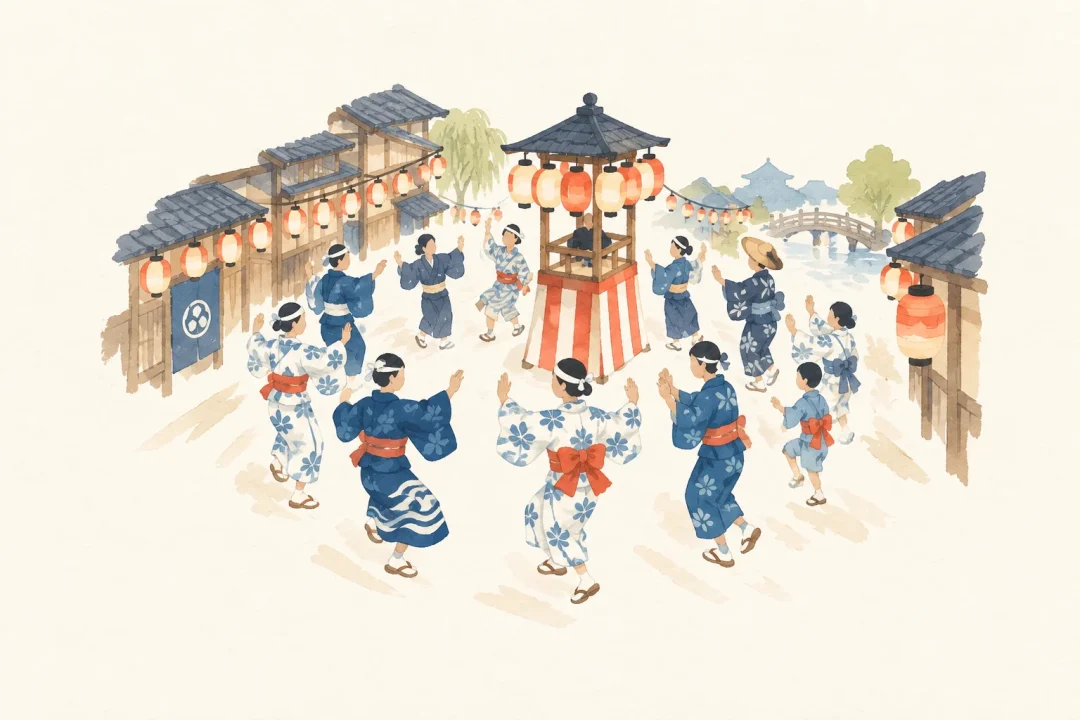
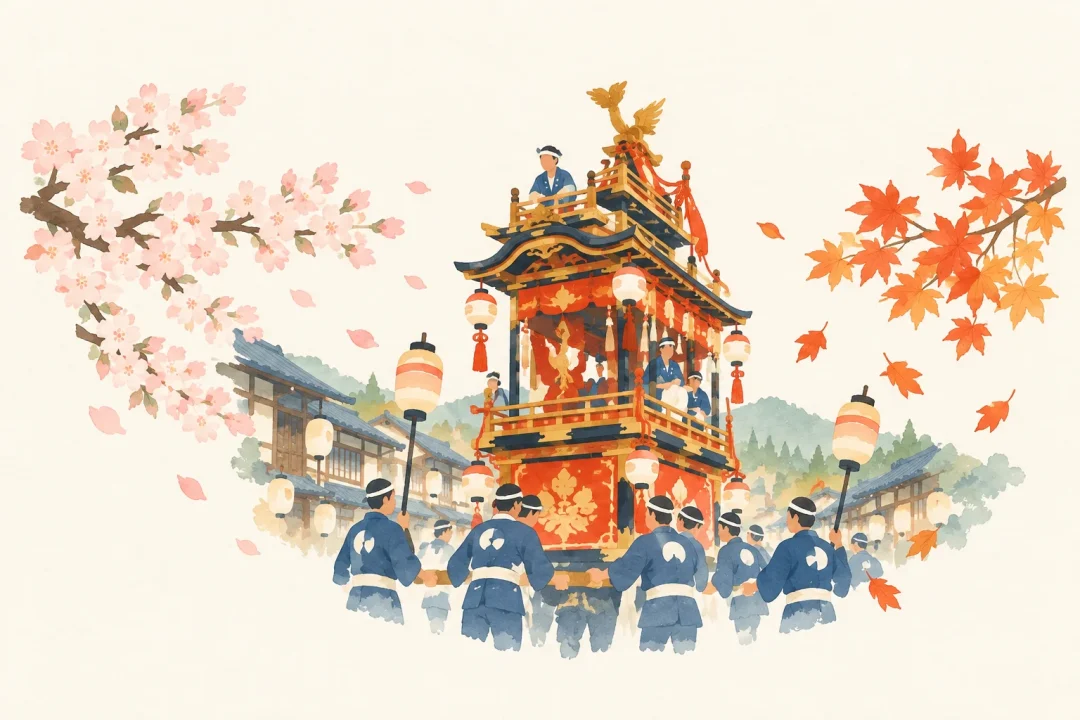
Kakeodori, where shinai sway and traditional drums resound through the mountain village
Kanmizu no Kakeodori

Festival information
EVENT INFORMATION- Season / frequency
- The 2nd Sunday of September and the preceding Saturday every year / Every year
- Area
- Gifu Prefecture・Gujo City(From Tokyo: approx. 2 h–2 h 30 min · bullet train + connecting train)Prefecture-level estimate to a main station or airport, not the venue. Airport access, check-in and onward travel are extra; remote areas and islands can take much longer.
- Features
- Highlights and activities
- Last updated
- 2026/10/19
Kanmizu no Kakeodori, passed down in Kanmizu, Meiho, Gujo City, Gifu Prefecture, is a furyu-style drum dance performed as part of the annual festival at Kanmizu Hakusan Shrine. The rhythm players carrying shinai and the dancers portraying a variety of roles bring to life a festival tradition passed down through the community.
About Kanmizu no Kakeodori
Photo credits and terms of use
Photographer: 大野 一将 File:Kanomizu no Kakeodori, Gujo, 2018.jpg / Wikimedia Commons / CC BY-SA 4.0 Own work by the contributorDisplay size only adjusted.May differ from the event currently featured.Kanmizu no Kakeodori is a furyu-style drum dance performed as part of the annual festival at Kanmizu Hakusan Shrine.
Centered on 4 musicians who play drums and gongs, the dance also features performers in a variety of costumes and singers, with the whole community supporting the performance.
On both days, the “Dance in Front of Nakageta,” “Garden Dance,” and “Dance in Front of the ” are performed. The tradition links the Kanmizu settlement with its shrine.
It is a National Important Intangible Folk Cultural Property and is also recognized as one of the UNESCO Intangible Cultural Heritage “Furyu-odori.”
Source: 国指定文化財等データベース
Festival highlights
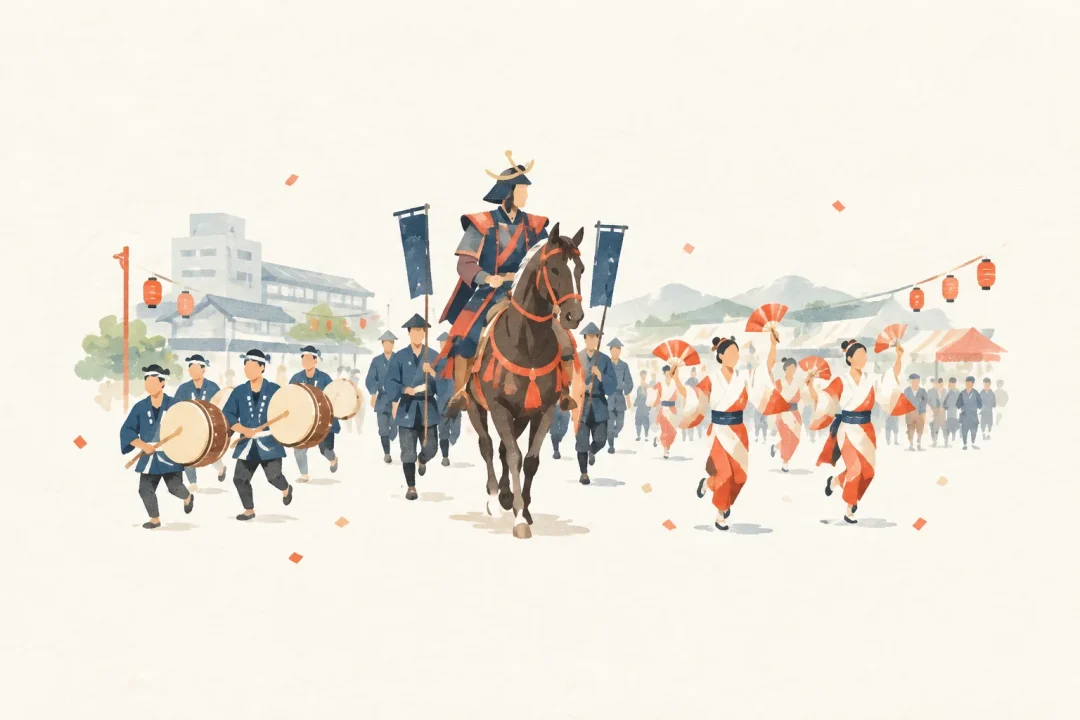
The main highlight is the “shinai,” about 3.6 meters long, carried by 4 rhythm players.
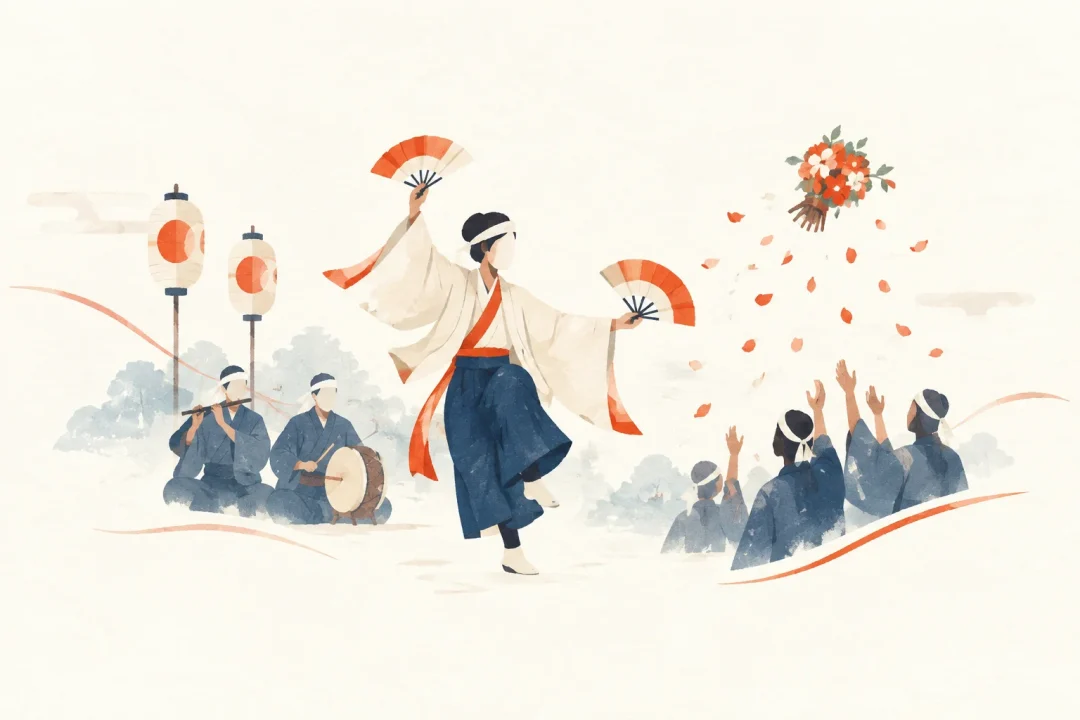
Wearing large decorations adorned with split bamboo, colored paper, and artificial flowers, the dancers move energetically while playing drums and gongs.
The circle formed by about 100 people portraying 31 roles, and the procession along “Kami-sama Road,” are also scenes unique to Kanmizu no Kakeodori.
During the main festival performance in front of the worship hall, the “niwahaki” is also performed: the shinai are rubbed against the ground, scattering artificial flowers.
Source: 寒水の掛踊 | 岐阜県 | 日本の文化遺産を探す|国宝・重要文化財データベース
Kakeodori, where shinai sway and traditional drums resound through the mountain village
What to expect
The festival begins with the “Dance in Front of Nakageta” at the Kanmizu Kakeodori Tradition Center. The performers then form a procession and proceed along the old “Kami-sama Road.”
In the grounds of Kanmizu Hakusan Shrine, the “Garden Dance” is performed, followed by a dance in front of the worship hall, making 3 dances in total each day.
The dance follows a sequence of drum and gong music, dance songs, and then music by the rhythm players once again.
A scene in which performers and spectators form a circle and dance to folk songs is also featured at the end.
Location and access
- Address
Gujo City
Host municipality 岐阜県郡上市
This map shows the surrounding area, not the exact venue location.
Dates and season
- Season
The 2nd Sunday of September and the preceding Saturday every year
- Frequency
Every year
Accommodation and hotels PR
Showing nearby accommodation.
Prices and availability are current at the time of retrieval. For multi-night stays, only the first night’s price is shown. Confirm the final price and directions to the venue with the booking provider. Select your dates again when using the area search link. Search area: within 3 km of Central Gifu Prefecture / Gujo City (the search is not centered on the festival venue)
Tips for your visit
As Kanmizu no Kakeodori is held as a shrine festival, please respect guidance from the preservation association and local residents when viewing it.
Follow local signs and staff instructions regarding photography and access.
Visitors are advised that roads in the Kanmizu settlement are narrow and parking near the shrine is limited.
It is best to check the event information for the relevant year before visiting, including travel arrangements on the festival day and parking conditions.
Nearby attractions
Nearby attractions in the Meiho area, where Kanmizu no Kakeodori is performed, include Meiho Onsen Yuseikan, Seseragi Kaido, and the castle town of Gujo Hachiman.
Meiho Onsen Yuseikan is presented as a day-use hot spring facility, and Seseragi Kaido is home to Roadside Station Meiho.
The castle town of Gujo Hachiman is known for Gujo Odori, which, like Kanmizu no Kakeodori, is associated with “Furyu-odori.”
If you plan to visit in connection with the festival, check the operating status and transportation options for each destination separately.

郡上八幡博覧館
日本の岐阜県郡上市にある博物館

郡上八幡城
岐阜県郡上市の城
Origins and History of Kanmizu no Kakeodori
Local tradition holds that Kanmizu no Kakeodori was brought from neighboring Motai Village in Hoei 6 (1709).
The oldest written record is a festival record from Tenmei 1 (1781), and it is said to have become established by the late Edo period.
There are 2 theories about the name “Kakeodori”: one links it to the exchange of songs with Motai Village, and the other to prayers made to the gods.
It became a subject for documentation in 1975, was designated a National Important Intangible Folk Cultural Property in 2021, and became one of the UNESCO Intangible Cultural Heritage “Furyu-odori” in 2022.
Official information
Kanmizu no Kakeodori is an Important Intangible Folk Cultural Property listed in the Agency for Cultural Affairs’ “Database of Nationally Designated Cultural Properties.”
You can check its official name as a cultural property, category, location, and the name of its preservation organization.
The designation date is March 11, 2021, and the Kanmizu Kakeodori Preservation Association is listed as the preservation organization.
Kanmizu no Kakeodori at a Glance
Kanmizu no Kakeodori is a furyu-style drum dance with a tradition of about 300 years, performed as part of the annual festival at Kanmizu Hakusan Shrine.
Highlights include the rhythm players carrying shinai about 3.6 meters long, the varied roles performed by about 100 people, and the procession from the settlement to the shrine.
The community supports this performance from preparation through its offering at the shrine. It is registered as a National Important Intangible Folk Cultural Property and as part of the UNESCO Intangible Cultural Heritage “Furyu-odori.”
Japanese Festivals.jp Editorial Team
Celebrating local culture and helping you discover a side of Japan you never knew.
Article updated: 2026/10/19
Submit information or a correction Submit photos of this festival