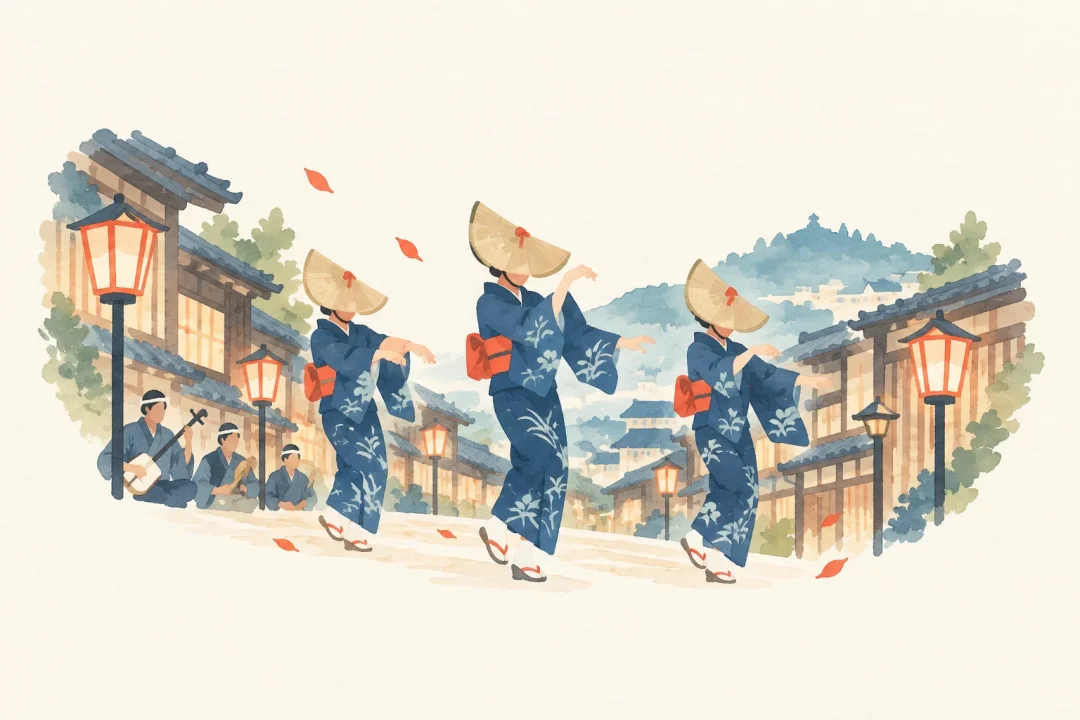
A traditional Hakusan festival where graceful ancient dances meet the flower-grabbing
Nagataki Ennen
Festival information
EVENT INFORMATION- Season / frequency
- Every year on January 6 / Every year
- Location
- Nagataki Hakusan Shrine
- Area
- Gifu Prefecture・Gujo City(From Tokyo: approx. 2 h–2 h 30 min · bullet train + connecting train)Prefecture-level estimate to a main station or airport, not the venue. Airport access, check-in and onward travel are extra; remote areas and islands can take much longer.
- Features
- Highlights and activities
- Wishes behind the festival
- Participation / viewing
- Spectators welcome
- Participation fee
- Free
- Last updated
- 2026/10/19
Gujo City’s Muika Festival, where ancient Ennen performing arts are preserved at Hakusan-Nagataki Shrine. From the offerings of song and dance to the flower-grabbing, local prayers and performing arts come together in a single festival.
About Nagataki Ennen
Photo credits and terms of use
Photographer: 大野 一将 File:Nagataki no En'nen, Tao,Gujō, 2018.jpg / Wikimedia Commons / CC BY-SA 4.0 Own work by the contributorDisplay size only adjusted.May differ from the event currently featured.Nagataki Ennen is a traditional performance offered at the festival of Hakusan-Nagataki Shrine, passed down as an event praying for silkworm-raising and a good harvest.
Also known as Shūshō Ennen, Muika Festival, or Hanadatori Festival, it preserves to this day the old form of Ennen once performed at Nagataki Temple.
The chief priest, elders, drummers, flutists, and others line up in the festival hall, expressing the community’s prayers through song and dance.
It is also designated a National Important Intangible Folk Cultural Property.
Source: 国指定文化財等データベース
Festival highlights
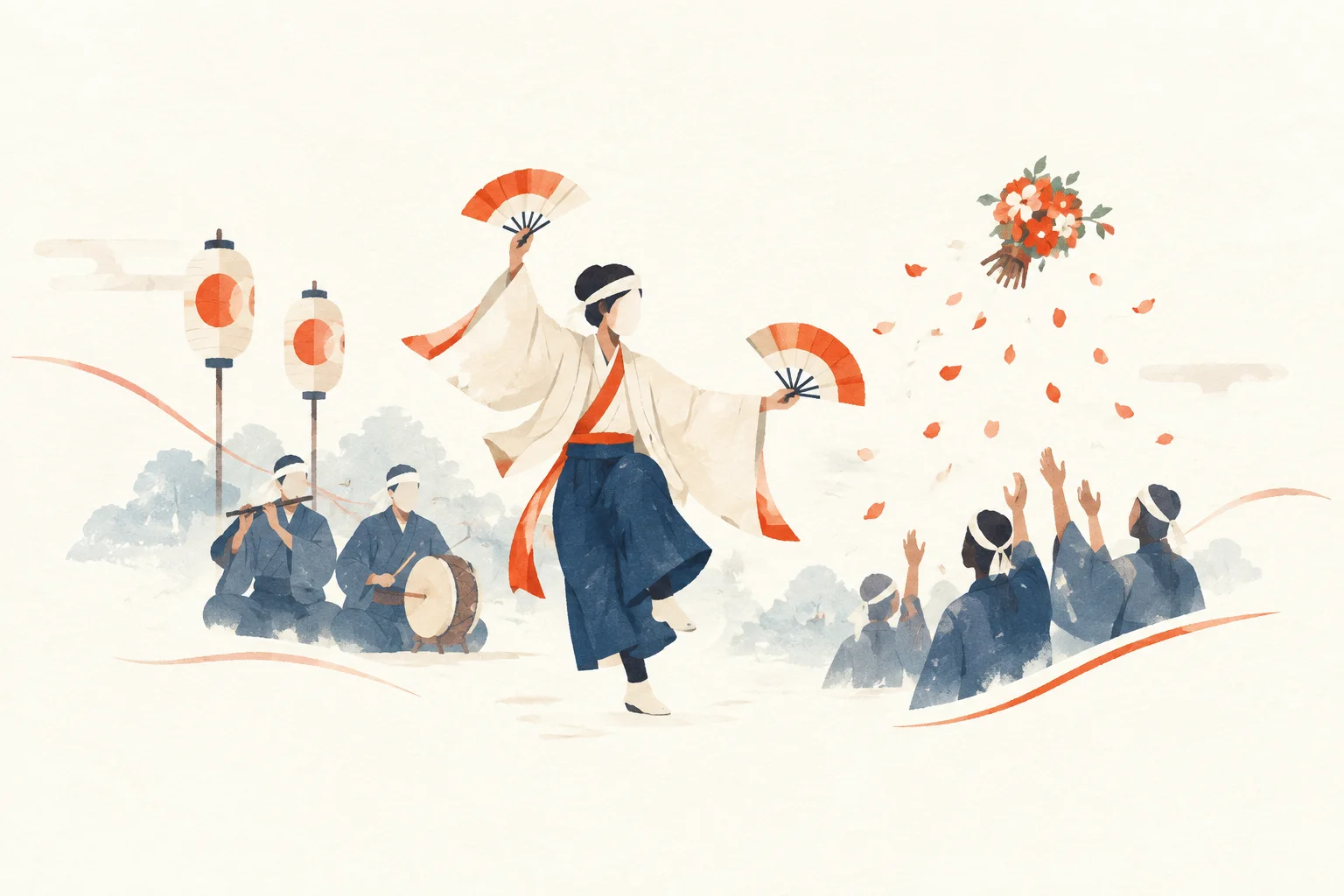
Highlights include the solemn Ennen dance and the contrast with the flower-grabbing that takes place midway through.
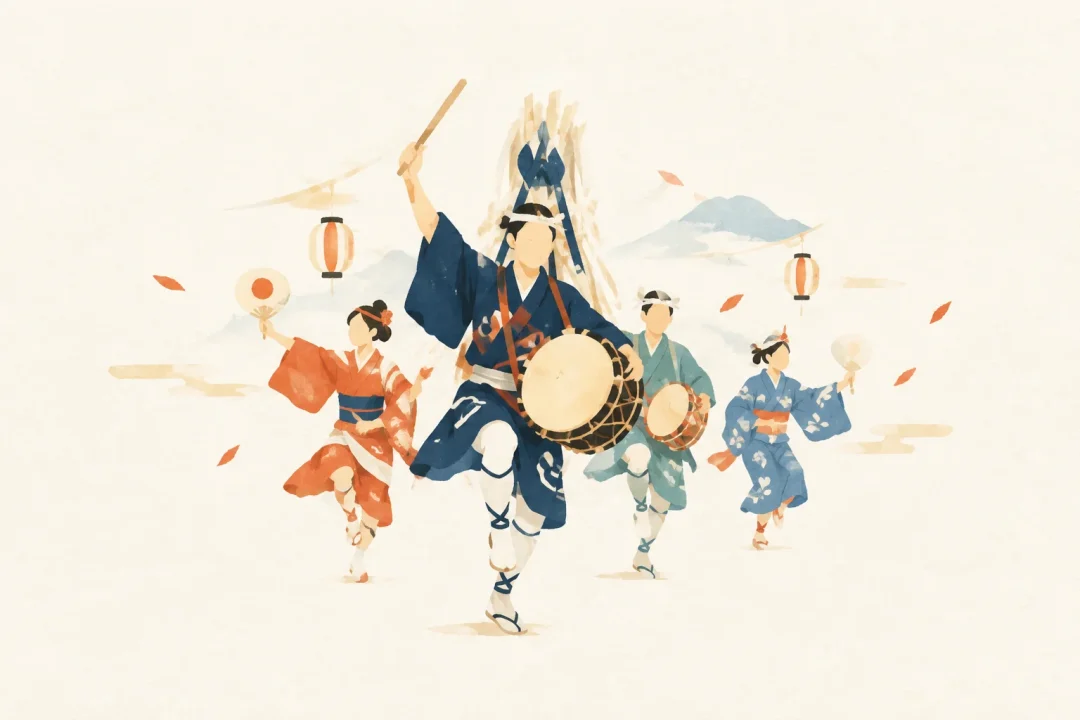
Performances are presented in sequence around a sweets stand in the center of the festival hall: ta-uta, dance, the children’s ranbyoshi dance, ta-odori, and taishū-mai.
When spectators scramble for flowers suspended from the ceiling, the quiet mood of the performing arts gives way, bringing the festival’s movement and energy to the fore.
Source: 白鳥エリアのみどころ | 郡上市 Gujo City
A traditional Hakusan festival where graceful ancient dances meet the flower-grabbing
What to expect
A confection stand is placed in the center of the festival hall, while the priest, elder, manabi, middle-aged elder, player, flute player, and others line up on either side.
After the elder recites words praising the sweets, the attendants distribute them, and then the confection stand is tossed into the crowd.
This is followed by ta-uta, hayashi dance, a children’s ranbyoshi dance, ta-odori, and a group dance; the Hanaubai takes place during the sequence of dances.
How to take part
Visitors can watch the festival without a reservation.
Visitors can watch the dedication of the Ennen and the Hanaubai (flower-snatching), and worship and viewing are listed as free of charge.
Crowds are expected during the Hanaubai, so viewers should watch those around them and follow the guidance of the preservation society and shrine to enjoy the event safely.
No reservation is needed to watch.
Admission is listed as free, and visitors can watch the Ennen being dedicated in the of Nagataki Hakusan Jinja.
No special application process or application contact is listed.
Location and access
- Venue and address
Nagataki Hakusan Shrine (138 Nagataki, Shirotori-cho, Gujo City, Gifu Prefecture)
- Train and bus
About a 5-minute walk from Hakusan-Nagataki Station on the Nagaragawa Railway Etsumi-Nan Line.
- By car
About 10 minutes by car from the Shiratori Interchange on the Tokai-Hokuriku Expressway.
- Parking
Parking is indicated behind Hakusan-Nagataki Station, at the roadside station Michi-no-Eki Hakusan Bunka no Sato Nagataki, and behind Hakusan Cultural Museum.
It may be crowded on the day.
Address 138 Nagataki, Shirotori-cho, Gujo City, Gifu Prefecture
Dates and season
The Ennen of Nagataki is dedicated each year on January 6 as the central event of the Mutsuka Festival.
The dedication begins at 1 p.m., and the trial performance is held at 1 p.m. on the previous day, January 5.
Accommodation and hotels PR
Showing nearby accommodation.
Prices and availability are current at the time of retrieval. For multi-night stays, only the first night’s price is shown. Confirm the final price and directions to the venue with the booking provider. Select your dates again when using the area search link. Search area: within 3 km of Central Gifu Prefecture / Gujo City (the search is not centered on the festival venue)
Tips for your visit
As it takes place in a mountainous area in winter, warm clothing and comfortable walking shoes are recommended.
Many people gather during the flower-grabbing, and movement can become intense, so please prioritize your safety and that of those around you.
Photography is permitted from the general viewing area. However, please avoid using flash during the Ennen dance and follow guidance from the preservation society and shrine.
Nearby attractions
Hakusan Nagataki Temple is on the same grounds as Nagataki Hakusan Shrine and can also be visited as a place associated with Hakusan worship.
Hakusan Takihōden, located within the , houses the Important Cultural Properties of the wooden statues of Shaka Triad and the Four Heavenly Kings.
At Hakusan Cultural Museum, about a 5-minute walk away, you can view exhibits on Hakusan worship and the history of Shirotori Town.

郡上八幡博覧館
日本の岐阜県郡上市にある博物館

郡上八幡城
岐阜県郡上市の城
Origins and History of Nagataki Ennen
Since Nagataki Ennen was originally performed at Nagataki Temple, a Buddhist temple, it retains the form and content of ancient Ennen performing arts.
As part of a festival praying for silkworm-raising and a good harvest, performances combining song, flute, drums, and dance have been passed down through the generations.
It was selected in 1970 as an intangible folk cultural property for which measures such as documentation should be undertaken, and designated a National Important Intangible Folk Cultural Property on May 17, 1977.
Official information
You can check the festival’s origins, performances, and cultural property designation in the “Nagataki Ennen” entry in the Database of National Cultural Properties.
Nagataki Ennen at a Glance
Nagataki Ennen is an Important Intangible Folk Cultural Property that preserves the form of ancient temple performing arts. It is offered each year at Nagataki Hakusan Shrine on January 6.
The quiet performances, such as ta-uta and ta-odori, are followed by hanadatori, in which people scramble for flowers suspended from the ceiling.
It is about a 5-minute walk from Hakusan-Nagataki Station. Please dress warmly for winter and take care to stay safe in crowds while watching.
Japanese Festivals.jp Editorial Team
Celebrating local culture and helping you discover a side of Japan you never knew.
Article updated: 2026/10/19
Submit information or a correction Submit photos of this festival