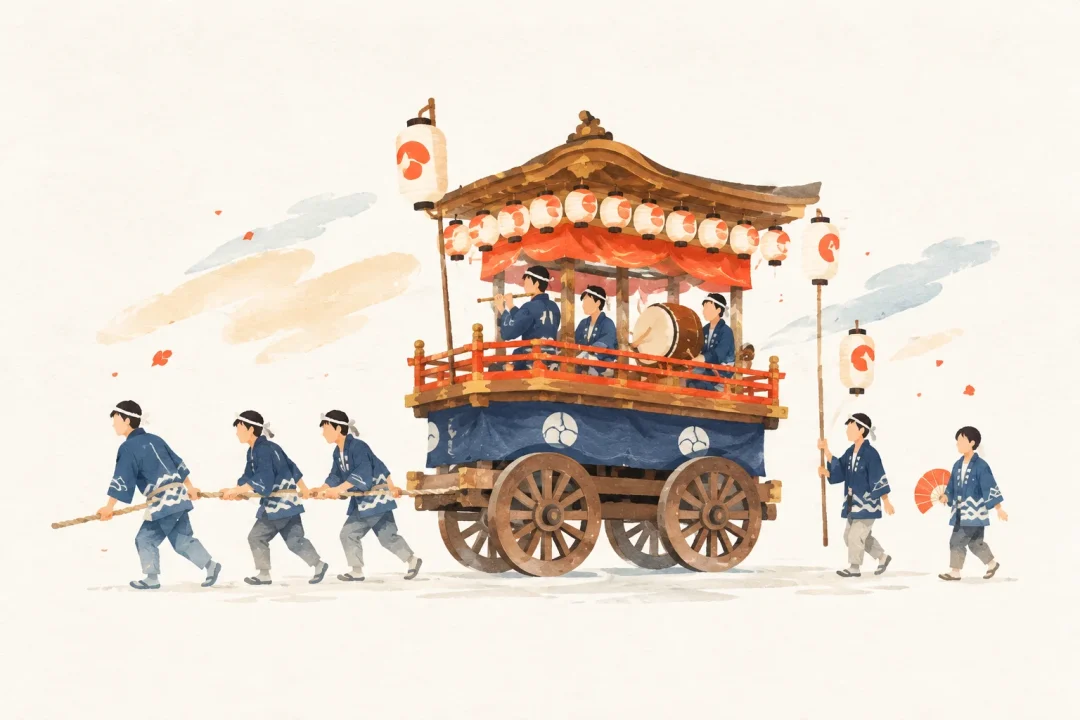
Hirugaya no Ta-asobi: depicting a year of rice cultivation through calls and gestures
Hirugaya no Ta-asobi
Festival information
EVENT INFORMATION- Season / frequency
- Every year
- Location
- Hiru-ko Shrine
- Area
- Shizuoka Prefecture・Makinohara City(From Tokyo: approx. 1 h–1 h 30 min · bullet train)Prefecture-level estimate to a main station or airport, not the venue. Airport access, check-in and onward travel are extra; remote areas and islands can take much longer.
- Features
- Wishes behind the festival
- Participation / viewing
- Spectators welcome
- Participation fee
- Free
- Age restrictions
- The performers are males aged 15 to 40
- Last updated
- 2026/10/19
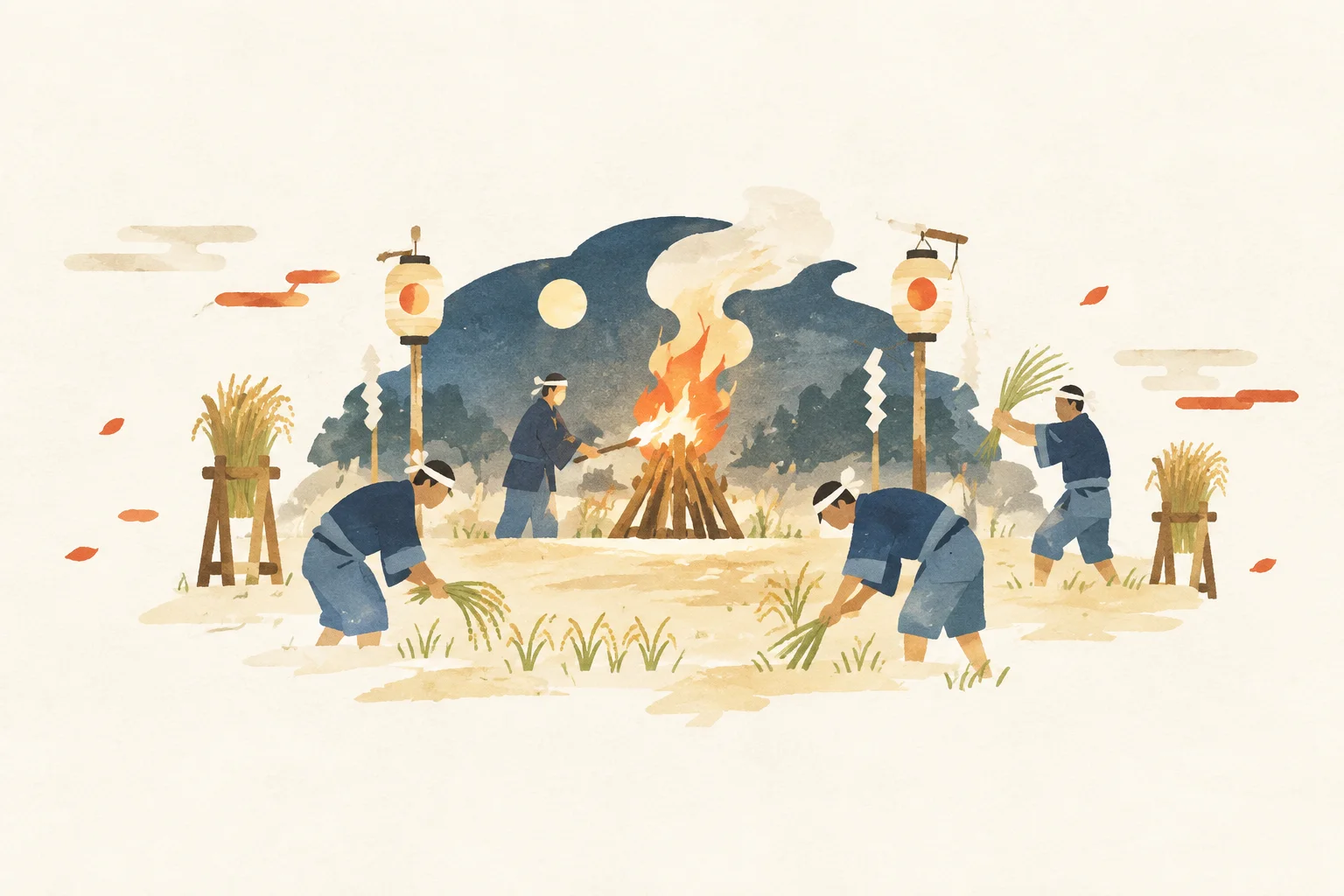
Hirugaya no Ta-asobi is a folk performing art from Hirugaya, Makinohara City, in which the stages of rice cultivation are reenacted to pray for a good harvest. The lighting of the firewood signals the start of ceremonial and farming performances in the at night.
About Hirugaya no Ta-asobi
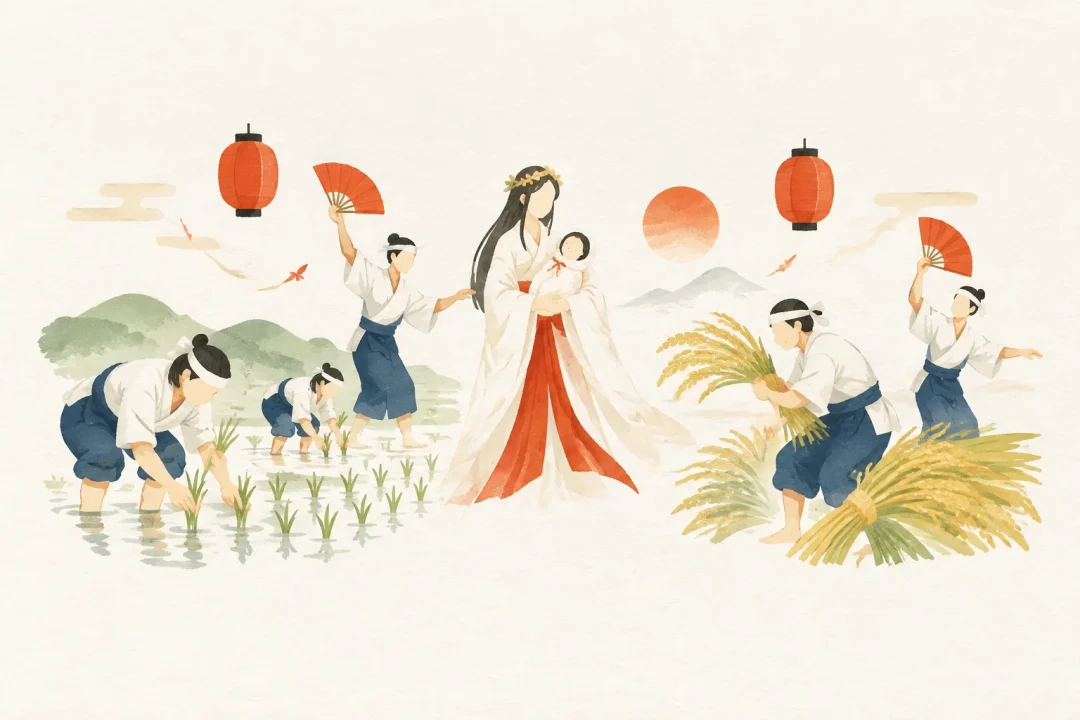
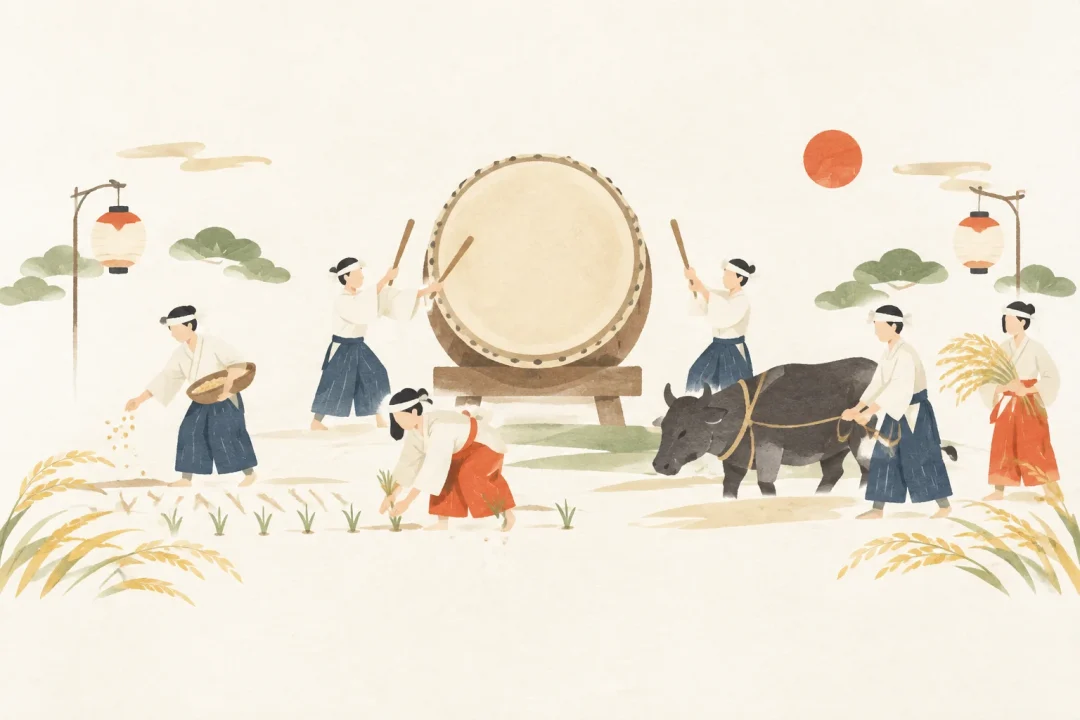
Hirugaya no Ta-asobi is a folk performing art in which the stages of rice cultivation are reenacted at the beginning of the year to pray for a good harvest that year.
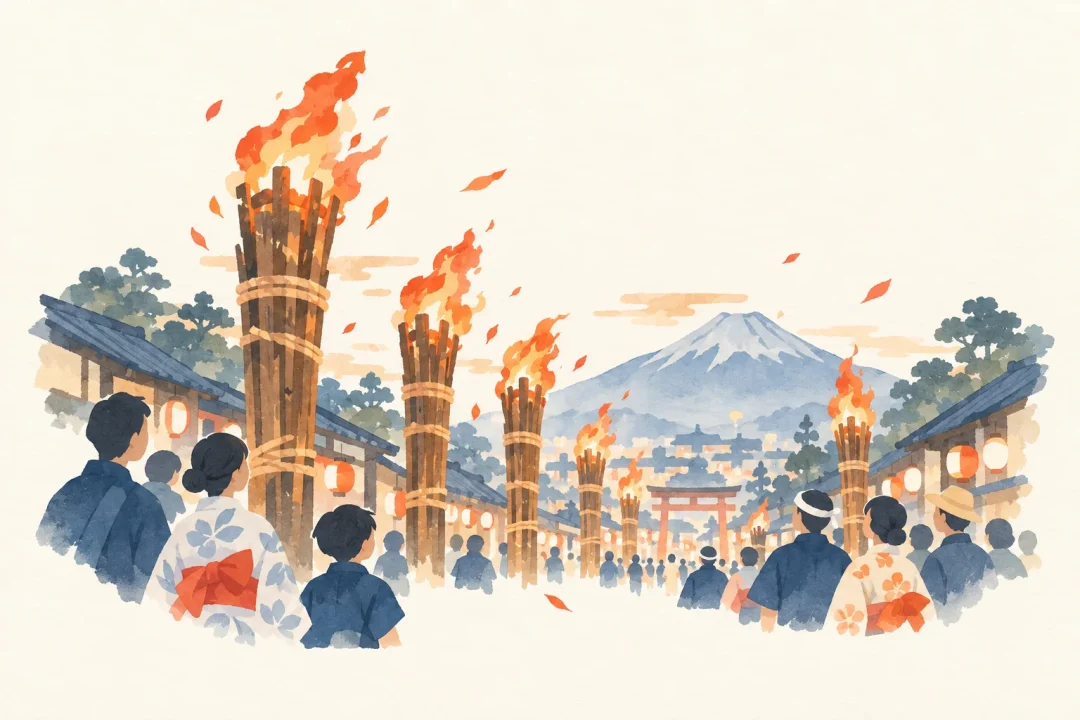
The festival begins in the grounds of Hiru-ko Shrine, signaled by the lighting of the firewood.
Ceremonial acts are followed by performances such as plowing, rice planting, and harvesting. The event is a nationally designated Important Intangible Folk Cultural Property that passes on the region’s rice-growing culture.
Source: しずおか文化財ナビ 蛭ヶ谷の田遊び|静岡県公式ホームページ
Festival highlights
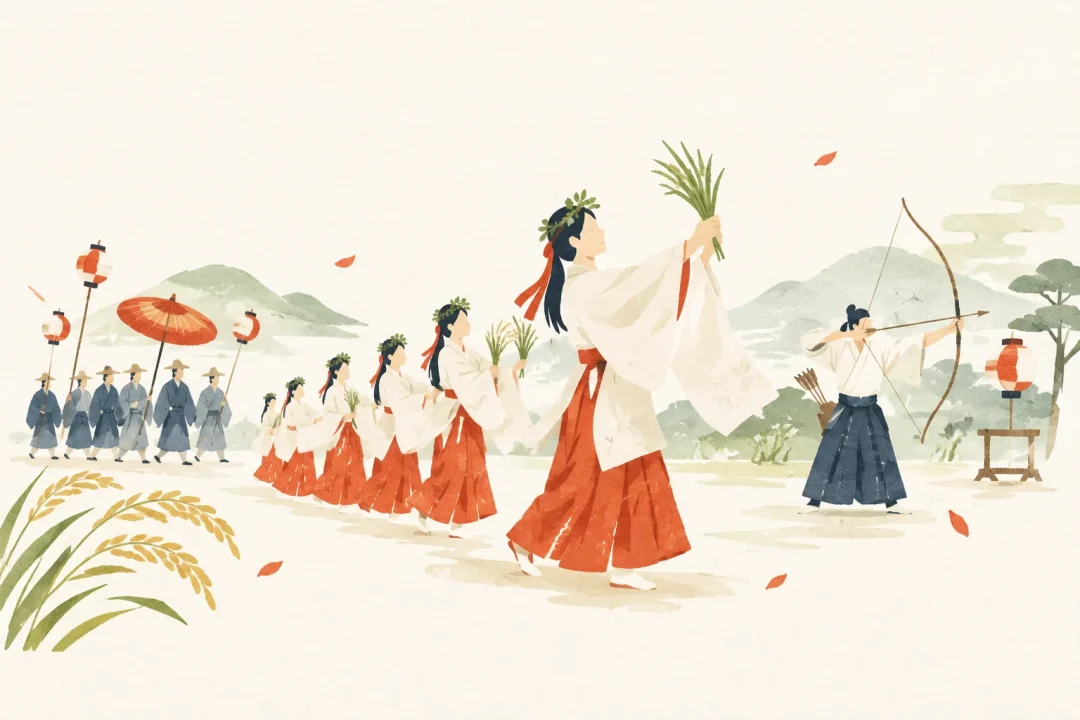
Highlights include the “four-direction cuts,” in which swords and wooden swords are swung down toward the east, west, north, and south, and a series of performances depicting the stages of rice cultivation.
Hota Kozo, a figure made from bundled cedar leaves, is paraded by young men and finally tied to the trunk of a cherry tree beside the shrine building.
Another distinctive feature is that the performances proceed without musical instruments, using only the performers’ calls, chants, and unique movements.
Source: 国指定文化財等データベース
Hirugaya no Ta-asobi: depicting a year of rice cultivation through calls and gestures
What to expect
The festival’s rice-field performances begin at dusk, signaled by lighting the okagari, a stack of firewood.
The first half features ceremonial acts such as sword and wooden-sword dances. In the second half, the performances shift to portray farming tasks, including plowing the fields, praising the ox, pounding wheat, planting rice, and harvesting rice.
The sequence ends with Hota Kozo being tied to the trunk of a cherry tree.
How to take part
The festival performances are offered by performers, primarily from the local youth association.
However, it is customary to distribute “kure mochi” to general participants on the day of the mochi-pounding.
Location and access
- Venue and address
The venue is Hiru-ko Shrine (1 Hirugaya, Makinohara City, Shizuoka Prefecture).
The festival takes place in the shrine grounds.
- By car
It is a 15-minute drive from the Tomei Sagara-Makinohara IC.
- Parking
There is no parking.
Source: 蛭ケ谷の田遊び / 静岡県 -【JAPAN 47 GO】
Address 1 Hirugaya, Makinohara City, Shizuoka Prefecture
Dates and season
- Frequency
Every year
Accommodation and hotels PR
Showing nearby accommodation.
Prices and availability are current at the time of retrieval. For multi-night stays, only the first night’s price is shown. Confirm the final price and directions to the venue with the booking provider. Select your dates again when using the area search link. Search area: within 3 km of Central Shizuoka Prefecture / Makinohara City (the search is not centered on the festival venue)
Tips for your visit
The main offerings take place from dusk until late at night, so be prepared to watch in the shrine grounds after dark.
The performances begin when the firewood is lit, and there is no parking at the venue.
Some acts involve swords and wooden swords, while others feature young men parading Hota Kozo. Please watch quietly from a spot where you will not interfere with the performances.
Nearby attractions
Nearby places in Makinohara City, the same city as the venue, include Saizanji Temple, the Sagara Oil Field well, and Sagara Oil Field Village Park.
Other places mentioned include Oe Hachimangu Shrine, Daikoji Temple, the Makinohara City History Museum, and Katahama Beach.
If you plan to visit alongside the festival, check each facility’s opening status and hours individually.
Origins and History of Hirugaya no Ta-asobi
The origins of Hirugaya no Ta-asobi are uncertain, but the book *Tōtōmi Chishi*, compiled by Toyohira Yamanaka, who died in 1836, records that a rice-planting festival was held on the 13th day of the first lunar month.
There is also a tradition that the rights to perform Ta-asobi were transferred from nearby Saizanji Temple, and a stone pillar bearing a donation inscription dated 1722 has been confirmed.
Until Meiji 5, it was held on day 13 of lunar month 1; from Meiji 6 onward, it has been held every year on February 11.
Official information
You can check the designation details, venue, and public viewing information for Hirugaya no Ta-asobi in the National Cultural Properties Database and Shizuoka Prefecture’s official Shizuoka Cultural Properties Navi.
The preservation group is the Hirugaya Ta-asobi Preservation Society.
Hirugaya no Ta-asobi at a Glance
Hirugaya no Ta-asobi is an Important Intangible Folk Cultural Property passed down in Hirugaya, Makinohara City, in which the stages of rice cultivation are performed to pray for a good harvest.
The varied performances begin with the lighting of the firewood and continue through the four-direction cuts, plowing, rice planting, harvesting, and the parade of Hota Kozo, with calls and gestures at their heart.
As the offerings take place at night and there is no parking, it is best to plan your journey to the venue and prepare for the viewing conditions before you go.
Japanese Festivals.jp Editorial Team
Celebrating local culture and helping you discover a side of Japan you never knew.
Article updated: 2026/10/19
Submit information or a correction Submit photos of this festival