A traditional Shimada-juku procession featuring Ōyakkos carrying maru obi sashes
Shimada Grand Festival

Festival information
EVENT INFORMATION- Season / frequency
- Mid-October / Once every 3 years
- Area
- Shizuoka Prefecture・Shimada City(From Tokyo: approx. 1 h–1 h 30 min · bullet train)Prefecture-level estimate to a main station or airport, not the venue. Airport access, check-in and onward travel are extra; remote areas and islands can take much longer.
- Features
- Wishes behind the festival
- Last updated
- 2026/10/19
Shimada Grand Festival, known for its procession of Ōyakkos carrying maru obi sashes, is a festival that brings together the rituals of Ōi Shrine and the life of the town of Shimada-juku. A daimyo procession, procession, Kashima Odori, and travel through the town. The festival is held once every 3 years in mid-October.
Photo credits and terms of use
Photographer: Halowand File:Shimada Taisai Oyakko.jpg / Wikimedia Commons / CC BY-SA 4.0 Own work by the contributorDisplay size only adjusted.May differ from the event currently featured.Photo credits and terms of use
Photographer: Halowand File:Shimada Taisai Otorige 01.jpg / Wikimedia Commons / CC BY 4.0 Own work by the contributorDisplay size only adjusted.May differ from the event currently featured.Photo credits and terms of use
Photographer: Halowand File:Oi-jinja during Shimada taisai.jpg / Wikimedia Commons / CC BY 4.0 Own work by the contributorDisplay size only adjusted.May differ from the event currently featured.About Shimada Grand Festival
Shimada Grand Festival is held around Ōi Shrine in Shimada City and is commonly known as the Obi Festival.
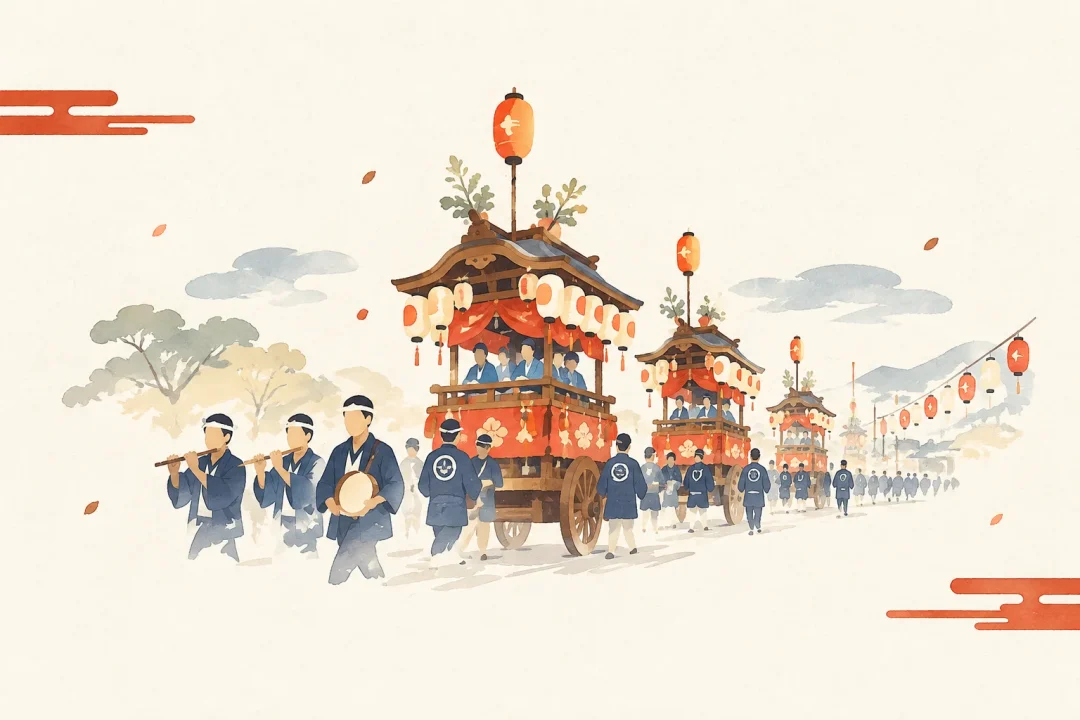
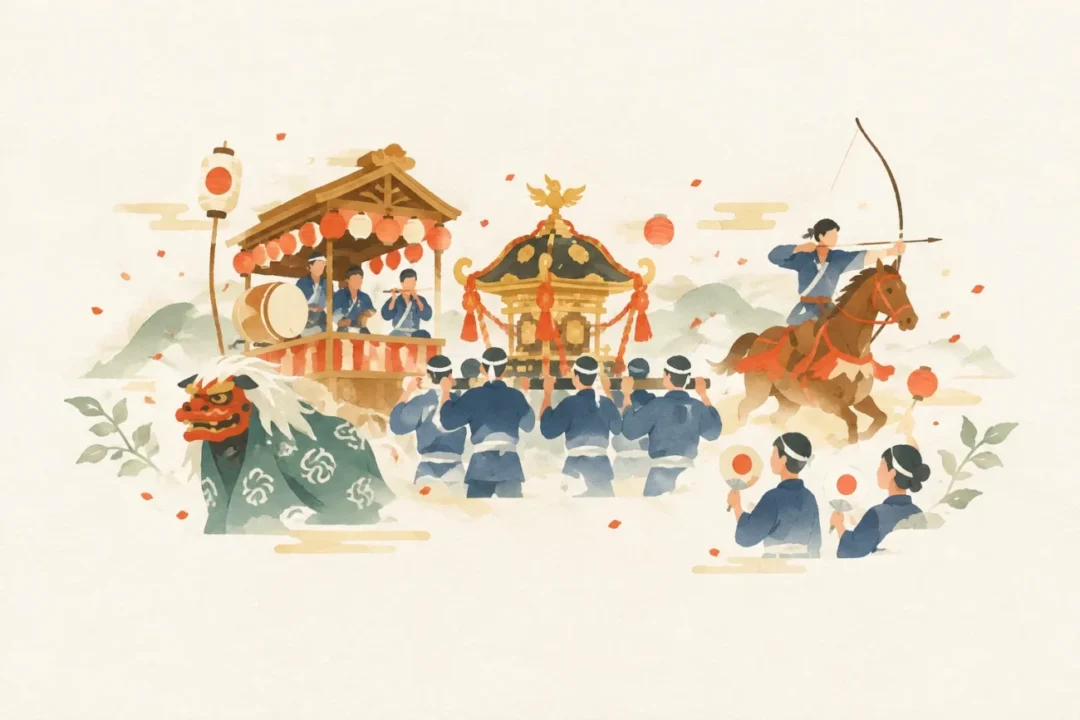
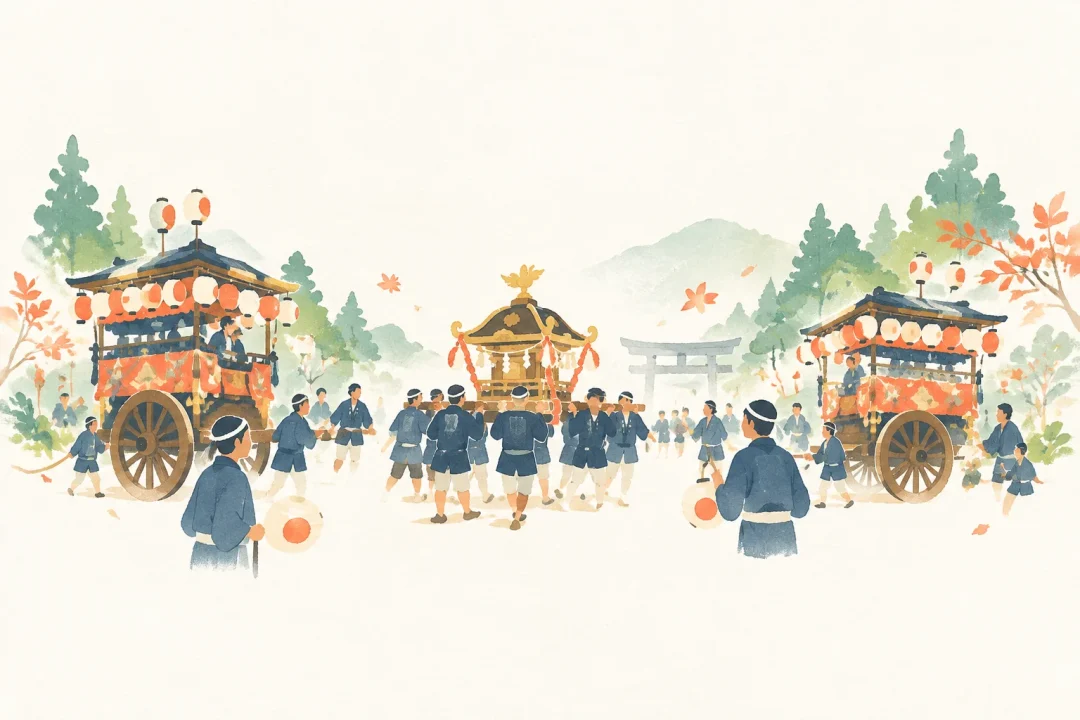
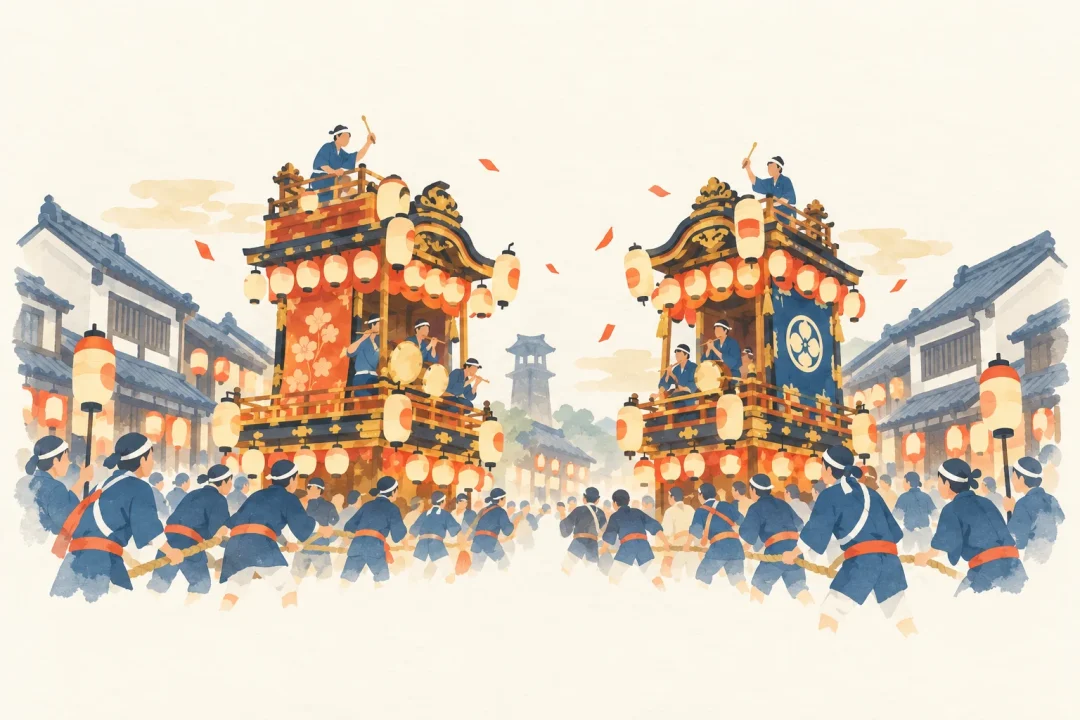
The daimyo procession, which follows the mikoshi procession, Kashima Odori, dashi, and other elements come together to form the festival.
It is said that the custom of displaying obi sashes dedicated by women who married into Shimada-juku to pray for safe childbirth led to today’s procession of Ōyakkos and obi sashes.
Held once every 3 years in mid-October.
Source: 島田大祭 - Wikipedia
Festival highlights
The main highlight is the daimyo procession, in which 25 Ōyakkos hold wooden swords out to either side and proceed with maru obi sashes draped over the hilts.
The procession is followed by riflemen, Ōtorige, Shaguma, Shirokuma, a lord, and others, creating a distinctive formation.
The mikoshi procession, Kashima Odori, and dashi also join in, and on the final day, the procession extends for about 1 kilometer during the Watari.
The Honjin-iri, held at dusk, is also described as a scene recreating the sankin-kōtai processions of the Edo period.
Source: イベント情報 - 島田大祭(帯まつり) |一般社団法人島田市観光協会
A traditional Shimada-juku procession featuring Ōyakkos carrying maru obi sashes
What to expect
The festival gets fully underway on the first day with the costume gathering. After receiving purification at Ōi Shrine, the youth groups of each district present their daimyo processions, dashi, and Kashima Odori around their neighborhoods.
On the middle day, ancient rituals and a shrine visit are held as part of the Gohonsai.
On the final day, the mikoshi and procession travel from Ōi Shrine to the . After the festival rites conclude and they return to the shrine, the procession continues with the Honjin-iri.
Location and access
- Venue and address
Hondori, Shimada City, and the surrounding area.
It is held mainly at Ōi Shrine.
- Train and bus
It is just outside the north exit of JR Shimada Station.
During the festival, community bus services will be partially changed due to traffic restrictions.
- By car
During the Grand Festival, traffic restrictions will be in place mainly along Hondori.
Visitors are advised to use public transportation.
- Parking
Parking is available at the Ōigawa Green Space Park parking lot.
シャトルバスは島田駅南口まで運行されます。
Event venue 静岡県島田市 島田市本通及びその
This map uses the venue name. Check the official guide for the event area and entrances.
Dates and season
- Season
Mid-October
- Frequency
Once every 3 years
Accommodation and hotels PR
Showing nearby accommodation.
Prices and availability are current at the time of retrieval. For multi-night stays, only the first night’s price is shown. Confirm the final price and directions to the venue with the booking provider. Select your dates again when using the area search link. Search area: within 3 km of Central Shizuoka Prefecture / Shimada City (the search is not centered on the festival venue)
Tips for your visit
During the Grand Festival, traffic restrictions will be in place mainly along Hondori, and the area around the venue will be crowded.
Visitors are advised to use public transportation.
Please refrain from using drones and other remotely controlled devices around the venue, and from smoking on the street.
There will be no trash bins at the venue, so you must take any trash you generate home with you.
Origins and History of Shimada Grand Festival
Shimada Grand Festival is said to have begun in 1695 (Genroku 8), and the 100th festival was held in 1992.
The festival’s original form changed over time, and its precise details are unclear.
A lord’s procession was added during the Kansei era, and the lead figure, who had originally dressed as a yamabushi, later changed into a yakko and came to be called an Ōyakko.
Kashima Odori is said to have begun when it was dedicated during the Enpō era to pray for protection from epidemics and bountiful harvests.
Official information
Information is provided by the Shimada Grand Festival Preservation and Promotion Association and the Shimada City Tourism Association.
The official website provides information on dates, history, highlights, rituals and entertainment, and procession schedules.
For information about the 2026 event, check the published announcements before relying on it.
Source: 島田大祭帯まつり
Shimada Grand Festival at a Glance
Shimada Grand Festival is one of Shimada City’s signature festivals, featuring a daimyo procession, mikoshi procession, Kashima Odori, and dashi centered around Ōi Shrine.
The sight of Ōyakkos proceeding with wooden swords bearing maru obi sashes symbolizes the Obi Festival.
From the costume gathering on the first day to the Gohonsai, and the Watari and Honjin-iri on the final day, visitors can experience local traditions through a series of rituals and processions.
Japanese Festivals.jp Editorial Team
Celebrating local culture and helping you discover a side of Japan you never knew.
Article updated: 2026/10/19
Submit information or a correction Submit photos of this festival