A change of clothes rooted in Tateyama faith, with a prayer entrusted to every stitch
The Changing of Clothes for Onba-sama of Ashikuraji
Festival information
EVENT INFORMATION- Season / frequency
- Every year on March 13 / Once a year
- Location
- Enma-do and Kaizan-do
- Area
- Toyama Prefecture・Tateyama Town(From Tokyo: approx. 2 h 10 min–2 h 40 min · bullet train)Prefecture-level estimate to a main station or airport, not the venue. Airport access, check-in and onward travel are extra; remote areas and islands can take much longer.
- Features
- Highlights and activities
- Wishes behind the festival
- Last updated
- 2026/11/11
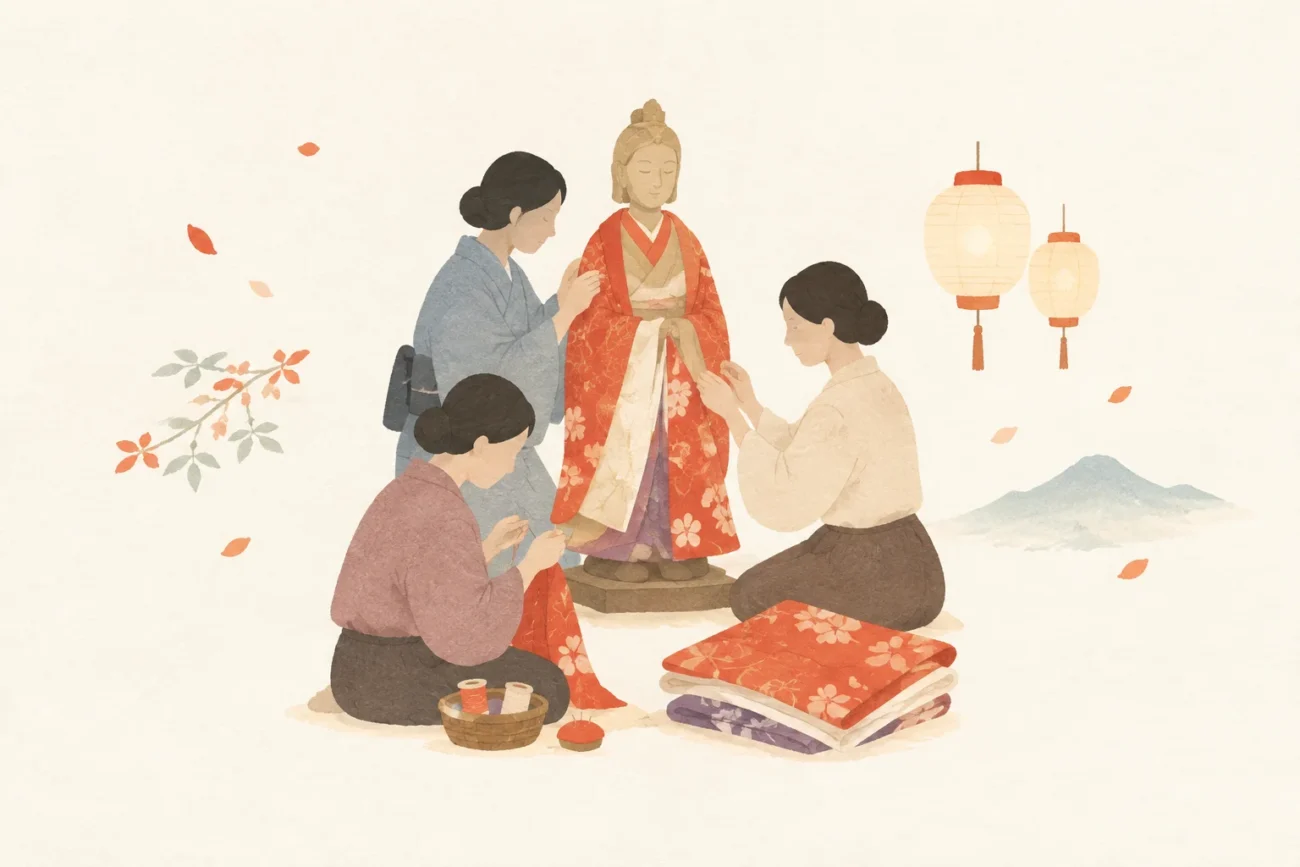
In Ashikuraji, a traditional event has been passed down in which women from the district sew a kimono for Uba-son, revered as a female guardian deity, stitch by stitch, and replace her old one.
About The Changing of Clothes for Onba-sama of Ashikuraji
The changing of clothes for Onba-sama of Ashikuraji is a traditional annual event in which women from the district replace the kimono of the wooden Uba-son (Onba-sama) at Enma-do.
Uba-son is a goddess of abundance who brings blessings of food and clothing, and has been worshipped especially as a female guardian deity who guides women to Buddhahood.
After sewing the white cloth, the participants pray and receive a purification rite at the Kaizan-do of Oyama , then change Uba-son’s clothes.
Festival highlights
A highlight is watching the women of the village sew a new kimono stitch by stitch from white bleached cotton cloth.
The custom of sewing the garment without making knots is said to follow the same practice as the kyo-katabira, a burial garment worn by the dead on their final journey.
Once the kimono is finished, the women visit the Kaizan-do of Oyama Jinja to pray and receive a purification rite, then change Uba-son’s clothes at Enma-do.
A change of clothes rooted in Tateyama faith, with a prayer entrusted to every stitch
What to expect
Before the event, on March 9, officers of the women’s association cut the white cloth at Enma-do.
March 13, women from the village gather at Enma-do from early morning and sew the white cloth stitch by stitch to make a kimono.
After sewing is complete, they visit the Kaizan-do of Oyama Jinja and receive a purification rite, then change Uba-son’s clothes at Enma-do, bringing the event to a close.
Location and access
- Venue and address
Enma-do and Kaizan-do / Ashikuraji, Tateyama Town
Address Ashikuraji, Tateyama Town
Dates and season
- Season
Every year on March 13
- Frequency
Once a year
Accommodation and hotels PR
Showing nearby accommodation.
Prices and availability are current at the time of retrieval. For multi-night stays, only the first night’s price is shown. Confirm the final price and directions to the venue with the booking provider. Select your dates again when using the area search link. Search area: within 3 km of Central Toyama Prefecture / Tateyama Town (the search is not centered on the festival venue)
Nearby attractions

富山県立山博物館
富山県立山町にある博物館

立山カルデラ砂防博物館
富山県立山町にある博物館

雄山神社
富山県中新川郡立山町にある神社
Origins and History of The Changing of Clothes for Onba-sama of Ashikuraji
During the Edo period, Uba-son was enshrined in a hall called Uba-do and worshipped as a figure who brought blessings of food and clothing, and as a female guardian deity.
In the past, hemp was grown in the Ashikuraji settlement and woven there as well.
The white cloth used today is bleached cotton, but the event itself has been passed down without interruption since before the Edo period and is said to preserve an earlier form of Tateyama faith.
Official information
Tateyama Town provides information on the event’s origins, steps, venues, and dates as part of its “Tateyama Saijiki” guide.
It is designated an Intangible Folk Cultural Property of Toyama Prefecture and is also included in the “100 Annual Events of Toyama.”
For inquiries, contact the Cultural and Sports Section of the Tateyama Town Board of Education.
The Changing of Clothes for Onba-sama of Ashikuraji at a Glance
The changing of clothes for Onba-sama of Ashikuraji is an annual event in which a new kimono is offered to the wooden Uba-son, a female guardian deity.
It begins with cutting the white cloth on March 9. On March 13, the women sew the kimono, then pray and receive a purification rite at Kaizan-do before changing Uba-son’s clothes.
Passed down since before the Edo period, the event keeps Tateyama faith and local handcraft traditions alive today.
Sources and references
Japanese Festivals.jp Editorial Team
Celebrating local culture and helping you discover a side of Japan you never knew.
Article updated: 2026/11/11