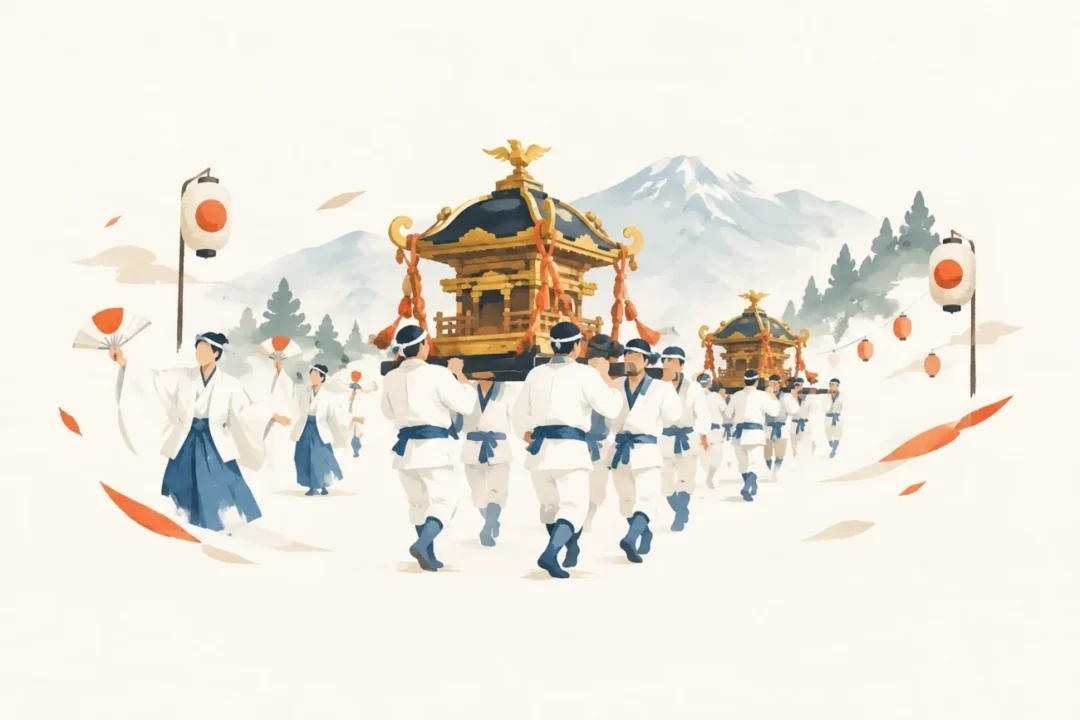
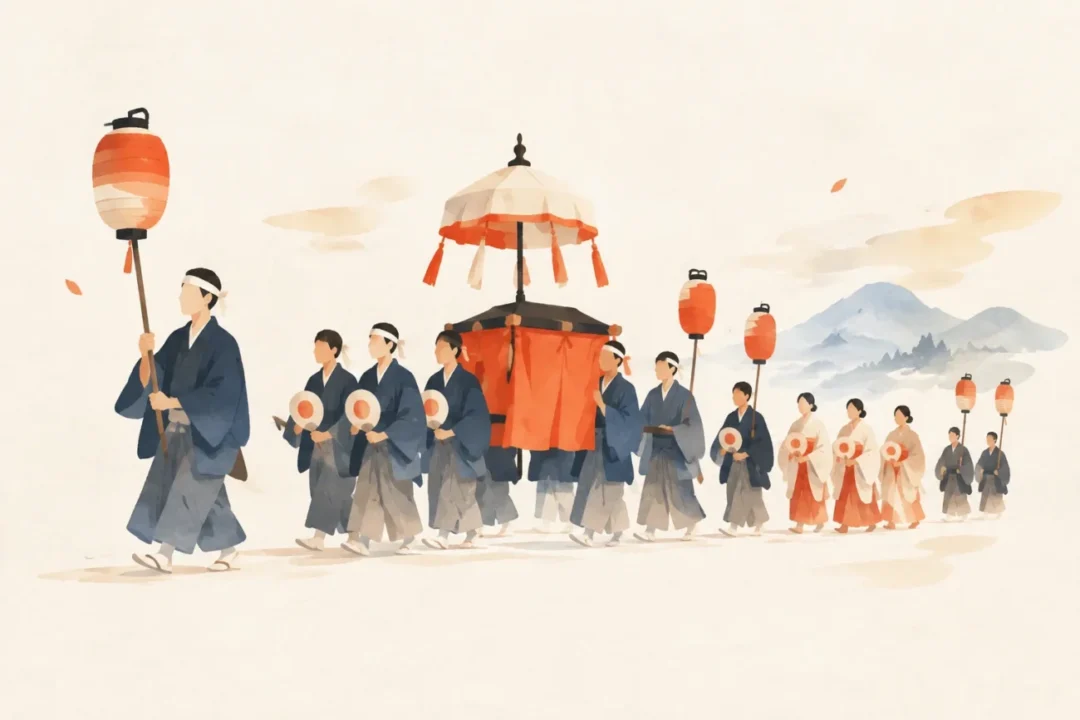
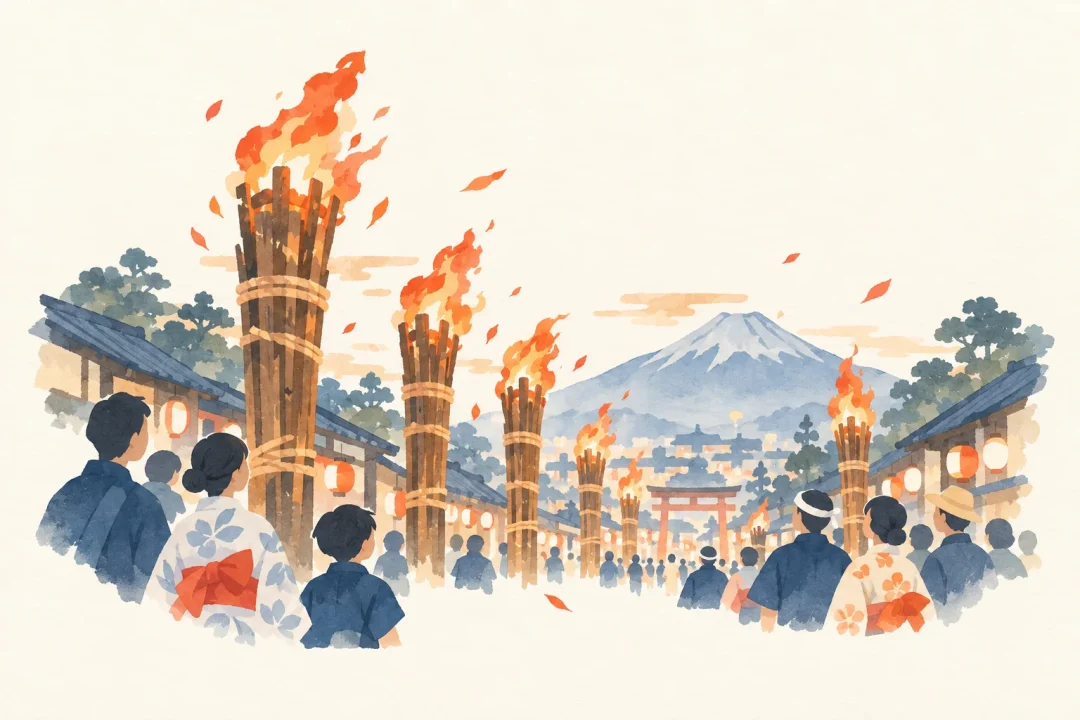
An Akahama tradition of praying for a good harvest with iris-and-straw sticks and chants
Akahama no Shōbutsu
Festival information
EVENT INFORMATION- Season / frequency
- Every year May 4 / Every year
- Location
- Akahama district and village shrine, Hachiman Shrine
- Area
- Toyama Prefecture・Namerikawa City(From Tokyo: approx. 2 h 10 min–2 h 40 min · bullet train)Prefecture-level estimate to a main station or airport, not the venue. Airport access, check-in and onward travel are extra; remote areas and islands can take much longer.
- Features
- Wishes behind the festival
- Last updated
- 2026/11/11
Akahama no Shōbutsu is an intangible folk event in Akahama, Namerikawa City, in which people visit homes across the district with straw sticks bundled with iris and chant as they go.
About Akahama no Shōbutsu
Akahama no Shōbutsu is an intangible folk event held every year on May 4 in the Akahama district of Namerikawa City.
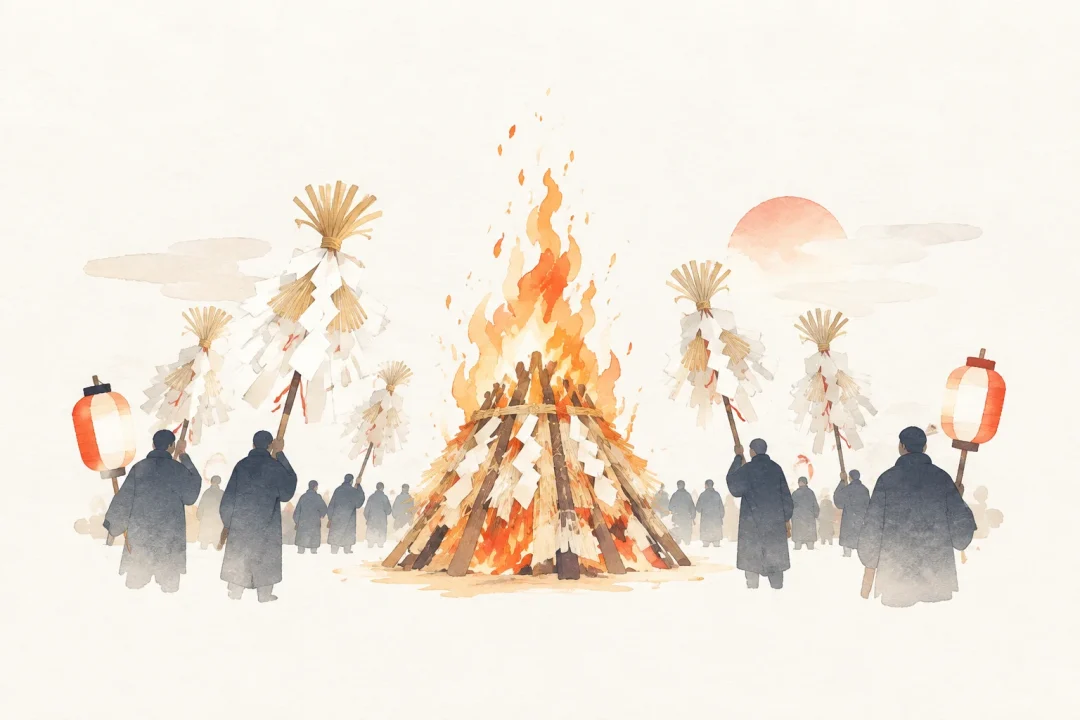
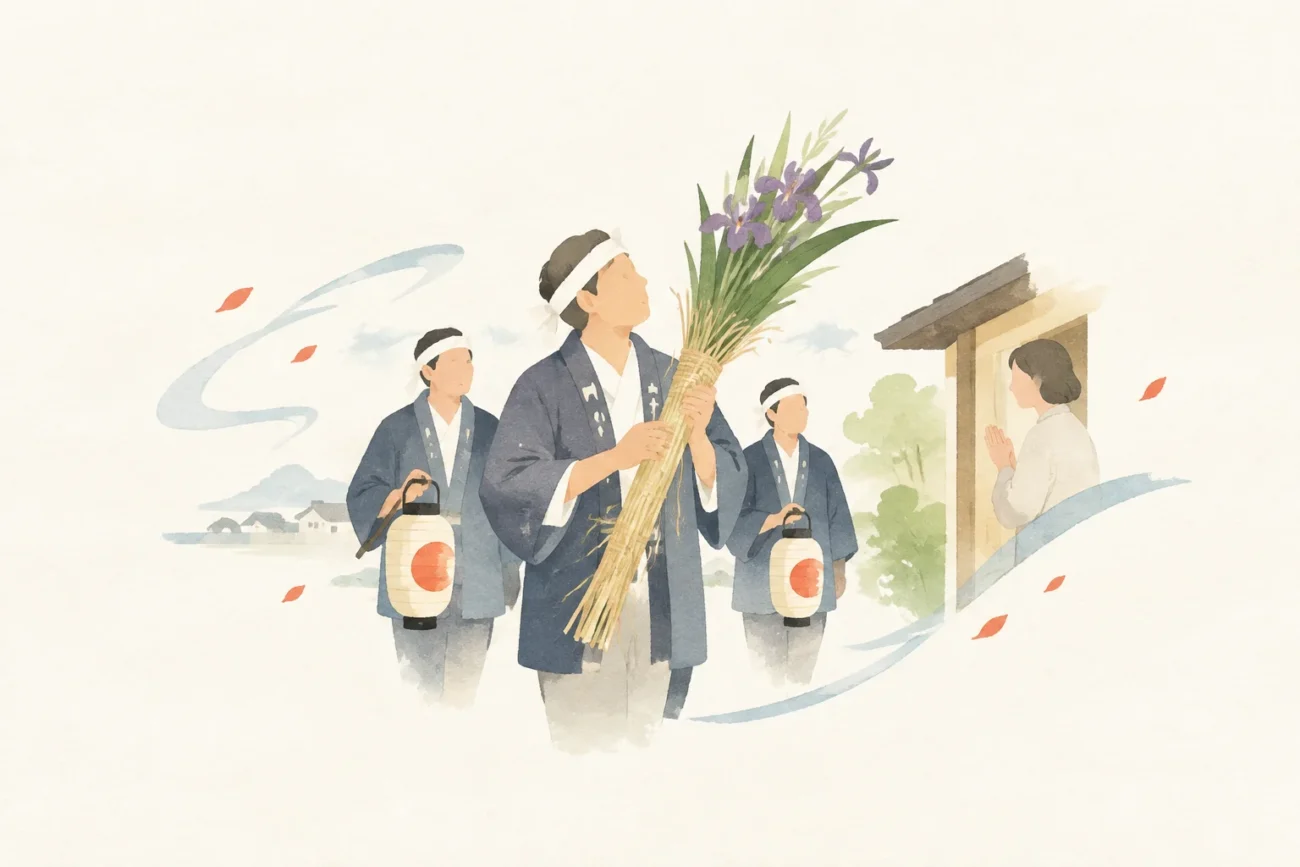
Children make straw sticks with iris leaves tucked inside, then visit each house in the district at dusk.
The event is said to involve chanting “May Shōbutsu” while striking entrances with a stick, driving away moles to pray for a good harvest, and dispelling evil influences through the spiritual power of iris.
Festival highlights
Highlights include children making straw sticks bundled with iris, and the distinctive chants as they visit the district at dusk.
At each home’s entrance, they chant “May Shōbutsu” and repeatedly strike the doorway with the straw stick.
The sound rings out, and they move on to the next house—this distinctive event takes place among the homes of the local community.
An Akahama tradition of praying for a good harvest with iris-and-straw sticks and chants
What to expect
At 9 a.m., children gather at the village shrine, Hachiman Shrine, and make sticks by bundling straw around iris leaves.
At dusk, they gather again and visit each house in the Akahama district in turn.
At the entrance, they chant “May Shōbutsu” while repeatedly striking the doorway with the stick, then move on to the next house when they have finished.
Location and access
- Venue and address
Akahama district and village shrine, Hachiman Shrine / Akahama, Namerikawa City
Address Akahama, Namerikawa City
Dates and season
- Season
Every year May 4
- Frequency
Every year
Accommodation and hotels PR
Showing nearby accommodation.
Prices and availability are current at the time of retrieval. For multi-night stays, only the first night’s price is shown. Confirm the final price and directions to the venue with the booking provider. Select your dates again when using the area search link. Search area: within 3 km of Central Toyama Prefecture / Namerikawa City (the search is not centered on the festival venue)
Nearby attractions

ほたるいかミュージアム
富山県滑川市にある博物館
Origins and History of Akahama no Shōbutsu
Akahama no Shōbutsu is believed to be one of the iris-season observances once widely held across the prefecture, though all the other such observances are said to have died out.
Today, Akahama is introduced as the only remaining example in the prefecture.
The event is associated with driving away moles to pray for a good harvest, and dispelling evil influences through the spiritual power of iris.
Official information
Namerikawa City lists Akahama no Shōbutsu as an intangible folk cultural property.
The Akahama Neighborhood Association is listed as its owner and administrator.
Akahama no Shōbutsu at a Glance
Akahama no Shōbutsu is an intangible folk event held in the Akahama district every year on May 4.
At 9 a.m., children make straw sticks with iris leaves tucked inside at the village shrine, Hachiman Shrine, then visit each house in the district at dusk.
The custom of chanting “May Shōbutsu” and striking doorways is associated with praying for a good harvest by driving away moles, and dispelling evil influences.
Sources and references
Japanese Festivals.jp Editorial Team
Celebrating local culture and helping you discover a side of Japan you never knew.
Article updated: 2026/11/11