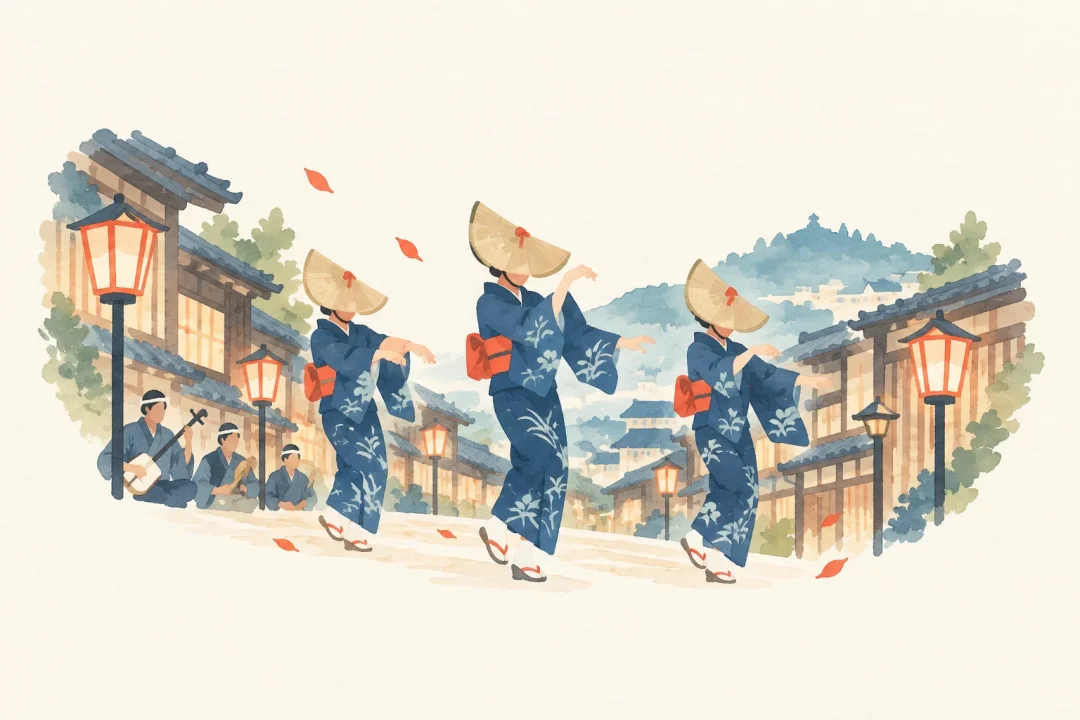
Etchu no Chigo Mai: carried onto the stage, passed down without touching the ground
Etchu no Chigo Mai
Festival information
EVENT INFORMATION- Season / frequency
- Every year, the 3rd Sunday in April, August 25, September 4 / Every year
- Location
- Kumano Shrine, Kamo Shrine, Hofukuji Temple
- Area
- Toyama Prefecture・Toyama City, Imizu City, Kurobe City(From Tokyo: approx. 2 h 10 min–2 h 40 min · bullet train)Prefecture-level estimate to a main station or airport, not the venue. Airport access, check-in and onward travel are extra; remote areas and islands can take much longer.
- Highlights and activities
- Required number of participants
- 4 child performers at each venue
- Last updated
- 2026/10/19
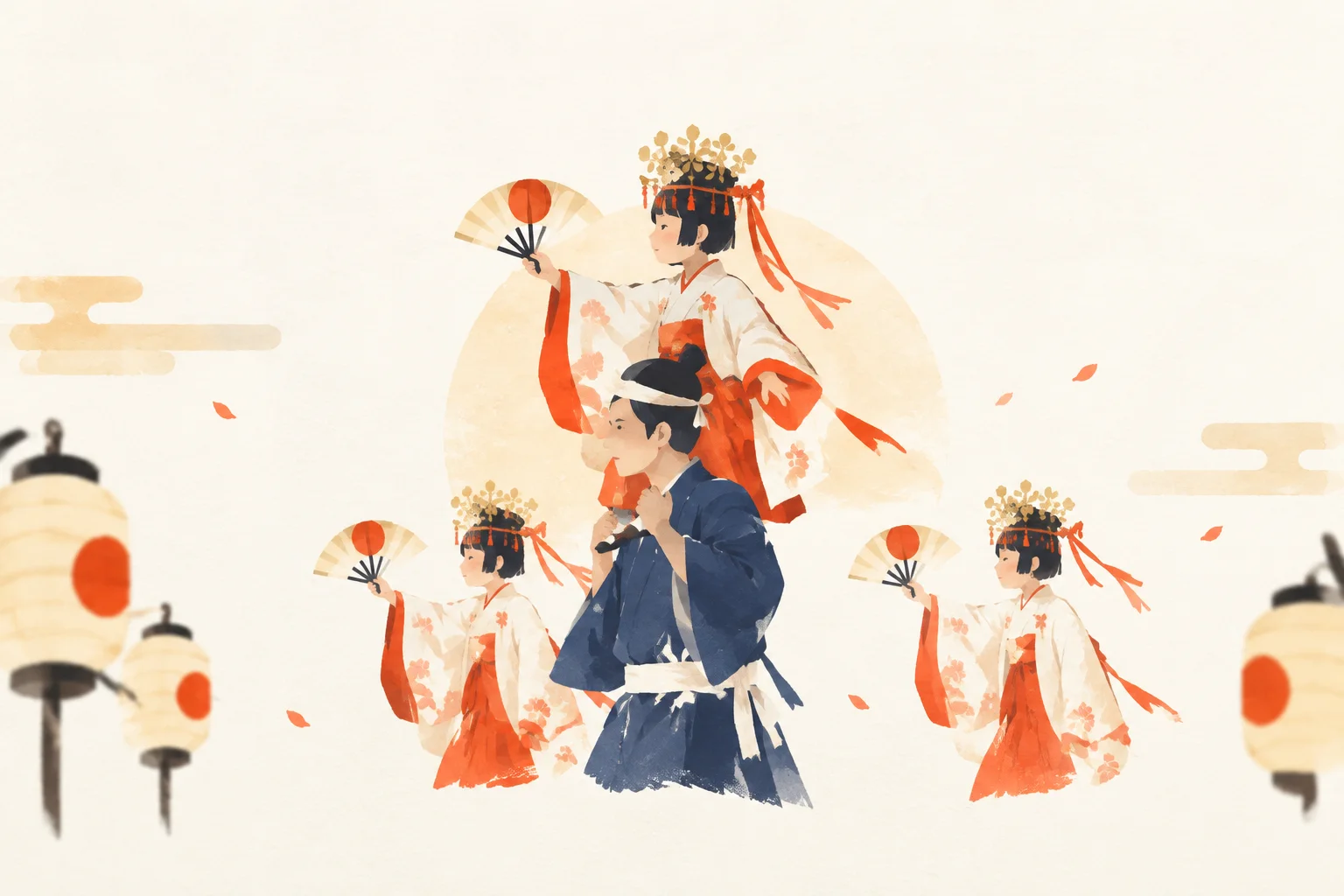
This nationally designated Important Intangible Folk Cultural Property brings together children’s dances passed down at three shrines and temples in Toyama Prefecture. The children enter the stage on adults’ shoulders and dance without touching the ground, following time-honored customs. Different pieces have been passed down in each area.
About Etchu no Chigo Mai
Etchu no Chigo Mai is the collective name for three children’s dances passed down at Kumano Shrine in Toyama City, Kamo Shrine in Imizu City, and Hofukuji Temple in Kurobe City.
All are performed at shrine festivals and Buddhist ceremonies, and share the old custom of the children not touching the ground until the dance is over.
Another key feature is that court dance and music from the Kyoto-Osaka area took root locally, with each place passing down its own pieces and techniques.
It was designated an Important Intangible Folk Cultural Property by the national government in 1982.
Source: 越中の稚児舞 | 文化遺産検索 | とやまの文化遺産 / 国指定文化財等データベース
Festival highlights
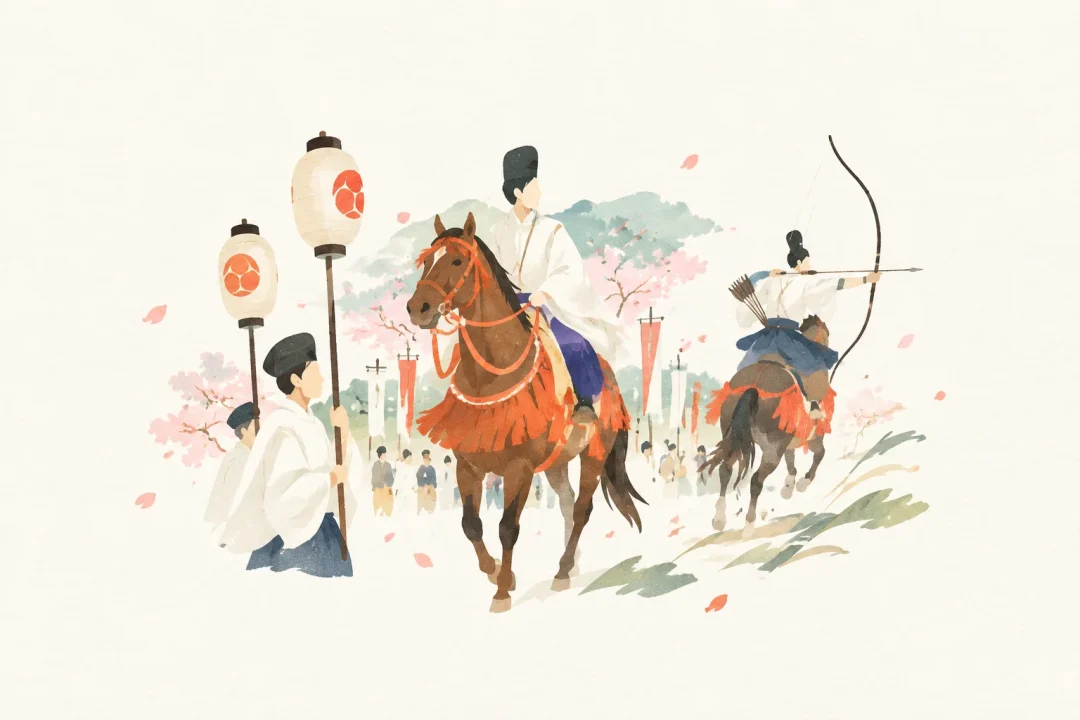
The highlight is seeing children ride on adults’ shoulders as they enter the stage and keep their feet off the ground until the dance is over.
Kumano Shrine has passed down 7 pieces, Kamo Shrine 9, and Hofukuji Temple 5, with the pieces and dance styles varying by area.
At Kamo Shrine, the children make a procession through the village before the dance. This time-honored offering continues to the accompaniment of flutes and drums.
Source: 地域伝統芸能活用センター 日本の祭り総集編
Etchu no Chigo Mai: carried onto the stage, passed down without touching the ground
What to expect
For the offering, children selected from the local community perform dances in shrine or temple precincts or on a stage.
At Kumano Shrine, the children enter the shrine after the ; at Kamo Shrine, they perform 9 pieces after a procession through the village; and at Hofukuji Temple, they are carried on adults’ shoulders between the Kannon Hall and the stage as they perform 5 pieces.
All three dances treat the children as beings connected with the gods and Buddhas, and place importance on the custom of not letting them touch the ground.
Source: 施設|とやま学遊ネット
How to take part
The performers are not open to anyone who wishes to take part; they are child performers selected from each area.
The tradition is carried on by child performers aged around 11 to 12 at Kamo Shrine, around 10 to 14 at Hōfukuji Temple, and around 8 to 9 at Kumano Shrine.
General visitors watch the , but no information is provided on how to apply to be a performer or take part in the selection process.
Location and access
- Venue and address
Performances are held at Kumano Shrine (851-1 Nakana, Fuchu-machi, Toyama City), Kamo Shrine (630 Kamo-chubu, Imizu City), and Hofukuji Temple (836 Asu, Unazuki-machi, Kurobe City).
- Train and bus
Hofukuji Temple is about a 40-minute walk from Ainoto Station on the Toyama Chihō Railway.
- By car
Kumano Shrine is about 15 minutes from the Toyama-nishi IC on the Hokuriku Expressway.
- Parking
Kumano Shrine has free parking.
Source: 国指定重要無形民俗文化財|黒部市 / 8/25 熊野神社稚児舞 - 富山市公式観光サイト
Address Kumano Shrine: 851-1 Nakana, Fuchu-machi, Toyama City / Kamo Shrine: 630 Kamo-chubu, Imizu City / Hofukuji Temple: 836 Asu, Unazuki-machi, Kurobe City
Dates and season
The annual hono dates are the 3rd Sunday in April at Hōfukuji Temple, August 25 at Kumano Shrine, and September 4 at Kamo Shrine.
The 3 Chigo Mai are not held together at one place on the same day; each is performed in connection with the festival or Buddhist service at its own shrine or temple.
Origins and History of Etchu no Chigo Mai
Etchu no Chigo Mai developed as a performing art for local festivals and Buddhist ceremonies after court dance and music from the Kyoto-Osaka area spread through Etchu and Echigo.
The dance at Kumano Shrine is said to have been introduced from Kamo Shrine around Tensho 15, while the dance at Hofukuji Temple is said to have begun as part of a project commemorating the temple’s restoration during the Bunroku era.
A document from Kyoho 16 remains at Hofukuji Temple, indicating that the dance had taken root before then.
It was designated an Important Intangible Folk Cultural Property by the national government in 1982.
Official information
The Agency for Cultural Affairs’ Database of Nationally Designated Cultural Properties describes Etchu no Chigo Mai as an Important Intangible Folk Cultural Property.
Toyama Prefecture’s cultural heritage search lists the three children’s dances at Kumano Shrine, Kamo Shrine, and Hofukuji Temple, along with their respective preservation groups.
For details about dates and venues, check the information provided by each shrine or temple and its preservation association.
Etchu no Chigo Mai at a Glance
Etchu no Chigo Mai is the collective name for three children’s dances passed down in Toyama City, Imizu City, and Kurobe City.
The old custom of the children entering the stage on adults’ shoulders and not touching the ground while dancing is shared by all three areas.
The pieces and dance styles differ from one shrine or temple to another, and local preservation groups help pass them down at festivals and Buddhist ceremonies.
Japanese Festivals.jp Editorial Team
Celebrating local culture and helping you discover a side of Japan you never knew.
Article updated: 2026/10/19
Submit information or a correction Submit photos of this festival