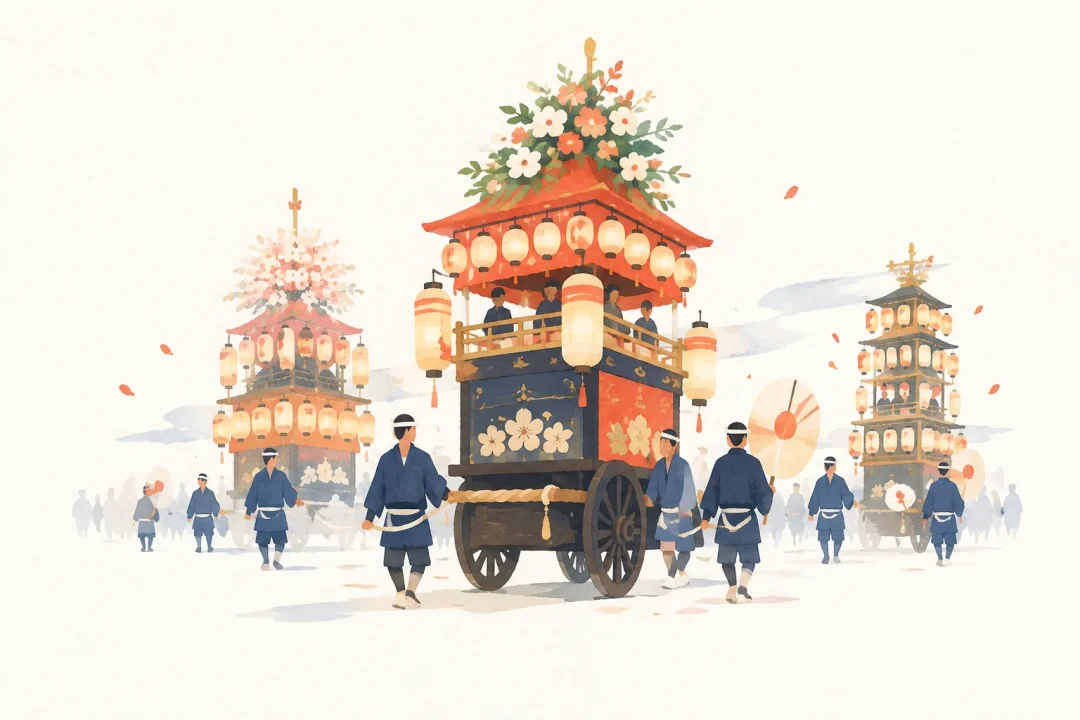
A fire festival where large gohei are burned to pray for peace and safety in Uozu throughout the year
Atagosha Fire Festival

The 2026 edition of Atagosha Fire Festival has ended.
Festival information
EVENT INFORMATION- Dates
- 2026/01/26Ended
- Season / frequency
- Every year on January 26 / Every year
- Location
- Uozu Shrine
- Area
- Toyama Prefecture・Uozu City(From Tokyo: approx. 2 h 10 min–2 h 40 min · bullet train)Prefecture-level estimate to a main station or airport, not the venue. Airport access, check-in and onward travel are extra; remote areas and islands can take much longer.
- Features
- Highlights and activities
- Wishes behind the festival
- Last updated
- 2026/10/19
A traditional fire festival held every year on January 26 in Uozu City, praying for fire prevention and household safety. Large made by each neighborhood are gathered at Uozu Shrine and burned after prayers.
About Atagosha Fire Festival
The Atagosha Fire Festival is held every year on January 26 in Uozu, Toyama Prefecture.
Offerings of large gohei are burned and dedicated to Kagutsuchi-no-Mikoto, the deity who protects against fire, in prayers for peace and safety in the community and at home, fire prevention, household safety, and good health.
The name Atagosha remains, but the current festival is held at Uozu Shrine.
Source: 【公式】魚津市観光案内公式サイト | うおっ!な魚津旅情報@北陸・魚津 魚津ライブラリ/愛宕社の火祭り / 愛宕社の火祭り - Wikipedia
Festival highlights
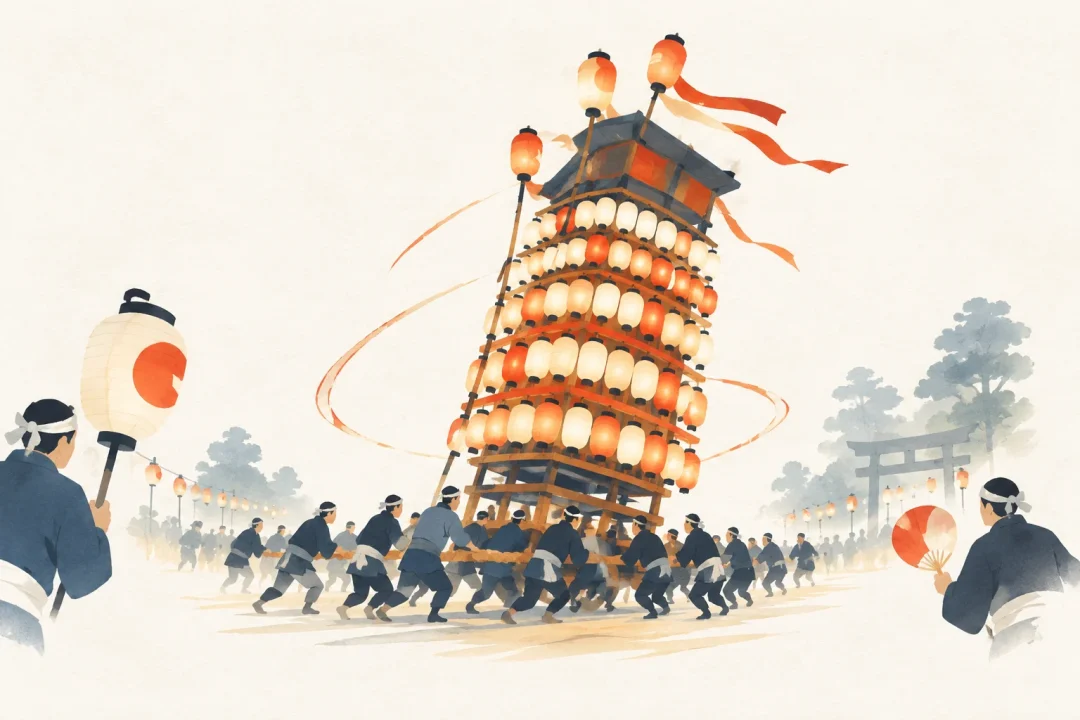
The highlight is the large gohei made by each neighborhood.
Each is distinctive, made by decorating a roughly 5–6 m-tall green bamboo pole with , a himorogi, tengu and Okame masks, a fan, and paper ornaments in gold, silver, white, and other colors. No two are alike.
On the day of the festival, several large gohei are gathered and burned to the sound of drums.
A fire festival where large gohei are burned to pray for peace and safety in Uozu throughout the year
What to expect
Before the festival, each neighborhood makes a large gohei and erects it in the town as a decoration.
On January 26, Uozu Shrine, Hachimangu Shrine, and Suwa Shrine divide the neighborhoods among them for prayers and visit the neighborhoods where large gohei have been erected.
Afterwards, the large gohei gathered in the shrine precincts are burned. Residents can also be seen bringing New Year’s decorations and calligraphy from the first writing of the year to burn.
How to take part
The festival is mainly organized by the neighborhoods and shrine, but residents can bring New Year decorations and calligraphy written for the start of the year to be burned.
Please check with Uozu Shrine before the event to find out whether members of the public can take part in running the festival, such as making the large gohei or attending prayers.
Even if you are visiting as a spectator, please take care not to interfere with the religious rites or the handling of fire.
Location and access
- Venue and address
Uozu Shrine (1-3-28 Chuo-dori, Uozu, Toyama).
The best time to see the festival is listed as around 11 a.m.
- Train and bus
Get off at Chuo-dori Event Hall-mae on the municipal bus’s city loop route.
- By car
It takes about 7 minutes from Uozu IC toward the city center.
- Parking
No parking is listed.
Source: 愛宕社の火祭り | 魚津市 | 子供とお出かけ情報「いこーよ」
Address 1-3-28 Chuo-dori, Uozu, Toyama
Dates and season
2026 Event Information (The listed dates have passed)
In 2026, the festival was held in January 26 (month), and the best time to see it is listed as around 11 a.m.
The festival is also held on January 26 in a typical year. A few days before the event, each neighborhood makes large gohei and erects them around town.
The 2026 festival date has now passed.
Accommodation and hotels PR
Showing nearby accommodation.
Prices and availability are current at the time of retrieval. For multi-night stays, only the first night’s price is shown. Confirm the final price and directions to the venue with the booking provider. Select your dates again when using the area search link. Search area: within 3 km of Central Toyama Prefecture / Uozu City (the search is not centered on the festival venue)
Tips for your visit
A fire ceremony takes place at the venue as the large gohei are burned, so please watch from a location that does not obstruct the burning area or the proceedings of the ritual.
If you plan to bring New Year’s decorations or calligraphy from the first writing of the year, check with Uozu Shrine about how to submit them.
If you are driving, consider using public transportation, as no venue parking is listed.
Nearby attractions

ミラージュランド
富山県魚津市にある遊園地

Suwa Shrine
魚津市にある神社

魚津埋没林博物館
富山県魚津市にある博物館

魚津水族館
富山県魚津市にある水族館
Origins and History of Atagosha Fire Festival
The Atagosha Fire Festival is said to have begun in response to a series of major fires in the town of Uozu around the middle of the Edo period, to raise awareness of fire prevention.
Its origins lie in the dedication of large gohei modeled after firefighters’ standards to Atagosha, where the deity who protects against fire is enshrined.
Atagosha was merged with Uozu Shrine in 1966, and the current festival is held at Uozu Shrine.
In 2007, it was selected for Toyama’s 100 Cultural Properties.
Official information
The official Uozu City tourism website features the Atagosha Fire Festival among Uozu City’s festivals and events.
The festival is organized by Uozu Shrine. The listed contact number is 0765-24-8883.
The event information also includes the date and time, venue, and transportation details.
Atagosha Fire Festival at a Glance
The Atagosha Fire Festival is a traditional event in which large gohei made by neighborhoods across Uozu City are burned in prayers for fire prevention and peace in the community and at home.
The 5–6 m-tall large gohei are decorated with masks such as tengu and Okame, and each neighborhood’s has a different appearance.
In 2026, it was held at Uozu Shrine on January 26, and the best time to see it was listed as around 11 a.m.
Japanese Festivals.jp Editorial Team
Celebrating local culture and helping you discover a side of Japan you never knew.
Article updated: 2026/10/19
Submit information or a correction Submit photos of this festival