The simple yet profound world of kagura in Tomiyama, Toyone Village, woven from masks and dance
O-kagura Festival
Festival information
EVENT INFORMATION- Event status
- Cancelled
- Season / frequency
- January 3 (currently suspended) / Suspended since 2026
- Location
- Kumano
- Area
- Aichi Prefecture・Toyone Village(From Tokyo: approx. 1 h 40 min–2 h · bullet train)Prefecture-level estimate to a main station or airport, not the venue. Airport access, check-in and onward travel are extra; remote areas and islands can take much longer.
- Features
- Highlights and activities
- Last updated
- 2026/11/14
O- Festival, passed down at Kumano Jinja in the Tomiyama area of Toyone Village, is a folk performing art known for its masked dances and humorous performances.
About O-kagura Festival
O-kagura Festival is a folk performing arts festival passed down at Kumano Jinja in the Tomiyama area of Toyone Village.
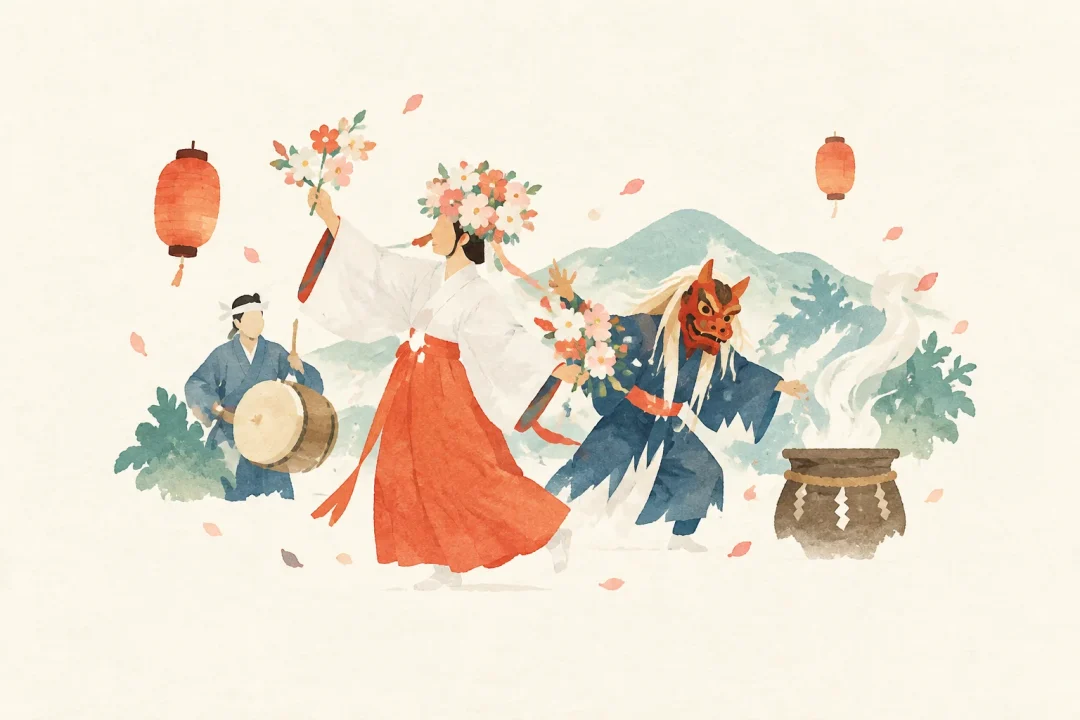
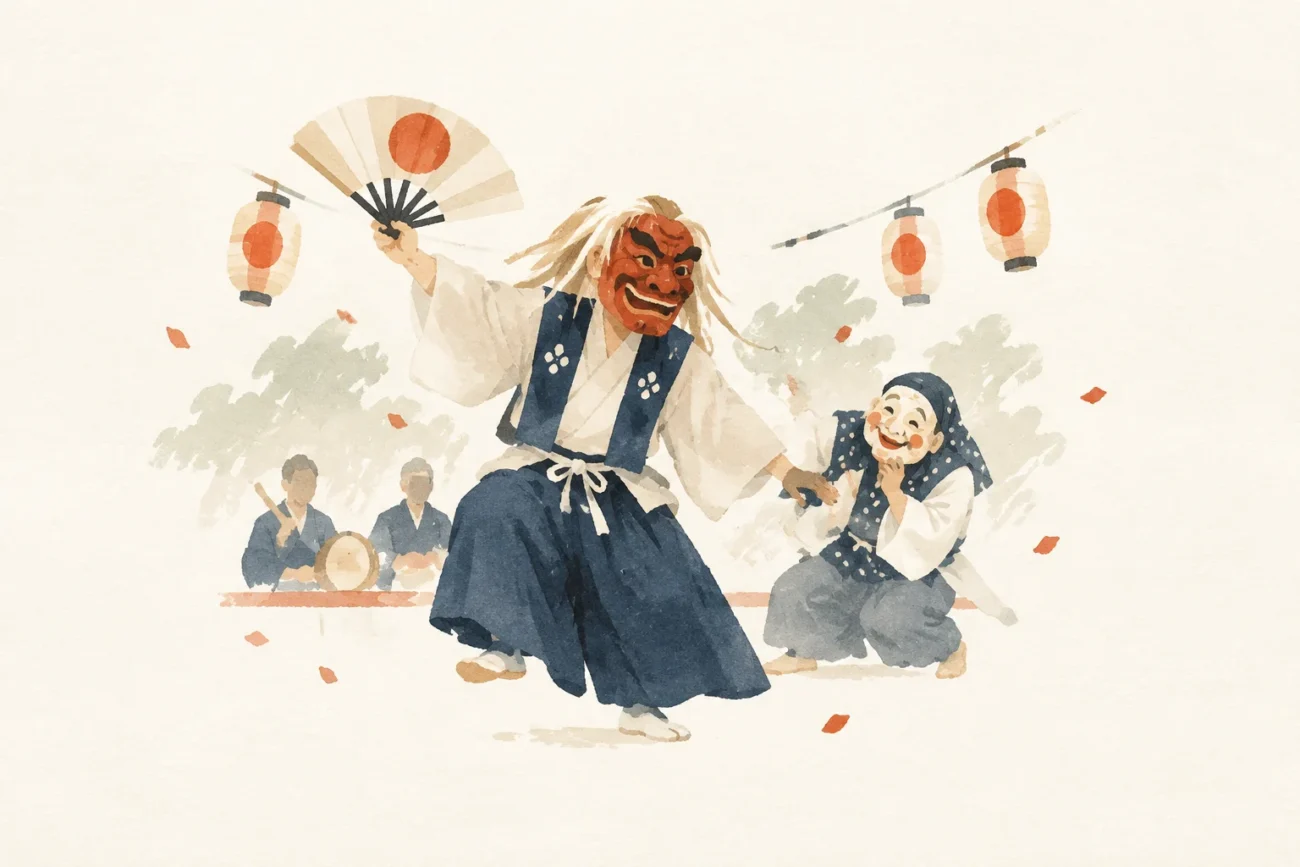
The performances combine dances for the deities with humor, including “Hanauri,” in which a performer wears a Kurojō mask, pinches their nose, and jumps about, and “Shirami Fukui,” in which a performer wears ragged clothes and pretends to pick off lice.
In the Tomiyama area, the festival has been passed down as an event marking the start of the New Year.
Festival highlights
The highlights are the distinctive performances featuring masks and costumes.
In “Hanauri,” the performer wears a Kurojō mask, pinches their nose, and jumps about while shouting.
In “Shirami Fukui,” the performer wears ragged clothes and pretends to pick off lice, making gestures as if scratching various parts of the body.
Other pieces passed down include “Kyōdai Oni,” “Donzuku,” “Yubayashi no Mai,” and “Ise no Hana no Mai.”
The simple yet profound world of kagura in Tomiyama, Toyone Village, woven from masks and dance
What to expect
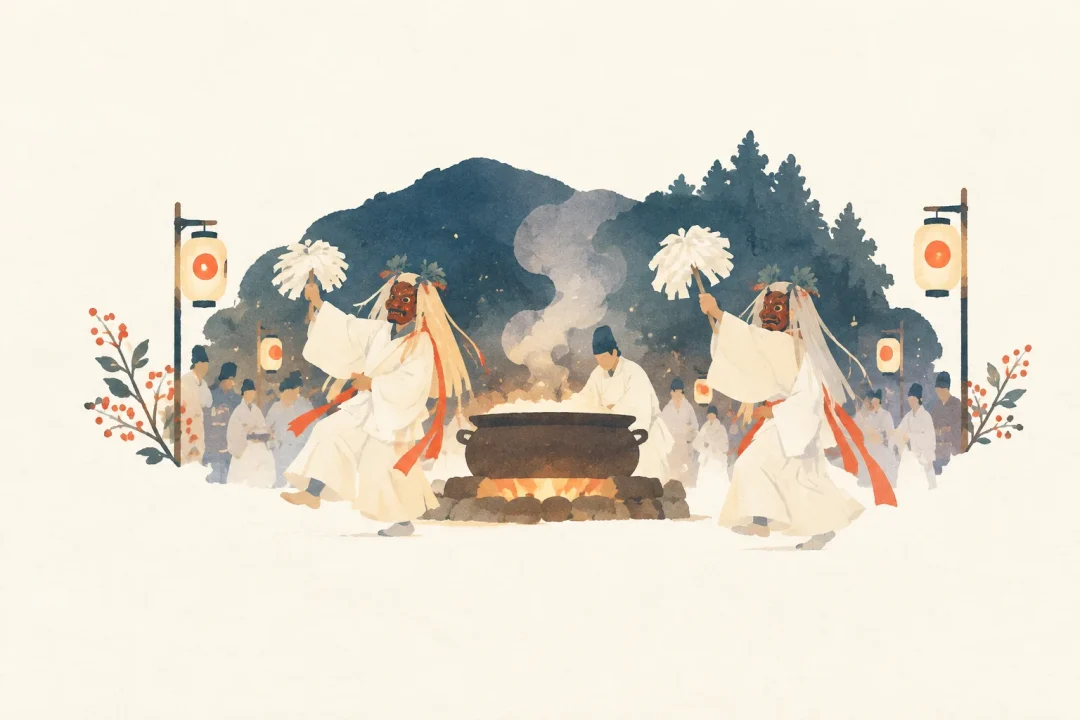
The festival consisted of “yudate kagura” and “theatrical performances.”
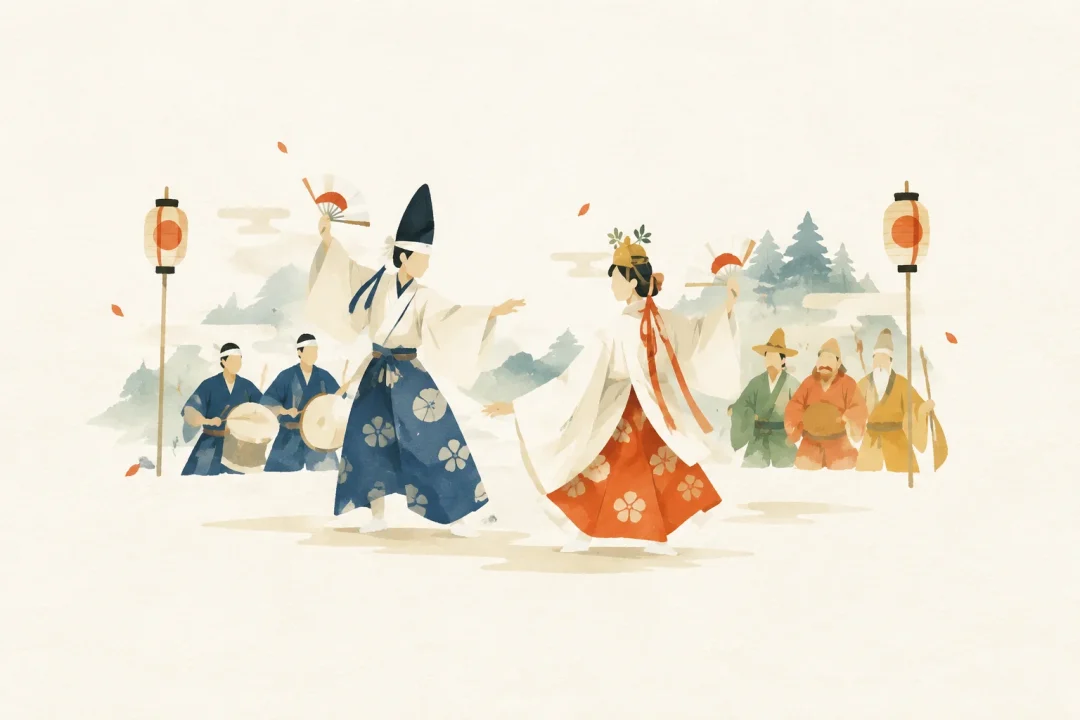
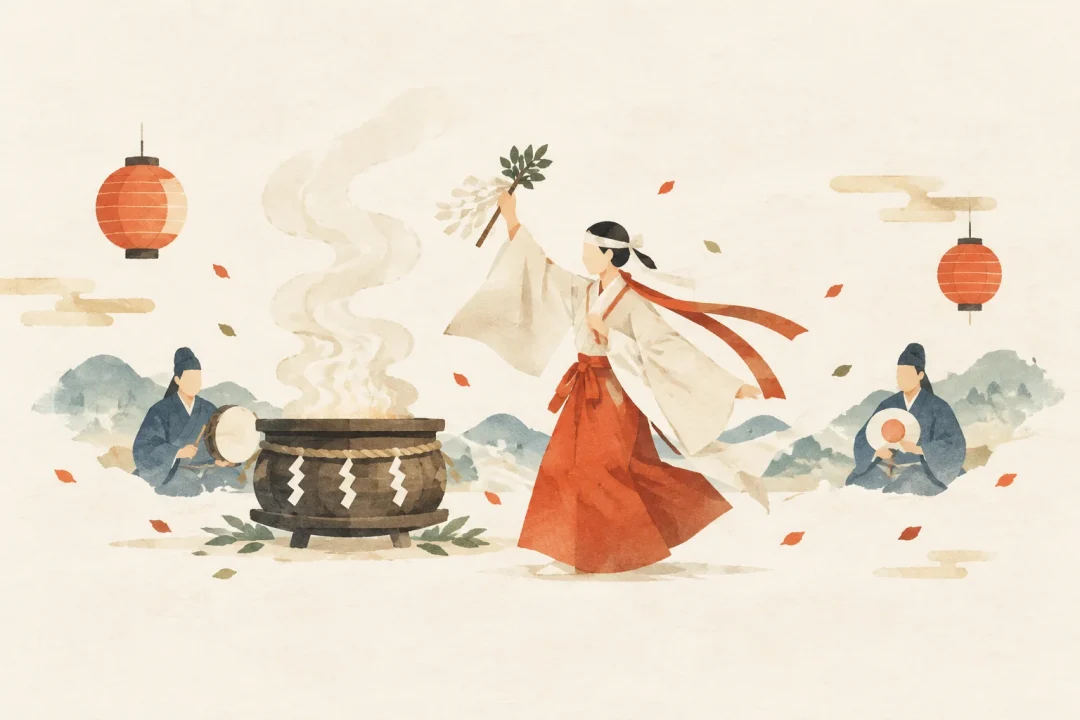
During the yudate ritual, hot water is offered to the deities. The theatrical performances include the “Donzuku,” dances by demons and brother demons, “Hanauri,” and “Shirami Fukui / Jorō Mask.”
The movements of the brother demons are said to represent the process of felling trees and preparing timber. Their powerful leaps and turns, stamping loudly on the floor, are also distinctive.
Location and access
- Venue and address
Kumano Jinja, 4 Ōtani, Tomiyama, Toyone Village
- Train and bus
Get off at Ōzore Station on the JR Iida Line
Address 4 Ōtani, Tomiyama, Toyone Village, Kitashitara District, Aichi Prefecture
Dates and season
Suspended in 2026.
Accommodation and hotels PR
Showing nearby accommodation.
Prices and availability are current at the time of retrieval. For multi-night stays, only the first night’s price is shown. Confirm the final price and directions to the venue with the booking provider. Select your dates again when using the area search link. Search area: within 3 km of Central Aichi Prefecture / Toyone Village (the search is not centered on the festival venue)
Origins and History of O-kagura Festival
Kumano Jinja in the Ōtani area is said to have originated when a family of the Kumano bettō opened the settlement in Shōhei 1 (1342) and enshrined the Kumano Sanzan deities.
The festival consisted of yudate kagura and theatrical performances. It is explained that, after the ban on Shugendō and the haibutsu kishaku movement in the early Meiji period, it took its present form, with Buddhist elements reduced from its original syncretic character.
Researchers are said to have called it the “O-kagura Festival” in the 10s of the Showa era, and the name is believed to have spread from then on.
Official information
Toyone Village Board of Education, telephone: 0536-85-1611
O-kagura Festival at a Glance
O-kagura Festival is a folk performing art passed down at Kumano Jinja in the Tomiyama area of Toyone Village. It is known for masked dances and humorous performances.
Well-known pieces include “Hanauri,” “Shirami Fukui,” and “Kyōdai Oni.” The festival consisted of yudate kagura and theatrical performances.
It is listed as suspended in 2026.
Japanese Festivals.jp Editorial Team
Celebrating local culture and helping you discover a side of Japan you never knew.
Article updated: 2026/11/14