Tengu and a white fox apply red pigment in Toyokawa’s unusual winter festival
Donki at Choshoji Temple
Festival information
EVENT INFORMATION- Dates
- 2026/12/20Scheduled
- Season / frequency
- Every year, the 3rd Sunday in December / Every year
- Location
- Around Choshoji Temple (procession: Choshoji Temple ⇔ Myoo-in)
- Area
- Aichi Prefecture・Toyokawa City(From Tokyo: approx. 1 h 40 min–2 h · bullet train)Prefecture-level estimate to a main station or airport, not the venue. Airport access, check-in and onward travel are extra; remote areas and islands can take much longer.
- Features
- Highlights and activities
- Wishes behind the festival
- Participation / viewing
- Spectators welcome
- Participation fee
- Free (admission)
- Last updated
- 2026/10/26
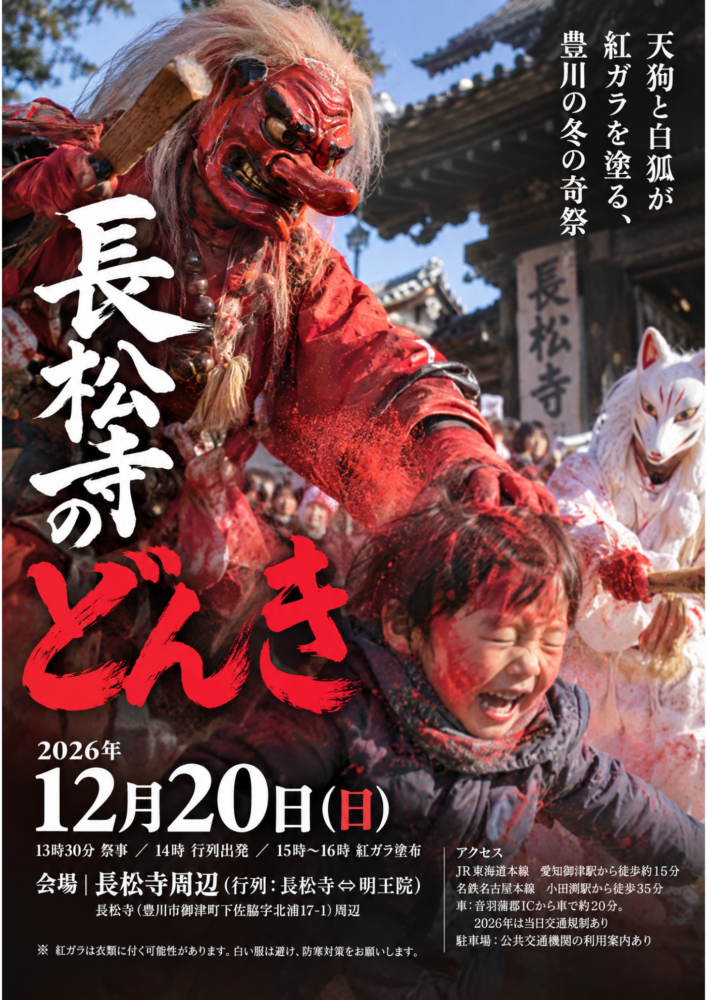
Donki at Choshoji Temple is a traditional event held every winter in Mitsu Town, Toyokawa City. A distinctive ritual in which a red tengu, a blue tengu, and a white fox chase children and smear them with beni-gara is a highlight. It is held as part of the fire-prevention festival associated with Akiba worship at Choshoji Temple.
About Donki at Choshoji Temple
Donki at Choshoji Temple is a traditional event held every winter in Mitsu Town, Toyokawa City.
Held alongside the fire-prevention festival for Akiba Sanshaku Daigongen enshrined at Choshoji Temple, the event features otherworldly divine messengers chasing children and smearing them with beni-gara.
The event is said to combine Buddhist beliefs in protection from fire with folk customs for warding off misfortune, reflecting prayers for protection from fire and continued good health.
It is also designated an Intangible Folk Cultural Property of Aichi Prefecture.
Festival highlights
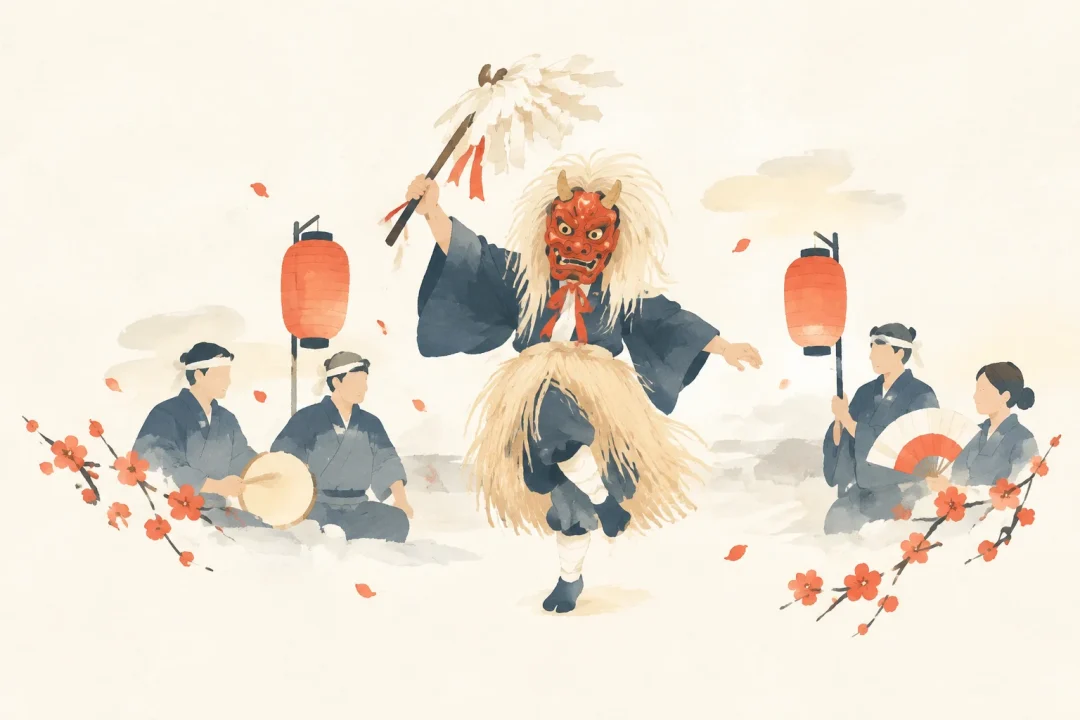
The highlight is the ritual of applying beni-gara, featuring three figures: a red tengu, a blue tengu, and a white fox.
The divine messengers chase children while carrying a shumoku mallet or a large palm-shaped fan, then smear beni-gara on the bodies of children they catch.
The white fox appears in white robes and is responsible for applying the beni-gara.
The red color of the beni-gara is believed to ward off illness and bring divine protection into the body.
Tengu and a white fox apply red pigment in Toyokawa’s unusual winter festival
What to expect
The event begins with a ceremony at Choshoji Temple, followed by a procession between Choshoji Temple and Myoo-in.
After that, the tengu and white fox chase the children and perform the ritual of smearing them with beni-gara.
Prayers to Akiba Daigongen are also held at Choshoji Temple, and visitors are invited to experience having beni-gara applied while praying for continued good health.
The procession and the application of beni-gara offer a glimpse into beliefs in protection from fire and warding off misfortune.
How to take part
At the event, visitors can watch the tengu and white fox chase children, and information also describes an experience of having beni-gara applied while praying for continued good health.
No information is provided about registration, reservations, or age requirements.
Location and access
- Venue and address
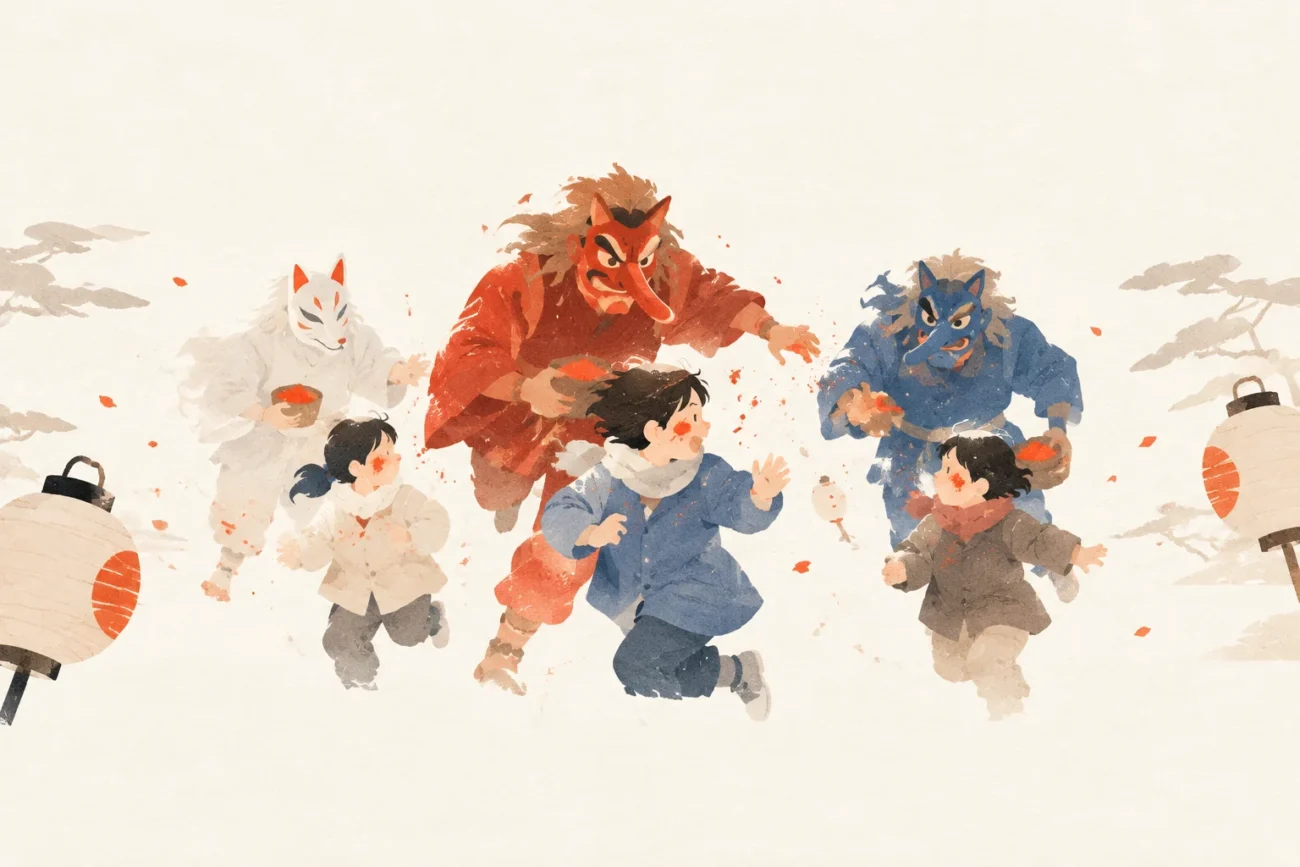
Around Choshoji Temple (17-1 Kitoura, Shimosawaki, Mitsu Town, Toyokawa City)
- Train and bus
JR Tokaido Main Line, about 15 minutes on foot from Aichi-Mito Station / Meitetsu Nagoya Main Line, 35 minutes on foot from Odabuchi Station
- By car
About 20 minutes by car from Otowa-Gamagori IC.
Traffic restrictions will be in place on the day in 2026
- Parking
Information recommends using public transportation
Address 17-1 Kitoura, Shimosawaki, Mitsu Town, Toyokawa City, Aichi Prefecture
Dates and season
It is scheduled to take place on December 20, 2026 (Sunday).
The ceremonies begin at 1:30 p.m., the procession sets off between Choshoji Temple and Myoo-in at 2 p.m., and the white fox and tengu go around applying beni-gara from 3 p.m. to 4 p.m.
Accommodation and hotels PR
Showing nearby accommodation.
Prices and availability are current at the time of retrieval. For multi-night stays, only the first night’s price is shown. Confirm the final price and directions to the venue with the booking provider. Select your dates again when using the area search link. Search area: within 3 km of Central Aichi Prefecture / Toyokawa City (the search is not centered on the festival venue)
Tips for your visit
Beni-gara is a pigment and may stain clothing, so visitors are advised to avoid wearing white.
Visitors are also advised to dress warmly.
If you plan to drive, check the information about public transportation as well, since the 2026 event information indicates that traffic restrictions will be in place that day.
Nearby attractions

御油の松並木資料館
愛知県豊川市の博物館・美術館のスポットです。

砥鹿神社
愛知県豊川市にある神社

豊川市桜ヶ丘ミュージアム
愛知県豊川市にある博物館と美術館の機能を持つ複合文化施設
Origins and History of Donki at Choshoji Temple
Donki is an event held alongside the fire-prevention festival for Akiba Sanshaku Daigongen at Choshoji Temple, and is said to date back to before the Edo period.
The event carries on a tradition that blends Buddhist beliefs in protection from fire with folk customs for warding off misfortune. Beni-gara has long been imbued with the meaning of warding off illness as a color of protection and life.
There are theories that the name “Donki” comes from the wooden stick carried by the white fox or from the sound made when it is struck.
Official information
The Toyokawa City Tourism Association’s event information provides details on the 2026 date, venue, times, access, and highlights.
Aichi Prefecture’s introduction to local cultural resources lists Donki at Choshoji Temple as part of the fire-prevention festival for Akiba Sanshobo Daigongen.
Donki at Choshoji Temple at a Glance
Donki at Choshoji Temple is a traditional event in Mitsu Town, Toyokawa City, held alongside the fire-prevention festival associated with Akiba worship.
In 2026, the schedule lists ceremonies at 1:30 p.m. on December 20 (Sunday), the procession setting off at 2 p.m., and beni-gara being applied from 3 p.m. to 4 p.m.
A red tengu, a blue tengu, and a white fox appear, conveying prayers for protection from fire and continued good health through distinctive gestures and beni-gara.
Japanese Festivals.jp Editorial Team
Celebrating local culture and helping you discover a side of Japan you never knew.
Article updated: 2026/10/26
Submit information or a correction Submit photos of this festival