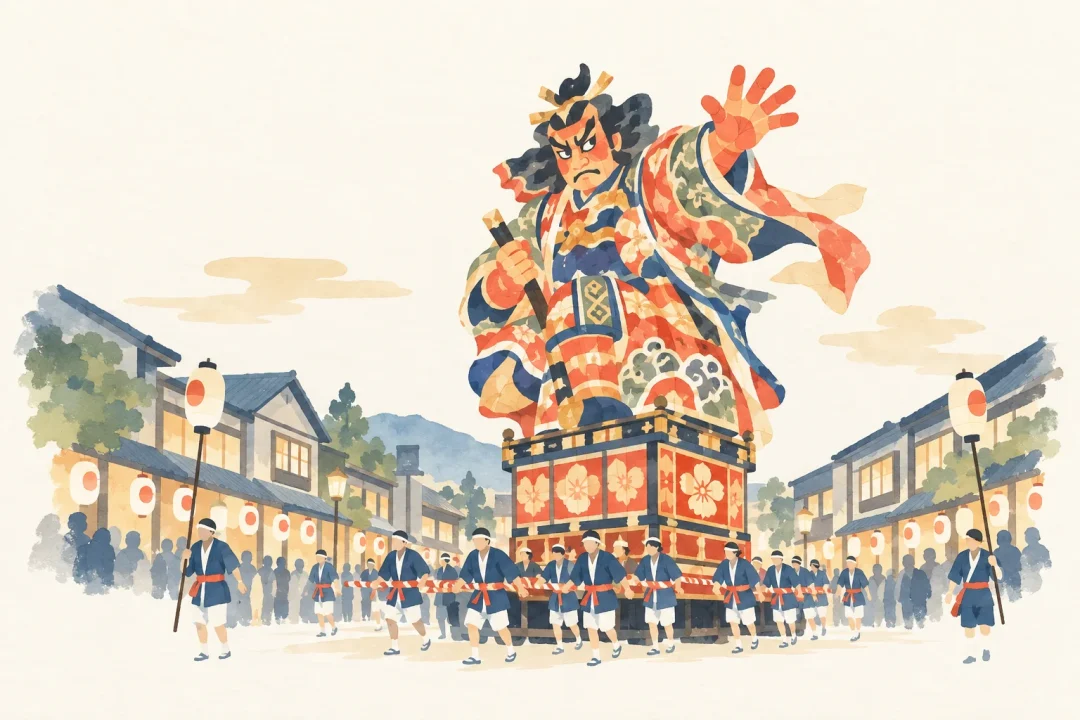
Tsunuki’s dance of gratitude for a bountiful harvest, passed down through two concentric circles, gongs, and taiko
Tsunuki Hōsai Taiko Dance
Festival information
EVENT INFORMATION- Season / frequency
- Every year on October 27 / Every year
- Location
- Amenominakanushi Shrine
- Area
- Kagoshima Prefecture・Minamisatsuma City(From Tokyo: approx. 1 h 50 min–2 h 20 min · flight time only)Prefecture-level estimate to a main station or airport, not the venue. Airport access, check-in and onward travel are extra; remote areas and islands can take much longer.
- Highlights and activities
- Wishes behind the festival
- Required number of participants
- 23 people
- Last updated
- 2026/11/13
A traditional Tsunuki performing art using gongs and , dedicated at the annual festival of Amenominakanushi Shrine. Its features include 23 dancers arranged in two concentric circles and the “Mikki” dance performed before the dedication.
About Tsunuki Hōsai Taiko Dance
The Tsunuki Hōsai Taiko Dance is a taiko dance dedicated at the annual festival of Amenominakanushi Shrine in Tsunuki, Kaseda, Minamisatsuma City.
It is thought to have developed into a dance using gongs and taiko to celebrate victory and give thanks for a bountiful harvest.
It is dedicated every year on October 27 and is designated an intangible folk cultural property of Kagoshima Prefecture.
Festival highlights
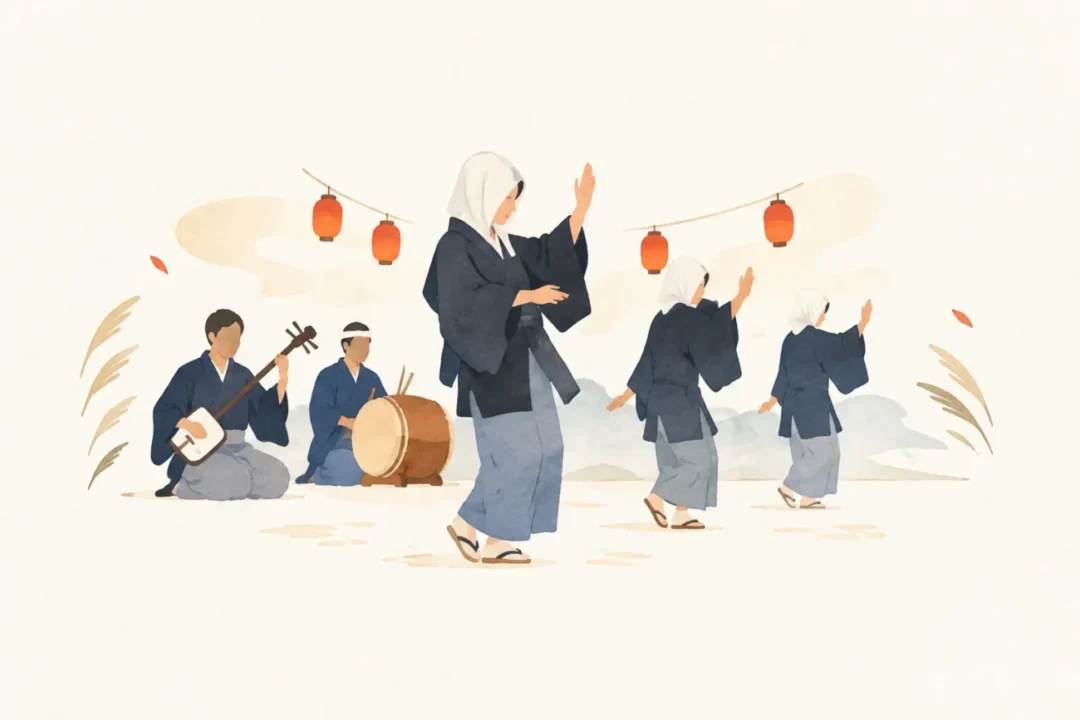
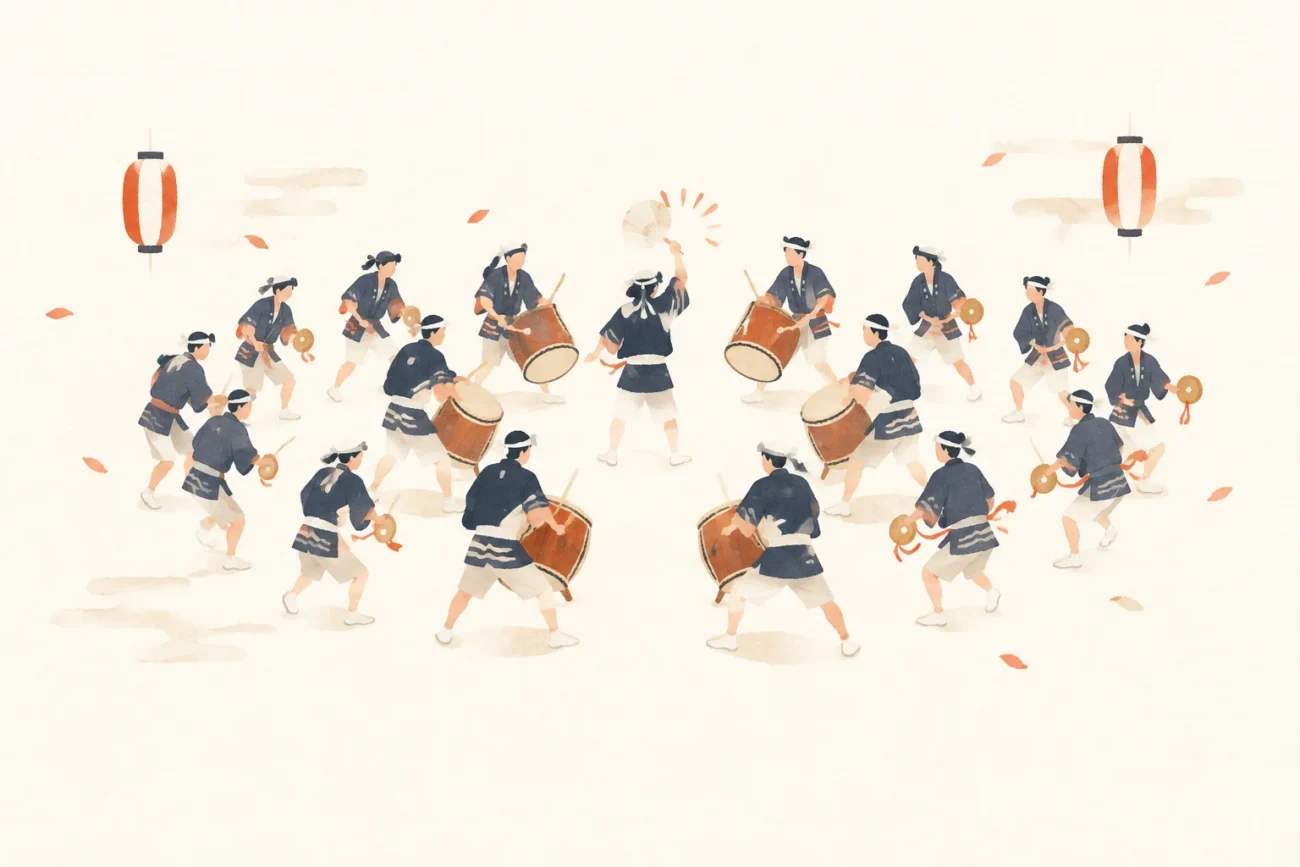
The dancers form two circles around shirasu piled in the center: 2 small-taiko players and 2 gong players make up the inner circle, surrounded by 16 large-taiko players.
Partway through, 3 singers line up outside the gong players, bringing the total to 23.
The “Mikki,” a circle dance performed before the dedication, is unusual and rarely seen in other taiko dances.
Tsunuki’s dance of gratitude for a bountiful harvest, passed down through two concentric circles, gongs, and taiko
What to expect
During the dedication, 8 dances are performed in the Mae-niwa and 9 in the Ushiro-niwa.
The large taiko are played gently to avoid making a loud sound, and before the dances, performers do a circle dance called “Mikki.”
Another guide says that after the dedication at the shrine, the three taiko dance groups return to their respective districts and dance until evening.
How to take part
必要人数:23人
Location and access
- Venue and address
Amenominakanushi Shrine (12072 Tsunuki, Kaseda, Minamisatsuma City)
Address 12072 Tsunuki, Kaseda, Minamisatsuma City
Dates and season
- Season
Every year on October 27
- Frequency
Every year
Accommodation and hotels PR
Showing nearby accommodation.
Prices and availability are current at the time of retrieval. For multi-night stays, only the first night’s price is shown. Confirm the final price and directions to the venue with the booking provider. Select your dates again when using the area search link. Search area: within 3 km of Central Kagoshima Prefecture / Minamisatsuma City (the search is not centered on the festival venue)
Origins and History of Tsunuki Hōsai Taiko Dance
Some say the dance originated in mythology or in celebrations of Minamoto no Yoritomo’s founding of the Kamakura shogunate.
Another theory is that it developed from dances influenced by nenbutsu odori, as well as rainmaking and insect-chasing dances performed by farmers, into a dance using gongs and taiko to celebrate victory and give thanks for a bountiful harvest.
It was designated an intangible folk cultural property of Kagoshima Prefecture on June 5, Showa 39 (1964).
Official information
The Kagoshima Prefecture guide to the “Tsunuki Hōsai Taiko Dance” includes its origins, dance formations, dedication date, venue, and cultural-property designation.
For inquiries, contact Minamisatsuma City Hall.
Tsunuki Hōsai Taiko Dance at a Glance
The Tsunuki Hōsai Taiko Dance is a prefecturally designated intangible folk cultural property, dedicated at Amenominakanushi Shrine in Tsunuki, Kaseda, Minamisatsuma City.
Its distinctive features include two concentric circles formed by small-taiko players, gong players, large-taiko players, and singers, as well as the “Mikki” dance performed before the dedication.
The number of dances differs between the Mae-niwa and Ushiro-niwa, and the dance has been passed down as an expression of gratitude for a bountiful harvest.
Sources and references
Japanese Festivals.jp Editorial Team
Celebrating local culture and helping you discover a side of Japan you never knew.
Article updated: 2026/11/13