An Obon event on Akusekijima where masked visiting deities cleanse impurity with red clay
The Boze of Akusekijima
Festival information
EVENT INFORMATION- Season / frequency
- Every year, day 16 of lunar month 7 / Every year
- Location
- School grounds of Akusekijima Elementary and Junior High School
- Area
- Kagoshima Prefecture・Toshima Village(From Tokyo: approx. 1 h 50 min–2 h 20 min · flight time only)Prefecture-level estimate to a main station or airport, not the venue. Airport access, check-in and onward travel are extra; remote areas and islands can take much longer.
- Highlights and activities
- Wishes behind the festival
- Last updated
- 2026/11/12
On Akusekijima in Toshima Village, Kagoshima Prefecture, the visiting deity Boze appears at the end of on the lunar calendar. This distinctive Obon event features three young men covered with masks and binro palm leaves, holding poles smeared with red clay.
About The Boze of Akusekijima
The Boze of Akusekijima is an Obon event in Akusekijima, Toshima Village, welcoming a visiting deity who appears at the end of Obon on the lunar calendar.
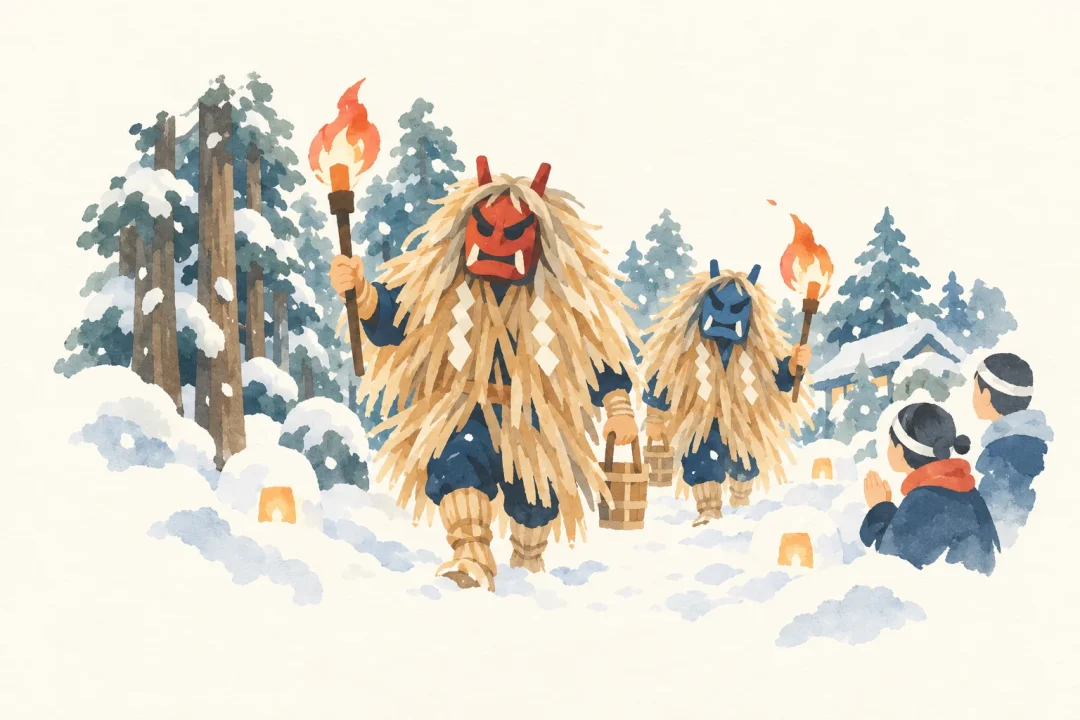
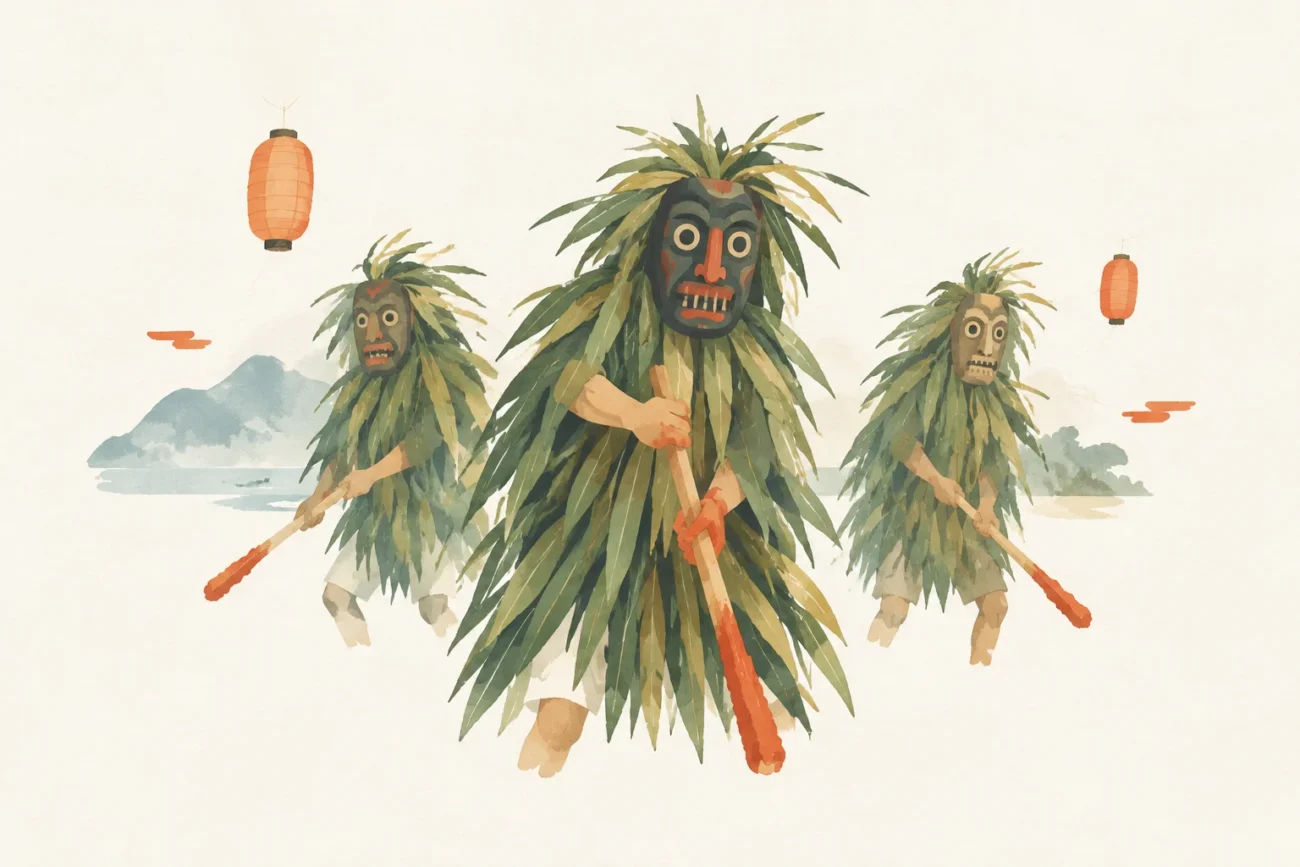
Boze appear wearing masks with large ears, eyes, and mouths and long noses, with their bodies covered in leaves of the binro palm.
They are believed to be deities who cleanse villagers of impurity, and tradition holds that having red clay applied to you brings blessings.
It was designated a National Important Intangible Folk Cultural Property in 2015 and registered as a constituent event of UNESCO Intangible Cultural Heritage in 2018.
Festival highlights
A highlight is seeing three young men dressed as Boze, their bodies covered with masks and plants.
Boze carry long poles called “Boze-mara,” smeared with red clay, and chase women and children.
Cultural property descriptions explain that they appear in a plaza, led by the sound of a summons , and chase the spectators, filling the area with laughter and shouts.
Having red clay applied is believed to bring the benefit of warding off evil spirits, and women are also said to receive the blessing of fertility.
An Obon event on Akusekijima where masked visiting deities cleanse impurity with red clay
What to expect
During the event, Boze appear in the plaza where people gather for , led by the sound of the summons taiko.
Three young men dress as Boze and use long poles smeared with red clay to chase women, children, and spectators.
Having red mud applied is believed to bring the benefit of warding off evil spirits, and women in particular are said to be blessed with children.
Current information identifies the event venue as the school grounds of Akusekijima Elementary and Junior High School.
How to take part
For visitors from outside the island, Toshima Village runs the “Tokara Tourism Program (Boze Tour),” with overnight stays aboard the ship.
Tour information is announced on the Toshima Village website around July each year.
Visitors are advised that many accommodation facilities on the island close during the Obon period on the lunar calendar, making it difficult to secure a place to stay.
Location and access
- Venue and address
School grounds of Akusekijima Elementary and Junior High School / Akusekijima, Toshima Village, Kagoshima Prefecture
- Train and bus
None
- By car
The only access to Akusekijima is Ferry Toshima 2 / No rental cars, rental bicycles, or taxis on the island
- Parking
Not stated
売店から会場まで:約500メートル、徒歩約6分/港から悪石島売店まで約2km、徒歩約30分
Address Akusekijima, Toshima Village, Kagoshima Prefecture
Dates and season
- Season
Every year, day 16 of lunar month 7
- Frequency
Every year
Accommodation and hotels PR
Showing nearby accommodation.
Prices and availability are current at the time of retrieval. For multi-night stays, only the first night’s price is shown. Confirm the final price and directions to the venue with the booking provider. Select your dates again when using the area search link. Search area: within 3 km of Central Kagoshima Prefecture / Toshima Village (the search is not centered on the festival venue)
Tips for your visit
There are no restaurants, supermarkets, or convenience stores on the island; the only place to buy food is the Akusekijima island shop.
売店の営業時間は11:00~13:00、16:00~18:00で、港から徒歩約30分、会場から徒歩約6分です。
There are no rental cars, rental bicycles, or taxis on the island, so you will need to plan ahead for transportation and food supplies.
Nearby attractions
Nearby sightseeing information includes the Toshima Village Historical and Folklore Museum, Nakanoshima Observatory, Mount Mitake, and Yaruse Lighthouse.
Hot springs in the island region include Yudomari Hot Spring on Kodakara Island and Higashiku and Nishiku Hot Springs on Nakanoshima.
Since distances from Akusekijima and travel times are not provided for each facility, treat this as information about destinations across the islands.
Origins and History of The Boze of Akusekijima
The Boze of Akusekijima is considered a typical example of visiting-deity events in the Tokara Islands.
On the final day of Obon day 16 of lunar month 7, Boze appear wearing masks painted with red clay or ink and adorned with binro palm leaves, palm bark, and tsugu leaves.
2015年には国の重要無形民俗文化財に指定され、2018年には「来訪神:仮面・仮装の神々」の構成行事の一つとしてユネスコ無形文化遺産に登録されました。
Official information
Official information includes Toshima Village’s “About Akusekijima,” accommodation facilities, the Toshima Village website, and information about Ferry Toshima 2.
Information about Boze tours for visitors from outside the island is announced on the Toshima Village website around July each year.
The Boze of Akusekijima at a Glance
The Boze of Akusekijima is a traditional event in Akusekijima, Toshima Village, welcoming a visiting deity who appears at the end of Obon on the lunar calendar.
Three young men, covered with masks and binro palm leaves, appear led by the summons taiko and chase the spectators with long poles smeared with red clay.
The red clay is believed to bring the benefit of warding off evil spirits and the blessing of fertility. The event is designated a National Important Intangible Folk Cultural Property and is inscribed on UNESCO’s Intangible Cultural Heritage list.
Sources and references
Japanese Festivals.jp Editorial Team
Celebrating local culture and helping you discover a side of Japan you never knew.
Article updated: 2026/11/12