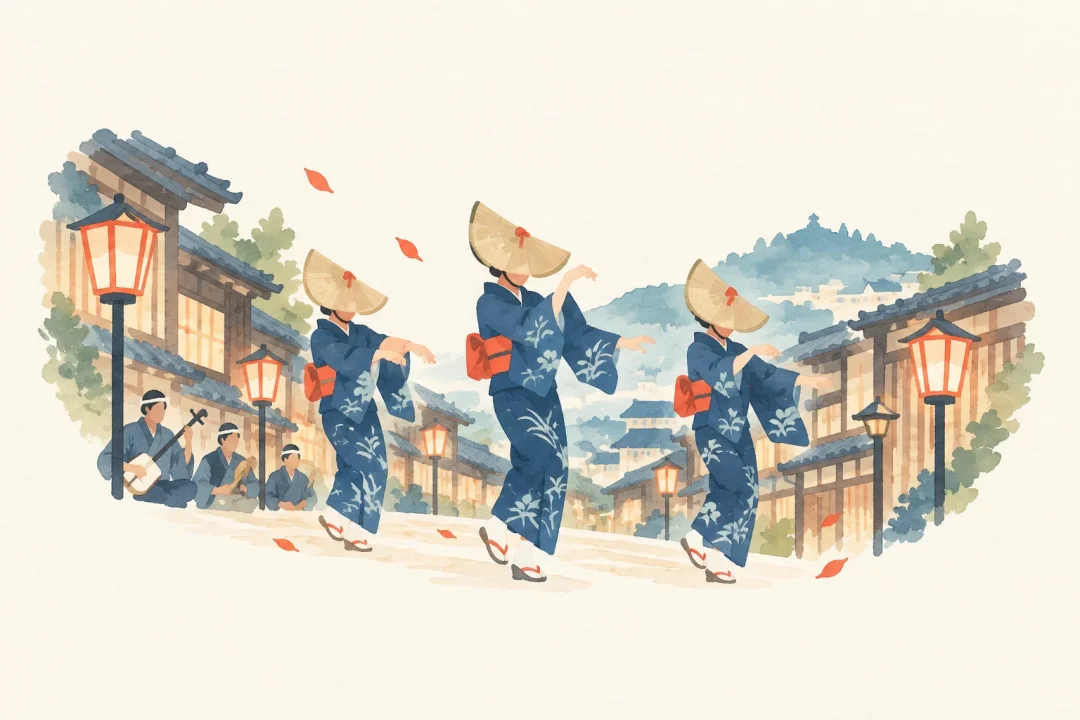
A quiet Bon Odori in Kumisaki, carrying on the spirit of remembrance
Kumisaki Bon Odori (Sōfuren)
Festival information
EVENT INFORMATION- Season / frequency
- Every year on August 16 / Every year
- Location
- Kumisaki-cho, Satsumasendai City
- Area
- Kagoshima Prefecture・Satsumasendai City(From Tokyo: approx. 1 h 50 min–2 h 20 min · flight time only)Prefecture-level estimate to a main station or airport, not the venue. Airport access, check-in and onward travel are extra; remote areas and islands can take much longer.
- Highlights and activities
- Wishes behind the festival
- Last updated
- 2026/11/12
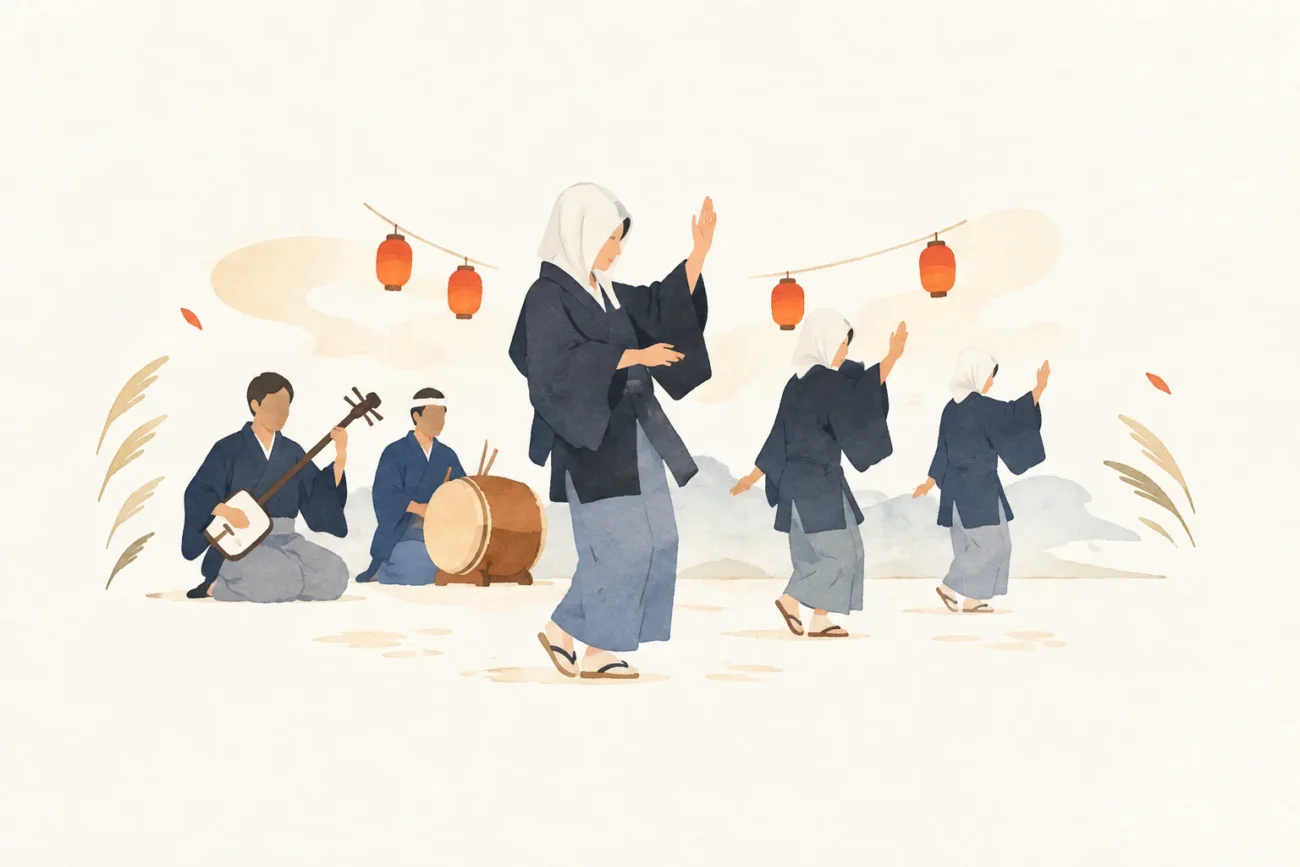
A passed down in the Kumisaki district of Satsumasendai, Kagoshima Prefecture, imbued with a spirit of remembrance. Dancers wear okoso hoods and men's haori and dance slowly to shamisen, , and songs in a 7-7-7-5 syllable pattern.
About Kumisaki Bon Odori (Sōfuren)
Kumisaki Bon Odori (Sōfuren) is an dance that has been passed down for generations in the Kumisaki district, on the left bank of the mouth of the Sendai River.
It is said to have originated when women who remained in their homeland danced to honor their husbands and children who died in battle in Korea in Keichō 2 (1597).
Today, the Kumisaki Bon Odori Preservation Society, centered around the Kumisaki Women's Association, carries on the tradition, and it is held every year on August 16.
Festival highlights
A highlight is the distinctive attire: an okoso hood, a men's haori, and a short sword tucked at the waist.
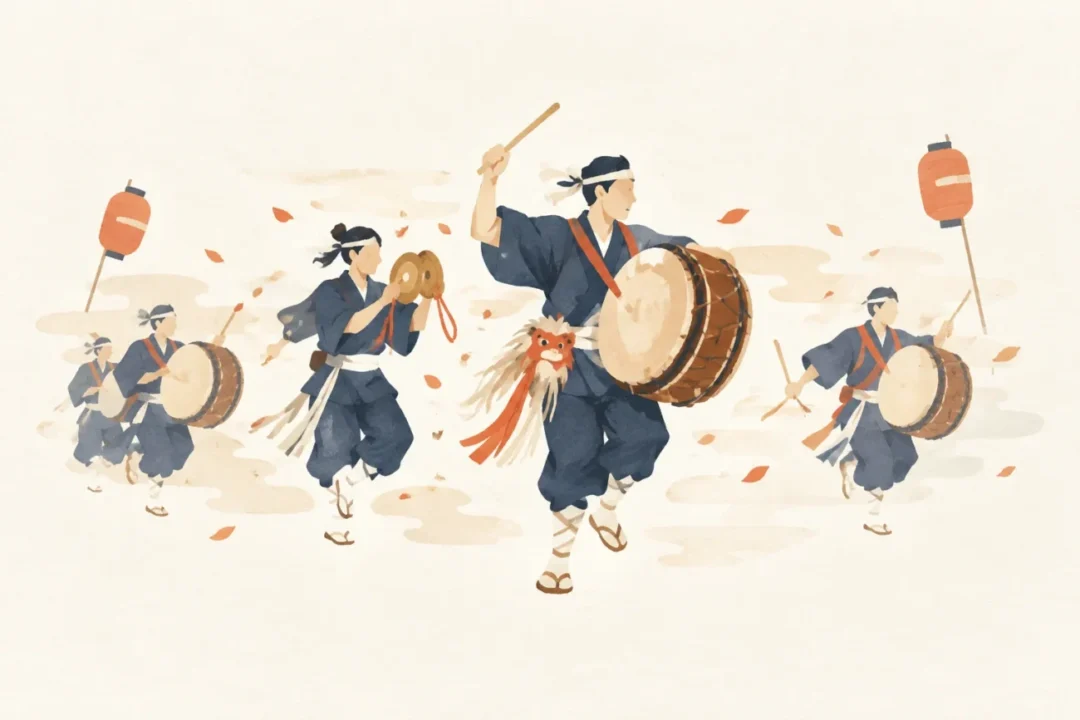
The dancers form a circle, guided by songs in a 7-7-7-5 syllable pattern and accompanied by shamisen and taiko.
This is a simple, slow-paced dance in which the dancers join their hands in prayer and repeatedly make gestures as if beckoning someone from far away. It conveys a refined charm.
A quiet Bon Odori in Kumisaki, carrying on the spirit of remembrance
What to expect
For the event, dancers wear okoso hoods and men's haori, with short swords tucked into their waistbands. They dance with the swords worn low.
Accompanied by shamisen and taiko, the dancers form a circle while singing songs in a 7-7-7-5 syllable pattern, repeatedly making gestures of joining hands in prayer and beckoning someone from far away.
Overall, this is a simple Bon Odori performed at a slow tempo.
Location and access
- Venue and address
Kumisaki-cho, Satsumasendai City
Address Kumisaki-cho, Satsumasendai City
Dates and season
- Season
Every year on August 16
- Frequency
Every year
Accommodation and hotels PR
Showing nearby accommodation.
Prices and availability are current at the time of retrieval. For multi-night stays, only the first night’s price is shown. Confirm the final price and directions to the venue with the booking provider. Select your dates again when using the area search link. Search area: within 3 km of Central Kagoshima Prefecture / Satsumasendai City (the search is not centered on the festival venue)
Nearby attractions

新田神社
鹿児島県薩摩川内市にある神社
写真:ja:User:MK Products upload by Sakoppi / CC BY-SA 3.0
Photo source ·
薩摩川内市せんだい宇宙館
鹿児島県薩摩川内市にある科学展示館、天文台
Origins and History of Kumisaki Bon Odori (Sōfuren)
Kumisaki Bon Odori (Sōfuren) is an Obon dance associated with the Shimazu forces, said to have departed from Kumisaki Port in Keichō 2 (1597).
It is said that women who remained in their homeland danced to honor their husbands and children who died in battle in Korea.
On May 31 in 1971 (Showa 46), it was designated a Kagoshima Prefectural Intangible Folk Cultural Property.
Today, the Kumisaki Bon Odori Preservation Society carries on the tradition.
Official information
It is listed in Kagoshima Prefecture’s “Kagoshima Regional Traditional Performing Arts Museum.”
For inquiries, contact the Satsumasendai City Office.
Kumisaki Bon Odori (Sōfuren) at a Glance
Kumisaki Bon Odori (Sōfuren) is an Obon dance of remembrance passed down in the Kumisaki district.
Dancers wear okoso hoods and men's haori, with short swords tucked at the waist, and dance in a circle to shamisen, taiko, and songs in a 7-7-7-5 syllable pattern.
The dance is slow, with repeated gestures of joining hands in prayer and beckoning someone from far away. It was designated a Kagoshima Prefectural Intangible Folk Cultural Property in 1971.
Sources and references
Japanese Festivals.jp Editorial Team
Celebrating local culture and helping you discover a side of Japan you never knew.
Article updated: 2026/11/12