Spring rice-field play where tilling and the bull’s movements bring laughter
Performance (ta-uchi) associated with Fukada Jinja’s spring festival
Festival information
EVENT INFORMATION- Season / frequency
- day 2 of lunar month 2 and the Sunday before or after that date
- Location
- Fukada
- Area
- Kagoshima Prefecture・Ichikikushikino City(From Tokyo: approx. 1 h 50 min–2 h 20 min · flight time only)Prefecture-level estimate to a main station or airport, not the venue. Airport access, check-in and onward travel are extra; remote areas and islands can take much longer.
- Features
- Highlights and activities
- Wishes behind the festival
- Last updated
- 2026/11/12
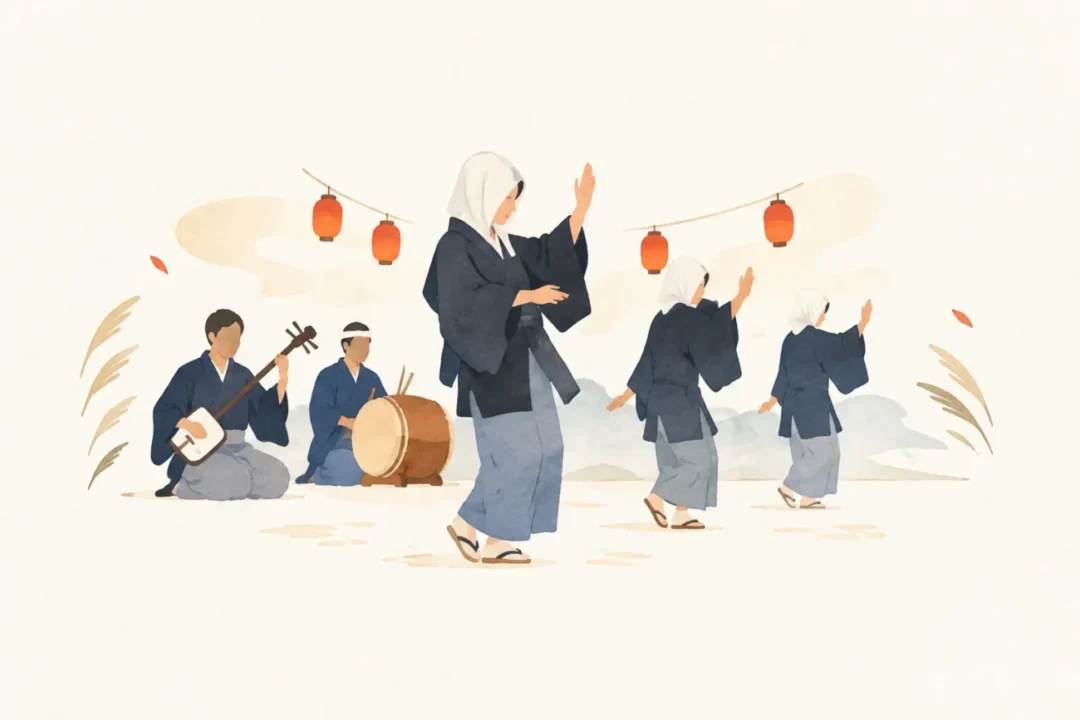
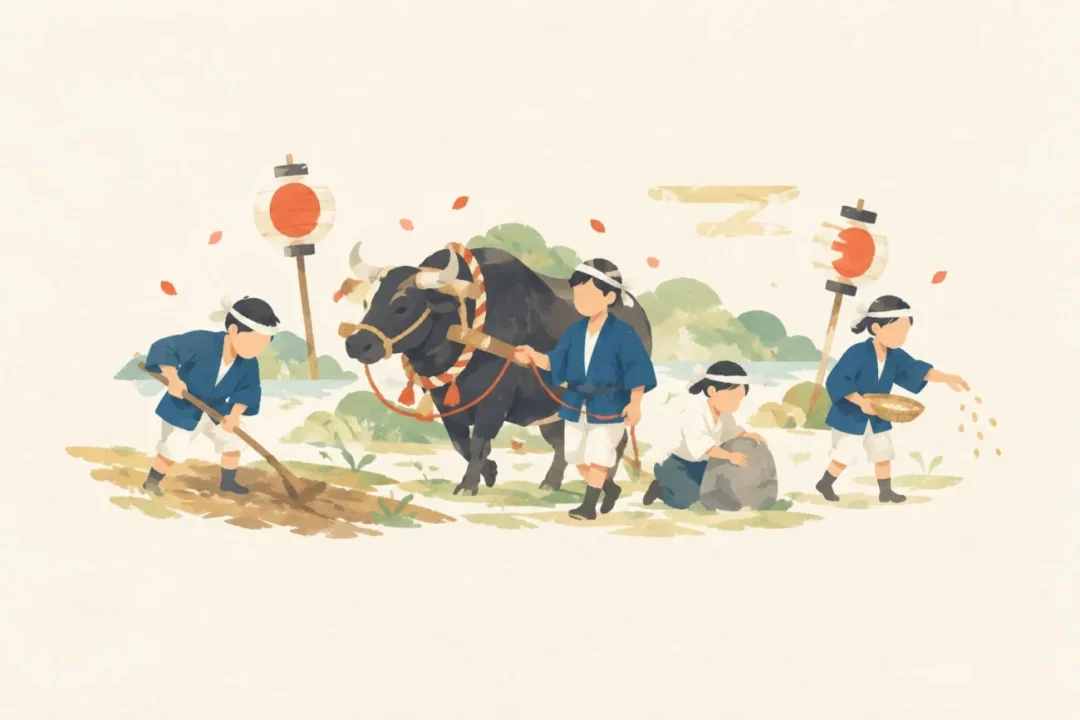
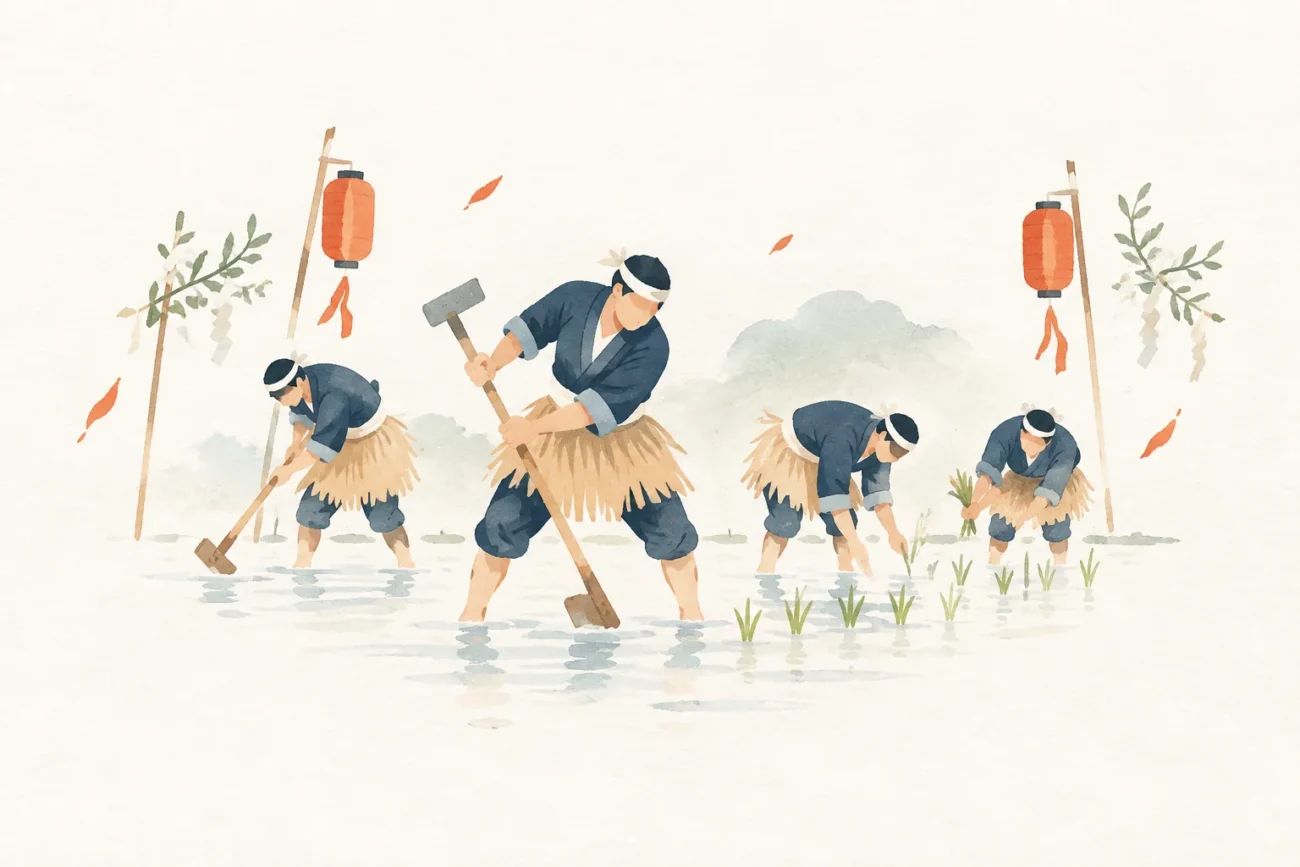
At Fukada Jinja’s spring festival, the “Gaun Gaun Festival,” agricultural work from tilling through to rice planting is acted out, with the standing in for a rice field.
About Performance (ta-uchi) associated with Fukada Jinja’s spring festival
Fukada Jinja’s spring festival is called the “Gaun Gaun Festival” and was held on day 2 of lunar month 2.
It is now held on the Sunday before or after that date.
This agricultural ritual for a good harvest depicts tilling, leveling, and planting rice, with the shrine grounds standing in for a rice field. It is also notable for the laughter shared between performers and onlookers.
Festival highlights
A highlight is the scene where Techo (the father) uses a large wooden hooked hoe to treat the shrine grounds as a rice field and begin tilling.
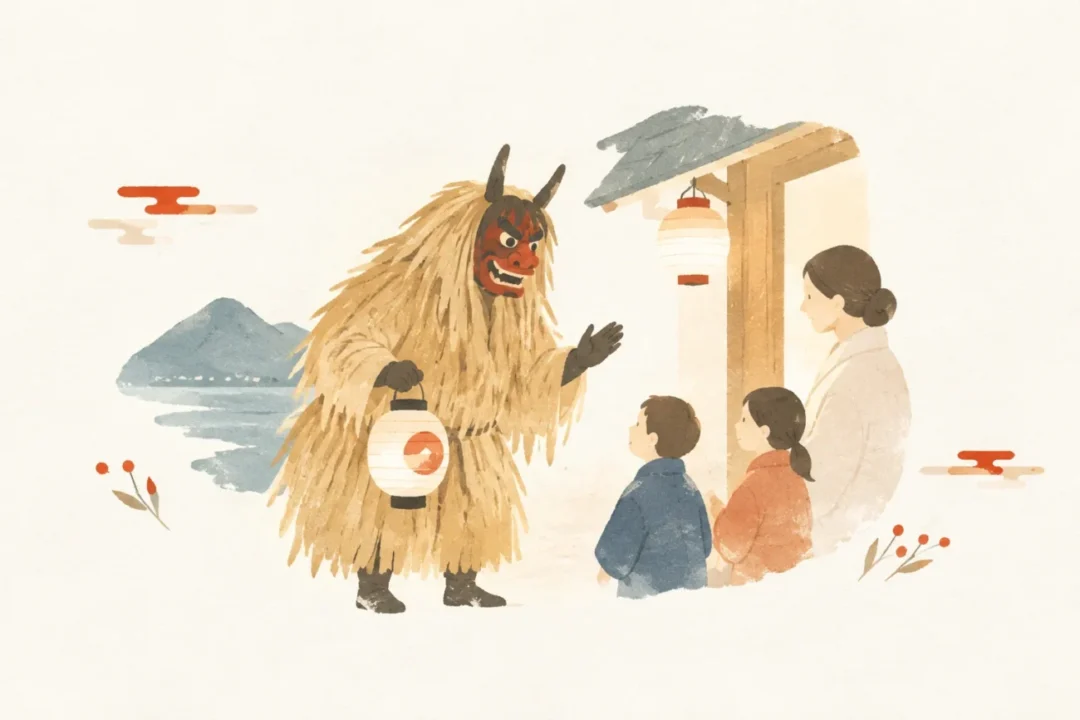
Children join in, followed by scenes of Kotte (the bull), led by Taro and Jiro, and the bull pulling a mogā (horse-drawn harrow) to level the field.
This performance preserves the atmosphere of ancient rice-field play, with theatrical exchanges that make onlookers laugh.
Spring rice-field play where tilling and the bull’s movements bring laughter
What to expect
After the , Techo (the father) begins tilling the shrine grounds with a wooden hooked hoe, while children join in.
Next, Taro and Jiro lead Kotte (the bull), and the bull pulls a mogā (horse-drawn harrow) to level the field.
Finally, scatter pine needles, completing the rice planting.
Location and access
- Venue and address
Fukada Jinja (20967 Nomoto, Ichikikushikino City)
Address 20967 Nomoto, Ichikikushikino City
Dates and season
- Season
day 2 of lunar month 2 and the Sunday before or after that date
Accommodation and hotels PR
Showing nearby accommodation.
Prices and availability are current at the time of retrieval. For multi-night stays, only the first night’s price is shown. Confirm the final price and directions to the venue with the booking provider. Select your dates again when using the area search link. Search area: within 3 km of Central Kagoshima Prefecture / Ichikikushikino City (the search is not centered on the festival venue)
Nearby attractions

薩摩藩英国留学生記念館
鹿児島県いちき串木野市にある記念館
Origins and History of Performance (ta-uchi) associated with Fukada Jinja’s spring festival
This performance has been passed down as a spring festival ritual praying for a good harvest, preserving the atmosphere of ancient rice-field play.
The spring festival was formerly held on day 2 of lunar month 2, and is now held on the Sunday before or after that date.
The performance (ta-uchi) associated with Fukada Jinja’s spring festival was designated a prefectural intangible folk cultural property in Showa 37, October 24.
Performance (ta-uchi) associated with Fukada Jinja’s spring festival at a Glance
Fukada Jinja’s “Gaun Gaun Festival” is a spring festival in which agricultural work is acted out, with the shrine grounds standing in for a rice field.
The performance proceeds from tilling the field with a wooden hooked hoe, to leveling it with a bull and a mogā harrow, and then to planting rice as ujiko scatter pine needles.
Children also take part in this theatrical performance, which conveys the atmosphere of ancient rice-field play and draws laughter from onlookers.
Sources and references
Japanese Festivals.jp Editorial Team
Celebrating local culture and helping you discover a side of Japan you never knew.
Article updated: 2026/11/12