A living tradition of Edo kagura in Kazo, performing a ritual to purify the four directions
Tamashiki Shrine Kagura
The 2026 edition of Tamashiki Shrine has ended.
Festival information
EVENT INFORMATION- Dates
- 2026/07/15Ended
- Season / frequency
- Festival days in February, May, July, and December each year / 4 times a year
- Location
- Tamashiki Shrine Kagura Hall
- Area
- Saitama Prefecture・Kazo City(From Tokyo: approx. 30 min–1 h · train)Prefecture-level estimate to a main station or airport, not the venue. Airport access, check-in and onward travel are extra; remote areas and islands can take much longer.
- Highlights and activities
- Participation / viewing
- Spectators welcome
- Last updated
- 2026/10/19
Tamashiki Shrine Kagura is a kagura designated an Important Intangible Folk Cultural Property of Japan, offered at 4 annual festivals at Tamashiki Shrine in Kazo City. Masked dancers circle the four corners of the stage, dancing to flute and drum music without songs or spoken lines. You can watch stylized movements passed down since the Edo period and a tradition preserved by the local community.
About Tamashiki Shrine Kagura
Photo credits and terms of use
Photographer: Saigen Jiro File:Tamashiki-jinja, kaguraden.jpg / Wikimedia Commons / CC0 Own work by the contributorDisplay size only adjusted.May differ from the event currently featured.Photo credits and terms of use
Photographer: Saigen Jiro File:Tamashiki-jinja, icho-2.jpg / Wikimedia Commons / CC0 Own work by the contributorDisplay size only adjusted.May differ from the event currently featured.Tamashiki Shrine Kagura is a traditional performing art offered at festivals at Tamashiki Shrine in Kazo City, Saitama Prefecture.
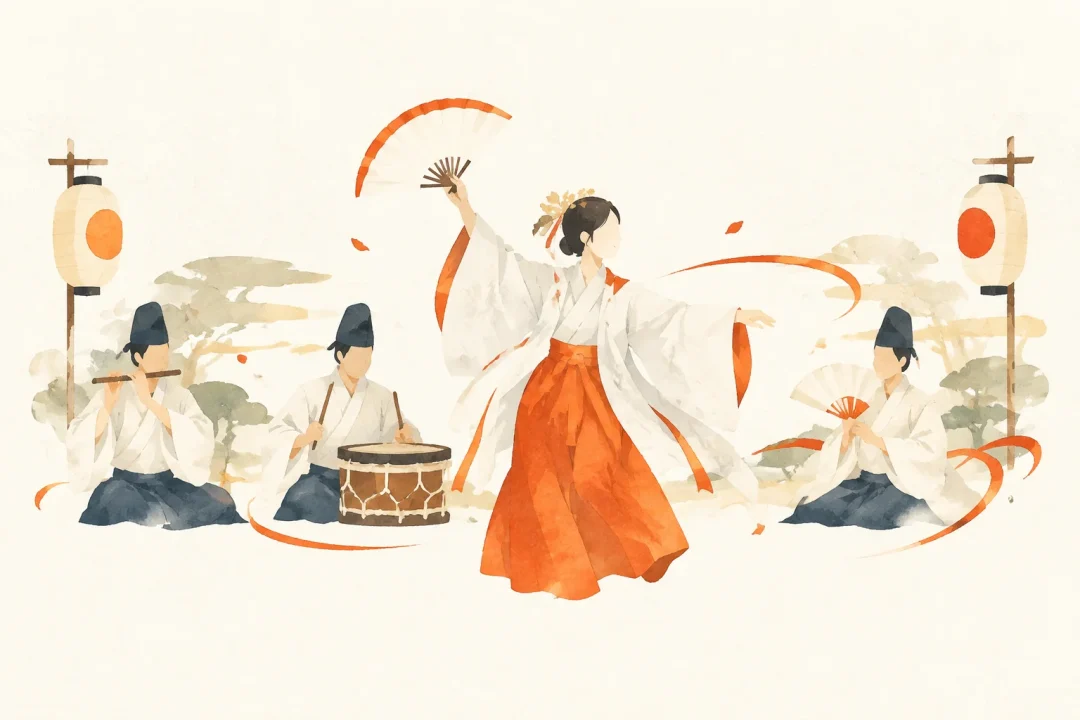
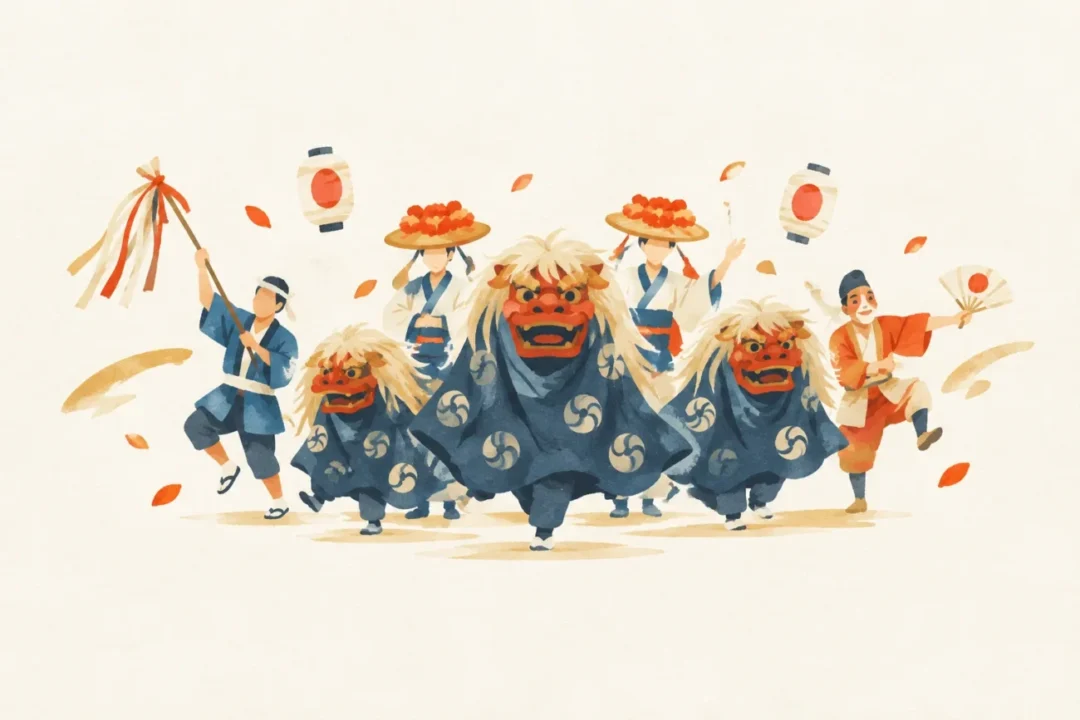
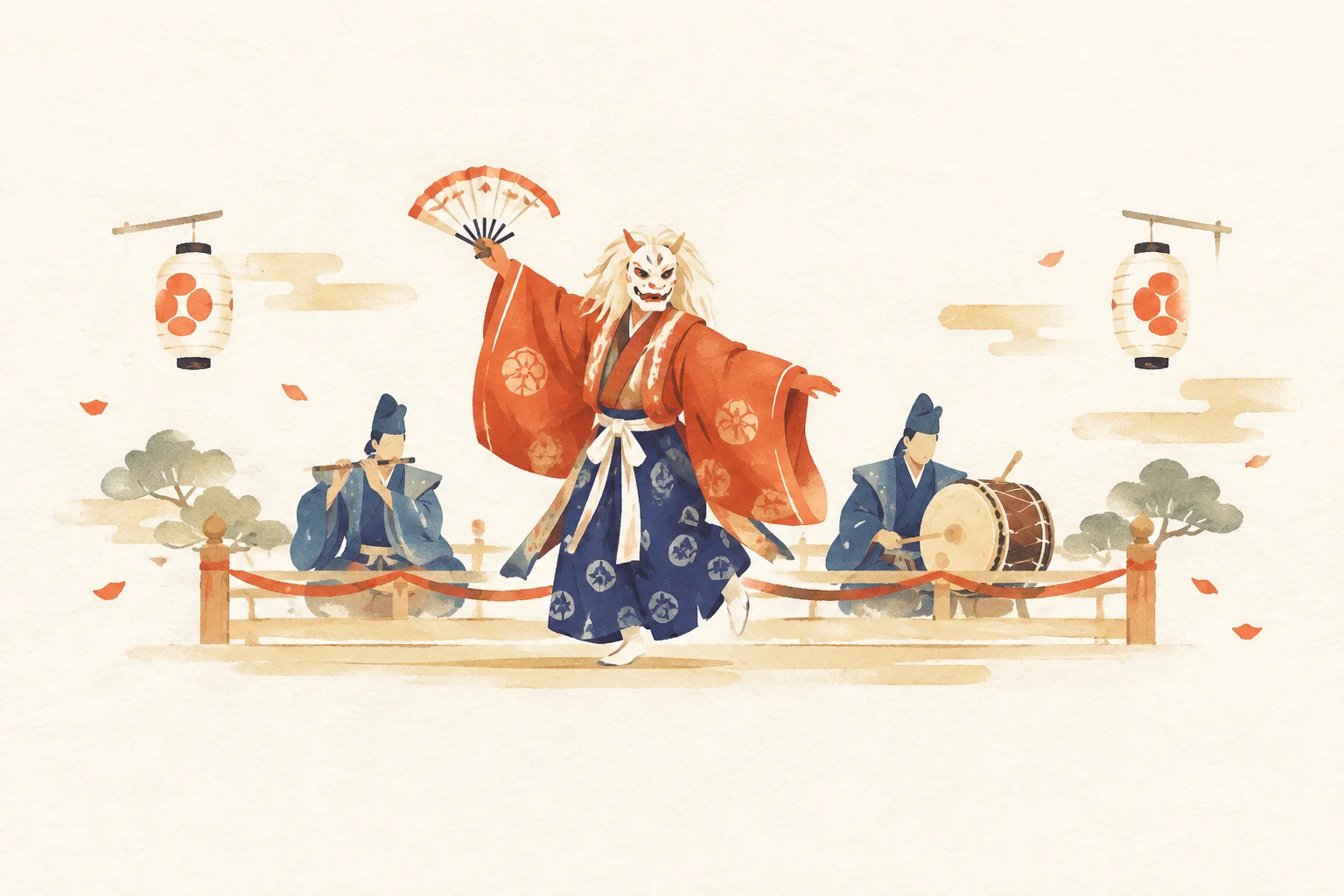
The performers wear masks and dance to flute and drum music, without songs or spoken lines.
It is designated an Important Intangible Folk Cultural Property of Japan and is an important local tradition that preserves an old style of Edo kagura.
Today, it is primarily passed down by the Tamashiki Shrine Kagura Preservation Society.
Source: 玉敷神社神楽の奉納/加須市 / 国指定文化財等データベース
Festival highlights
The main highlight is the “Four-Direction Purification,” in which the dancers move from the center of the stage toward its four corners.
The dancers visit the corners in the order northwest, northeast, southeast, and southwest, repeating ritual movements before returning to the sacred seat.
Enjoy the differences between the performances, from the paired dance of Izanagi and Izanami and the Okame dance to Shoki facing a demon and the Yamameguri, in which all the performers dance around the stage.
This offering brings together masked dances and music played on nail-fastened drums, shime-daiko drums, and flutes, combining quietness with power.
A living tradition of Edo kagura in Kazo, performing a ritual to purify the four directions
What to expect
During the offering, the dancers enter through the stage entrance on the audience’s left, circle in front of the musicians, and face forward before beginning the main dance.
In many performances, the dancers repeat the Four-Direction Purification, bow before the sacred seat, then retreat to the entrance and exit to conclude.
The performances vary in their arrangements, with one, two, three, or five dancers, among others; the number and type of acts performed depend on how many kagura performers take part in the festival.
How to take part
Kagura is a dance offered at shrine festivals, and general visitors can watch the offering in the .
However, no information is provided about recruiting members of the public to perform kagura as dancers or hayashi musicians.
The Tamashiki Shrine Kagura Preservation Society carries on the local tradition, with people from the Shono district at its core and volunteers also taking part.
Location and access
- Venue and address
Performances are offered at the Tamashiki Shrine Kagura Hall (552 Kisaimachi, Kazo City).
- Train and bus
Take a bus bound for Konosu from Kazo Station on the Tobu Isesaki Line, get off at “Kisai 1-chome,” then walk about 7 minutes.
You can also take a bus from Konosu Station on the JR Takasaki Line.
- By car
From Kazo IC on the Tohoku Expressway, it is about 6 km and approximately 15 minutes via National Route 125, Prefectural Route 38, and National Route 122.
- Parking
There is parking around Tamashiki Shrine.
The Tamashiki Shrine parking lot has space for 30 cars and is open from 9 a.m. to 6 p.m.
Source: 玉敷神社神楽 | 埼玉県 | 日本の文化遺産を探す|国宝・重要文化財データベース / 玉敷神社 | 【公式】事業者向け埼玉県観光情報 - ちょこたび埼玉
Address 552 Kisai, Kazo City, Saitama Prefecture
Dates and season
2026 event information (the listed dates have passed)
Tamashiki Shrine Kagura is offered at the New Year Festival on February 1, the Spring Grand Festival on May 5, the Summer Grand Festival on July 15, and the annual festival on December 1 each year.
In 2026, it was announced that 7 kagura acts would be offered at the Tamashiki Shrine Kagura Hall from around 1:30 p.m. on July 15.
Start times and performances may vary at each festival.
Accommodation and hotels PR
Showing nearby accommodation.
Prices and availability are current at the time of retrieval. For multi-night stays, only the first night’s price is shown. Confirm the final price and directions to the venue with the booking provider. Select your dates again when using the area search link. Search area: within 3 km of Central Saitama Prefecture / Kazo City (the search is not centered on the festival venue)
Tips for your visit
Kagura is both a performance for the audience and a sacred rite offered to the sacred seat.
Watching the sacred seat facing the direction the dancers approach from, and their movements performed without songs or spoken lines, makes it easier to follow the meaning of the Four-Direction Purification and the stage arrangement.
Offering times and performances may change, so if you are traveling from far away, please check the latest information from Tamashiki Shrine or Kazo City.
Nearby attractions
Tamashiki Park, next to Tamashiki Shrine, is home to a wisteria tree estimated to be more than 400 years old.
The wisteria is at its best from late April to early May, and you can enjoy hydrangeas along the “Wisteria and Hydrangea Path” in mid-June.
The area offers a glimpse of Kisaichi’s history: from the medieval period to the first half of the 17th century, it was a castle town of Kisaichi Castle and an important transport hub connecting highways.
Origins and History of Tamashiki Shrine Kagura
There are no records that directly indicate the origins of Tamashiki Shrine Kagura, but it is believed to have been performed as early as the early Edo period.
The priestly records known as the Yoyoshu mention daidai kagura in 1719 and 1734, and a document remains from 1822 granting kagura performers authorization to serve as kagura officiants.
In the past, it was passed from father to son to the eldest sons of a limited number of families in the Shono district. In 1975, a preservation society was formed, shifting the tradition to a system maintained by the local community and volunteers.
In 2008, it was designated an Important Intangible Folk Cultural Property of Japan.
Official information
You can check the event dates, planned offerings, venue, and performances in Kazo City’s “Tamashiki Shrine Kagura Offerings” information.
Details of its cultural property designation and kagura style are listed in the Agency for Cultural Affairs’ Database of Nationally Designated Cultural Properties.
Tamashiki Shrine Kagura at a Glance
Tamashiki Shrine Kagura features masked dancers performing the Four-Direction Purification repeatedly to flute and drum music, without songs or spoken lines.
It is offered at 4 annual festivals at Tamashiki Shrine, and 18 acts have been passed down.
The offering on July 15, 2026 was announced for the Tamashiki Shrine Kagura Hall in Kisai, Kazo City, offering a close-up experience of a local tradition designated an Important Intangible Folk Cultural Property of Japan.
Japanese Festivals.jp Editorial Team
Celebrating local culture and helping you discover a side of Japan you never knew.
Article updated: 2026/10/19
Submit information or a correction Submit photos of this festival