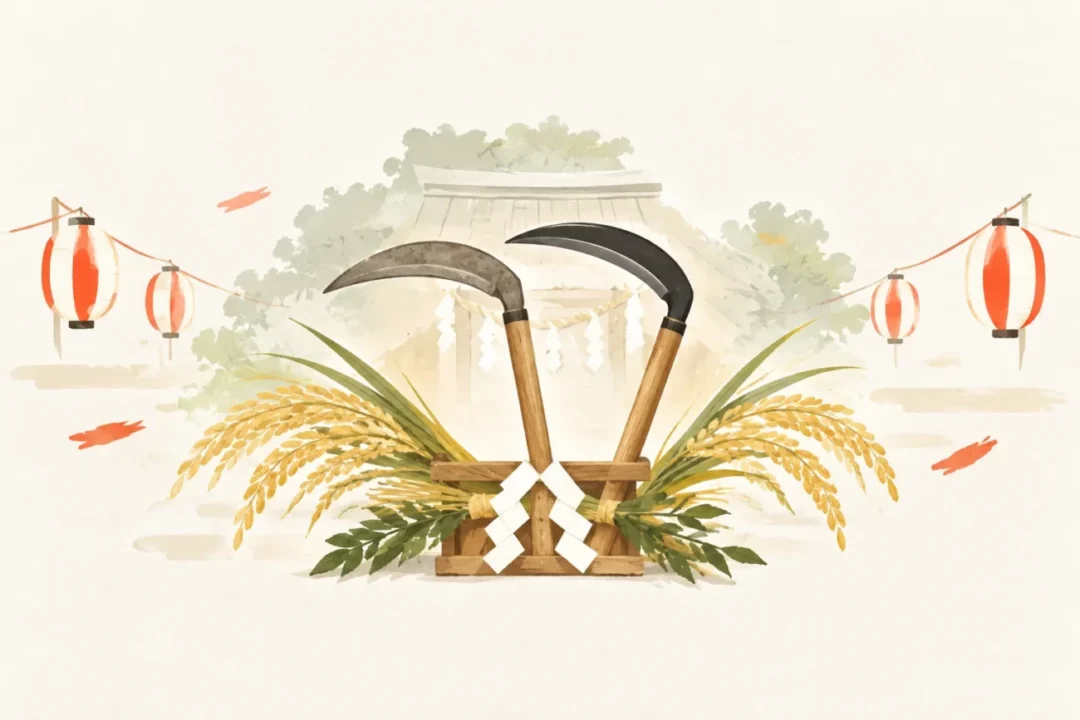
An ancient style of kagura passed down in Washinomiya, brought to life by singing and festival music
Washinomiya Saibara Kagura
Festival information
EVENT INFORMATION- Season / frequency
- Every year, 6 times: January 1, February 14, April 10, July 31, October 10, and the first Day of the Rooster in December / 6 times a year
- Location
- Washinomiya Shrine, Hall
- Area
- Saitama Prefecture・Kuki City(From Tokyo: approx. 30 min–1 h · train)Prefecture-level estimate to a main station or airport, not the venue. Airport access, check-in and onward travel are extra; remote areas and islands can take much longer.
- Features
- Highlights and activities
- Participation / viewing
- Spectators welcome
- Last updated
- 2026/10/19
This traditional performing art of Kuki City is passed down at festivals at Washinomiya Shrine, where dances are performed to Saibara songs and festival music.
About Washinomiya Saibara Kagura
Washinomiya Saibara Kagura is a form of kagura passed down at Washinomiya Shrine in Washinomiya, Kuki City. Its formal name is Haji Ichiryu Saibara Kagura.
It incorporates Saibara, songs popular in the Heian period, into a program of dance dramas based on myths.
It is said to be the source of Kanto kagura and was designated an Important Intangible Folk Cultural Property of Japan in Showa 51.
It is performed 6 times a year in conjunction with shrine festivals and is preserved and passed down by the local community.
Source: 鷲宮催馬楽神楽|久喜市ホームページ / 第1回 鷲宮催馬楽神楽(わしのみやさいばらかぐら)|久喜市ホームページ
Festival highlights
A highlight is the graceful dance, which retains an old style and is performed while chanting kagura songs and Saibara.
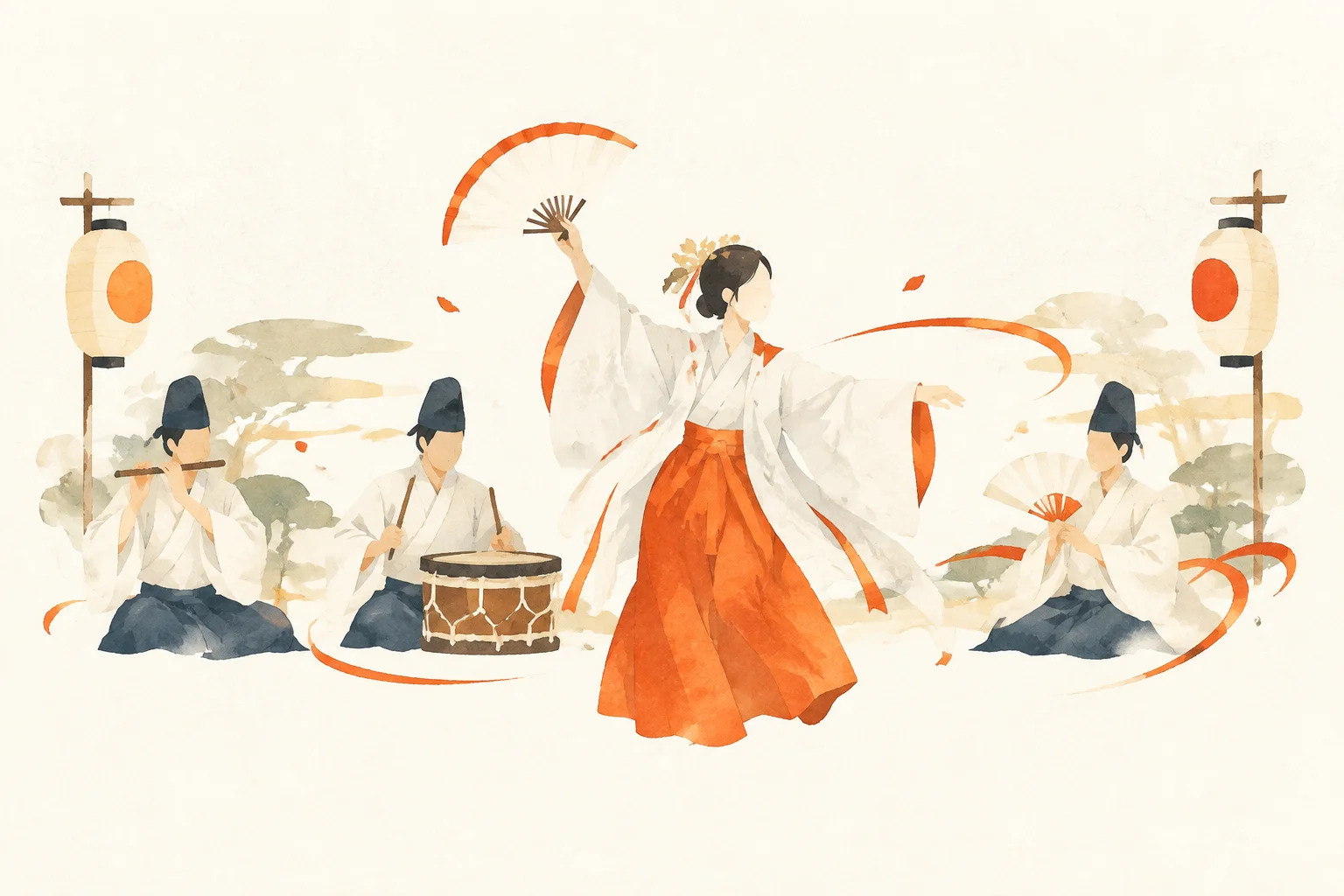
Dancers appear to the accompaniment of a large drum, small drum, flute, and taibyoshi drum. The performance proceeds in 4 sections: De no mai, kagura songs, Maigake, and Hikkomi no mai.
The performance features dance dramas based on myths, centered on the 12 core pieces.
The program is not decided until the day, so you can also look forward to seeing which piece is performed.
Source: 国指定文化財等データベース
An ancient style of kagura passed down in Washinomiya, brought to life by singing and festival music
What to expect
Performances take place in the kagura hall in conjunction with shrine festivals. They begin around midday and are often said to continue from around 11 a.m. to around 3 p.m.
Dancers move to the festival music and perform each piece while singing kagura songs and Saibara.
The program consists of the 12 core pieces and 3 others, but the details are not decided until the day.
On January 1, performances may also take place from around midnight.
How to take part
No information is provided about general visitors participating as dancers, but viewing is open to the public.
You can watch the performances in the kagura hall as part of the festival.
The program is not decided until the day of the event, so if you’re hoping to see a particular performance, it’s a good idea to check the information provided at the venue.
Viewing is open to the public, and no advance registration information is provided.
Enjoy the performances held in the kagura hall at Washinomiya Shrine in conjunction with the festival.
Start times vary by day and often begin around midday, so it’s best to allow plenty of time for your visit.
Location and access
- Venue and address
Washinomiya Shrine, Kagura Hall (1-6-1 Washinomiya, Kuki City)
- Train and bus
Take the Tobu Isesaki Line to Washinomiya Station, then walk about 10 minutes.
- By car
About 15 minutes from either the Tohoku Expressway's Kuki IC or Kazo IC.
- Parking
There is parking at the shrine.
Address 1-6-1 Washinomiya, Kuki City, Saitama Prefecture
Dates and season
Washinomiya Saibara Kagura is performed 6 times a year, on January 1, February 14, April 10, July 31, October 10, and the first Day of the Rooster in December.
The 2026 schedule lists January 1, February 14, April 10, July 31, October 10, and December 1.
Performances usually run from around 11 a.m. to around 3 p.m., but start times vary by day.
On January 1, performances also take place from around midnight.
Accommodation and hotels PR
Showing nearby accommodation.
Prices and availability are current at the time of retrieval. For multi-night stays, only the first night’s price is shown. Confirm the final price and directions to the venue with the booking provider. Select your dates again when using the area search link. Search area: within 3 km of Central Saitama Prefecture / Kuki City (the search is not centered on the festival venue)
Tips for your visit
Start times are not fixed and vary by day, so it is a good idea to allow plenty of time for your arrival.
The program will not be known until the day.
Please watch the dances and music quietly in the kagura hall and be mindful of the setting as a place of worship and festival.
If you come by car, you can use the shrine parking lot, but be sure to check the day's guidance, including information about crowding.
Nearby attractions
Around Washinomiya Shrine, visitors can enjoy seasonal natural scenery at places such as the Kawazu cherry blossoms along the Aoge-bori River and Cosmos Fureai Road.
The Kawazu cherry trees along the Aoge-bori River are planted downstream from Miyamae Bridge near Washinomiya Shrine.
Cosmos Fureai Road is a flower-lined path following the Kasai Irrigation Canal in the Washinomiya area of Kuki City.
You can enjoy scenery suited to the season alongside your visit to see the kagura.
Source: 鷲宮神社 | 観光スポット一覧 | 【公式】埼玉観光情報 - ちょこたび埼玉

鷲宮神社
埼玉県久喜市にある神社
Origins and History of Washinomiya Saibara Kagura
A record of kagura being performed at Washinomiya Shrine in Kencho 3 (1251) appears in the Azuma Kagami, a historical chronicle from the Kamakura period, and is cited in accounts of the origins of Washinomiya Saibara Kagura.
However, the kagura performed at the time is thought to have taken a different form from that seen today.
The present form is said to have been established during the Edo period when Ouchi Kunihisa, the chief priest, reorganized the kagura. In the past, kagura performers came from specific families.
It is now passed down by a preservation association and local residents, and was designated an Important Intangible Folk Cultural Property of Japan in Showa 51.
Official information
For dates, venue, and access information, see the Washinomiya Saibara Kagura page on the official Kuki City website.
Information about its status as a nationally designated cultural property is listed in the Agency for Cultural Affairs' Database of Nationally Designated Cultural Properties.
For details about the program and dates, the introduction in the Cultural Digital Library may also be helpful.
Source: 鷲宮催馬楽神楽|文化デジタルライブラリー
Washinomiya Saibara Kagura at a Glance
Washinomiya Saibara Kagura is an Important Intangible Folk Cultural Property passed down at Washinomiya Shrine in Washinomiya, Kuki City. It features dance and music incorporating Heian-period songs.
Enjoy performances based on myths, accompanied by kagura songs and Saibara singing.
Six performance dates are scheduled for 2026, and admission is free.
The shrine is about a 10-minute walk from Washinomiya Station and has a parking lot.
Japanese Festivals.jp Editorial Team
Celebrating local culture and helping you discover a side of Japan you never knew.
Article updated: 2026/10/19
Submit information or a correction Submit photos of this festival