Shimokita’s performing art keeps the spirit of yamabushi kagura alive
Shimokita no Noh-mai
Festival information
EVENT INFORMATION- Season / frequency
- From December 18 to January 19, around New Year, and during autumn shrine festivals
- Area
- Aomori Prefecture・Higashidori Village, Mutsu City, and Yokohama Town(From Tokyo: approx. 3 h–3 h 30 min · bullet train)Prefecture-level estimate to a main station or airport, not the venue. Airport access, check-in and onward travel are extra; remote areas and islands can take much longer.
- Features
- Highlights and activities
- Participation / viewing
- Spectators welcome
- Last updated
- 2026/10/19
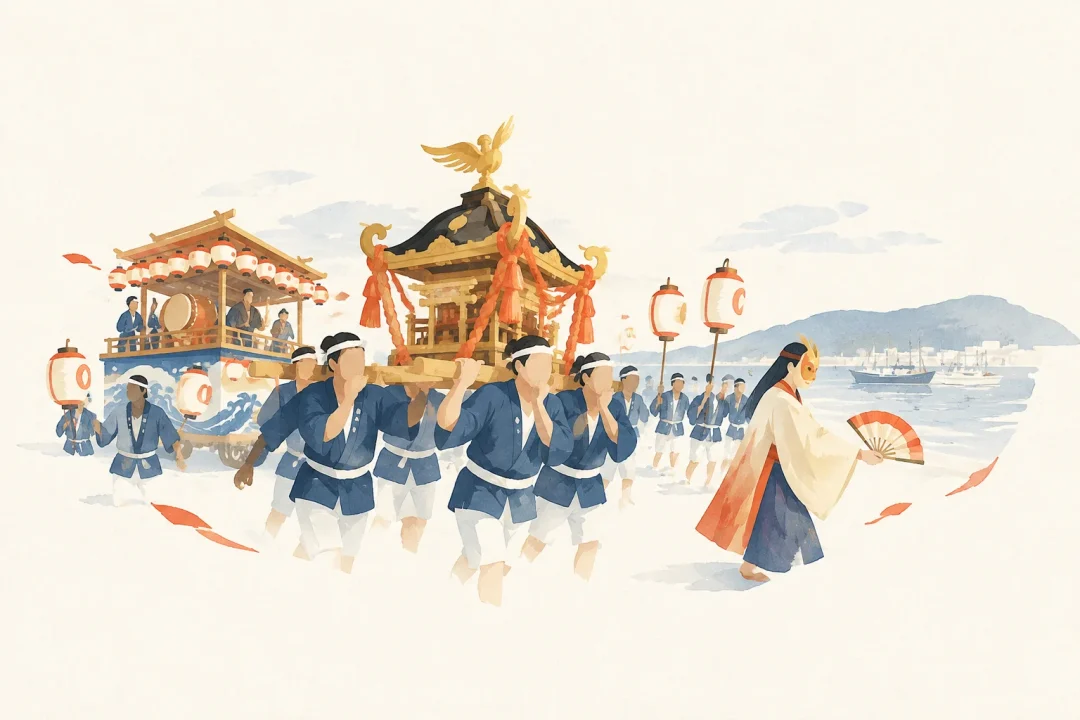
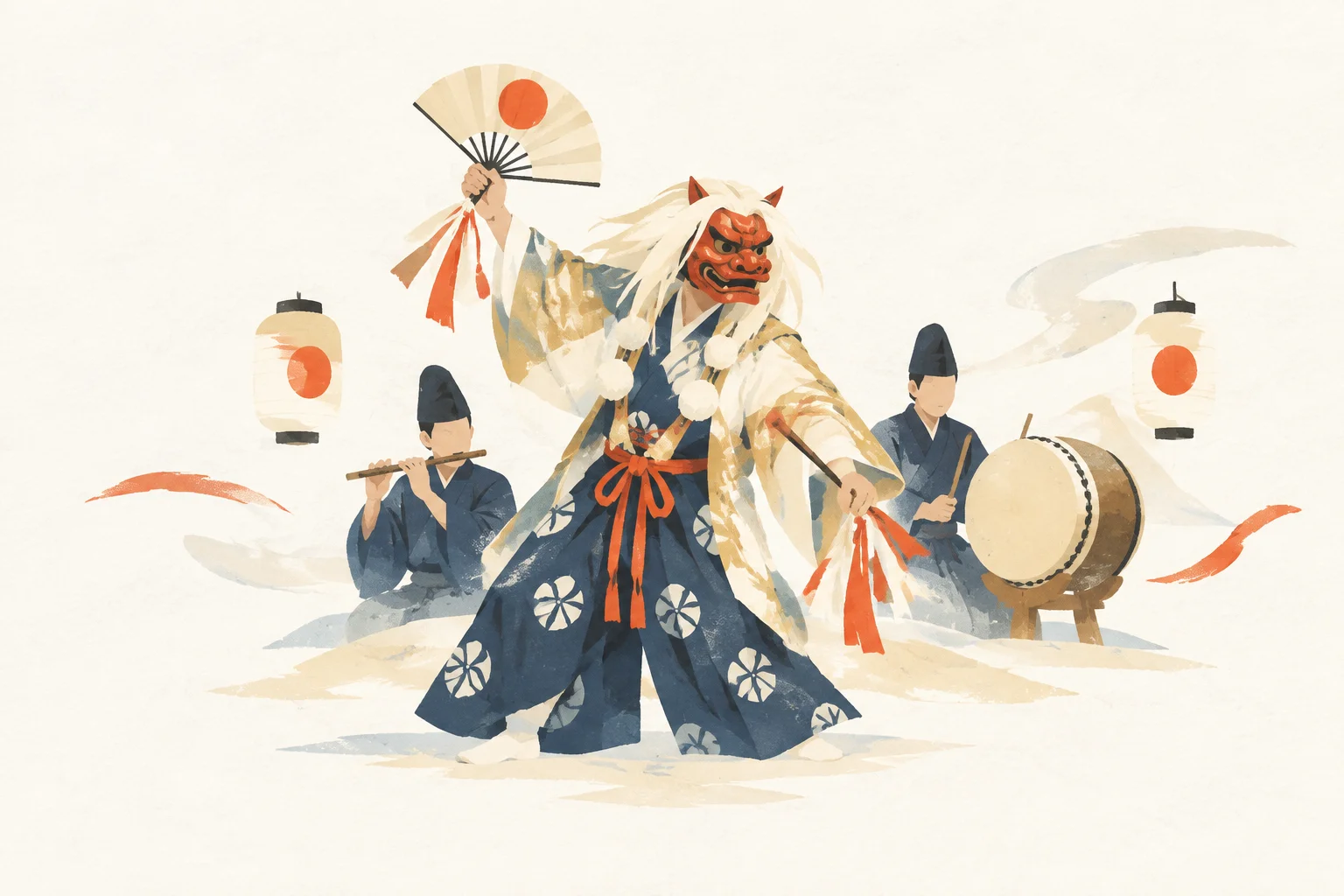
Dances carrying on the yamabushi tradition of the Shimokita Peninsula are performed to the sound of masks, costumes, flutes, and drums. A varied repertoire, including Gongen-mai and warrior dances, brings local prayers and traditions into the present.
About Shimokita no Noh-mai
Shimokita no Noh-mai is a folk performing art of the yamabushi kagura tradition, passed down on the Shimokita Peninsula and designated an Important Intangible Folk Cultural Property of Japan.
Passed down mainly in Higashidori Village, these performances have been preserved in close connection with local life.
The diverse repertoire includes ritual dances, warrior dances, comic dances, and Gongen-mai, a lion kagura dance.
This is a theatrical performance in which the dancers are joined by flutes, drums, hand gongs, and utakake chanting of the text.
Source: 国指定文化財等データベース / 下北の能舞|青森県庁ウェブサイト Aomori Prefectural Government
Festival highlights
A highlight is the variety of dances performed in masks and costumes, with props such as swords and fans.
The repertoire ranges from ceremonial dances such as Torimai, Okina, and Sanbaso, to warrior dances such as Shinobu, Yashima, and the Soga Brothers, and Kanemaki, which features an interplay between humans and demons or beasts. Each performance has its own character.
Some performances characteristically conclude with Gongen-mai, a prayer dance.
Enjoy lively music from flutes, drums, hand gongs, and utakake, along with vigorous performances at a fast tempo.
Shimokita’s performing art keeps the spirit of yamabushi kagura alive
What to expect
When performed publicly, a curtain is set behind the board-floored stage, and performers enter and leave the backstage area by lifting it.
Masks, costumes, and props such as swords and fans are used according to the performance, bringing to life a world of dance and narrative.
In some areas, as part of New Year spring prayers, performers carry the Gongen-sama deity from house to house, striking the gates, and then perform at a community hall in the evening.
Young members learn from elders and teachers, helping to pass on the tradition.
How to take part
Performers of Noh-mai are mainly members of local youth associations and preservation groups.
This is a performing art passed down by local practitioners through traditions such as New Year’s door-to-door performances and shows at community centers; it is not presented as an event where general visitors can join as performers.
At public shrine festivals and recitals, visitors can enjoy the performances as audience members.
For information about recruitment and requirements for participating as a performer, please check with the preservation group in each host community.
Location and access
- Venue and address
Venues vary by area and include private homes and community halls known as Noh-mai-yado, as well as shrine festival grounds.
Venues announced for 2026 performances include Sarugami-kaku in Hachinohe City (5-4 Oaza Motodoshicho, Hachinohe City, Aomori Prefecture) and Higashidori Village Gymnasium (5-34 Sunagomata Sawauchi, Higashidori Village, Shimokita District, Aomori Prefecture).
- By car
Access varies by venue.
- Parking
Sarugami-kaku has parking for 11 vehicles.
Source: 八戸市更上閣・更上閣にぎわい広場/八戸市 / 東通村郷土芸能保存連合会 発表会2026|1/10|青森県東通村
Event venue 青森県東通村、むつ市、横浜町 能舞宿と呼ばれる民家や集会所
This map uses the venue name. Check the official guide for the event area and entrances.
Dates and season
Each year in Higashidori Village, performances are held in various locations during the period from December 18 to January 19 and at autumn shrine festivals.
From New Year’s Day 2, some areas hold gate-to-gate visits carrying the Gongen-sama deity as part of spring prayers, followed by performances at a community hall in the evening.
In 2026, a showcase was scheduled at Higashidori Village Gymnasium on January 10, and a performance at Sarugami-kaku in Hachinohe City on September 19.
Dates and venues vary by area and performance, so check the specific event announcement before visiting.
Origins and History of Shimokita no Noh-mai
Shimokita no Noh-mai is said to have originated with ascetic yamabushi monks from Osorezan, who performed it during prayers; it later spread among farming and fishing communities in the villages.
The name Noh-mai appears in the writings of Sugae Masumi, suggesting that it was in common use by the late Edo period.
The custom of young people in the youth association learning from elders and teachers also served as a form of adult education in the community.
It was designated an Important Intangible Folk Cultural Property on March 20, 1989, and measures are being taken to preserve it.
Official information
The Aomori Prefectural Government’s cultural property guide introduces the designation category, location, preservation groups, public performance periods, and performance sequence of Shimokita no Noh-mai.
The National Cultural Properties Database provides an account of the performances as lion kagura rooted in yamabushi ascetic practices, along with information about the repertoire passed down and the form of Noh-mai-yado venues.
The listed preservation groups include the Shimokita no Noh-mai Preservation Association.
Shimokita no Noh-mai at a Glance
Shimokita no Noh-mai is an Important Intangible Folk Cultural Property of the yamabushi kagura tradition, passed down across the Shimokita Peninsula mainly in Higashidori Village.
Torimai, Okina, Sanbaso, warrior dances, and Gongen-mai are performed with masks, costumes, swords, fans, and musical accompaniment from flutes, drums, and hand gongs.
Public performances take place at different times depending on the area, including the New Year through winter and autumn shrine festivals. Performances were also announced in Higashidori Village and Hachinohe City in 2026.
Japanese Festivals.jp Editorial Team
Celebrating local culture and helping you discover a side of Japan you never knew.
Article updated: 2026/10/19
Submit information or a correction Submit photos of this festival