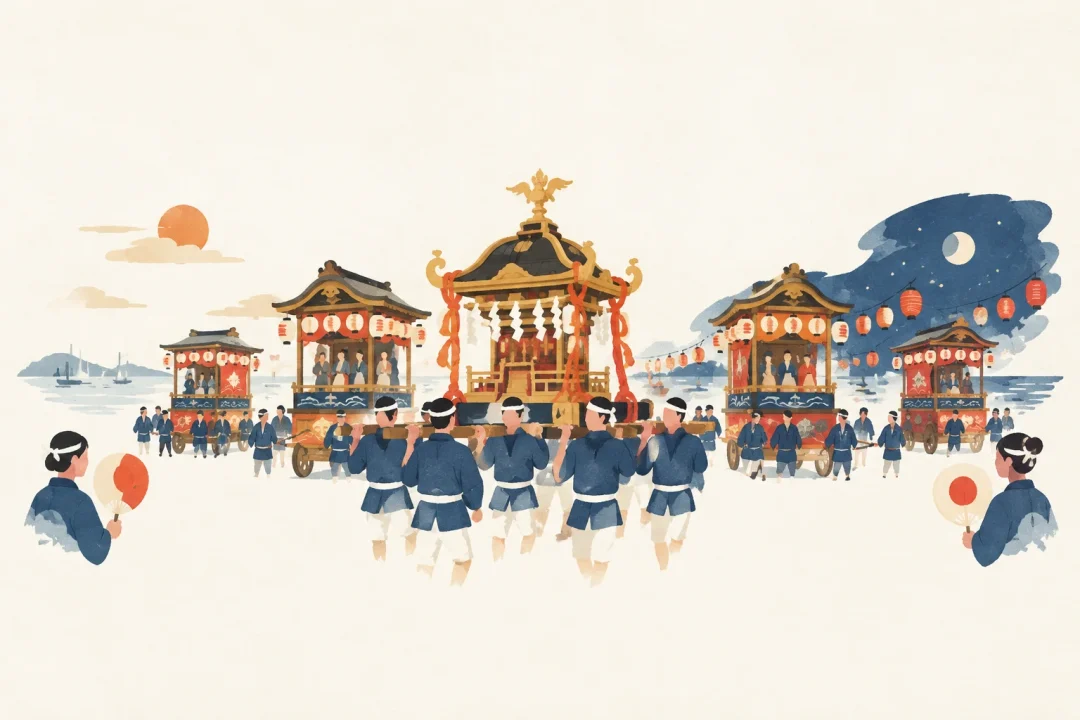
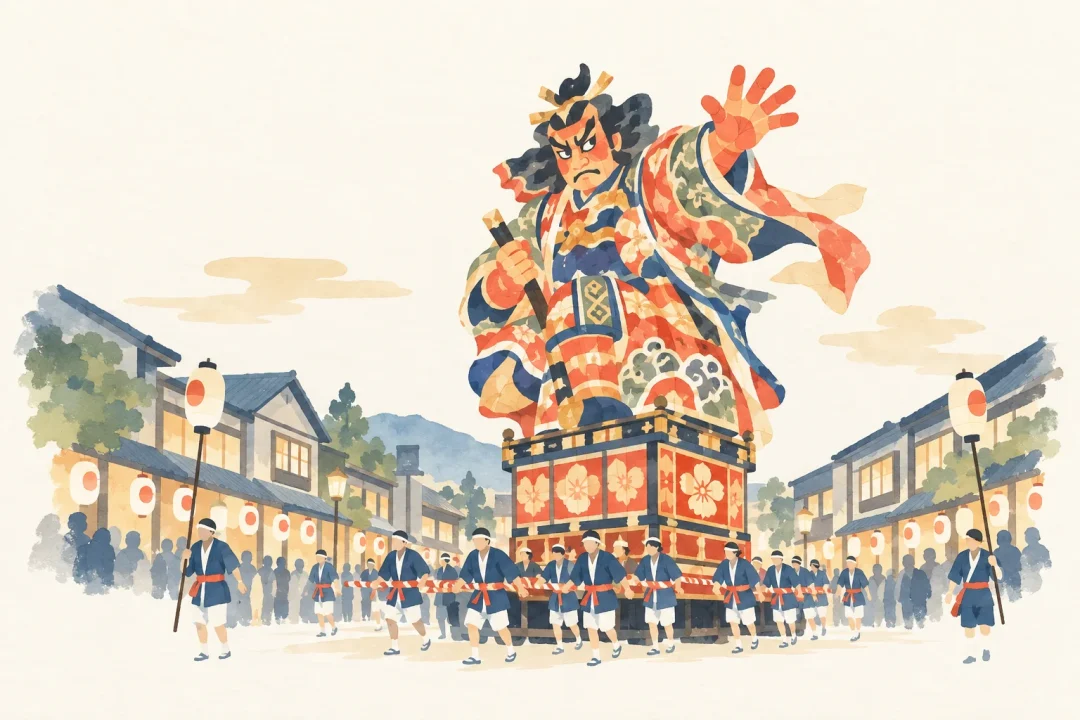
Five dashi transform between day and night, while Gion festival music brings Tanabu to life
Tanabu Matsuri
The 2026 edition of Tanabu Matsuri has ended.
Festival information
EVENT INFORMATION- Dates
- 2026/08/18 〜 2026/08/20Ended
- Season / frequency
- Every year, August 18–20 / Every year
- Location
- Tanabu district, Mutsu (around Tanabu Shrine)
- Area
- Aomori Prefecture・Mutsu City(From Tokyo: approx. 3 h–3 h 30 min · bullet train)Prefecture-level estimate to a main station or airport, not the venue. Airport access, check-in and onward travel are extra; remote areas and islands can take much longer.
- Features
- Highlights and activities
- Participation / viewing
- Spectators welcome
- Last updated
- 2026/10/19
This is the annual festival of Tanabu Shrine, where 5 tour the Tanabu district, displaying different decorations and festival music by day and night. Events that let you experience Mutsu’s local culture continue through the procession, the Oshimako nagashi dance, and the Goshagawakare on the final day.
About Tanabu Matsuri
Tanabu Matsuri is a local festival handed down as the annual festival of Tanabu Shrine in Mutsu.
Each of the 5 neighborhoods in the Tanabu district operates a dashi, and the shrine festival and neighborhood events unfold together.
The dashi and festival music, influenced by the Kyoto Gion Festival, are distinctive features. The festival is also designated an Intangible Folk Cultural Property of Aomori Prefecture.
Source: 田名部まつり - Wikipedia / 田名部神社例大祭|観光・文化・スポーツ|むつ市
Festival highlights
A highlight is the 5 dashi operated by the 5 neighborhoods of Yokomukaicho, Ogawacho, Yanagicho, Honcho, and Shinmachi.
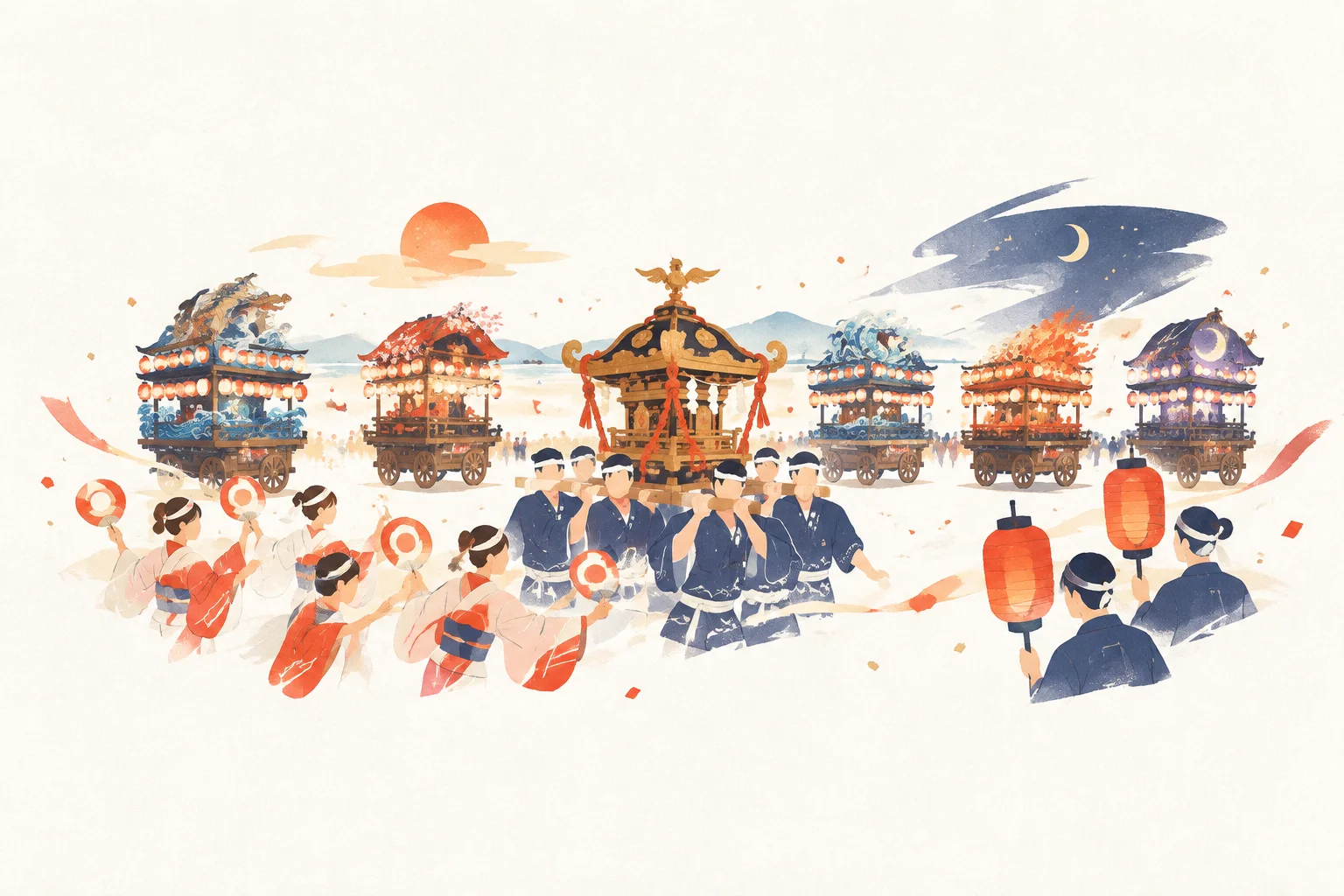
The dashi change their appearance between day and night: during the day, they feature embroidered curtains and rear curtains; at night, locally painted lantern panels are lit.
Late on the final day, all 5 gather and exchange barrel sake, pledging to meet again. This Goshagawakare marks a turning point in the festival.
Five dashi transform between day and night, while Gion festival music brings Tanabu to life
What to expect
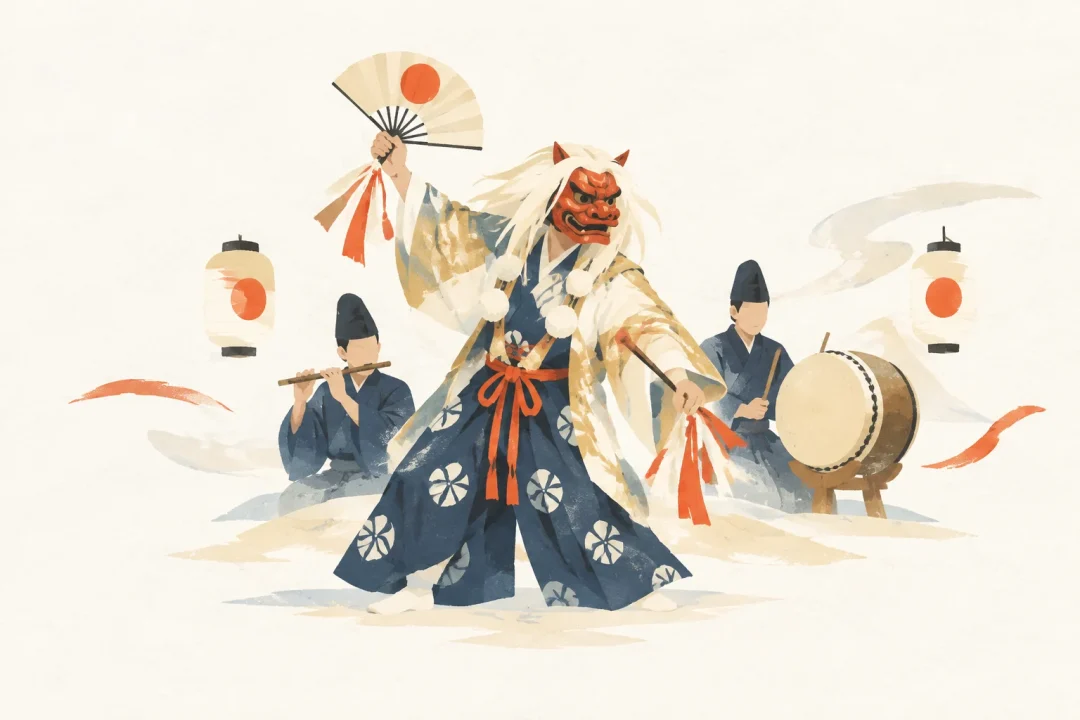
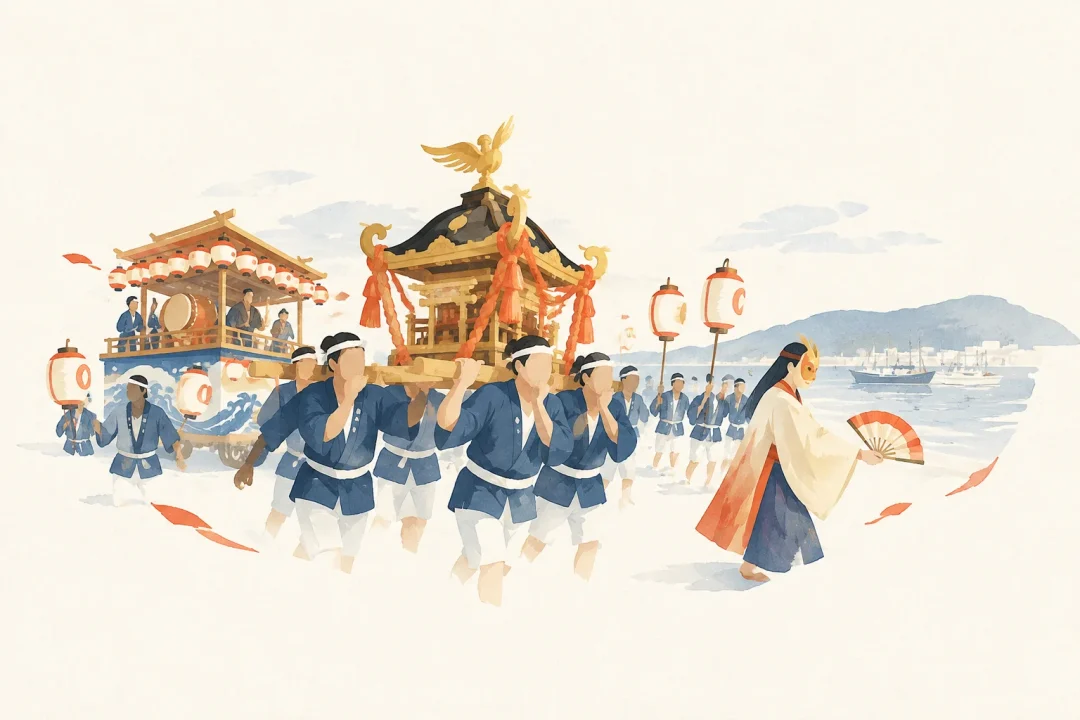
During the festival, the Daikagura and dashi travel through the neighborhood to pay their respects at Tanabu Shrine. Events include a mikoshi procession and a Noh dance dedication.
As the dashi move, the riders play festival music while people pull ropes on both sides.
Gion festival music fills the day, while “Yamayare” sounds at night; the events continue with the Oshimako nagashi dance on August 18 and the Goshagawakare on the final day.
How to take part
Visitors can watch the event.
Location and access
- Venue and address
Tanabu district (around Tanabu Shrine).
Tanabu Shrine is located at 1-1 Tanabu-cho, Mutsu, Aomori Prefecture.
- Train and bus
About a 30-minute walk from Shimokita Station on the JR Ominato Line.
- By car
About 10 minutes by car from Shimokita Station.
- Parking
Tanabu Shrine is listed as having parking.
Source: Tanabu Festival (Annual Festival of Tanabu Shrine)|Attractions|Amazing AOMORI - The Official Aomori Travel Guide / 田名部神社|スポット・体験|【公式】青森県観光情報サイト Amazing AOMORI
Address 1-1 Tanabu-cho, Mutsu, Aomori Prefecture (Tanabu Shrine)
Dates and season
2026 event information (the listed dates have passed)
The 2026 event information said the festival was scheduled to take place over 3 days, from August 18 through the 20th.
The schedule was set to include the Daikagura and dashi paying their respects at the shrine and a Noh dance dedication on the 18th; the dashi visiting the shrine and a pre-festival event on the 19th; and the annual festival, mikoshi procession, and dashi procession on the 20th.
The Goshagawakare takes place on the final night.
Accommodation and hotels PR
Showing nearby accommodation.
Prices and availability are current at the time of retrieval. For multi-night stays, only the first night’s price is shown. Confirm the final price and directions to the venue with the booking provider. Select your dates again when using the area search link. Search area: within 3 km of Central Aomori Prefecture / Mutsu City (the search is not centered on the festival venue)
Tips for your visit
The dashi travel through the streets of the Tanabu district, and specialized levers are used to steer them when turning at intersections.
Near the dashi route, watch out for the dashi as it moves and for calls from the participants, and follow instructions from staff and local guides while watching.
At night, the painted lantern panels are lit, revealing decorations that differ from those seen during the day.
Nearby attractions
At the heart of the festival is Tanabu Shrine, which draws local worshippers as the head shrine of the Shimokita Peninsula.
The shrine is in the center of Mutsu, in a bustling area lined with restaurants.
You can visit the and hall of Tanabu Shrine alongside the festival and experience the town’s culture.

むつ科学技術館
青森県むつ市にある科学館
写真:kitakame / CC BY 3.0(resized and reformatted)
Photo source ·
恐山
日本の青森県にある火山
写真:Douglas P Perkins ( Douglaspperkins ( talk )) / CC BY 3.0(resized and reformatted)
Photo source ·Origins and History of Tanabu Matsuri
The exact origins of Tanabu Matsuri are unclear, but it is said to have a history of more than about 370 years.
A travel diary from 1793 already describes a form of dashi procession similar to the one seen today.
In addition to the dashi and festival music influenced by the Kyoto Gion Festival, exchanges of goods and culture through the Kitamaebune ships are also said to have influenced the festival’s character.
Official information
Mutsu City lists the annual festival of Tanabu Shrine as official information.
The contact is Tanabu Shrine, and the phone number is 0175-22-7470.
The dashi route map is listed as provided by Tanabu Shrine.
Tanabu Matsuri at a Glance
Tanabu Matsuri is one of Mutsu’s signature annual festivals, with dashi from 5 neighborhoods touring the town around Tanabu Shrine.
The decorations and festival music change between day and night. Events include dashi processions, a mikoshi procession, a Noh dance dedication, and the Oshimako nagashi dance.
You can experience the local festival traditions and dashi culture as a continuous series of events, culminating in the Goshagawakare on the final day.
Japanese Festivals.jp Editorial Team
Celebrating local culture and helping you discover a side of Japan you never knew.
Article updated: 2026/10/19
Submit information or a correction Submit photos of this festival